


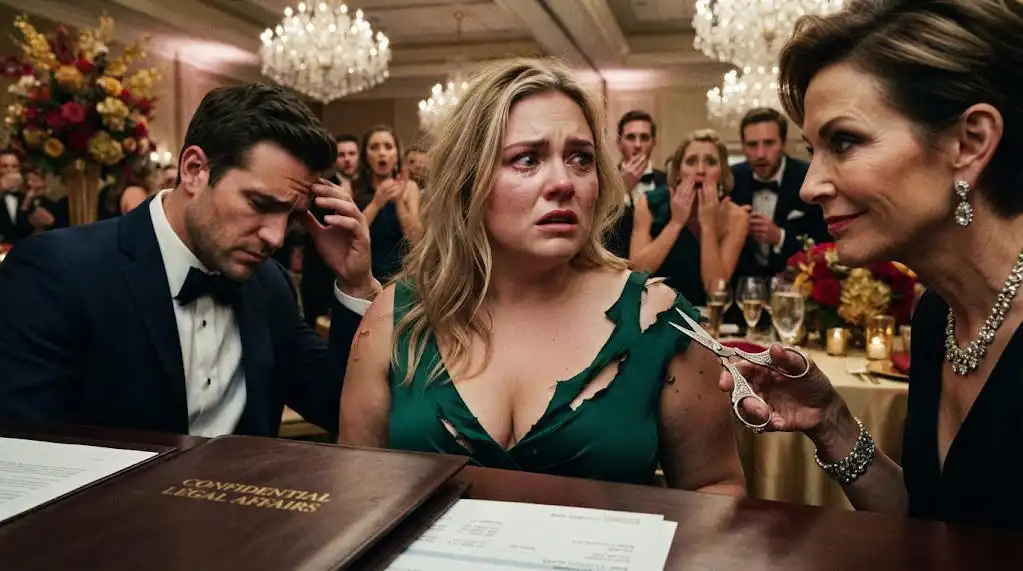
The scissors cut through my dress with a sharp, unmistakable sound.
Two hundred guests watched as my future mother-in-law lifted the torn fabric and laughed.
“Look at her!” Victoria Caldwell announced. “She looks like an elephant wrapped in a bedsheet.”
A few people laughed nervously.
Others stared at their champagne glasses.
My fiancé, Ethan, stood beside his mother in a perfectly tailored black suit.
He looked at the ruined hem of my custom engagement dress.
Then he looked at me.
“Maybe this will teach you to dress appropriately for my family's events.”
That was the moment I realized I was standing in the middle of a celebration for a marriage that should never happen.
I was thirty-one years old, an independent illustrator, and a woman who had spent the past several years slowly shrinking her own dreams to make room for someone else's ambitions.
I had given up professional opportunities for Ethan.
I had invested my savings in the home we planned to share.
I had convinced myself that the tension between us was temporary, that his mother's cruelty was simply part of a difficult family dynamic, and that once we were married, things would become easier.
I had been wrong.
Victoria wasn't the real surprise that evening.
I had known she disliked me for years.
The surprise was how easily Ethan had joined her.
I looked at the guests.
I looked at the dress I had commissioned months earlier.
Then I looked at the man I had planned to marry.
“Are you going to say anything?” I asked him.
He sighed.
“Claire, please don't make a scene.”
I almost laughed.
His mother had cut my dress in front of two hundred people, and somehow I was the one being accused of making a scene.
I took a slow breath.
Then I removed the damaged dress from my shoulders, revealing the elegant black evening outfit I had worn beneath it, gathered the fabric, and placed it over a nearby chair.
I picked up my handbag.
“Enjoy the party,” I said.
And I walked out.
My name is Claire Bennett, and for most of my adult life, I believed that love meant making room for another person's imperfections.
I grew up in a modest home outside Dallas.
My mother was a school librarian, and my father repaired musical instruments.
We didn't have much money, but our home was filled with books, music, and art supplies.
I spent hours drawing imaginary houses, city streets, gardens, and people who didn't exist.
I loved the way a few lines could suggest a whole story.
By the time I graduated from college, I had developed a distinctive illustration style that combined delicate linework with warm colors and architectural details.
I worked as a freelance illustrator, creating book covers, editorial illustrations, and commissioned artwork for independent businesses.
My early career wasn't glamorous.
I worked at a small desk in a rented apartment.
I learned to write contracts, negotiate rates, manage invoices, and handle clients who believed that an artist should be grateful for exposure instead of payment.
But I loved my work.
Every completed project felt like a little piece of a world I had built myself.
Then I met Ethan Caldwell at an art exhibition.
He was charming, confident, and well connected.
He worked in business development for a growing investment company and seemed genuinely interested in my illustrations.
At our first dinner, he asked questions about my work that went beyond the usual polite conversation.
He wanted to know how I developed characters, how I chose colors, and why certain drawings felt more emotionally powerful than others.
“You make ordinary things look important,” he told me.
I smiled.
“Sometimes ordinary things are important.”
He said he liked that about me.
For a while, I believed him.
Ethan introduced me to his friends.
He attended my exhibitions.
He bought one of my illustrations and framed it in his apartment.
When I landed a contract with a respected publishing company, he brought flowers to my studio.
He seemed proud of me.
His mother, Victoria, was less enthusiastic.
The first time Ethan introduced us, she examined my clothes and asked whether my illustration business was a serious career.
“It pays my bills,” I replied.
She smiled without warmth.
“That's nice. Ethan has always been surrounded by ambitious people.”
I assumed she was trying to impress me with her expectations.
I didn't realize she was warning me that I would never meet them.
Victoria believed social status was a form of currency.
She judged people by their clothes, homes, connections, and physical appearance.
She often spoke about marriage as though it were a business merger.
When she discussed Ethan's future, she mentioned the importance of choosing a wife who could represent the family appropriately.
She never said directly that I was unsuitable.
She didn't need to.
Her pauses and glances communicated enough.
Ethan always defended her.
“She means well,” he would say.
“She can be difficult, but she's from another generation.”
“Don't take everything personally.”
I accepted those explanations because I loved him.
I also believed that if I remained patient, she would eventually see that I was a good partner for her son.
Then I became pregnant.
The pregnancy changed my body and my routines.
After giving birth, I developed hormonal symptoms that required medical attention and affected my weight, energy, and confidence.
My doctor explained that recovery and hormonal health could be complicated, and we worked together on an appropriate plan.
I had expected to return to my usual routine gradually.
Instead, I found myself struggling with fatigue, changes in my body, and the demands of caring for a young child.
My illustration work became harder to manage.
I turned down a major commission because the deadline conflicted with childcare and medical appointments.
Another client hired a different illustrator after I asked for an extension.
I began working fewer hours.
Ethan told me he supported my decision to focus on our family.
“We're building a life together,” he said. “You don't have to prove anything to anyone.”
I believed him.
When we decided to purchase a house, I contributed most of the savings I had accumulated from years of freelance work.
The house was beautiful but not extravagant.
It had a large living room, a small garden, and a spare room I planned to turn into an art studio.
Ethan said we would make it our forever home.
I imagined painting in the morning while sunlight spilled across the floor.
I imagined our child growing up surrounded by books and art.
I imagined us growing older together.
The financial arrangement was supposed to protect both of us.
We discussed a written agreement documenting our separate contributions and clarifying how the property and future expenses would be handled if our relationship ended.
A preliminary financial agreement was prepared and signed during our engagement discussions.
We intended to have our attorneys finalize the remaining details before marriage.
I kept copies of the documents and the bank statements showing my contributions.
At the time, I thought those records were simply responsible planning.
I never imagined I would need them to protect myself from the man I loved.
As the wedding approached, Ethan became increasingly concerned about appearances.
He wanted a larger engagement party.
He wanted a more expensive venue.
He wanted his business associates to attend.
He also began making comments about my body.
At first, they sounded almost harmless.
“You might feel more confident if you worked out a little.”
“Maybe you should get a stylist for the engagement party.”
“Victoria is worried the photographs won't look as elegant as she imagined.”
I stared at him.
“What does my weight have to do with our engagement?”
“Nothing. I'm just trying to help.”
“Help me do what?”
He looked annoyed.
“Why does everything have to become an argument?”
I tried to explain that my health was something I was addressing with my doctor, not a problem he could solve by criticizing me.
He apologized.
Then he did it again.
Eventually, I stopped telling him how much his comments hurt.
I was tired of explaining why I deserved kindness.
I was tired of trying to persuade someone who claimed to love me that my body wasn't a public discussion.
I also began noticing changes in our finances.
Our shared house account had been established to cover mortgage payments, property expenses, and improvements.
I had transferred a substantial portion of my savings into it.
Ethan had also contributed money, although the amounts and timing differed.
One evening, I reviewed the statements while preparing a household budget.
Several large transfers caught my attention.
The money had moved from the shared account into an account associated with Ethan's company.
I asked him about it.
“What's this transfer?”
He glanced at the screen.
“Business expenses.”
“From our house account?”
“I'll put it back.”
“When?”
“When the next payment comes in.”
I didn't like the answer.
“Why didn't you tell me?”
He closed the laptop.
“Because I didn't think you'd understand the business side of it.”
I stared at him.
“I understand that money we set aside for the house has been moved somewhere else.”
He sighed.
“Claire, don't start this again.”
I wanted to believe him.
I wanted to believe that the transfers were temporary, that he would repay the money, and that I was simply anxious because of everything else happening in my life.
But something had changed.
I began saving copies of the bank statements.
I reviewed the preliminary financial agreement.
I made a list of the amounts I had contributed and the dates on which the money had moved.
I didn't accuse him of a crime.
I didn't know the full circumstances.
I simply wanted to understand what had happened to the money we had agreed to set aside for our home.
Then came the engagement party.
Victoria had spent weeks planning it.
The venue was a private ballroom in an upscale Dallas hotel.
The tables were decorated with white roses and gold accents.
A string quartet played near the entrance.
Servers carried trays of champagne through the room.
Ethan's business associates stood beside his relatives, discussing investments and upcoming projects.
I had commissioned a custom dress for the occasion.
It was made from deep-blue fabric, with a carefully tailored waist and a flowing skirt.
I had chosen the design because I wanted to feel beautiful without pretending to be someone I wasn't.
The dressmaker had worked hard to make it fit comfortably.
When I put it on that evening, I looked at myself in the mirror and felt something I hadn't felt in months.
I felt like myself.
Then Victoria saw me.
She looked me up and down.
“That's the dress you chose?”
I smiled politely.
“Yes.”
She leaned toward a friend.
“It's amazing what people think is appropriate these days.”
I heard her.
I pretended I hadn't.
Ethan came over and kissed my cheek.
“You look nice,” he said.
I wanted to believe he meant it.
For the first hour, I greeted guests, thanked people for coming, and tried to enjoy the evening.
Then Victoria approached me near the ballroom entrance.
She was holding a pair of small sewing scissors.
I didn't understand why.
“Claire,” she said, “we need to fix something.”
“What?”
She pointed toward the hem of my dress.
“It hangs terribly.”
“It's designed that way.”
She laughed.
“Of course you'd think that.”
I stepped back.
“Please don't touch my dress.”
Her expression hardened.
“You really do think everything revolves around you.”
She grabbed the edge of the skirt.
I tried to pull away.
Then she cut through the fabric.
The sound was sharp enough to make the people nearest us turn around.
A section of the hem tore open.
I stared at her.
She lifted the scissors and laughed.
“Now you look like an elephant wrapped in a bedsheet.”
The room fell silent.
Ethan walked over.
For one hopeful second, I thought he would tell his mother to apologize.
Instead, he looked at the damaged dress and sighed.
“Maybe this will teach you to dress appropriately for my family's events.”
I felt something inside me go quiet.
Not numb.
Not broken.
Quiet.
I looked at him and understood that I had been trying to build a marriage with someone who viewed my dignity as negotiable.
I could no longer tell myself that his behavior was temporary.
I could no longer pretend that his mother's cruelty was the only problem.
He had chosen his side.
And it wasn't mine.
I removed the ruined dress, gathered it carefully, and placed it over a chair.
Then I walked out.
Outside, the night air felt cool against my face.
I stood near the hotel entrance and called a car.
I didn't cry until I was alone in the back seat.
The tears came suddenly.
I cried for the relationship I thought I had.
I cried for the years I had spent adjusting myself to fit into Ethan's world.
I cried for the money I had invested in the house.
And I cried because I knew that ending the relationship would be painful, expensive, and public.
The following morning, I called an independent attorney.
I explained the engagement, the house, the financial agreement, and the transfers from our shared account.
I brought every document I had preserved.
My attorney reviewed the preliminary agreement and explained that its legal effect depended on its wording, the circumstances in which it had been signed, and the applicable law.
It was not automatically a final or enforceable settlement simply because we had signed a draft.
The property title, purchase documents, financing arrangements, and bank records would all matter.
We needed to establish the facts before deciding what I could recover.
That was exactly what I wanted.
I didn't want revenge disguised as a legal strategy.
I wanted to know what belonged to me, what obligations I had accepted, and how to leave the relationship without losing everything I had worked for.
My attorney requested the relevant financial records and began documenting the transfers.
We calculated my contributions to the property and compared them with Ethan's.
We reviewed the title and the mortgage obligations.
We also examined the records associated with the money moved into his company's account.
The review showed that several transfers had been made without my informed agreement.
Ethan had used some of the money to cover company expenses during a period of financial pressure.
The records also raised questions about how he had represented his company's financial position to potential investors.
My attorney explained that the property dispute and the company's financial disclosures were separate matters.
We would not make accusations beyond what the evidence supported.
But I would not agree to a settlement that ignored the money that had been moved.
Ethan called me repeatedly.
At first, he was angry.
“You're making this much bigger than it needs to be.”
I asked him to communicate through our attorneys.
He said I was being unreasonable.
Then he tried to be charming.
“Claire, we love each other. We can fix this.”
I remembered the scissors.
I remembered the ballroom full of people.
I remembered the way he had looked at me when I asked him to defend me.
I didn't answer.
Victoria sent messages, too.
She said I was humiliating the family.
She said the dress incident had been misunderstood.
She said that all families had disagreements and that I was being dramatic.
I saved the messages and sent them to my attorney when appropriate.
I did not post them online.
I did not ask strangers to attack her.
I wanted to keep the process as private as possible.
Unfortunately, the engagement party had been photographed and filmed by dozens of guests.
Within days, short clips of the incident began circulating online.
Some people criticized Victoria.
Others defended her, claiming that I should have expected scrutiny when marrying into a wealthy family.
A few people focused on my weight.
The public attention was exhausting.
I had spent years creating illustrations that told other people's stories.
Now strangers were arguing about mine.
I turned off most of my social media notifications.
I asked friends not to send me every new comment.
And I began rebuilding my daily routine.
I returned to drawing.
At first, I could manage only short sessions.
I sketched plants, windows, and the view from my apartment.
I walked in the mornings when my energy allowed.
I continued working with my doctor to manage my health and develop a sustainable exercise routine.
I stopped treating movement as a punishment for my appearance.
I wanted to feel stronger.
I wanted to sleep better.
I wanted to remember that my body was mine, not a project for Ethan or Victoria to criticize.
Gradually, my confidence returned.
Not all at once.
Some days, I still remembered the ballroom and felt the old humiliation rise in my chest.
But I began to understand that the most important part of my life had never belonged to Ethan.
My talent was mine.
My work ethic was mine.
My ability to create something beautiful from a blank page was mine.
And my future did not have to depend on whether a wealthy family approved of me.
Meanwhile, the financial negotiations continued.
Ethan initially insisted that the house belonged to both of us equally and that I had no right to demand reimbursement for the transfers.
My attorney responded with the purchase documents, bank statements, and a detailed accounting of our respective contributions.
The records made it impossible to ignore where the money had gone.
We also presented the preliminary financial agreement as evidence of what we had discussed and intended, while recognizing that the final settlement had to be negotiated and documented properly.
After several rounds of negotiations, the parties reached a comprehensive settlement.
The agreement accounted for the documented contributions, the outstanding mortgage, the relevant property obligations, and the disputed transfers.
The house was sold under agreed terms.
After the mortgage and authorized costs were paid, the remaining proceeds were distributed according to the settlement.
The agreement also required Ethan to repay the amount established through the financial review.
My attorney made sure the final documents addressed the outstanding obligations and the transfer of funds.
I signed only after the terms had been explained and reviewed.
It was not a dramatic courtroom victory.
It was a careful, documented resolution.
And when the money arrived in my account, I felt something I had not experienced in months.
Relief.
I could pay my outstanding obligations.
I could plan for the future.
I could stop checking my bank balance with the constant fear that another unexpected transfer would leave me unable to meet my bills.
But the settlement did not restore the years I had spent trying to save the relationship.
That part was mine to rebuild.
Ethan requested one final meeting.
Our attorneys agreed to a meeting at their office to finalize the remaining documents.
He arrived wearing a navy suit and carrying a small box.
For a moment, he looked like the man I had fallen in love with.
He placed the box on the table.
Inside was a delicate gold bracelet.
“I bought this for you months ago,” he said. “I thought we could start over.”
I looked at the bracelet.
“Why now?”
He sighed.
“Because I've made mistakes.”
“You let your mother cut my dress in front of two hundred people.”
“I was caught off guard.”
“You told me I deserved it.”
He looked down.
“I shouldn't have said that.”
“You moved our house money into your company without properly discussing it with me.”
“I was under pressure.”
“And you made me believe that if I loved you enough, I should accept whatever happened.”
He rubbed his forehead.
“Claire, I know things got out of hand. But we were going to get married. We were building a life together.”
I looked at him for a long moment.
“We were supposed to be building a life together. That was the point.”
He reached for my hand.
I moved it away.
“I can change,” he said. “We can postpone the wedding. We can start counseling. We can rebuild what we had.”
I believed he was capable of regretting what had happened.
But regret was not the same as accountability.
And a promise to change did not erase the pattern that had brought us to that office.
I picked up the final settlement agreement.
I read the last page.
Then I signed.
Ethan stared at me.
“You're really doing this?”
“Yes.”
“After everything we've been through?”
I put down the pen.
“I'm not ending this because your mother cut my dress. I'm ending it because you watched her do it and decided I deserved it. I'm ending it because you treated my confidence as something you could spend, and our money as something you could move without my agreement.”
His eyes filled with tears.
“Please, Claire.”
I stood.
“I hope you learn from this. But you don't get to use my hope as another chance to hurt me.”
I left the office.
This time, I didn't cry in the car.
The business consequences came later.
As questions about Ethan's financial disclosures reached his company's investors, several requested independent clarification of the company's financial position.
The records showed that the business had faced financial pressure that had not been adequately explained in some of the communications presented to potential investors.
The company had to commission additional financial reviews.
Some investors withdrew from pending commitments, while others suspended discussions until the issues were resolved.
The company lost valuable opportunities and faced a difficult period of restructuring.
Ethan's reputation suffered.
The engagement party footage had already circulated widely, and the financial dispute gave the story another dimension.
I did not publish the bank statements myself.
I did not leak confidential company documents.
I did not ask reporters to destroy his career.
The financial questions were handled through the relevant professional and legal channels.
I simply refused to conceal information that was properly required to resolve our shared financial obligations.
Victoria attempted to contact me one last time.
She wrote that I had ruined her son's future over a relationship that could have been saved.
I read the message.
Then I deleted it.
I no longer needed her to understand why I had left.
I needed to build a life that didn't require her permission.
The first few months of independence were quieter than I expected.
I rented a modest apartment with a large window and a spare room that I turned into an art studio.
The room had white walls, wooden floors, and enough space for a long worktable.
I placed my brushes in jars.
I stacked sketchbooks on the shelves.
I hung a few of my favorite illustrations near the window.
For the first time in years, I arranged the room entirely around my own work.
I didn't need to ask whether Ethan preferred a different color scheme.
I didn't need to worry about Victoria criticizing the furniture.
I could leave a half-finished drawing on the table and return to it the next morning.
I could work late.
I could take a break.
I could choose what mattered to me.
At first, I accepted small illustration projects to rebuild my income.
Then an independent gallery contacted me about exhibiting a new series of work.
The curator had seen my illustrations through a publisher and wanted to know whether I had enough pieces for a solo exhibition.
I hesitated.
I hadn't held a major exhibition in years.
My confidence was still fragile.
But I agreed to meet.
The curator, Margaret Ellis, examined my recent work.
The drawings were different from the illustrations I had created before my relationship.
They were quieter.
They focused on rooms, windows, gardens, and ordinary domestic objects.
Many of them explored the feeling of inhabiting a place that no longer felt like home.
Margaret studied one drawing of a torn piece of blue fabric resting beside an open window.
“What is this one about?” she asked.
I considered the question.
“It's about realizing that something can be damaged without being the end of the story.”
She looked at the drawing again.
“I think people will understand that.”
We scheduled the exhibition for the following season.
I spent months preparing.
I worked on a series of illustrations about rebuilding, memory, and the small rituals that make a place feel safe.
I drew morning light falling across an empty kitchen.
I drew a chair beside a window.
I drew a woman standing in a garden, holding a handful of seeds.
I drew a table covered in unfinished sketches.
I didn't include a portrait of Ethan.
I didn't draw Victoria holding scissors.
I wasn't interested in turning the exhibition into a public accusation.
I wanted to make something that belonged to me.
As the exhibition approached, I worried about how people would respond.
Some visitors might recognize the story behind the work.
Others might simply see a collection of illustrations.
Either way, I wanted the art to stand on its own.
The opening night arrived on a cool Dallas evening.
The gallery was filled with warm light.
My illustrations hung in simple frames along the white walls.
Visitors moved slowly from one piece to another.
Some studied the details.
Others asked about the materials or the inspiration behind a particular image.
A woman stood in front of the drawing of the torn blue fabric for several minutes.
Then she turned toward me.
“I went through something similar,” she said quietly. “Not the same situation, but the feeling of realizing that the person you loved didn't really see you.”
I nodded.
“I'm sorry.”
She looked back at the illustration.
“I like that you didn't draw the ending as a disaster.”
I smiled.
“I didn't want it to be a disaster forever.”
She bought the piece.
By the end of the evening, several works had sold.
The gallery offered me another exhibition.
A publisher contacted me about a new illustration project.
And for the first time in a long while, I found myself thinking about the future with curiosity instead of fear.
I still had responsibilities.
I still had to manage my health.
I still had financial decisions to make.
But I was no longer arranging my life around a man who believed I should be grateful for whatever treatment he chose to give me.
Over the following months, my work expanded.
I accepted a publishing contract.
I developed a new series of illustrations for a children's book.
I began teaching occasional drawing workshops for adults who wanted to return to art after years away.
I also continued exercising in ways that supported my health.
My weight changed gradually, but it was not the centerpiece of my recovery.
I was learning to take care of myself without turning my body into a measure of success.
Some days, I walked for an hour.
Other days, I did a shorter workout and spent the rest of the evening painting.
I celebrated the consistency, not the number on a scale.
The greatest change was that I stopped asking whether I looked worthy of being loved.
I began asking whether the people around me treated me with respect.
That question changed everything.
A year after the engagement party, I moved into a larger studio with tall windows and a small balcony.
The morning sun poured across the floor.
I could spread large sheets of paper across my worktable.
I could store finished illustrations without stacking them against the wall.
I could invite clients over without apologizing for the space.
On the first morning in the new studio, I opened the windows and listened to the city waking up.
Then I placed a blank sheet of paper on the table.
For several minutes, I simply looked at it.
I had spent so long trying to recover the life I had imagined with Ethan that I had forgotten how much possibility existed outside that dream.
I picked up a pencil.
I drew the window.
Then I drew the sunlight falling across the floor.
Then I drew a woman sitting at a worktable, surrounded by unfinished paintings.
She looked calm.
She looked focused.
And she looked entirely at home.
I didn't need to make her thinner.
I didn't need to dress her in expensive clothes.
I didn't need to give her a wealthy fiancé or a perfect life.
I only needed to let her exist without apology.
When I finished the sketch, I leaned back and smiled.
The engagement party had been the night I lost the future I thought I wanted.
But it had also been the night I stopped negotiating away my dignity to keep it.
I had recovered my documented financial contributions through a proper settlement.
I had rebuilt my career through work I loved.
I had made peace with my health as an ongoing part of my life, rather than a condition I had to overcome to deserve happiness.
And I had learned that a relationship could end without turning my entire life into a failure.
Ethan's future was his responsibility.
Victoria's opinions belonged to her.
My future was mine.
That evening, I finished a new illustration and placed it beside the window.
The light was fading, but the room remained warm.
I made tea, sat at my worktable, and opened my sketchbook to a fresh page.
For the first time in years, I wasn't drawing the life I hoped someone would allow me to have.
I was drawing the life I had chosen for myself.
And that was enough.
Choose your side: CLAIRE WAS RIGHT TO END THE ENGAGEMENT, RECOVER HER MONEY, AND REBUILD HER LIFE, or SHE SHOULD HAVE GIVEN ETHAN ONE LAST CHANCE TO CHANGE.
Comment your choice and share this story with someone who needs the reminder that love should never require surrendering your dignity.
Disclaimer: Mention of any brand or trademark is for identification only and does not imply partnership or endorsement
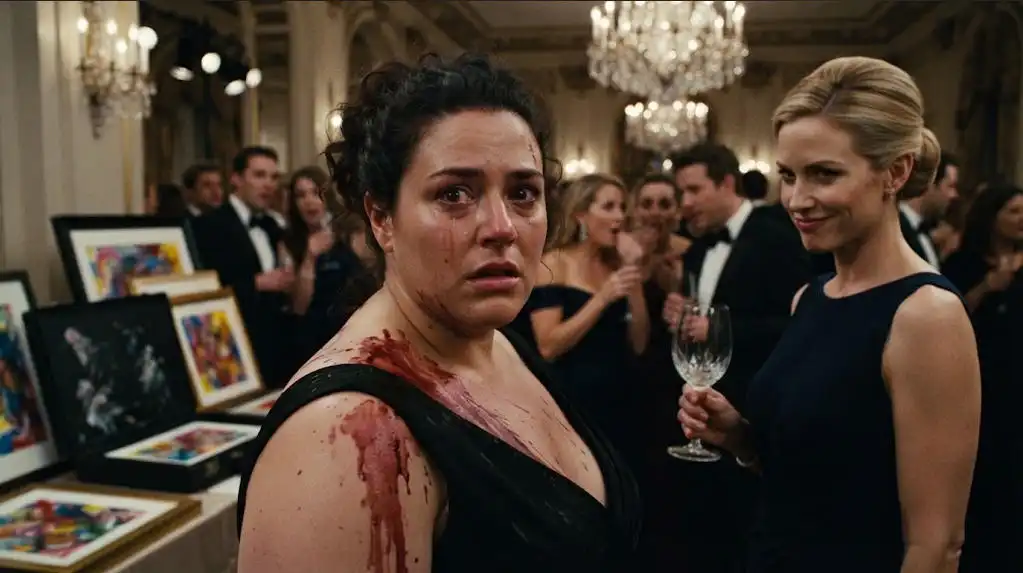
A Wealthy Manhattan Socialite Poured Red Wine on a Plus-Size Artist at a Charity Gala, Calling Her “Cheap and Unworthy.” She Had NO IDEA Who Would Discover Her Paintings... 😱
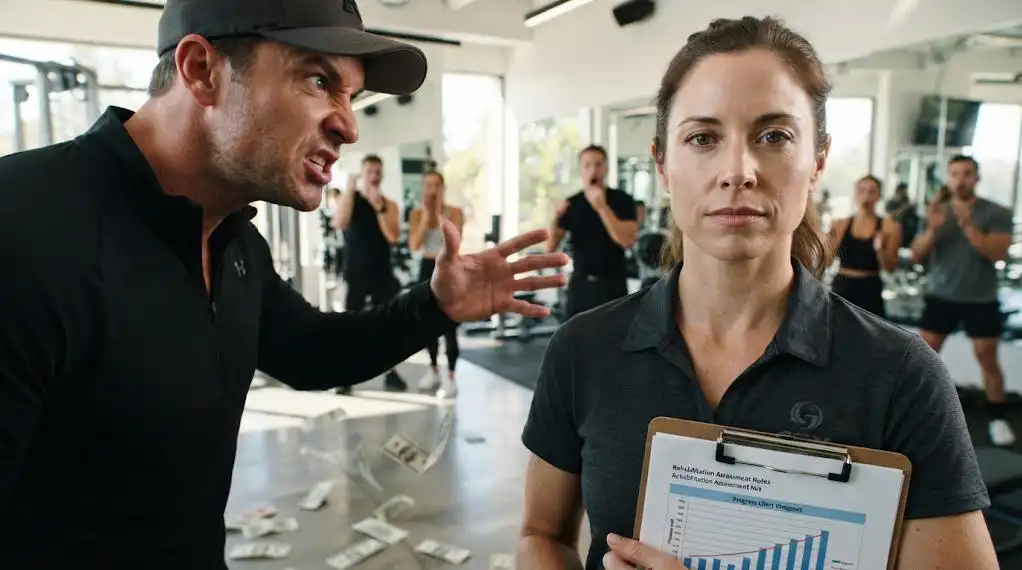
A Celebrity Trainer Threw CASH in a Plus-Size Nutritionist’s Face at a Luxury LA Gym, Saying She Couldn’t Even Control Her Own Weight. He Had NO IDEA What Her Clients Would Prove... 😱
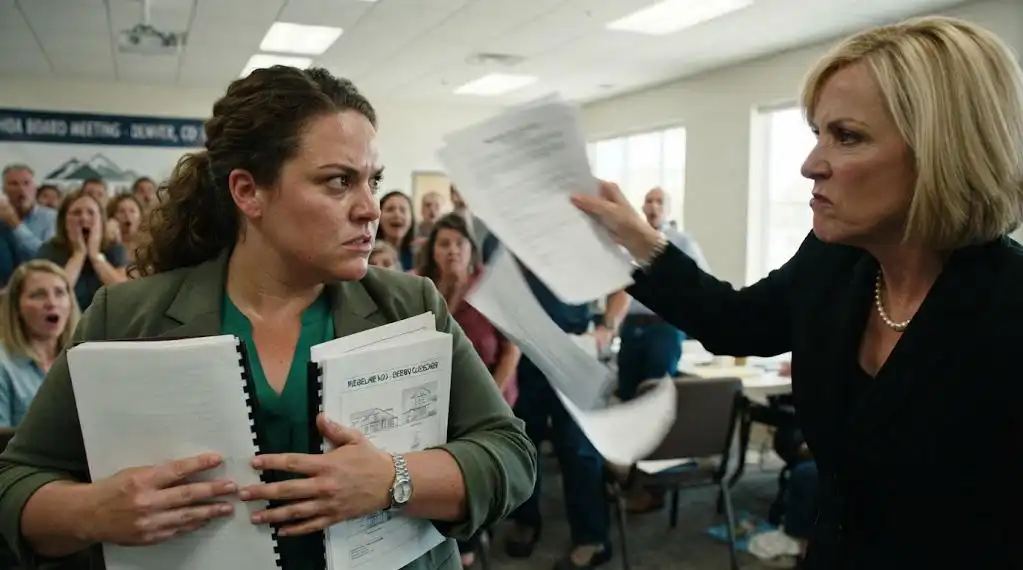
A Denver HOA President Fined a Plus-Size Homeowner Thousands and Threatened Her Home. Then She Uncovered the ONE Document the Board Didn't Want Anyone to See... 😱