
The mansion manager’s voice shook through the speakers.
“Sir… you need to see what we found behind the curtain.”
For the first time that night, Vanessa stopped shouting.
The ballroom went so quiet that my daughter’s little sniffle sounded louder than the string quartet.
Then I heard my son whisper from the basement stairs:
“Daddy… did we do something bad?”
That sentence almost broke me.
Not because he was scared.
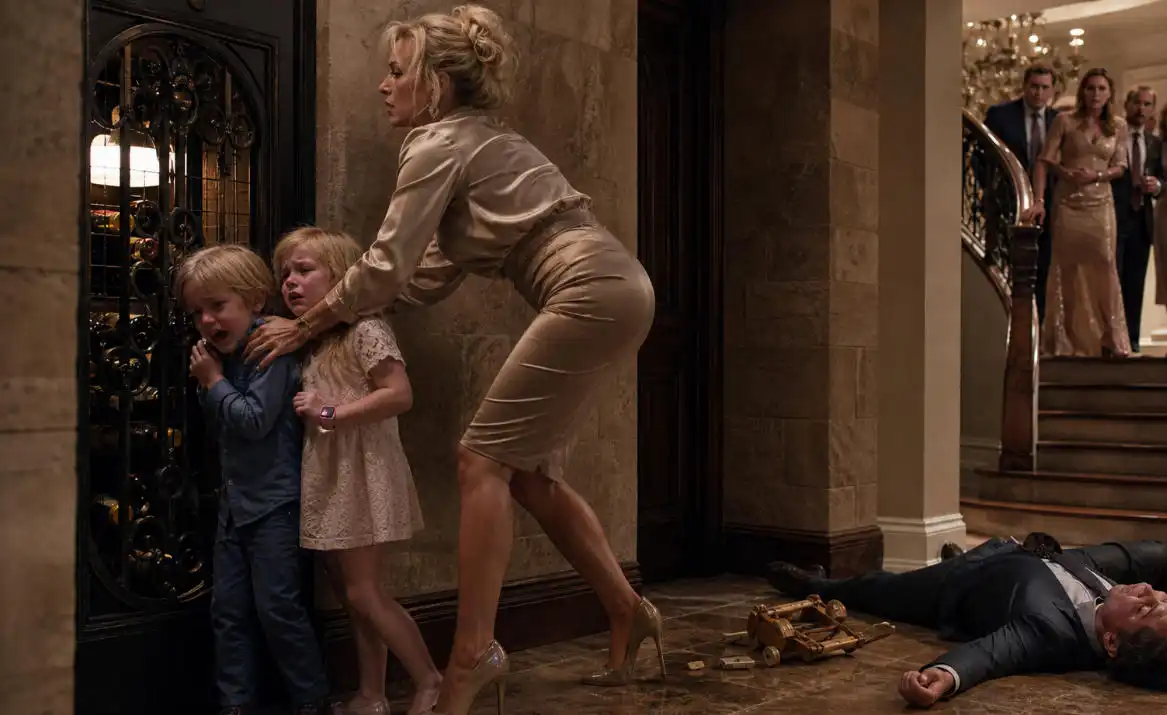
Because a grown woman in pearls had made two 5-year-old children believe they deserved to be hidden underground.
I was twelve time zones away, standing in a glass conference room in Singapore, with a Zurich banking director on one screen, a New York trust attorney on another, and my company’s board counsel sitting across from me.
Five minutes earlier, I had been discussing a multi-country infrastructure acquisition.
Now I was listening to my twins breathe through the old mansion’s emergency speakers.
And every person on that call understood one thing:
This was no longer family drama.
This was evidence.
“Keep the audio live,” my attorney said quietly.
I did.
Vanessa didn’t know it, but the mansion system recorded emergency broadcasts automatically.
Every word.
Every scream.
Every door slam.
Every lie.
The manager carried my twins out first.
Mia was clutching her pink smartwatch with both hands.
My son, Noah, had red marks on his wrist from where his cousin had yanked the train away.
Their little dress clothes were dusty.
Mia’s hair ribbon was crooked.
Noah was trying not to cry because he thought “big boys” weren’t supposed to.
I leaned toward the microphone.
“Mia. Noah. Look at Mr. Bell. He’s going to take you to the library. You are not in trouble.”
Mia sniffed.
“Aunt Vanessa said we don’t belong upstairs.”
Before I could answer, Vanessa’s voice sliced through the ballroom.
“Oh, for heaven’s sake. They were being dramatic.”
There it was.
The entitlement.
That old-money, polished, poisonous tone.
The kind that could call cruelty “discipline” and theft “family management.”
She stepped closer to the mansion’s central microphone, probably not realizing it was still live.
“Those children are spoiled,” she said. “They break things, they cry, they don’t respect the estate. Someone had to teach them boundaries.”
A few relatives murmured.
Not in agreement.
In shock.
Because thirty seconds earlier, they had heard a 5-year-old girl beg from behind a locked basement door.
The mansion manager, Mr. Bell, appeared on the video feed from the ballroom camera.
He was holding something small in a white cloth.
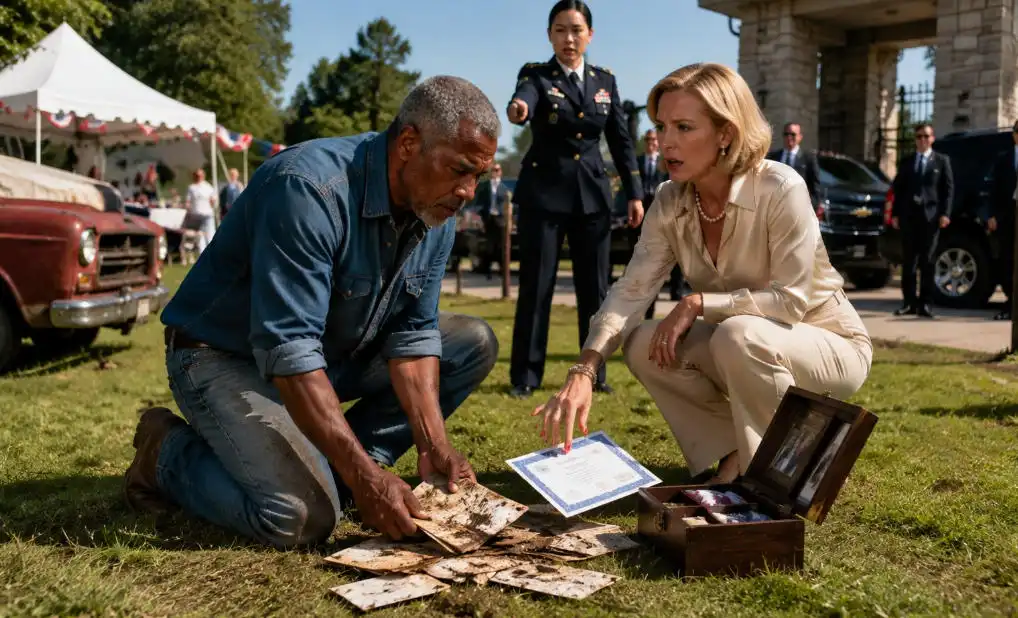
A broken wooden train.
My son’s favorite.
The one my late mother had bought him before she passed.
Behind him stood my brother-in-law, Calvin, Vanessa’s husband.
His face had gone pale.
Mr. Bell said, “Sir, this was hidden behind the west curtain. I also found this.”
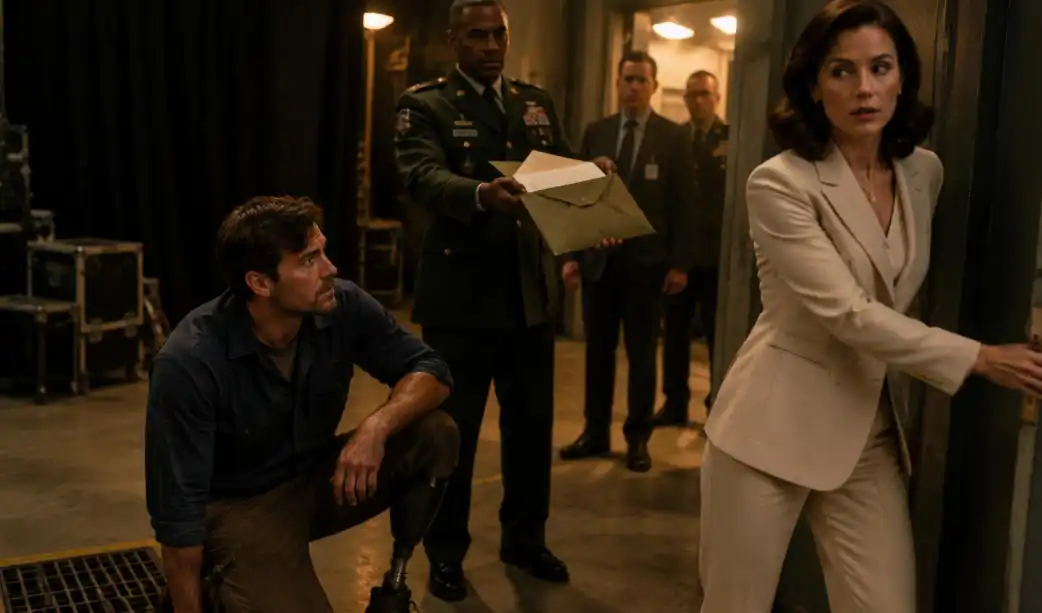
He lifted a leather folder.
The room shifted.
Vanessa lunged for it.
“Give me that.”
Mr. Bell stepped back.
My legal counsel spoke into the call.
“Do not hand her anything. Place it on the library table. Camera facing down.”
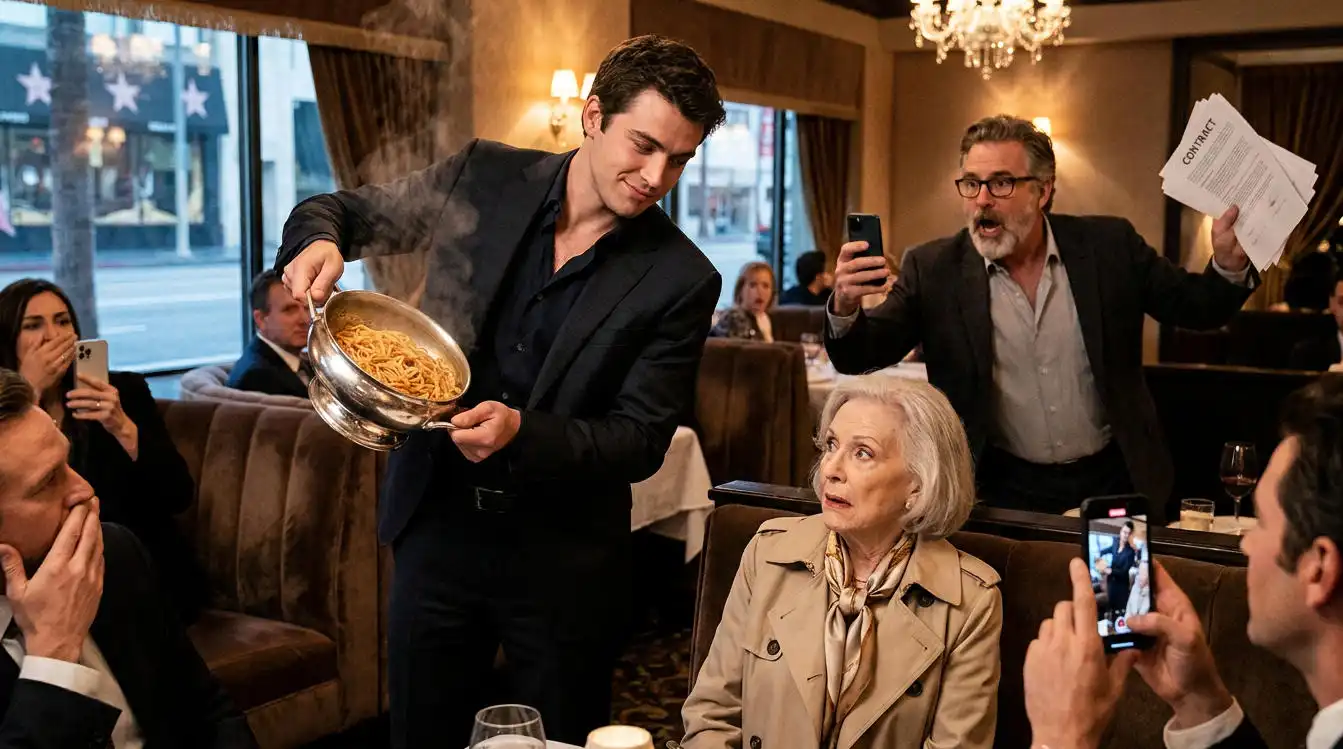
The ballroom guests were filming now.
Phones up.
Mouths open.
Some had come for champagne and inheritance gossip.
They were about to witness a family empire crack open in real time.
Vanessa turned toward the guests and laughed.
A fake laugh.
Too high.
Too sharp.
“This is ridiculous. He isn’t even here. He thinks because he sold some app company, he can run this family from a laptop?”
That was the part she had always hated.
My money was new.
Hers was inherited.
I built mine.
She married near hers.
And for years she had treated me like a visitor in my own children’s bloodline.
“Vanessa,” I said, calmly, “where were my children supposed to sleep tonight?”
She blinked.
“What?”
“Answer the question.”
“They were never staying overnight.”
“They were,” I said. “Their bags are in the east nursery.”
She scoffed.
“That room belongs to my son during estate weekends.”
“No,” I said. “That room belongs to the minor beneficiaries listed in the revised trust.”
Silence.
That was the first crack.
Vanessa looked toward Calvin.
Calvin looked at the floor.
Because he knew.
He had known for three weeks.
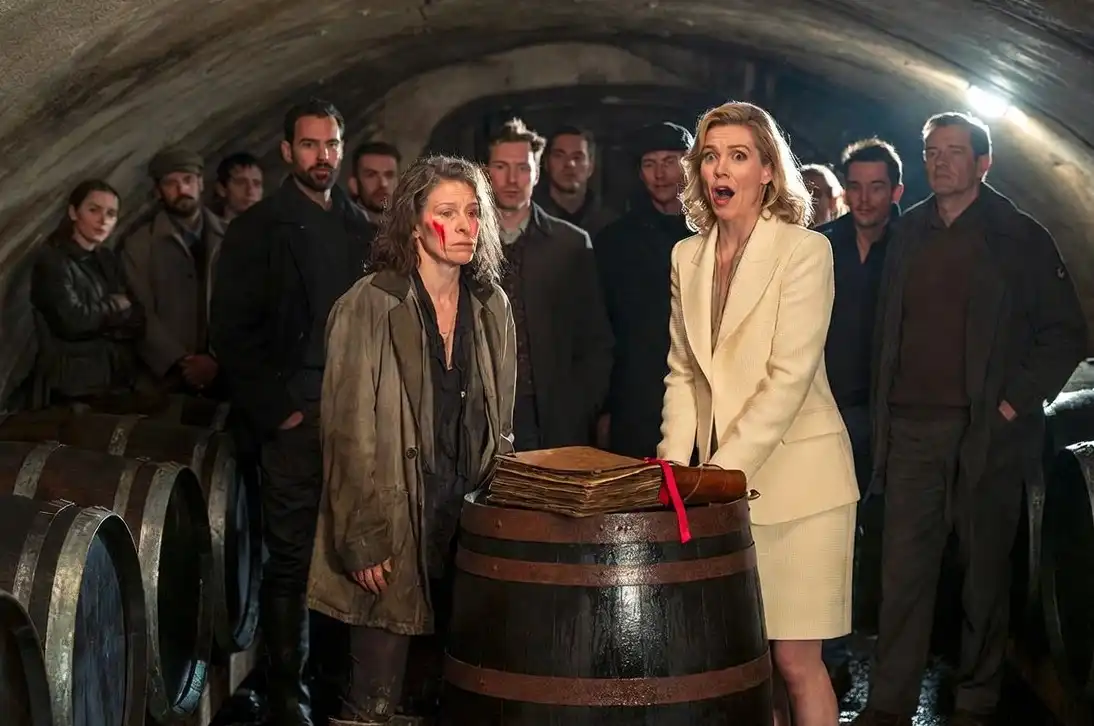
The estate attorney, Mr. Harrington, walked slowly into the ballroom from the west-wing office.
He was 72, thin, and very careful with his words.
He carried the locked drawer file.
And he looked furious in the way old lawyers look furious — without raising his voice.
“Mr. Cole,” he said to me through the room speaker, “I have the original signed instruction from your father.”
Vanessa snapped, “That document is outdated.”
Mr. Harrington turned toward her.
“No, Mrs. Whitmore. This is the updated instruction. The one your husband told my office had been misplaced.”
A woman gasped near the fireplace.
Someone whispered, “Oh my God.”
Vanessa’s son, Carter, stood near the dessert table holding Noah’s wooden train wheel like a prize.
He was seven.
Old enough to know he had stolen it.
Young enough to have learned it from the adults around him.
Mia saw him through the open library door.
“That’s Noah’s,” she said.
Vanessa hissed, “Carter, put that down.”
Too late.
The cameras caught it.
The staff caught it.
The guests caught it.
The estate attorney caught it.
And my attorney in Singapore caught it too.
“Mr. Harrington,” I said, “please read the relevant clause.”
Vanessa shouted, “Absolutely not!”
Mr. Harrington adjusted his glasses.
“Under Section Four, Subsection C, any adult beneficiary or household member who intimidates, confines, misrepresents, or attempts to discredit a minor beneficiary for inheritance advantage triggers immediate review and suspension of discretionary estate privileges.”
The ballroom went dead silent.
Then he continued.
“Under Section Seven, deliberate concealment of estate-related documents by a household member triggers forfeiture review.”
Calvin whispered, “Vanessa…”
She spun on him.
“Don’t say my name like that.”
But now everyone saw him.
The smooth husband who had hidden the broken toy.
The man who had told the staff not to call me.
The uncle who watched two little children be locked away and chose comfort over courage.
My attorney typed fast.
The banking director in Zurich said, “Mr. Cole, on your authorization, we can suspend all trust-linked revolving credit pending investigation.”
“Do it,” I said.
Vanessa laughed again.
But this time, no one laughed with her.
A phone buzzed in her hand.
Then another.
Then Calvin’s.
Then the estate chauffeur’s tablet.
Then the luxury concierge line on the entry desk.
Frozen.
Every account tied to their household.
Not their personal survival funds.
Not medical access.
Not basic legal protections.
Only the estate-backed credit lines they had been abusing for years.
The cards that bought Vanessa’s gowns.
The driver account.
The private club tabs.
The hotel suites.
The designer invoices.
The “charity dinners” that somehow always included jewelry.
All of it locked under audit.
Vanessa stared at her phone.
Her face changed.
Not sad.
Not guilty.
Exposed.
“You can’t do this,” she said.
“I already did.”
Then Mia’s tiny voice came from the library.
“Daddy?”
“Yes, baby?”
“Did my turtle button work?”
For the first time that night, my voice nearly failed.
“Yes,” I said. “It worked perfectly.”
The whole ballroom heard it.
That was when one of the older cousins started crying.
Not because of money.
Because every adult in that room understood the simple horror of it.
A little girl had needed a secret emergency button to survive her own family.
Mr. Bell cleared his throat.
“Sir, there’s more.”
He placed the leather folder under the camera.
Inside were printed emails.
Not old ones.
Recent ones.
Vanessa and Calvin had been coordinating with a private evaluator to describe my twins as “emotionally volatile,” “poorly socialized,” and “unfit for ceremonial estate responsibilities.”
They had planned to use that language in a trust review meeting.
Why?
Because my father, before his death, had left the estate structure flexible until all minor heirs were assessed.
Vanessa wanted her son positioned as the “stable heir.”
So she created instability.
She let Carter steal Noah’s toy.
She let him shove Mia.
She had Calvin hide the broken pieces.
Then she locked the twins in the basement and planned to say they had a “tantrum” and “ran downstairs.”
That was the full truth.
Ugly.
Documented.
And stupid enough to be written down.
My attorney said, “We have sufficient evidence for emergency protective orders, trust suspension, and civil action.”
Mr. Harrington nodded.
“I will support that.”
Vanessa suddenly softened her voice.
A performance.
“Daniel,” she said to me, using my first name like we were close. “This is a misunderstanding. I was overwhelmed. Children can be difficult.”
“No,” I said. “Children can be loud. Children can be tired. Children can fight over toys. Adults lock doors.”
Her mouth opened.
Nothing came out.
Then Carter started crying.
Vanessa reached for him, but he pulled away.
Because even at seven, he knew something had shifted.
The family wasn’t looking at him like a little prince anymore.
They were looking at him like a child being trained into cruelty.
That mattered too.
He was not the architect.
He was the product.
The architects were standing beside him in evening clothes.
By midnight, security had escorted Vanessa, Calvin, and Carter to the guest wing.
Not the basement.
Not yet.
Because unlike Vanessa, I did not punish children with darkness.
The next morning, a county officer, a child welfare representative, the estate attorney, and two trust auditors arrived.
Everything moved through proper channels.
The emergency recording was preserved.
The hidden folder was cataloged.
The staff statements were signed.
The ballroom videos were collected.
The broken train was photographed.
The basement lock was inspected.
And Vanessa still tried to lie.
She said the twins had been “playing.”
Then the officer played the audio.
Mia’s voice filled the room again.
“Daddy… Aunt Vanessa locked us in the basement.”
Vanessa looked down.
That was the moment she finally understood:
The smallest person in the house had become the strongest witness.
The legal hammer fell cleanly.
Vanessa and Calvin were removed from all estate decision-making.
Their discretionary trust privileges were suspended.
The fraudulent evaluator letter triggered a professional misconduct inquiry.
Calvin’s concealment of documents triggered a forfeiture review.
Their private club accounts collapsed within a week.
The old social circle that once adored Vanessa stopped returning calls.
Not because they suddenly became moral people.
Because public disgrace is contagious, and everyone had watched the video.
As for the “same basement” consequence?
It happened under supervision.
Not as abuse.
As evidence reconstruction.
The court-approved investigator required Vanessa and Calvin to spend one full controlled review period inside the same basement environment they claimed was “safe,” with legal observers, cameras, and documented conditions.
No champagne.
No staff to command.
No phones to spin the story.
Just cold stone walls, a locked door, and the truth of what they had done.
After twenty-four hours of formal reconstruction, Vanessa’s own statement changed.
She stopped calling it “quiet time.”
She called it “confinement.”
That word mattered.
It entered the record.
And once it entered the record, she could never polish it away.
The final estate decision came three months later.
My twins were named protected independent beneficiaries.
Not symbolic heirs.
Real ones.
A separate castle property — the old north estate, small by aristocratic standards but enormous to two 5-year-olds — was placed under a protected trust for them.
Mia called it “the brave house.”
Noah asked if the basement had locks.
I told him, “Only on the outside gates. Never on you.”
He nodded like that was the most important inspection.
Vanessa’s family was not sent to prison.
This was not a movie.
But they lost the mansion life they had worshiped.
They were relocated to a remote mining-region property owned by Calvin’s side of the family — barren, windy, and far away from the estate circles Vanessa had spent her life trying to impress.
No ballroom.
No driver.
No private chef.
No inheritance meetings.
Just consequences.
Carter was placed in counseling and later wrote Noah a shaky apology in blue marker.
“I’m sorry I took your train. My mom said I was supposed to win.”
Noah stared at it for a long time.
Then he asked, “Can he learn not to be mean?”
Mia answered before I could.
“Yes. But not in our castle.”
I almost laughed.
Then I almost cried.
A few weeks later, we restored the wooden train.
Not perfectly.
One wheel still had a tiny crack.
Noah said he wanted to keep it that way.
“So we remember it didn’t stay broken.”
That became our family rule.
We do not pretend bad things didn’t happen.
We repair what we can.
We protect what matters.
And we never let cruel people define where innocent children belong.
The first night my twins slept in the north estate, Mia wore her smartwatch to bed.
I told her she didn’t need the turtle button anymore.
She looked at me very seriously and said:
“I know. But brave girls keep tools.”
She was right.
So I kissed both their foreheads, turned off the light, and stood in the hallway until I heard them laugh together in their new room.
Not a basement.
Not a punishment room.
A castle bedroom with moonlight on the floor.
Vanessa wanted her son to inherit everything by making my children disappear downstairs.
Instead, the whole family heard the truth through the speakers.
She lost the estate.
Her husband lost his standing.
Her son lost the throne she had built out of lies.
And my twins gained the one thing she could never understand:
A home where no one had to earn the right to be loved.
So pick a side and share it:
Was freezing every estate card too harsh…
Or was it exactly what a father should do when someone locks his children in the dark? 🔥
Disclaimer: Mention of any brand or trademark is for identification only and does not imply partnership or endorsement