
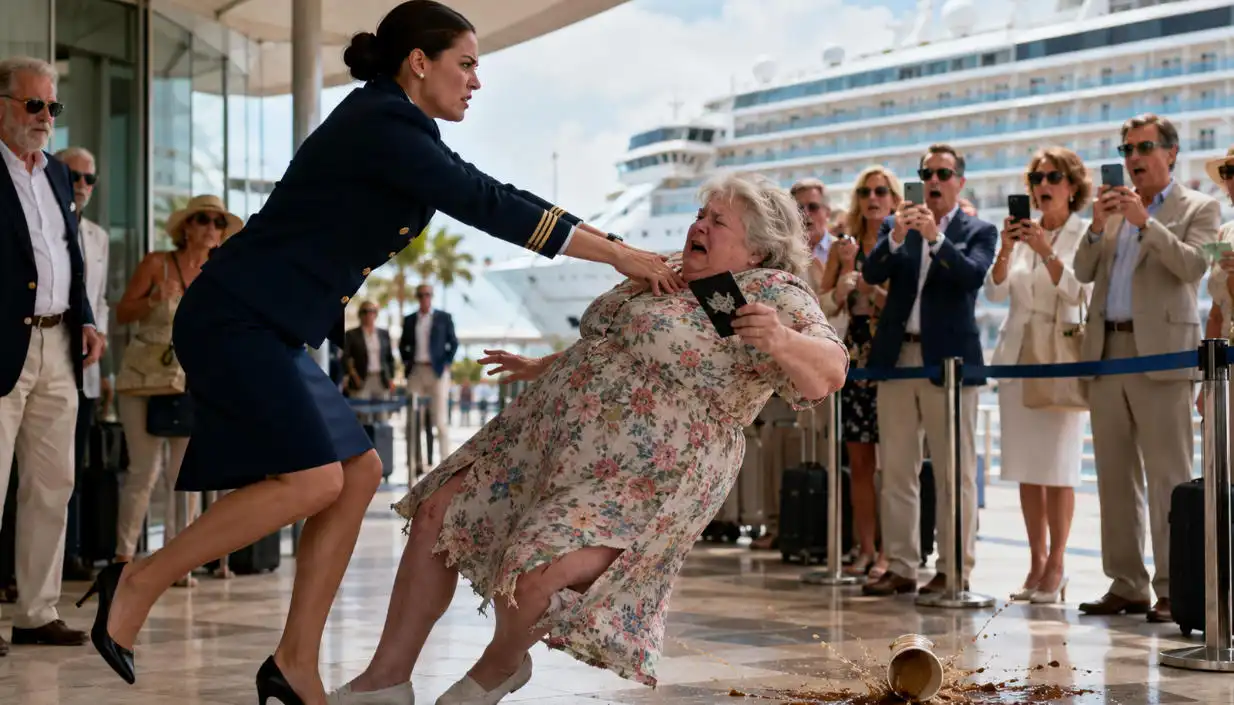
Monica froze when she saw the black card.
Not because it looked expensive.
Because the silver ship emblem on it was not for guests.
It was the executive seal.
The kind of card no passenger was supposed to carry unless they owned more of the company than the captain did.
But Sylvia did not say that yet.
She stayed on the floor for one more second.
Coffee dripped from her chin.
Her cheek was red.
Her gray hair had come loose from its clip.
Her floral dress was torn at the shoulder, exposing the kind of shame no decent person should ever have to feel in public.
And the worst part?
People were still recording.
Monica looked around at the first-class passengers, then back at Sylvia.
Her confidence flickered.
Only for a moment.
Then it came back harder.
“Security,” Monica snapped. “Remove her.”
One guard stepped forward.
Then stopped.
Because behind Monica, three men in navy suits were walking down the gangway.
Not cruise security.
Corporate security.
The kind who did not ask questions twice.
The captain followed them.
Then the port director.
Then a man in a white jacket who looked like he had just left an emergency executive meeting.
Monica’s face changed.
“Captain,” she said quickly, forcing a smile. “We had an incident with an unstable passenger.”
Sylvia slowly stood.
She did not cry.
She did not yell.
She simply wiped the coffee from her cheek with a napkin someone finally had the courage to hand her.
The captain looked at Sylvia.
Then at Monica.
Then at the torn dress.
Then at the coffee on the floor.
“Mrs. Whitaker,” he said softly, “are you injured?”
The entire line went silent.
Monica blinked.
Mrs. Whitaker.
Not ma’am.
Not passenger.
Mrs. Whitaker.
Sylvia gave a small nod.
“I’ll live, Captain Harris.”
Monica laughed nervously.
“Wait… you know her?”
The port director swallowed.
Everyone could hear it.
The captain turned to Monica.
“Monica, this is Sylvia Whitaker.”
Monica’s smile disappeared.
“The owner of Whitaker Maritime Holdings.”
A phone slipped from someone’s hand and cracked against the floor.
The captain continued.
“She owns this ship.”
He looked toward the massive white cruise liner behind them.
“And the eleven others in this fleet.”
Monica’s mouth opened, but nothing came out.
Sylvia adjusted the torn edge of her dress.
For the first time, she looked Monica directly in the eyes.
“You told me I belonged below deck.”
Monica stepped backward.
“I didn’t know—”
Sylvia raised one finger.
“That is exactly the problem.”
No one moved.
No one breathed.
Even the passengers who had mocked her were now staring at the floor like children caught stealing.
Sylvia turned toward the first-class line.
“Who complained that I was blocking the path?”
No one answered.
She looked at one man in a linen jacket.
He had been the loudest.
He had said, “Can’t they send her downstairs?”
His wife nudged him, but he kept his mouth shut.
Sylvia nodded.
“That’s what I thought.”
Then she turned back to Monica.
“You assaulted a passenger in a public boarding area.”
Monica shook her head quickly.
“It wasn’t assault. She was being disruptive.”
Sylvia looked at the cameras.
“The port cameras caught everything.”
Then she looked at the passengers’ phones.
“And so did half of Miami.”
Monica’s voice cracked.
“She had a fake ticket.”
The captain took Sylvia’s boarding pass from the floor and scanned it with his tablet.
A sharp beep sounded.
He looked up.
“Presidential Suite. Private owner boarding authorization. Lifetime clearance.”
The port director added, “And priority medical accommodation.”
Monica’s face went pale.
Sylvia had spent forty-one years as a nurse.
She had lifted people no one else wanted to touch.
Washed blood from strangers.
Held the hands of dying men whose families were too late.
She had retired with swollen knees, tired feet, and more dignity than any uniform could give.
But Monica saw a floral dress.
A soft body.
A quiet woman.
And decided that meant Sylvia was small.
That was Monica’s mistake.
A corporate officer stepped forward.
“Mrs. Whitaker, would you like to press charges?”
Monica snapped her head up.
“Charges?”
The officer spoke calmly.
“Battery. Possible assault with a heated beverage. Destruction of personal property. Public endangerment. We’ll let port police determine the final charges.”
Monica began to tremble.
“No, no, no. Please. I have worked here nine years.”
Sylvia looked at her.
“And how many people did you treat like this when no one important was watching?”
That question hit harder than the slap.
Because Monica did not answer.
She could not.
The captain turned to the security team.
“Escort Ms. Bell away from the boarding area.”
Monica grabbed his sleeve.
“Captain, please. Tell her I’m sorry.”
Sylvia’s voice stayed calm.
“Do not apologize because I own the ship.”
Monica turned toward her, crying now.
“I’m sorry, Mrs. Whitaker. I’m so sorry. I didn’t know.”
Sylvia stepped closer.
“That is not an apology.”
Monica sank to her knees right there on the deck.
In front of the same first-class passengers she had tried to impress.
In front of the crew she had bullied.
In front of the phones still recording.
“Please,” Monica whispered. “I’ll lose everything.”
Sylvia looked down at her.
“You made that decision when you put your hands on me.”
Port police arrived five minutes later.
They took statements.
They collected videos.
They photographed Sylvia’s cheek, her torn dress, and the coffee burn marks on her collar.
Monica kept crying.
But nobody clapped for her.
Nobody protected her.
The same passengers who had laughed at Sylvia now backed away from Monica like they had never seen her before.
That is how cowardice works.
It cheers until consequences arrive.
Then it hides.
One of the corporate officers handed Sylvia a tablet.
“Immediate termination paperwork is ready.”
Sylvia signed with one finger.
No drama.
No speech.
Just a signature.
Monica saw it happen.
Her whole career ended in less than three seconds.
Then one of the crew members rolled out Monica’s expensive designer luggage.
The same luggage she had loudly bragged about earlier.
The same luggage she had refused to let junior staff touch because, in her words, “Some hands leave marks.”
Sylvia glanced at it.
“Is that hers?”
The captain nodded.
Sylvia looked toward the harbor.
“Remove it from my ship.”
A dockhand lifted the bags off the crew cart and tossed them over the side into the water beside the pier.
Splash.
Then another.
Splash.
Monica screamed.
“My bags!”
Sylvia did not flinch.
“Interesting,” she said. “You care more about luggage than a woman you knocked to the ground.”
The port police officer raised an eyebrow but said nothing.
The bags were later pulled from the water by harbor staff and logged as evidence because Monica claimed damages.
That claim did not help her.
It only added more paperwork to a day she would never forget.
Before boarding, Sylvia turned to the passengers.
The man in the linen jacket finally mumbled, “Ma’am, we didn’t know who you were.”
Sylvia looked at him.
“You shouldn’t have needed to.”
His wife lowered her head.
Another woman whispered, “We should have helped.”
Sylvia nodded once.
“Yes. You should have.”
Then something unexpected happened.
A young crew member stepped forward.
Her name tag said Elena.
Her hands were shaking.
“Mrs. Whitaker?”
Sylvia turned.
Elena swallowed.
“She has done this before.”
Monica snapped from beside the police officer.
“Shut up.”
But Elena kept going.
“She made an older couple give up their table last month because they didn’t ‘look premium.’ She mocked a veteran for using a cane. She told a housekeeper her accent made guests uncomfortable.”
More crew members began stepping forward.
One by one.
Quiet people.
Working people.
People Monica had counted on being too scared to talk.
A bartender.
A porter.
A cabin steward.
A young maintenance worker.
They all had stories.
Not rumors.
Dates.
Names.
Incident reports that had disappeared.
Complaints that had been “lost.”
A pattern.
That was the real truth.
Monica was not having a bad day.
She was the bad day.
Sylvia listened to every word.
Then she turned to the corporate officer.
“Open an independent review of every complaint filed under Monica Bell’s supervision.”
The officer nodded.
“And anyone who buried those complaints?”
Sylvia’s eyes hardened.
“They answer to me.”
That was when the cruise line changed.
Not with a slogan.
Not with a press release.
With consequences.
By sunset, Monica had been fired, removed from the port, and turned over for formal processing.
Her union representative arrived.
Her attorney called.
Her social media vanished.
The passengers’ videos had already spread.
But Sylvia refused to let the story become just another internet spectacle.
The next morning, while staying in the top-deck Presidential Suite she had quietly booked under her late husband’s name, Sylvia called a staff meeting.
Not for revenge.
For repair.
She stood before the crew with a small bandage on her cheek and her floral dress neatly folded over one arm.
“This dress is ruined,” she said.
The room was silent.
“But my dignity is not.”
Some crew members cried.
Elena did.
So did the porter Monica had once called “invisible.”
Sylvia announced three changes that day.
Every crew complaint would now go to an outside ethics office.
Every passenger-facing supervisor would be retrained and reviewed.
And any employee caught humiliating a guest, crew member, elder, disabled person, or working-class traveler would be removed before they could harm someone else.
Then Sylvia did something nobody expected.
She created the Whitaker Dignity Fund.
Paid from her own pocket.
For crew members who needed legal help, emergency support, or protection after reporting abuse.
Elena was the first person she promoted.
Not because Elena spoke up for the owner.
Because Elena spoke up when she was still afraid.
That mattered.
Three weeks later, Monica appeared in court.
She did not look powerful anymore.
No crisp uniform.
No shiny badge.
No crowd laughing behind her.
She faced criminal charges connected to the assault and a civil claim from Sylvia’s legal team.
The court did not care that Sylvia was rich.
It cared that Monica put hands on another person.
It cared that she used her position to intimidate.
It cared that there was video.
Monica’s attorney tried to argue stress.
Tried to argue misunderstanding.
Tried to argue “guest confusion.”
But video does not get nervous.
Video does not forget.
Video does not flatter a uniform.
The judge watched Monica throw coffee, slap Sylvia, pull her hair, shove her down, and mock her.
Then the courtroom got very quiet.
Monica accepted a deal that included probation, mandatory counseling, community service, restitution, and a permanent ban from employment with Whitaker Maritime and its partner cruise lines.
Her luxury career was over.
Her reputation was gone.
And the worst part for her?
She had to write formal apology letters.
Not just to Sylvia.
To every crew member whose complaint the investigation confirmed.
Sylvia read hers once.
Then folded it.
Not because it healed everything.
Because she no longer needed Monica to understand her worth.
On the next sailing from Miami, Sylvia walked through the same first-class boarding gate.
This time, crew members lined the entrance.
Not because she demanded it.
Because they wanted to.
Elena stood at the front, now wearing a supervisor badge.
“Welcome aboard, Mrs. Whitaker,” she said, smiling through tears.
Sylvia hugged her.
Then she looked at the passengers waiting behind them.
Some recognized her.
Some looked ashamed.
Some looked inspired.
Sylvia stepped onto the gangway slowly.
Her knees still hurt.
Her cheek had healed.
Her dress had been replaced by a new one.
Blue flowers this time.
But she carried the torn floral dress in a garment bag.
It now hangs inside the company’s training center in Miami.
Under a small plaque:
“Never confuse silence with weakness.”
Sylvia never became cruel.
That is what made the ending beautiful.
She did not use power to humiliate the powerless.
She used power to stop someone who did.
And every person who watched that day learned something simple:
Respect should never depend on who someone turns out to be.
It should be given before you know their name.
So choose a side:
Was Sylvia right to let Monica face public consequences after public humiliation — or should mercy have come before justice?
Share this if you believe dignity is not reserved for rich people. ⚓
Disclaimer: Mention of any brand or trademark is for identification only and does not imply partnership or endorsement
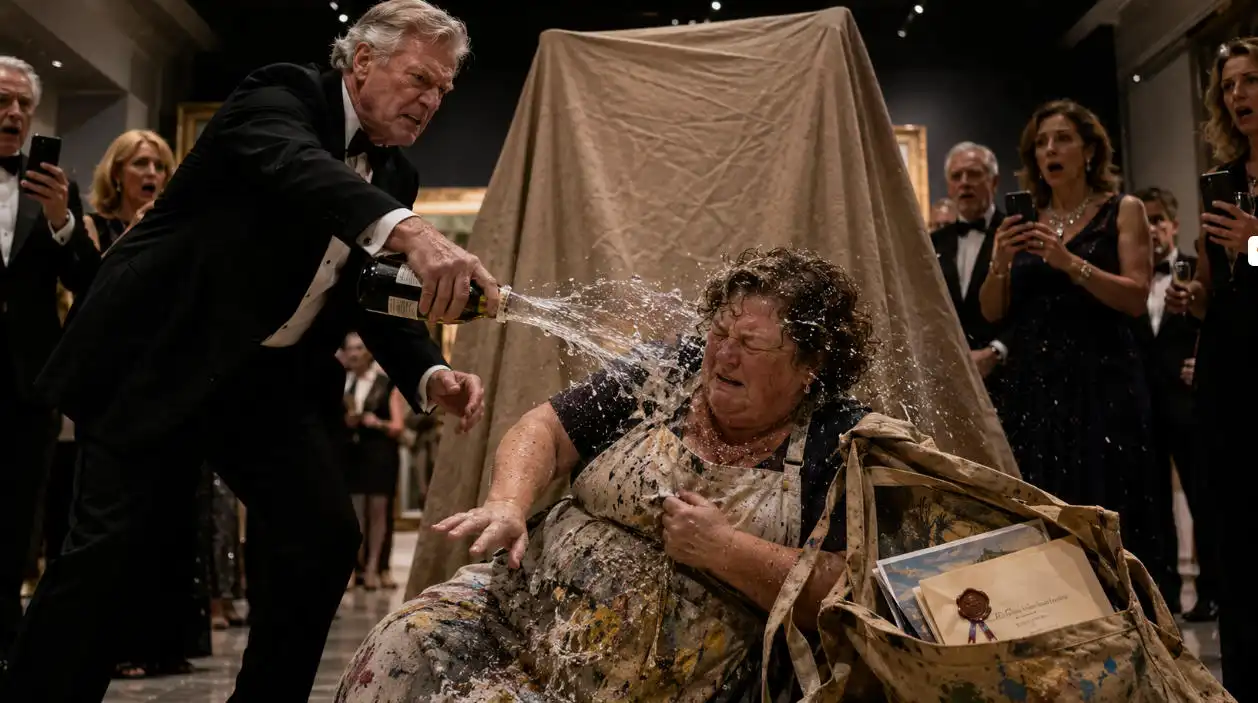
A Paint-Stained ART TEACHER Was Humiliated at a VIP Museum Preview by an Elite Critic… But He Had NO IDEA Who She Really Was 😳
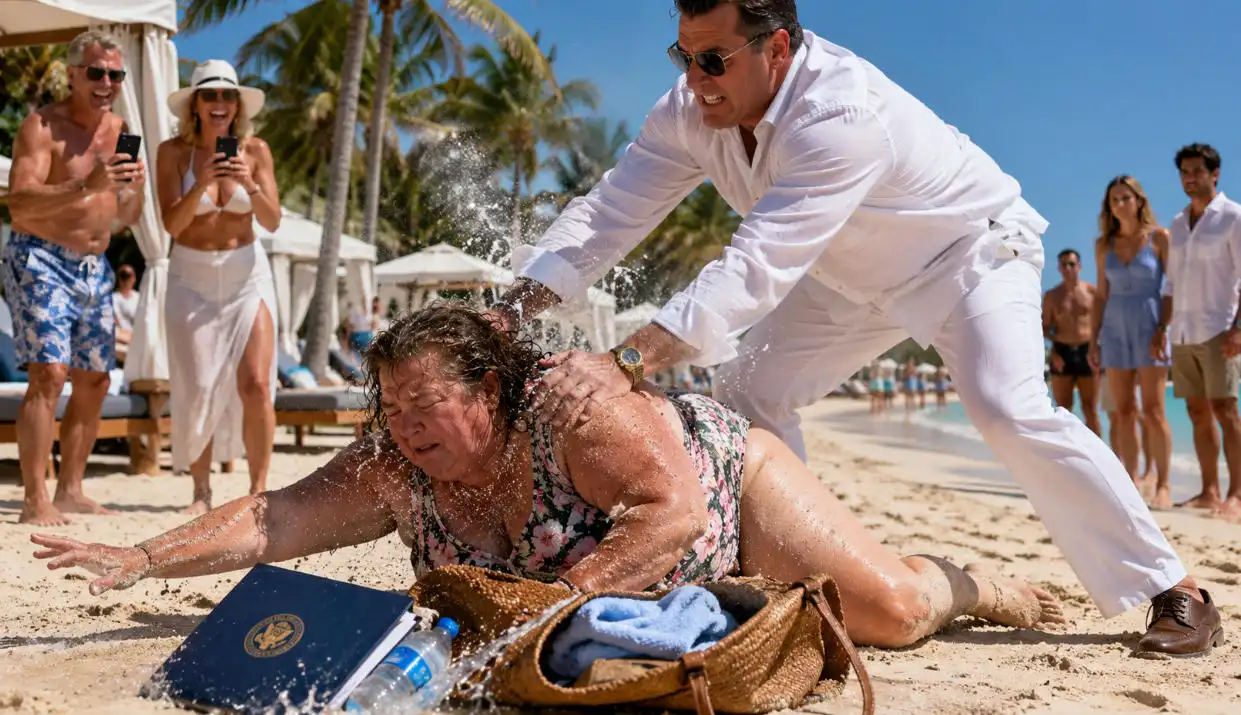
A PLUS-SIZE Grocery Cashier Was Dragged Across A Private Island Beach By A Snobby Resort Manager… But He Had NO IDEA Who She Really Was 😳

A Wall Street Executive Slapped A Soft-Spoken Farmer At The Bellagio VIP Table… Then The Dealer Froze When He Heard Jim’s Name