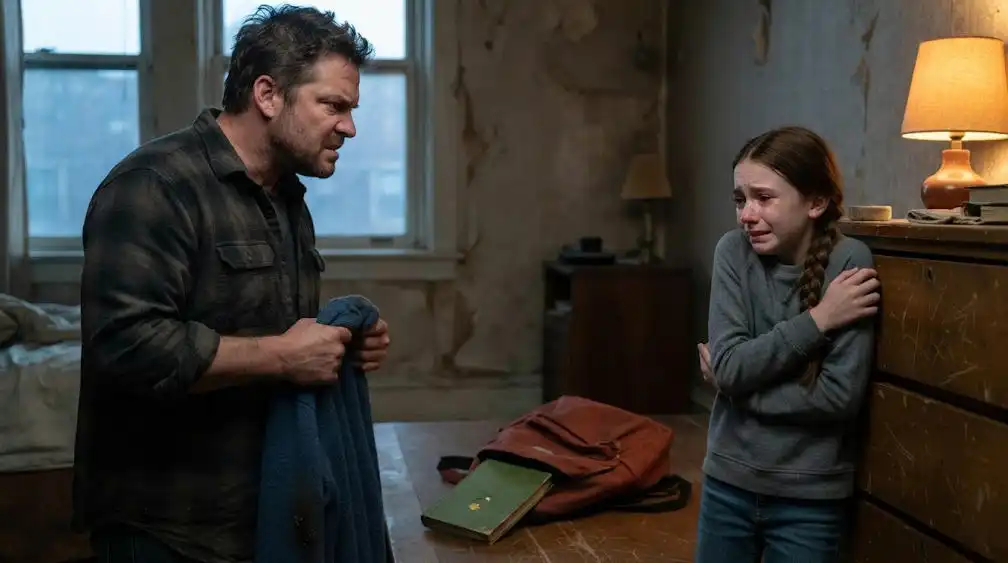




The soup was still steaming when my brother tipped the bowl over my head.
Gravy ran down my forehead. A piece of carrot landed on my shoulder. Thanksgiving dinner fell across the front of my blouse while twenty relatives watched in stunned silence.
My brother, Mark, laughed.
“Maybe now you'll finally learn some self-control.”
My mother, Diane, glanced at the ruined tablecloth.
“Honestly, Natalie. Must you always make family gatherings uncomfortable?”
I was thirty years old, exhausted from another overnight shift, and standing in my parents' dining room with food dripping from my hair.
I had helped pay my father's medical bills that month.
I had spent the previous weekend organizing Mark's freight deliveries without charging him a cent.
And somehow, I was still the family disappointment.
I looked around the table, waiting for someone to tell Mark that what he had done was unacceptable.
Nobody did.
My younger sister, Ashley, lowered her eyes and pressed her lips together, trying not to smile.
My mother sighed as though I had inconvenienced everyone by being humiliated.
Something inside me finally settled.
I picked up my napkin, wiped my face, and looked directly at my brother.
“I'm done paying for everything.”
Mark laughed harder.
“You? What are you going to do, cut us off?”
I placed the napkin beside my plate.
“Yes.”
Then I walked out.
My name is Natalie Brooks, and for most of my adult life, I had confused being useful with being loved.
I grew up in Cleveland, Ohio, in a family that believed appearances mattered.
My mother admired polished people.
She liked expensive handbags, carefully arranged dinner tables, and relatives who could talk confidently about promotions, property values, and successful children.
My brother, Mark, was her favorite son.
He was outgoing, ambitious, and always talking about the next business opportunity.
My younger sister, Ashley, was her favorite daughter.
She was slim, fashionable, and good at making people feel that everything in her life was going according to plan.
I was the practical one.
I was the daughter who remembered appointments, handled paperwork, and showed up when something needed fixing.
When our father developed serious health problems, I became the person everyone called.
When an insurance statement was confusing, they called me.
When a medical appointment needed to be rescheduled, they called me.
When a bill arrived before payday, they called me.
And when my mother worried about how the family would manage financially, she called me again.
At first, I didn't mind.
My father, Frank, had spent years working hard to support us. He wasn't perfect, but he had always been kinder to me than the rest of the family.
He never made comments about my weight.
When I struggled with a difficult decision, he listened.
When I showed him a certificate from a professional training course, he put it on the refrigerator as though I had won an international award.
“You've always been dependable, Natalie,” he once told me.
I held on to those words for years.
Unfortunately, being dependable became the excuse everyone used to take more from me.
I worked as a logistics dispatcher for a regional transportation company.
My job involved coordinating drivers, tracking shipments, communicating with warehouses, and solving problems when deliveries went wrong.
If a truck broke down, I helped arrange another vehicle.
If a warehouse changed its receiving hours, I updated the schedule.
If a shipment was delayed, I worked out a new delivery window.
It was stressful work, particularly because my position required rotating overnight shifts.
My sleep schedule changed constantly.
Some weeks, I worked late nights followed by early-morning handovers.
Other weeks, I struggled to sleep during the day while trucks rumbled along the road outside my apartment.
The irregular hours affected my energy, eating habits, and overall health.
I developed hormonal symptoms and gained weight.
I consulted healthcare professionals and tried to improve my routines, but progress was slow.
The more exhausted I became, the harder it was to maintain consistent sleep, meals, and exercise.
My family treated the changes as evidence that I lacked discipline.
Ashley once looked at a photograph of us from a family barbecue and said, “You used to take such good care of yourself.”
My mother nodded.
“You would feel so much better if you made an effort.”
I had made efforts.
I had scheduled appointments between shifts.
I had tried to prepare meals in advance.
I had walked when I had enough energy.
But none of that seemed to matter.
To my family, the explanation was simple: I was getting fat because I wasn't trying hard enough.
Ashley, meanwhile, received praise for everything.
When she completed a professional course, my mother organized a dinner.
When she bought a new car, my mother told everyone how proud she was.
When Ashley announced that she wanted to move into a nicer apartment, my parents helped with the deposit.
I didn't resent my sister for being successful.
I resented the fact that her success was treated as a family achievement while my contributions were treated as obligations.
When I paid a portion of Dad's medical expenses, my mother said, “That's what family does.”
When Ashley bought herself a designer handbag, my mother called her a young woman who knew her worth.
When Mark needed help covering a business expense, my mother called me.
“You're good with numbers,” she would say. “Could you help your brother work something out?”
I rarely received the money back promptly.
Sometimes I never received it back at all.
I kept telling myself that families were supposed to help one another.
Then I started looking at my bank statements.
Over several years, I had made recurring transfers for Dad's prescriptions, medical appointments, and other expenses related to his care.
I had also covered household shortfalls and helped Mark when his freight business encountered cash-flow problems.
I created a spreadsheet.
I listed the date, amount, recipient, and purpose of every payment I could verify.
I kept the receipts and transfer confirmations.
The total frightened me.
I had contributed far more than I realized.
Meanwhile, I had postponed replacing my old car.
I had delayed moving into a better apartment.
I had turned down training opportunities because I couldn't afford the fees.
My family knew I worked long hours.
They simply didn't seem to believe that my time or money belonged to me.
Mark's business made the situation worse.
He had started a small freight and delivery company several years earlier.
He was good at selling the idea.
He could charm potential clients, negotiate with suppliers, and make a modest operation sound like a major enterprise.
But he struggled with the daily details.
Dispatch schedules, delivery windows, driver assignments, and customer updates were not glamorous.
They required patience and constant attention.
Whenever Mark fell behind, he called me.
“Just take a look at tomorrow's schedule,” he would say.
“I'm getting ready for bed.”
“It'll only take twenty minutes.”
Twenty minutes became an hour.
An hour became an evening.
Sometimes he called during my break at work and asked me to solve a scheduling problem for his company while I was coordinating shipments for my own employer.
He promised to pay me when business improved.
Business always seemed to be improving just around the corner.
“You're family,” he reminded me whenever I mentioned payment.
“You know how hard I'm working.”
I did know.
I also knew that I was working hard.
But in Mark's world, his ambitions were investments.
Mine were inconveniences.
My mother reinforced that idea.
“Your brother is trying to build something,” she said. “You have a steady job. You should help him get established.”
When I pointed out that I had bills of my own, she looked offended.
“Why do you always make everything about money?”
I stopped arguing.
I simply kept helping.
The last straw did not arrive all at once.
It came through a series of small humiliations that I had learned to tolerate.
My mother asked me to bring food to a family gathering, then criticized what I brought.
Mark borrowed money and joked about my appearance when I asked when he would repay it.
Ashley accepted help from our parents without hesitation, then told me I needed to become more independent.
My mother once said that she worried about my future because I had no husband, no children, and no beautiful home.
I was thirty years old.
I had a job, a place to live, professional skills, and a record of helping the people I loved.
But none of those things counted as success in her eyes.
Then I overheard a conversation that changed the way I understood our family.
It happened several months before Thanksgiving.
I had arrived at my parents' house to drop off some paperwork for Dad's medical appointments.
My mother was in the kitchen, talking to Ashley.
They didn't realize I had returned from the hallway.
My mother was discussing her estate plans.
“Ashley understands how to present herself,” she said. “She'll know what to do with the house and the money.”
Ashley asked what would happen to me.
My mother answered without hesitation.
“Natalie will be fine. She always finds a way to manage. Besides, she's the one who helps with your father. She can keep doing that.”
Ashley laughed softly.
“But isn't that unfair?”
“Not everything has to be equal,” my mother replied. “Some children need more help than others. Natalie is used to doing things on her own.”
I stood completely still.
I had spent years helping my family because I believed that our relationships mattered more than keeping score.
Now I was hearing my mother explain that my reliability was the reason she could give more to someone else.
I did not interrupt them.
I left the paperwork on the kitchen counter and went home.
Later, during a conversation in which I was directly involved, my mother repeated the same reasoning about her intended estate arrangements. I preserved a recording of that conversation, along with my financial records.
The recording was not a will, and I understood that it did not determine anyone's legal inheritance rights.
But it captured something I had struggled to admit to myself.
My mother did not merely overlook my contributions.
She expected them.
She believed I would continue paying, helping, and sacrificing because I had always done so.
I cried that night.
Not because I expected to inherit the family house.
I had never demanded it.
I cried because I realized how little my mother thought she owed me in return for years of support.
Still, I continued helping Dad.
His condition required ongoing care, and I did not want our family conflict to affect his access to necessary treatment.
I paid my agreed share of certain expenses directly when possible.
I kept the records.
I also began thinking more carefully about what I could afford and what responsibilities actually belonged to me.
I did not announce a family revolution.
I simply began preparing to make different choices.
Then Thanksgiving arrived.
My mother had been planning the dinner for weeks.
She wanted everything to look perfect.
The table was covered with a cream-colored cloth, and the good china was arranged around a centerpiece of autumn leaves and miniature pumpkins.
Ashley arrived in a fitted burgundy dress.
Mark wore a new sweater and spent the first twenty minutes discussing a business opportunity.
I came straight from a demanding shift.
I had showered, changed into a clean blouse, and brought a homemade apple pie because I knew my father liked it.
I was tired, but I was glad to see Dad.
He was sitting at the end of the table.
When I placed the pie beside him, he smiled.
“Your grandmother's recipe?”
“Almost. I changed the crust a little.”
He took my hand.
“I'm glad you came.”
For a moment, I felt that the evening might be different.
Then dinner began.
My mother praised Ashley's dress.
Mark talked about a new client.
Ashley described a weekend trip she wanted to take.
I listened and occasionally joined the conversation.
When I reached for a second helping of potatoes, Mark glanced at my plate.
“Careful, Natalie. You're going to need a bigger chair.”
I put down my serving spoon.
“Can we just have dinner?”
He grinned.
“I'm only joking.”
My mother sighed.
“Your brother is trying to make conversation. You don't have to take everything personally.”
A few minutes later, Mark looked at my plate again.
“Seriously, do you ever stop eating?”
I stared at him.
“I worked all night.”
“So did plenty of people who don't look like that.”
Ashley gave a nervous laugh.
My father told Mark to leave me alone.
Mark ignored him.
“I'm just saying what everyone thinks.”
“No,” I said. “You're saying what you want to say because you think nobody will challenge you.”
His face hardened.
“Listen to yourself. You always act like the victim.”
My mother put down her fork.
“That's enough, Natalie. We're trying to enjoy Thanksgiving.”
I looked at her.
“I'm not the one insulting people at the table.”
She shook her head.
“Every family has teasing. You make everything difficult.”
Mark stood and reached for a serving bowl of hot soup.
I thought he was going to refill his plate.
Instead, he walked around the table toward me.
“Maybe this will help you understand,” he said.
He tipped the bowl.
The soup poured over my head and shoulders.
I gasped and jumped away from the table.
The bowl struck the edge of a chair before Mark dropped it.
Food scattered across the floor.
My blouse was soaked.
The soup was hot enough to leave my scalp and neck red and painful.
For a second, nobody moved.
Then my mother stood.
“Look at this mess!”
She looked at the tablecloth, not at me.
“Mark, you shouldn't have wasted the soup.”
I stared at her.
My brother was laughing.
Ashley had covered her mouth.
My father tried to push himself up from his chair, but he was too weak to move quickly.
“Mark,” he said, his voice shaking. “What have you done?”
That was when I knew I could not stay.
I stepped away from the table and carefully cooled the affected skin with running water in the kitchen.
My father asked whether I needed medical attention.
I told him I would get checked because the skin was painful and red.
My mother followed me into the kitchen.
“Don't turn this into a bigger incident than it needs to be,” she said.
I looked at her.
“Your son poured hot soup over my head.”
“He was angry.”
“So was I. I didn't pour anything on him.”
She folded her arms.
“You know how Mark gets.”
I reached for a clean towel.
“And you know how I get, apparently. I keep paying for everything.”
She frowned.
“What is that supposed to mean?”
I looked her in the eyes.
“It means I'm done.”
“Done with what?”
“Paying for Mark's business problems. Covering your household expenses. Working for free whenever he can't manage his own company. Pretending that the way you treat me is normal.”
She stared at me.
“You wouldn't dare.”
I dried my face.
“Watch me.”
Then I left.
I went to an urgent care clinic to have the irritated skin examined.
Fortunately, the injury was not severe, and I was given instructions for caring for it and watching for worsening symptoms.
I went home afterward and sat in my apartment without turning on the television.
My phone began ringing.
First, my mother.
Then Mark.
Then Ashley.
I didn't answer.
I was too tired to explain why being treated like a person mattered.
The next morning, I opened my laptop and reviewed the spreadsheet I had created months earlier.
For the first time, I did not look at the figures with guilt.
I looked at them as information.
I calculated my regular expenses.
I reviewed my savings.
I identified the support I could reasonably continue providing for Dad without putting my own housing and basic needs at risk.
Then I made a list of everything I would no longer pay.
Mark's business expenses.
My mother's household shortfalls.
Unpaid dispatch work.
Last-minute loans.
Unexplained transfers.
Anything that required me to sacrifice my stability simply because someone else had failed to plan.
I contacted an attorney to understand my responsibilities and protect my financial interests.
I wanted to be certain that my decisions about Dad's care were handled appropriately.
The advice was straightforward: keep accurate records, distinguish my own obligations from voluntary support, and avoid making informal promises that I could not sustain.
I contacted the appropriate people involved in Dad's care and arranged a transparent way to handle the expenses I had agreed to cover.
Where payments were necessary, I would make them through documented arrangements.
I would not abandon my father.
But I would no longer allow my love for him to become an unlimited source of money for everyone else.
Then I called Mark.
He answered on the first ring.
“Finally. I need you to fix next week's dispatch schedule.”
“No.”
There was a pause.
“What?”
“I won't be handling your dispatch schedule anymore.”
“You can't just stop.”
“I can. I've been doing it for free, and I'm no longer available.”
He laughed in disbelief.
“You're going to wreck my business over a stupid Thanksgiving argument?”
“No, Mark. Your business is your responsibility.”
He swore at me and hung up.
I blocked his number temporarily.
My mother called from another phone.
She left a message accusing me of punishing everyone because I couldn't take a joke.
I saved it and did not respond.
Ashley sent a longer message.
She said I was being selfish.
She reminded me that Dad was sick and that family members were supposed to help one another.
I replied once.
“I am continuing to help Dad through a clear, affordable plan. I am no longer paying for Mark's business or covering expenses that aren't mine.”
She did not answer.
The consequences began almost immediately.
Mark had relied on my help for so long that he had never built a reliable dispatch process of his own.
When I stopped handling the schedules, he struggled to coordinate drivers, delivery windows, and warehouse appointments.
At first, he tried to do everything himself.
He missed a few calls.
Then he double-booked a truck.
A customer complained when a shipment arrived outside its delivery window.
Another client canceled a booking after repeated communication problems.
Mark hired a temporary dispatcher, but the person lacked familiarity with his operation and charged a professional rate.
The cost was far higher than the free help he had received from me.
His cash flow tightened.
He began calling more often.
I did not answer.
Within weeks, he had lost enough business that he was struggling to cover operating expenses.
His company was in danger of closing.
My mother called to tell me I was destroying my brother's future.
I reminded her that I had never been his employee.
She said I should have given him more notice.
I reminded her that I had repeatedly told him I could not keep doing unpaid work after my own shifts.
She said I was being cruel.
I ended the call.
The hardest part was not hearing their accusations.
It was the guilt that followed.
I had been trained by years of family expectations to believe that another person's crisis automatically became my responsibility.
Whenever Mark's business struggled, I felt compelled to rescue it.
Whenever my mother was upset, I tried to make peace.
Whenever Ashley criticized me, I wondered whether I was being unreasonable.
I had to learn that discomfort did not mean I was doing something wrong.
Sometimes discomfort was simply the feeling of breaking a habit that had been hurting me.
I began making changes to my own life.
I spoke with my healthcare provider about the symptoms that had been affecting my health.
I worked on establishing a more consistent sleep routine around my shifts.
I began preparing meals in advance so I would not have to rely on whatever food was available at two in the morning.
I started walking regularly.
When I had enough energy, I added gentle strength exercises appropriate for my current ability.
I stopped setting unrealistic goals that made me feel like a failure whenever work interrupted my plans.
My health improved gradually.
My energy became more predictable.
I felt stronger.
My weight also began to change, but it was no longer the only measure I used to judge myself.
I was learning to care for my body because I lived in it, not because I needed to prove something to my mother.
At work, I continued developing my skills.
I took an additional course in logistics planning and began documenting improvements I had made to shipment coordination.
My supervisor noticed that I handled complicated scheduling problems calmly.
When a senior dispatcher position became available, I applied.
The interview was challenging.
I had to explain how I managed competing deadlines, communicated with drivers, and prioritized urgent deliveries.
I described specific problems I had solved.
I talked about reducing scheduling errors and improving communication between warehouses and carriers.
I did not talk about my family.
I did not mention Mark.
I focused on my work.
Two weeks later, I received the promotion.
The salary increase was modest, but it made a meaningful difference.
I could build my savings again.
I could replace some worn-out furniture.
I could begin looking for an apartment with more space and a better environment for sleeping between shifts.
For the first time in years, my progress was not immediately redirected toward someone else's needs.
Then my family came to my apartment.
It was a Sunday afternoon.
I had just returned from grocery shopping when I heard a knock.
I opened the door and found my mother and Mark standing in the hallway.
Mark looked exhausted.
His shirt was wrinkled, and he kept rubbing his forehead.
My mother looked angry.
“We need to talk,” she said.
I stepped aside enough to speak without blocking the doorway.
“What is it?”
Mark began immediately.
“I need you to help with the dispatch schedules. Just for a month. Until I get the business stable again.”
“No.”
He stared at me.
“Don't start this again.”
“I'm not starting anything. I'm answering your question.”
He took a breath.
“You know the clients. You know the routes. I can't afford another dispatcher right now.”
“Then you need to restructure the business or hire someone you can afford.”
“You're my sister!”
“And I was your sister when you poured soup over my head.”
He looked away.
My mother stepped forward.
“Must you bring that up every time?”
“Yes,” I said. “Because neither of you has apologized for it.”
Mark folded his arms.
“I said I was sorry about Thanksgiving.”
He had not.
He had sent one message saying he was sorry I had taken the incident so seriously.
That was not an apology.
I looked at him.
“You apologized for my reaction. You never apologized for what you did.”
He opened his mouth, then closed it.
My mother changed tactics.
“Your brother is facing a serious financial problem. Your father needs support. We are family. You cannot just walk away from everyone.”
“I haven't walked away from Dad.”
“You should be helping more.”
“I am helping with Dad's care in a way I can sustain. The arrangements are documented. I'm not going to finance Mark's company or cover expenses that aren't my responsibility.”
My mother shook her head.
“You've become selfish.”
I felt the old instinct to defend myself.
I wanted to list every bill I had paid, every night I had stayed awake to solve Mark's scheduling problems, and every time I had rearranged my life because someone else needed me.
Instead, I opened the folder I had prepared.
Inside were copies of the payment records I had organized, along with a summary of the support I had provided over the years.
I did not hand them every private document.
I simply showed them the totals and dates relevant to the conversation.
“These are the payments I've made toward Dad's care and the other expenses I've covered,” I said. “I'm not asking you to repay everything today. I'm showing you that I have helped for years.”
My mother looked at the figures.
For once, she had nothing to say.
Then I placed a written summary of the boundaries I had established on the table near the door.
It explained that I would continue contributing to Dad's necessary care according to the documented arrangement I could afford, and that any changes would need to be discussed transparently.
It also made clear that I would no longer provide unpaid business services or personal loans to Mark.
My mother glanced at the paper.
“You've actually written all this down?”
“Yes.”
She looked almost offended by the idea that our family arrangements needed to be written down.
I understood why.
For years, everything had depended on my willingness to help without asking questions.
Written records made it harder to pretend that my contributions were invisible.
Then I took out a copy of the transcript I had prepared from the recording of our conversation about the estate.
I did not threaten to publish it.
I did not use it to demand an inheritance.
I simply placed it beside the financial summary.
“I'm not asking for your house or your money,” I told my mother. “But I will no longer pretend that I don't understand what you expect from me.”
She read the first few lines.
Her expression changed.
“That conversation was private.”
“It was a conversation I participated in. I kept a record because I needed to understand what was happening.”
“You're twisting my words.”
“Then explain them.”
She stared at me.
I waited.
Finally, she said, “Ashley needs more help than you do.”
I nodded slowly.
“Then help Ashley. That's your choice. But you don't get to use that choice as a reason to demand that I pay for everyone else.”
Mark shifted his weight.
“Can we please focus on the business?”
“No.”
He looked shocked.
“I thought you wanted to help.”
“I wanted to help you build something sustainable. I did not agree to become your unpaid employee indefinitely.”
He rubbed his face.
“So you're just going to let my company fail?”
I looked at him.
“If your company fails because you cannot manage its operations without free labor from your sister, you need to face that reality. I will not sacrifice my job, health, and financial security to keep pretending the business is working.”
He stared at me for a long time.
My mother began crying.
She said I had changed.
She said the family used to be closer.
She said my father would be heartbroken if he knew how I was treating them.
That last comment hurt.
But it no longer controlled me.
“I love Dad,” I said. “That's why I'm making sure his care continues. I'm not going to prove that love by allowing you to mistreat me.”
I opened the door.
“I think you should leave now.”
My mother looked at me as though she no longer recognized her own daughter.
Mark muttered something under his breath.
Neither apologized.
They left.
I closed the door and leaned against it.
My hands were trembling.
Setting boundaries had not made me fearless.
It had simply taught me that I could be frightened and still say no.
The following months were difficult.
My mother told relatives that I had abandoned the family.
Mark complained that I had left him to handle a business crisis alone.
Some relatives called to ask why I was being so hard on them.
I explained my position when I felt it was useful.
I did not argue with everyone.
I did not share private medical information about my father.
I did not post my family's financial records online.
I did not try to turn every relative into a witness for my side.
I let the records speak where they needed to, and I let my boundaries speak everywhere else.
My father remained the one person whose feelings I worried about most.
I visited him regularly.
I brought groceries when that was part of our arrangement.
I helped coordinate appointments when I could.
I continued my agreed contributions toward his care.
One afternoon, I found him sitting by the living room window.
He looked tired, but he smiled when I entered.
“Your mother tells me you've been having a difficult time.”
I sat beside him.
“I've been setting some limits.”
He nodded.
“Good.”
I looked at him in surprise.
“You're not angry?”
He took a slow breath.
“I should have said something at Thanksgiving.”
I felt my throat tighten.
“Yes,” I said. “You should have.”
He looked down at his hands.
“I was embarrassed. I didn't know how to stop it.”
“You could have told Mark to stop.”
“I could have.”
He was quiet for a moment.
Then he said, “I'm sorry I didn't.”
Those words meant more to me than any argument I could have won.
I did not pretend that his apology erased everything.
But I accepted it.
We talked about his treatment, the family, and the changes I was making in my life.
He asked about my new position.
When I told him about the promotion, he smiled.
“I knew you were good at that work.”
I laughed softly.
“You're the only person in this family who has ever said that without asking me to solve a problem afterward.”
He smiled sadly.
“You shouldn't have had to earn kindness by being useful.”
I carried those words with me for a long time.
Mark's business continued struggling.
He eventually hired a professional dispatcher through a local service.
The arrangement cost him more than my unpaid help had, but it forced him to acknowledge the real cost of the work.
He lost two major clients after missed deliveries and communication failures.
The company came close to shutting down.
To keep it operating, he reduced expenses, renegotiated some contracts, and stopped pursuing new business until he could handle the work he already had.
He was embarrassed.
He was angry.
But for the first time, he had to take responsibility for the daily operations rather than expecting me to rescue him.
My mother had to adjust, too.
Without my automatic contributions, she had to review her own budget and make decisions about household expenses.
She could no longer assume that I would cover every unexpected bill.
Ashley began helping with some of the family arrangements she had previously left to me.
At first, she complained.
Then she realized that managing appointments and coordinating support required time, patience, and attention.
I did not celebrate their difficulties.
I did not want my family to suffer.
I wanted the responsibilities to stop falling on one person simply because everyone else had grown accustomed to it.
Months passed.
My health improved gradually as I established a more consistent routine around my work schedule.
I learned to prepare meals before overnight shifts.
I kept easy, balanced food available for the hours when I was tired.
I made time for walking and appropriate exercise.
I worked with my healthcare provider to monitor the symptoms that had affected my energy and weight.
Some weeks were difficult.
There were nights when I slept poorly or returned home too exhausted to exercise.
But I stopped treating every setback as a personal failure.
I was no longer trying to become a different person to earn my family's approval.
I was trying to build a life that felt sustainable.
Eventually, I found a new apartment.
It was on the third floor of a quiet building with large windows, a small balcony, and enough room for a proper dining table.
The bedroom was far enough from the street that I could sleep during the day without constant traffic noise.
I could afford the rent without worrying that an unexpected family request would leave me short.
Moving day was exhausting.
Two friends from work helped me carry boxes.
One brought a toolbox.
The other arrived with sandwiches and a bag of groceries.
They didn't ask whether I had paid for the food.
They didn't tell me I owed them a favor.
They simply helped because they cared.
That evening, we sat on the floor of my new apartment, eating takeout beside a stack of unpacked boxes.
Someone raised a paper cup.
“To Natalie's new place.”
I laughed.
“To a place where nobody gets to dump soup on me.”
We all laughed, and for the first time in a long while, the sound felt easy.
I had spent years thinking that family was defined by how much sacrifice a person could endure.
Now I was learning that love could be quieter.
It could look like a friend helping carry a box.
It could look like someone remembering that you work nights and bringing dinner early.
It could look like a person listening when you say you're tired without turning your exhaustion into a character flaw.
I still loved my father.
I still cared about my mother and siblings.
But I no longer believed that love required unlimited access to my money, time, or emotional energy.
My relationship with my mother remained distant.
Mark and I spoke occasionally, usually about practical family matters.
He did not become a different man overnight.
Neither did she.
There were still awkward conversations and moments when old expectations resurfaced.
When that happened, I repeated my boundaries.
I would help with Dad's care through the arrangements we had established.
I would not provide unpaid business services.
I would not lend money I could not afford to lose.
I would not accept humiliation as the price of belonging.
Sometimes my mother accused me of being cold.
Sometimes Mark said I had forgotten where I came from.
I reminded them that I had not forgotten anything.
I remembered every year I had helped.
I remembered every bill.
I remembered every late-night phone call.
And I remembered Thanksgiving.
I simply no longer believed those memories obligated me to repeat the same pattern forever.
The following Thanksgiving, I did not attend my mother's dinner.
Instead, I invited a few close friends to my new apartment.
We cooked together.
One friend brought roasted vegetables.
Another made mashed potatoes.
I prepared an apple pie using my grandmother's recipe.
The kitchen became crowded, and someone spilled a little gravy on the counter.
We laughed, cleaned it up, and kept cooking.
Nobody blamed me.
Nobody commented on how much I ate.
Nobody treated my body as a family problem.
When we sat down to dinner, I looked around the table.
These were people who respected my work, understood my schedule, and cared about me without requiring me to prove my worth through endless favors.
The meal was simple.
The apartment was warm.
The windows reflected the soft light of the lamps.
For the first time in years, Thanksgiving felt like a holiday instead of an examination I was destined to fail.
I thought about the girl I had been, the one who believed that if she worked harder, paid more bills, and asked for less, her family would eventually recognize how much she loved them.
I wished I could tell her something.
Being dependable is a strength, but it is not permission for other people to take everything you have.
Helping someone is an act of love.
Being forced to rescue them repeatedly is not the same thing.
And the people who truly care about you will not require you to accept humiliation as proof of loyalty.
I lifted my glass.
“To good food,” I said.
My friends raised theirs.
“To good people,” someone replied.
I smiled.
Outside, Cleveland was settling into a cold November evening.
Inside, the table was full, the food was warm, and nobody was asking me to pay for the privilege of being there.
I was thirty years old.
I had a job I was proud of, a home I could afford, a healthier routine, and relationships built on mutual care.
My family had not suddenly become perfect.
My mother had not transformed into a different person.
My brother had not offered a grand apology.
But I had stopped waiting for them to change before allowing myself to live.
And that was the difference.
I could love my family without financing every decision they made.
I could care for my father without becoming responsible for everyone else's life.
I could forgive what I was ready to forgive without pretending the hurt had never happened.
Most importantly, I could sit at a Thanksgiving table without wondering whether I had earned my place.
I took another bite of pie.
My friend asked whether I wanted the last slice.
I grinned.
“Absolutely.”
Everyone laughed.
And nobody had to humiliate anyone to make the evening memorable.
CHOOSE YOUR SIDE: NATALIE WAS RIGHT TO SET FIRM FINANCIAL BOUNDARIES, or FAMILY SHOULD ALWAYS COME FIRST, EVEN WHEN RELATIVES TREAT YOU BADLY.
Comment your choice and share this story with someone who needs the reminder that loving your family does not mean abandoning yourself. ❤️
Disclaimer: Mention of any brand or trademark is for identification only and does not imply partnership or endorsement

A Luxury Boutique Manager Called a Plus-Size Game Developer “Too Poor to Shop Here” and THREW AWAY Her Credit Card. She Had NO IDEA Who Just Bought the Mall... 😱
My Wealthy Aunt Let Her Daughter CUT MY HAIR at Thanksgiving and Called Me a “Family Embarrassment.” Then Grandpa’s Lawyer Opened the REAL Will... 😱

A Snobbish Charity Queen Dumped Red Wine on a Plus-Size Riding Instructor and Kicked Her Out. She Had NO IDEA Who Held the Club’s Debt... 😱