
Then the sheriff opened the folder and began to read the first line.
But before the truth left his mouth, John Miller lifted one weathered hand.
“Sheriff,” he said softly, “not yet.”
The Texas country club ballroom was so quiet people could hear the silverware trembling on plates.
At the front of the room, Emily Miller stood in a white engagement dress beside Charles Whitaker, the Wall Street fiancé who had just called her father “farm trash” in front of bankers, lawyers, cousins, neighbors, and half the town.
John was sixty-eight years old.
He had one bad leg, one good suit that didn’t fit anymore, and mud on both boots from fixing fence before sunrise.
Charles had a tailored tuxedo, a fake smile, and a gold watch he kept flashing like it was proof God loved him more.
The difference between them was impossible to miss.
One man looked like money.
The other looked like sacrifice.
And Emily, the daughter John had raised alone on a struggling Texas farm, had chosen silence when her fiancé mocked him.
That silence hurt John more than the insults.
More than the limp.
More than the years.
John looked at the microphone in the center of the ballroom and said, “Give me three minutes. If I can’t prove I belong here, I’ll walk out and you’ll never have to be ashamed of me again.”
Emily flinched.
“Dad…”
Charles laughed under his breath.
“Three minutes? You already proved enough when you tracked mud across marble.”
A few guests looked down.
Some looked away.
Nobody laughed this time.
The sheriff, Hank Dawson, stood near the doorway with a sealed folder in his hand. Beside him was Earl Bennett, an old veteran with silver hair, a stiff back, and a small velvet box pressed to his chest.
Earl’s eyes were locked on Emily.
Not with anger.
With grief.
John stepped toward the microphone.
His bad leg dragged slightly.
Every step made a soft scrape against the polished floor.
Charles leaned toward Emily and whispered loud enough for the front tables to hear, “This is exactly why I told you not to invite him.”
Emily’s cheeks burned.
“He’s my father,” she whispered.
“Then act like you’ve outgrown him.”
That was the sentence that changed the temperature in the room.
John stopped walking.
Slowly, he turned.
“What did you say?”
Charles smiled.
“I said she has outgrown you. She has a future now. A real life. Not cows, debt, rusted fences, and some cripple limping around pretending dignity pays bills.”
💔
Emily closed her eyes.
But she still said nothing.
John nodded once, like a man accepting a wound he had been expecting for years.
Then he reached the microphone.
His hands were rough, the kind of rough that comes from barbed wire, tractor grease, sun, and winter work done without gloves.
He tapped the microphone once.
A sharp sound cracked through the speakers.
“My name is John Miller,” he said. “Most of you know me as Emily’s father. Some of you know me as the man who sells peaches by the highway in July. Some of you know me as the farmer who still owes half the town a favor.”
A few older guests smiled sadly.
John continued.
“I didn’t come here to embarrass my daughter. I came because every father hopes his little girl will let him stand near her on one of the biggest days of her life.”
Emily’s lip trembled.
Charles rolled his eyes.
John looked at him.
“And I came because a man who plans to marry my daughter ought to know one thing before he puts a ring on her finger.”
Charles folded his arms.
“What, old man?”
John leaned closer to the microphone.
“You can insult me. You can insult my clothes. You can insult my farm. But you do not buy my daughter with borrowed shine and call it love.”
The room stirred.
Charles stiffened.
“Borrowed shine?”
John did not answer.
Instead, he looked at Emily.
“Do you remember the summer before college?”
Her face changed.
The whole room could see it.
A memory had found her.
Emily’s voice came out small.
“I remember you said the crops failed.”
“They did.”
“You said… you said not to worry about tuition.”
“I did.”
She swallowed.
“And then you stopped going to physical therapy.”
John lowered his eyes.
Charles snapped, “What does this have to do with anything?”
Sheriff Dawson stepped forward.
“It has to do with the document in my hand.”
Charles pointed at him.
“You’re interrupting a private event.”
The sheriff’s face did not move.
“This became public when you humiliated a man in front of witnesses.”
😱
A murmur traveled through the ballroom.
Charles looked around as if the walls had betrayed him.
John held up his hand again.
“No, Hank. Let me say my part first.”
He turned back to Emily.
“You were eighteen. You had that acceptance letter from Baylor folded under your pillow like it was a prayer. Your mama was already gone, and I didn’t know how to tell you that the farm account had forty-three dollars in it.”
Emily pressed both hands to her mouth.
John’s voice stayed calm, but everyone could hear the break beneath it.
“So I sold the east pasture.”
A woman near the back gasped.
Every local person in that room knew what the east pasture meant.
It was Miller land.
Old land.
The best grazing land his family had owned for generations.
Emily shook her head.
“No. You told me you leased it.”
John smiled, but it hurt to see.
“I told you what I had to tell you so you would go to school without guilt.”
Emily’s tears spilled over.
“You sold half the farm?”
John nodded.
“For your tuition. Your books. Your dorm. That first winter coat you said was on sale but still cost more than my truck payment.”
Charles laughed, but it came out thin.
“So what? Parents pay for college. That doesn’t make him noble.”
Earl Bennett took one hard step forward.
“No,” Earl said. “But bleeding in a ditch for her does.”
The room froze again.
Emily turned toward him.
“What?”
John’s face went pale.
“Earl.”
But Earl was done waiting.
He opened the velvet box.
Inside lay an old military medal, polished but worn at the edges, and a folded photograph of two young soldiers standing in desert dust with their arms around each other.
“Your father saved my life overseas,” Earl said. “That medal should’ve been pinned on him in front of a whole base. He refused the ceremony because he said he didn’t want fuss.”
He looked at John.
“And years later, he saved you too.”
Emily shook her head harder.
“No. His leg… he said it was a tractor accident.”
John closed his eyes.
“It was.”
Sheriff Dawson said, “Not exactly.”
Now the sheriff opened the folder.
He pulled out a report, yellowed at the edges but official.
“August 14, 2008,” he read. “Vehicle rollover on County Road 19. Minor female trapped in truck cab after hydroplaning near the Miller property. John Miller entered drainage ditch during flash flooding, broke passenger window with fence post, removed minor from vehicle moments before secondary collapse. John Miller sustained compound fracture to left tibia and permanent nerve damage.”
Emily whispered, “No.”
The sheriff looked up.
“The minor female was Emily Miller.”
The sound she made was not a word.
It was a daughter falling through every lie that had ever protected her.
“You said…” She turned to John. “You said I climbed out myself.”
John’s eyes shone.
“You were seventeen. You had nightmares for months. You already blamed yourself for taking the truck without asking. I wasn’t going to let you carry my limp too.”
💔
Emily stepped backward until she hit the edge of the head table.
The diamond on her finger caught the chandelier light.
Suddenly it looked cold.
Charles grabbed her wrist.
“Enough. This is emotional manipulation.”
John’s eyes dropped to Charles’s hand.
“Let go of her.”
Charles tightened his grip.
“She is my fiancée.”
“And she is my daughter.”
There was something in John’s voice then that made even the richest men in the room sit straighter.
Charles released Emily.
But he smiled again, desperate to regain control.
“This is pathetic. A sad farm story. A sheriff playing theater. An old soldier with a box. None of this changes the fact that your daughter chose a better life.”
John slowly stepped down from the microphone platform.
His boot hit the marble.
Mud flaked from the heel.
He walked toward Charles.
The whole ballroom seemed to hold its breath.
Charles lifted his wrist again.
“Careful, old man. This watch costs more than your tractor.”
John stopped.
He looked at the watch.
Then at the sheriff.
Sheriff Dawson sighed like a man who had been waiting for the last piece to fall.
“Actually,” the sheriff said, “that watch is part of why I’m here.”
Charles’s smile vanished.
“What?”
Hank pulled another paper from the folder.
“Charles Whitaker is not currently employed by Whitaker Capital Advisors. He was terminated six months ago after internal fraud allegations.”
The ballroom erupted.
🤯
Charles shouted, “That’s confidential!”
Hank kept reading.
“He is also wanted for questioning in connection with forged investment contracts targeting elderly clients in three counties.”
Emily stared at Charles as if he had turned into a stranger.
“Is that true?”
Charles backed up.
“It’s complicated.”
John looked at the watch again.
“That gold real?”
Charles said nothing.
John took one more step.
“Answer my daughter.”
Charles sneered.
“You wouldn’t know real gold if you dug it out of your pig trough.”
That was when John lifted his muddy boot.
Not fast.
Not wild.
Just deliberate.
Charles had dropped the watch earlier on the head table while making a show of wiping John’s mud off his sleeve. It sat beside a champagne glass, bright and loud and fake.
John brought his boot down.
Crack.
The watch face shattered under the mud-caked heel.
Gasps burst around the room.
Charles lunged.
“My watch!”
A tiny brass-colored plate popped loose.
Sheriff Dawson bent, picked it up, and raised it between two fingers.
“Counterfeit.”
The laughter started in the back.
Not cruel at first.
Just disbelief.
Then it rolled through the ballroom like thunder across open pasture.
Charles’s face went red.
The man who had mocked muddy boots had been wearing a fake crown.
And the whole town had seen it.
😱
Charles turned on Emily.
“You think this changes anything? You’re nothing without me. You’re a farm girl in borrowed diamonds.”
Emily looked down at her engagement ring.
For the first time all night, she seemed to really see it.
Then she pulled it off.
Her hand shook.
“No,” she said. “I was a farm girl in my father’s love.”
She set the ring on the table.
Charles stared.
“You’ll regret this.”
Sheriff Dawson stepped closer.
“Mr. Whitaker, you’ll want to come with me.”
“I’m not going anywhere.”
Two deputies entered from the side hallway.
Charles looked around for allies.
The bankers looked away.
The lawyers checked their shoes.
The relatives whispered.
Even his own mother sat frozen, one hand over her mouth.
Hank’s voice was calm.
“You can walk out like a gentleman, or you can make this worse in front of everyone.”
Charles tried to straighten his jacket.
But his hands were shaking.
As the deputies escorted him out, someone near the bar muttered, “Should’ve bought a real watch.”
The room broke into nervous laughter.
Charles Whitaker, the man who had called John Miller “farm trash,” left the Texas country club with mud on his shoe, fraud papers in the sheriff’s folder, and no fiancée beside him.
Within a week, the story was everywhere in town.
The local paper ran it under a careful headline about financial fraud.
The victims began coming forward.
Retirees.
Widows.
A disabled veteran.
People who had trusted Charles because he wore fine suits and spoke like money.
He was charged, then convicted.
His name disappeared from country club guest lists.
His polished life cracked faster than that fake watch.
But the harder part happened after the ballroom emptied.
Because public justice is loud.
Private forgiveness is quiet.
After Charles was taken away, Emily stood in the wreckage of her own engagement party, surrounded by flowers, champagne, and guests pretending not to watch her cry.
John had turned to leave.
Not dramatically.
Not proudly.
Just tired.
Emily ran after him.
Her heels slipped on the marble.
“Dad!”
He stopped near the doorway.
His old hat was in his hand.
For a second, he looked smaller than he had at the microphone.
Like the truth had cost him something too.
Emily reached him and fell to her knees.
The whole room saw it.
The daughter in diamonds kneeling in front of the father in muddy boots.
“I’m sorry,” she sobbed. “I’m so sorry. I let him talk to you like that. I let myself believe you were something to escape.”
John’s chin trembled.
Emily gripped his hands.
“You sold the land. You gave up therapy. You carried my guilt so I could feel free. And I treated you like you were the shame.”
John looked down at her.
The room waited for anger.
For a lecture.
For the punishment every commenter would later say she deserved.
But John Miller was not built like that.
He put one rough hand on her head, the same way he had when she was five and scared of thunder.
“Baby girl,” he whispered, “I didn’t raise you perfect. I raised you loved.”
That broke her completely.
🙏
She cried into his muddy pant leg, and John stood there, one hand on her shoulder, forgiving her before she had even finished asking.
Earl Bennett wiped his eyes.
Sheriff Dawson turned away and pretended to study the wall.
The guests who had laughed at John earlier did not know where to look.
Some shame makes people smaller.
Some shame makes them human again.
Emily did not marry Charles.
She did not return to the city the next morning.
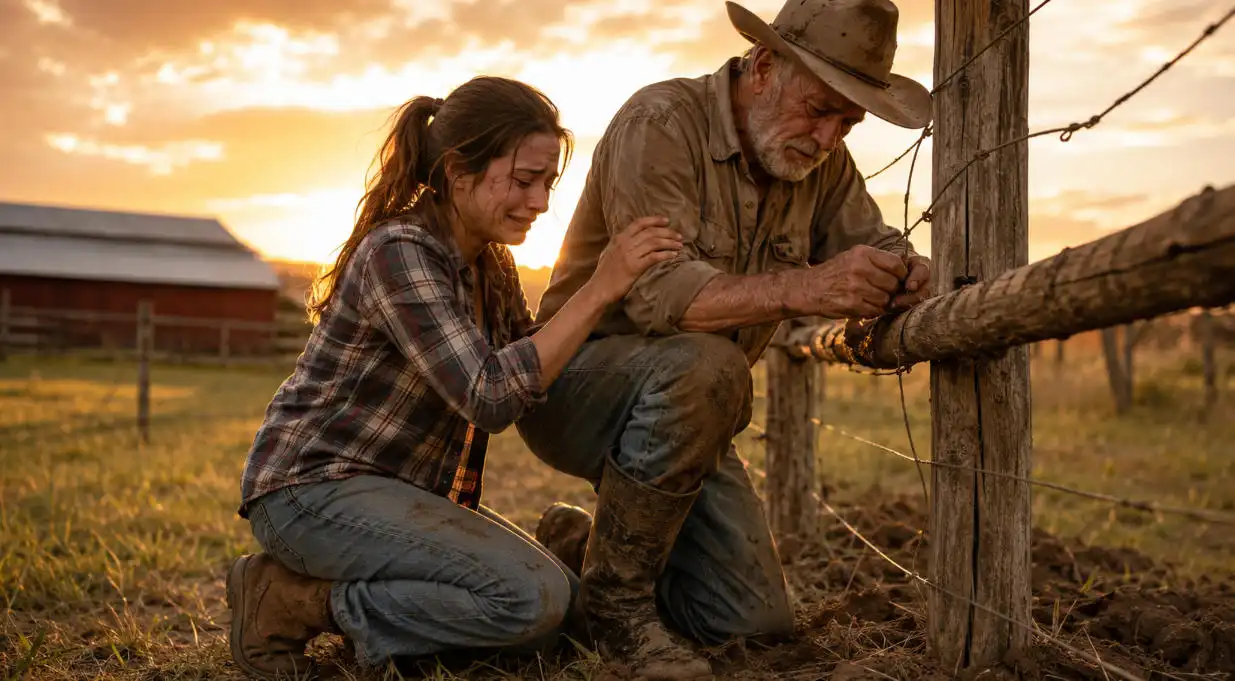
Three days later, she showed up at the Miller farm in jeans, work gloves, and an old plaid shirt John remembered from her college years.
The fence along the west pasture had sagged in two places.
John was already there with a post-hole digger.
He looked up.
Emily stood by the truck, hair tied back, makeup gone, eyes swollen but steady.
“I don’t know how to fix a fence anymore,” she said.
John leaned on the handle.
“Then I reckon we start with the part that’s broken.”
Neither of them said they were talking about more than the fence.
They worked slowly.
John measured.
Emily held the posts.
He showed her how to stretch wire without slicing her palm.
She listened.
Really listened.
By noon, her hands had blisters.
By sunset, her boots had mud on them too.
And for the first time in years, John heard his daughter laugh without trying to sound important.
A week later, Emily packed away the designer dresses.
She kept one nice black dress for church.
The rest she donated.
She moved back into her old room for a while, the one with faded rodeo ribbons still hanging by the window.
Every morning, she made coffee before John came in from feeding the cattle.
Every evening, they repaired another piece of the farm.
Not because money magically returned.
Not because pain vanished.
But because love, when chosen daily, can become visible again.
The micro miracle was simple and undeniable.
By the end of the month, the broken west fence stood straight for the first time in seven years.
Neighbors driving past slowed down.
They saw Emily Miller in a plaid shirt beside her limping father, both of them hammering under the Texas sun.
They saw apology turned into labor.
They saw forgiveness turned into posts, wire, sweat, and supper on the porch.
One afternoon, Earl Bennett came by with the medal.
He handed it to Emily.
“Your daddy still won’t display it,” Earl said. “Maybe you can convince him.”
Emily found John in the barn.
She held out the velvet box.
“I don’t want to hide what you did anymore.”
John looked at the medal for a long time.
Then he shook his head.
“I didn’t do it for display.”
“I know,” she said. “That’s why it matters.”
So they hung it in the farmhouse hallway.
Not high.
Not fancy.
Just near the front door, beneath a framed photo of Emily’s mother.
Under it, Emily placed a small handwritten note.
My father never asked to be seen. But he deserved to be.
People in town still talk about that engagement party.
Some talk about Charles and the fake watch.
Some talk about the sheriff reading the papers.
Some talk about the old veteran crying with a medal in his hands.
But the people who really understood the story talk about the moment after.
The moment when a daughter had every reason to hide…
And instead knelt in front of the father she had wounded.
John never became rich.
Emily never got back the years she spent being embarrassed by the very man who loved her best.
But every Saturday, if you drive past the Miller farm near sunset, you can see two figures by the fence line.
An old man with a limp.
A grown daughter in a plaid shirt.
And a stretch of Texas land that still stands because somebody decided family was worth repairing.
Share this if you believe a parent’s quiet sacrifice should never be mistaken for weakness.
Disclaimer: Mention of any brand or trademark is for identification only and does not imply partnership or endorsement
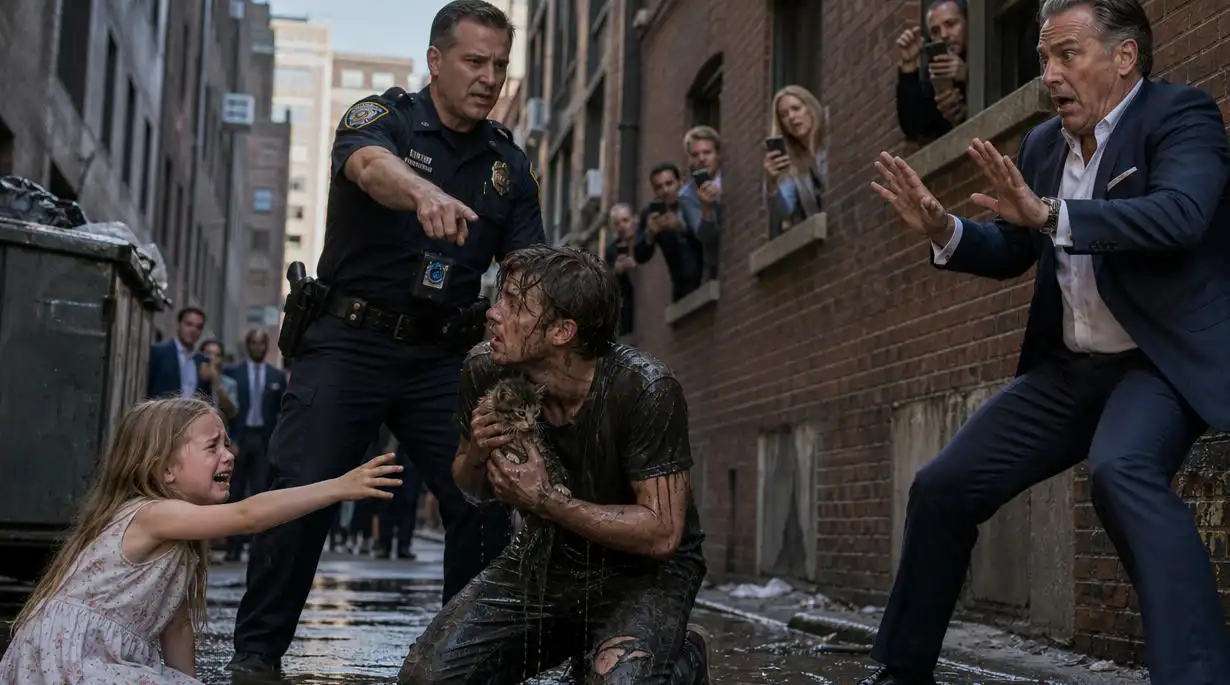
They Laughed While Security Beat the “Alley Thief”… Then One Video Made Everyone REGRET It
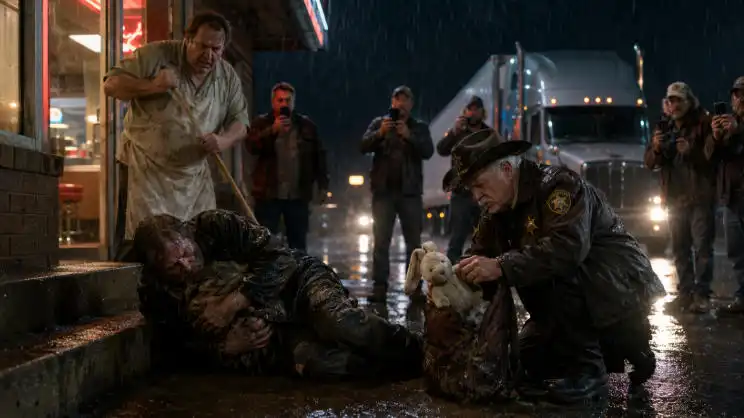
A Diner Owner Called Him a “VAMPIRE” and Kicked Him Into the Rain… Then KARMA Pulled Up in 18 Wheels
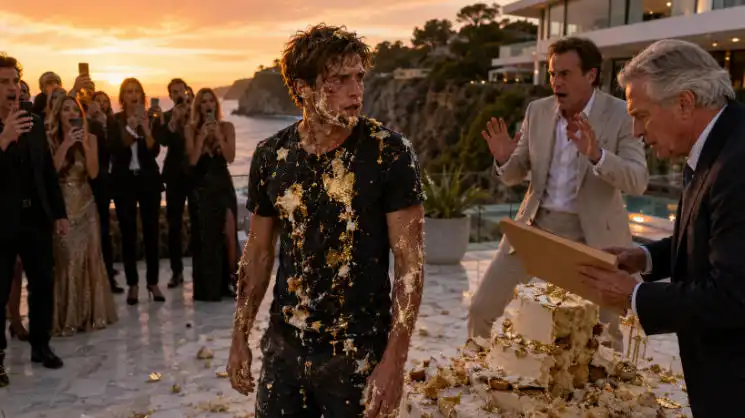
A Hollywood Producer Humiliated a Quiet Crew Worker on LIVE Video… Then KARMA Walked In Holding a Sealed Trust File