
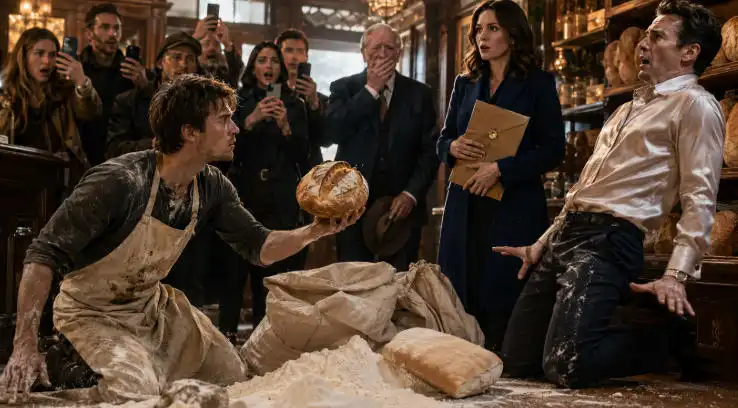
Then the Food Channel host read the first three words on the parchment sleeve.
She did not finish the sentence right away.
She looked at the loaf.
Then at me.
Then at Richard, whose hand was still locked around my arm like he owned the bone underneath my skin.
The whole bakery went so quiet that the old ovens sounded like thunder.
“Richard,” the host said carefully, “why does this say Elias Vale Baking Patent?”
Richard’s fingers dropped from my sleeve.
For the first time in my life, my brother had no comeback.
Not a laugh.
Not a threat.
Not one of those smooth little insults he used whenever there were rich people watching.
Just silence.
And live cameras.
That was the part he hated most.
Everyone was watching.
The customers.
The staff.
The food critic.
The old mayor.
The neighborhood families who still remembered my father waking up at 3:30 every morning to feed a sourdough starter older than most of the buildings on our block.
And America.
All because Richard wanted a national spotlight.
He got one.
Just not the kind he ordered.
My name is Elias Vale.
I was adopted when I was twelve by a baker named Joseph Vale, a quiet man with scarred hands, silver hair, and the kind of patience that made angry people ashamed of themselves.
He did not find me in some sweet storybook way.
He found me stealing a day-old roll from the alley behind Vale & Son Bakery.
I was hungry.
He caught me with the roll tucked under my jacket.
I expected police.
Instead, he said, “If you are going to steal bread, at least steal the good loaf.”
Then he made me sweep the back room, fed me soup, and asked where my parents were.
Three months later, I was sleeping in the little apartment above the ovens.
Two years later, I called him Dad.
He never forced me.
He earned it.
Richard was Joseph’s biological son.
He hated me from the first week.
Not loudly at first.
Small things.
He would “forget” to tell me dinner was ready.
He would move my school backpack near the trash and say, “Looks more natural there.”
When customers complimented my shaping, Richard would laugh and say, “Dad lets him play with dough because it keeps him off the street.”
Joseph always corrected him.
Firmly.
But Richard had a talent for behaving just long enough to look innocent.
By the time we were adults, everyone in the neighborhood knew the truth.
I was the son who opened the bakery at dawn.
Richard was the son who showed up at noon wearing sunglasses indoors.
I fed the starter.
Richard fed his ego.
I learned temperature, timing, fermentation, scoring, hydration, and the way Chicago winter air could change a loaf overnight.
Richard learned how to charge drinks to other people’s cards.
Still, Dad loved him.
That was Dad’s weakness.
Maybe his only one.
“Blood is loud,” Dad used to tell me, “but love is steady.”
He said that the last winter before he died.
He was sick by then, though he tried to hide it.
Cancer made him thinner, but not weaker.
Every night, after closing, he called me into the back kitchen.
No phone.
No notebook.
No shortcuts.
He taught me the real family sourdough.
Not the public version printed in old newspaper interviews.
The real one.
The one brought from Poland by his grandfather.
A strange method.
A sweet rye soak.
A long cold rest.
A starter fed with apple peel in October.
A crust wash that smelled like roasted malt and honey.
“Recipes can be stolen,” Dad told me. “Judgment cannot.”
Then one night, he handed me a folder.
Inside were two things.
A letter.
And documents showing that I had been legally granted forty percent of Vale & Son Bakery after his death.
Richard would receive forty percent.
The final twenty percent was placed in a neighborhood trust that prevented the bakery name, recipes, and building from being sold without approval.
Dad knew his son.
That was the first time I realized it.
He loved Richard.
But he did not trust him.
“Promise me,” Dad said, breathing hard, “you’ll protect the bread.”
I promised.
Three weeks later, he was gone.
At the funeral, Richard cried louder than anyone.
At the will reading, he smiled faster than anyone.
Our family lawyer, Martin Kessler, sat behind a polished desk and slid one document toward me.
“The estate is simple,” he said.
I noticed he would not look me in the eyes.
Richard leaned back, ankles crossed.
“The bakery passes entirely to Richard Vale,” Kessler said. “Elias receives a small personal stipend in recognition of his years of service.”
Years of service.
Not sonship.
Not inheritance.
Service.
I stared at the paper.
“This is not what Dad showed me.”
Richard gave a soft laugh.
“Dad felt sorry for you, Elias. That doesn’t mean he wanted you running a business.”
Kessler adjusted his glasses.
“The signed will is clear.”
I asked to see the original.
He refused.
I asked for a copy.
He gave me one with missing pages.
I asked why Dad’s neighborhood trust was gone.
Richard slammed his palm on the desk.
“Because nobody wants your little bedtime stories about dough and dead men.”
That was the day I learned how clean theft can look when a lawyer prints it on cream-colored paper.
Richard moved fast after that.
He changed the locks.
He fired two older bakers who had worked for my father for twenty years.
He brought in frozen par-baked loaves from a commercial supplier outside the city.
He renamed our best-selling sourdough “The Richard Reserve.”
Then he demoted me.
Not officially.
That would have created paperwork.
He simply stopped scheduling me in the kitchen.
Marcy, the front counter lead, became his little general.
She had always resented me because Dad trusted me with the ovens and never trusted her with the cash drawer.
Now she enjoyed herself.
“Dish pit, Elias.”
“Trash run, Elias.”
“Bathroom floor, Elias.”
If I walked near the starter fridge, she snapped her fingers like I was a dog.
One Saturday morning, in front of twenty customers, Richard held up a burnt industrial loaf and said, “This is still better than anything the orphan made.”
People looked down.
That hurt more than laughter.
The silence of decent people can sound a lot like permission.
But one person did not look down.
Former Mayor Thomas Whitaker.
Eighty-one years old.
White hair.
Camel coat.
Walked with a cane since his stroke.
He had eaten one slice of toasted rye with butter at Table 4 every Sunday for thirty years.
He tasted Richard’s new bread once and put it down.
“This isn’t Joseph’s,” he said.
Richard smiled.
“Recipes evolve, Mayor.”
The mayor looked straight at me near the sink.
“No,” he said. “They either live or they die.”
That afternoon, while I was mopping flour paste off the floor, the mayor slipped me a card.
On the back, he had written one sentence:
“If your father left something honest behind, find someone honest to read it.”
I almost threw it away.
Then I remembered Dad’s folder.
I still had photographs of the documents he had shown me.
I had saved them years earlier because Dad told me, “Paper burns. Copies travel.”
For three weeks, I did two jobs.
By day, I cleaned Richard’s mess.
By night, I built the case.
I contacted an estate attorney the mayor recommended.
I sent her the photographs.
I sent her emails Dad had written.
I sent her old bank records showing Richard had borrowed money against future inheritance before Dad died.
Then I sent her the most important thing.
A video.
Dad had recorded himself six months before his death, sitting at the wooden prep table, explaining exactly how he wanted the bakery protected.
He named Richard.
He named me.
He named the trust.
He named Kessler as the lawyer who had prepared the documents.
And at the end, he said:
“If any later version removes Elias completely or allows the sale of the family name, it was not done by my free will.”
The attorney called me at 11:42 p.m.
Her voice was calm.
Too calm.
“Elias,” she said, “do not confront them.”
I sat on the stairs behind the bakery with my phone pressed to my ear.
“Why?”
“Because the copy they gave you is not just suspicious. It appears to be fraudulent.”
My stomach turned.
She continued.
“And there is something else. Did your father ever assign the original bread formula to the company?”
“No,” I said. “He taught it to me personally.”
“Did he write it down?”
“Not the real version.”
“Good,” she said. “Then Richard owns the storefront he stole on paper. He does not own what makes it valuable.”
That sentence changed everything.
I did not want revenge.
Not at first.
I wanted Dad’s bakery safe.
But Richard wanted more than the building.
He wanted to erase me.
And then he made his mistake.
He announced that the Food Channel was coming.
A national live segment.
“America’s Historic Family Bakeries.”
Richard had begged his way onto the show by bragging about our “century-old signature sourdough.”
He printed banners.
He bought a new jacket.
He invited influencers.
He told local press he had “modernized” his father’s dusty little shop.
The night before the broadcast, he caught me feeding a small starter jar in the back hallway.
“What is that?” he demanded.
“Mine.”
He stepped closer.
“Nothing in this building is yours.”
I looked at him.
He smirked.
“You know what? Tomorrow, stay visible. I want people to see how generous I am. I even kept the adopted help.”
Marcy laughed from the register.
“The dishwasher gets a cameo.”
I went home that night and baked.
Not in the bakery.
In the licensed kitchen of a church basement three blocks away.
Mayor Whitaker arranged it.
My estate attorney documented it.
A patent attorney helped me file protection for the unique process Dad had taught me, because while a basic recipe cannot be owned like a song, a specific commercial baking process can be protected when properly documented.
Dad had never cared about that kind of thing.
But Dad had never met the version of Richard who would sell a family name to pay gambling debts.
By sunrise, I had twelve loaves.
Eleven stayed sealed.
One came with me under a plain linen cloth.
Tucked beneath my apron was the stamped filing packet.
Not the whole legal case.
Just enough to make Richard panic in front of the right witnesses.
The bakery was packed by 10 a.m.
Lights.
Cameras.
Microphones.
A producer counting down.
Richard stood behind the counter like a prince in a kingdom someone else built.
Marcy wore red lipstick and a fake smile.
Kessler, the lawyer, stood near the pastry case pretending to browse.
I saw him immediately.
That told me everything.
Richard was not there to honor Dad.
He was there to raise the bakery’s value before selling it.
The critic, Amanda Cole, entered with the Food Channel host.
She was famous for one thing.
She did not lie.
If she loved food, she cried.
If she hated it, she said so with a smile sharp enough to cut glass.
Richard welcomed her with both hands.
“My father built this place,” he said. “I had the courage to take it into the future.”
Amanda smiled.
“And your brother?”
The question hit him wrong.
“My father took in a boy,” Richard said. “We gave him work.”
The old customers stiffened.
I was standing near the dish pit with wet sleeves.
Amanda looked past Richard at me.
“What kind of work?”
Richard laughed.
“Whatever matches the skill level.”
Then he walked over, grabbed my shoulder, and shoved me backward into the flour sacks.
The impact knocked the breath from me.
Flour burst into the air.
Someone gasped.
Someone else said, “Oh my God.”
Richard looked into the camera and gave America his perfect smile.
“Every family business has a little charity case.”
That was the moment the room turned.
Not loudly.
Not yet.
But you could feel it.
A hundred private judgments forming all at once.
Amanda’s face went still.
“Let’s taste the bread,” she said.
Richard presented his loaf.
Pale crust.
Soft center.
No blistering.
No smell except yeast and packaging.
Amanda broke it open.
She chewed.
Her smile disappeared.
“This tastes like a hotel conference roll trying to be sourdough.”
A few people coughed to hide laughter.
Richard’s neck reddened.
“This is our updated formula.”
“No,” Mayor Whitaker said from Table 4. “It isn’t.”
Richard spun around.
“With respect, Mayor, your taste buds are older than this building.”
That was his second mistake.
The mayor slowly stood with his cane.
“My taste buds buried better men than you.”
The room murmured.
Marcy rushed in.
“Elias probably contaminated the batch. He’s always lurking near the kitchen.”
Richard seized the excuse.
He pointed at me.
“You did this.”
I wiped flour from my face.
“No.”
“You’ve been jealous since Dad chose me.”
“He didn’t choose this bread,” I said.
The words left my mouth before fear could stop them.
Richard stepped close.
“You are done here.”
Amanda turned toward me.
“Do you know the original bread?”
Richard barked, “He washes pans.”
I looked at the old ovens.
Then at Dad’s photograph on the wall.
Then at the camera.
“My father taught me one recipe before he died.”
That was when I uncovered the loaf.
The smell did what truth often does.
It entered the room before anyone could argue with it.
Deep.
Warm.
Tangy.
Sweet at the edge.
The kind of smell that makes strangers remember childhood.
Amanda did not speak.
She reached for the loaf like it might vanish.
When she cracked the crust, the microphone caught it.
A clean, sharp sound.
The inside opened glossy and webbed, with a perfect fermented crumb.
Mayor Whitaker covered his mouth.
“That’s Joseph’s,” he whispered.
Richard lunged and grabbed my arm.
“You baked company property.”
“No,” I said. “I baked my father’s recipe.”
“My father,” Richard snapped.
“Our father,” I answered.
Amanda tasted the bread.
She closed her eyes.
The camera operator moved closer.
For five seconds, nobody breathed.
Then Amanda opened her eyes and said:
“That is one of the best sourdoughs I’ve tasted in this country.”
Richard looked like someone had cut the floor out beneath him.
Then she noticed the parchment sleeve.
The stamp.
The filing number.
The words.
“Elias Vale Baking Patent.”
That was where the Facebook post ended.
But that was not where the reckoning ended.
Because as Amanda read those words aloud, my attorney walked in through the front door.
Behind her came two investigators from the Illinois Attorney Registration office.
And behind them came a court officer carrying a temporary restraining order.
Kessler saw them first.
He tried to leave through the side hallway.
Mayor Whitaker blocked him with his cane.
“Martin,” he said, “I believe the door is that way.”
One investigator stepped forward.
“Mr. Kessler, we need to speak with you regarding the estate documents of Joseph Vale.”
Richard’s voice cracked.
“What is this?”
My attorney handed him the order.
“This prohibits the sale, transfer, licensing, or alteration of Vale & Son Bakery assets pending probate review and fraud investigation.”
Richard stared at the pages.
“This is my bakery.”
“No,” she said. “That is exactly what a judge is now reviewing.”
Amanda’s crew kept filming.
The producer whispered, “Are we still live?”
Amanda said, “We are absolutely still live.”
Marcy backed away from the counter.
Richard looked at her.
“Do something.”
She blinked.
“What do you want me to do?”
“Tell them he stole from us.”
I looked at Marcy.
She looked at the cameras.
That is when loyalty became expensive.
“I only did what Richard told me,” she blurted.
The room went cold.
Richard turned slowly.
Marcy began crying.
“He said Elias wasn’t really family. He said the lawyer had fixed it. He said once the TV segment raised the value, the buyer would close by Friday.”
The old customers erupted.
“Buyer?”
“You were selling?”
“Joseph would be ashamed!”
Richard shouted over them.
“Shut up! All of you! You people buy muffins, you don’t get opinions!”
Amanda looked into the camera.
“Well,” she said softly, “America heard that.”
That clip went everywhere.
By evening, the Food Channel segment had been shared millions of times.
Not because of my bread.
Because of Richard’s face when the lie broke open.
The legal case took months.
Real justice usually does.
It is not as fast as a movie.
It is paperwork.
Depositions.
Bank records.
Handwriting experts.
Digital timestamps.
Witness statements.
But lies have seams.
Kessler’s forged will had many.
The notary stamp belonged to a woman who had been in Florida the day the document was supposedly signed.
Dad’s signature had been lifted from an older lease agreement.
The trust removal page had different printer toner.
Richard’s emails showed he had promised Kessler a “bonus” after the bakery sale.
Marcy provided messages showing Richard told staff to keep me away from the ovens so I could not “claim emotional ownership.”
And the buyer?
A frozen-food corporation that wanted the Vale name for supermarket packaging.
They did not want the bakery.
They wanted Dad’s ghost on a plastic bag.
That hurt more than I expected.
In court, Richard wore a navy suit and tried to look wounded.
His attorney called it a misunderstanding between grieving brothers.
Then my attorney played Dad’s video.
The courtroom watched my father alive again.
Thin.
Tired.
But clear.
“If Elias is hearing this,” Dad said on the screen, “then something has gone wrong. Son, forgive me for not being stronger sooner. You protected the work when Richard would not. The bakery is not blood. It is duty.”
I cried then.
I did not want to.
But I did.
Richard looked down at the table.
Not from shame.
From anger.
The judge reinstated the original estate structure.
Then, after the fraud findings and Richard’s debt disclosures, his shares were seized to satisfy creditors and legal damages.
The neighborhood trust exercised its right to block any sale.
Kessler lost his law license.
Later, he pled guilty to forgery-related charges and financial misconduct.
Marcy avoided prison by cooperating, but she never worked in the neighborhood again.
Richard filed for bankruptcy before winter.
His gambling debts swallowed what little he had left.
The last time I saw him, he was loading designer luggage into a rideshare outside a cheap extended-stay hotel.
He saw me watching.
For once, I did not feel happy.
I felt tired.
He said, “Dad would hate what you did to me.”
I shook my head.
“No, Richard. Dad would hate that I had to.”
He had no answer.
Vale & Son reopened under court protection three months after the broadcast.
On opening morning, I expected a few regulars.
The line wrapped around the block.
Old customers.
New customers.
Food Channel fans.
Union workers.
Teachers.
Firefighters.
Parents with kids on their shoulders.
Mayor Whitaker sat at Table 4 with his cane across his lap and a napkin tucked into his collar like a king.
I placed the first slice in front of him.
He tasted it.
Closed his eyes.
And nodded.
That was worth more than the cameras.
More than the money.
More than hearing Richard’s name disappear from the sign.
Years later, people call Vale & Son a national brand.
There are locations in twelve states now.
We ship bread across the country.
Food magazines call me a founder.
Business pages call me a millionaire.
One headline even called me “the dishwasher who built an empire.”
I keep that one framed in the back hallway.
Not because it flatters me.
Because it reminds every apprentice who walks in with dirty sleeves that no honest work is beneath them.
The original Chicago bakery still opens at 5 a.m.
The starter still gets fed by hand.
Dad’s photograph still hangs above the ovens.
And on the wall beside it, there is a small sign:
Never confuse inheritance with character.
Richard inherited the name first.
I inherited the duty.
Only one of those could keep the bread alive. 🍞
So choose a side:
Was I wrong for letting my brother be exposed on live TV…
Or did he finally taste the bread he baked for himself?
Disclaimer: Mention of any brand or trademark is for identification only and does not imply partnership or endorsement
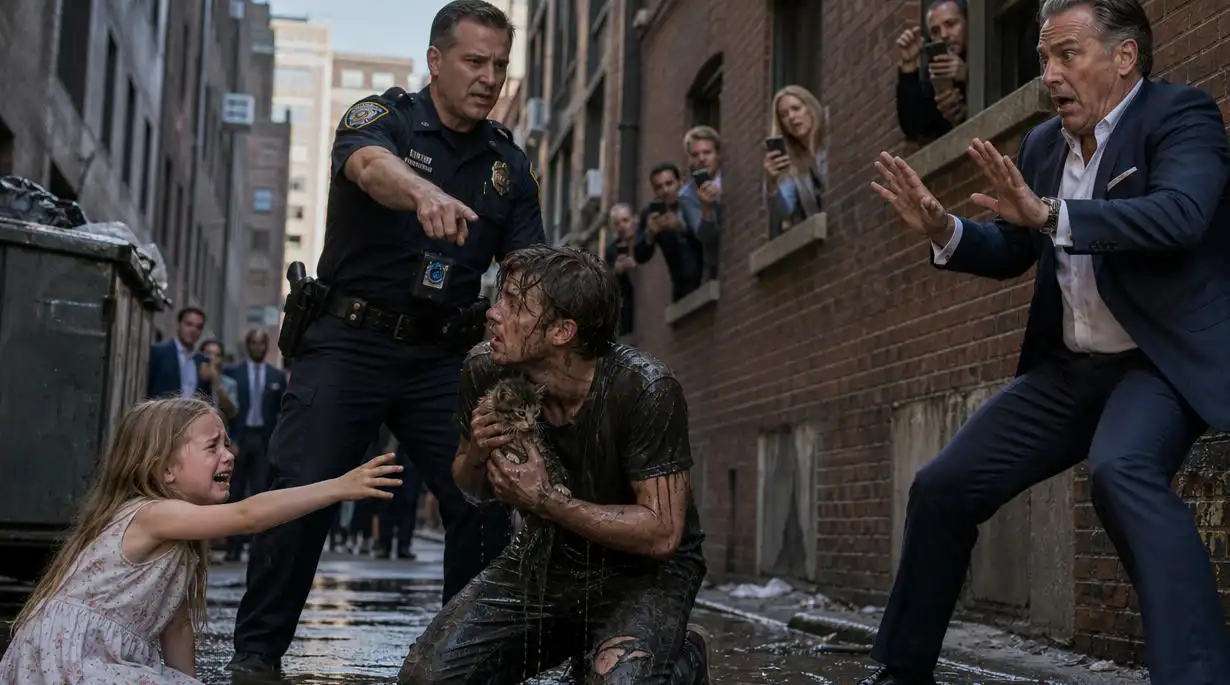
They Laughed While Security Beat the “Alley Thief”… Then One Video Made Everyone REGRET It
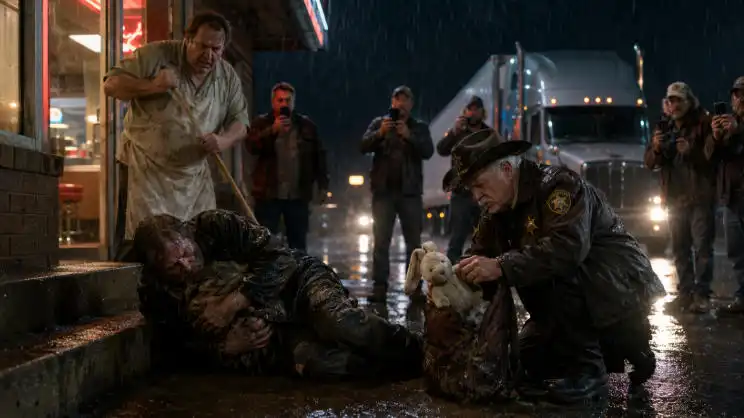
A Diner Owner Called Him a “VAMPIRE” and Kicked Him Into the Rain… Then KARMA Pulled Up in 18 Wheels
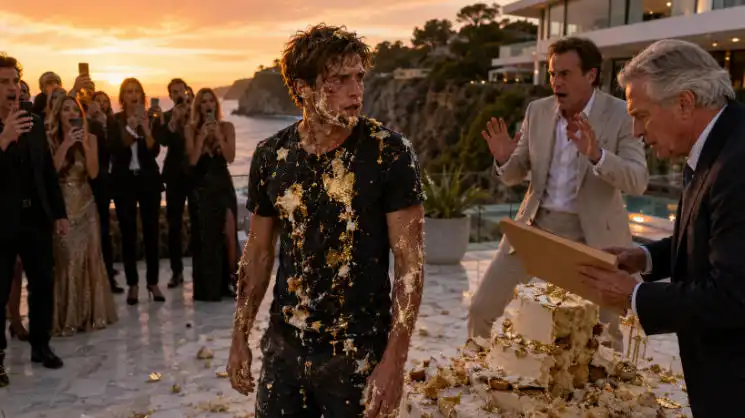
A Hollywood Producer Humiliated a Quiet Crew Worker on LIVE Video… Then KARMA Walked In Holding a Sealed Trust File