

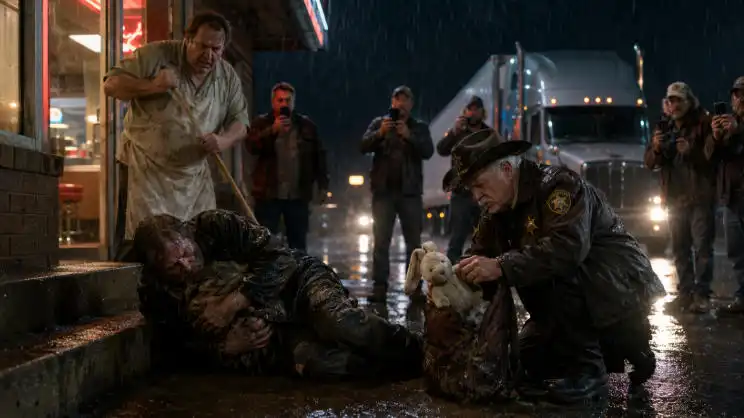
Sheriff Higgins opened the muddy backpack slowly.
Nobody in Gordon’s Diner breathed.
Rain hammered the front windows so hard the neon sign outside flickered like it was ashamed to still be glowing.
Frank sat on the wet steps with blood on his lip, one burned cheek shining under the porch light, one hand still wrapped around the broken strap of that little backpack.
Gordon tried to laugh.
It came out thin.
“Sheriff,” he said, “you know how these people are. He was hanging around my door. Customers were uncomfortable.”
Sheriff Higgins didn’t look at him.
He reached inside the backpack and pulled out a soaked stuffed bunny.
Its ears were muddy.
Its button eye was hanging by a thread.
Then he pulled out a pink bicycle reflector.
Then a school ID sealed in a plastic sleeve.
CHLOE MARTIN — AGE 14.
A waitress covered her mouth.
One of the truckers whispered, “Lord have mercy.”
Gordon’s face went pale.
Frank looked down at the ground.
He still said nothing.
That was the thing about Frank.
The world had done its worst to his face years ago, but it had never managed to burn the kindness out of him.
He had been a mechanic once.
A good one.
Before the garage fire.
Before the surgeries.
Before people stopped looking him in the eye.
Before job interviews ended five seconds after he walked through the door.
Now he drifted along the Ohio highway with a canvas bag, a socket wrench, and the habit of helping strangers who never asked his name.
That night, the storm rolled over the county just after sunset.
Wind bent the trees sideways.
Rain washed gravel across the shoulder.
Truckers pulled into Gordon’s Diner because it was the only place open for miles.
Inside, Gordon played the part of the clean, respectable businessman.
White shirt.
Polished shoes.
Hair sprayed into place.
A little brass sign beside the register read:
FAMILY OWNED. GOOD FOOD. GOOD PEOPLE.
But Gordon only believed in good people if they paid, tipped, and looked right in his booths.
Frank didn’t look right.
He showed up under the awning around 9:40 p.m.
Soaked coat.
Burn scars across the left side of his face and neck.
A gray beard.
Boots splitting at the seams.
He didn’t come in at first.
He just stood near the vending machine, trying to get out of the rain.
A little girl’s bicycle lay beside him.
Pink frame.
Bent front wheel.
Chain off.
Back reflector cracked.
At the corner booth, a trucker named Earl noticed him first.
“Poor guy’s freezing,” Earl muttered.
Gordon looked out the window and frowned.
“Not again.”
The waitress, Marlene, followed his eyes.
“He’s not bothering anybody.”
“He’s standing in front of my business looking like a haunted house decoration.”
Marlene stiffened.
“Gordon.”
“What? Customers don’t come here to stare at horror movies.”
Outside, Frank knelt by the bicycle and worked the chain with numb fingers.
A gust of wind threw rain under the awning.
He wiped water from his eyes and kept working.
That was when Chloe appeared from behind the dumpster enclosure.
Fourteen.
White hoodie.
Wet hair stuck to her cheeks.
One arm wrapped around herself.
The other clutching the stuffed bunny.
She looked angry in the way scared children sometimes look angry.
Frank saw her and lifted both hands gently.
“Easy,” he said. “I’m not taking your bike.”
Chloe glared at him.
“Then why are you touching it?”
“Because it won’t roll with the chain jammed like that.”
“I don’t need help.”
“Everybody needs help in a storm.”
She looked toward the diner.
Then toward the dark road.
Frank noticed the expensive sneakers first.
Then the little gold bracelet.
Then the way she tried too hard not to cry.
“You running from somebody?” he asked.
Her chin lifted.
“No.”
Frank nodded like he believed her.
He didn’t.
He just reached into his coat and pulled out a stale dinner roll wrapped in a napkin.
It was the only food he had.
He held it out.
“Eat.”
“I have money.”
“Then buy me breakfast someday.”
She stared at him.
“You look scary.”
“I know.”
“That rude?”
“No. Honest.”
She took the bread.
For a few minutes, there were only three sounds.
Rain.
Thunder.
Metal clicking as Frank fixed the bike chain.
Inside the diner, Gordon watched like a judge looking down from a bench.
“Now he’s dragging kids into it,” he said.
Marlene said, “That girl shouldn’t be out there.”
“Exactly. I don’t need some homeless creep creating a scene.”
Earl turned in his booth.
“He’s fixing her bike, Gordon.”
Gordon snapped, “Eat your meatloaf, Earl.”
But Earl kept watching.
So did two other truckers.
One of them, Sam, raised his phone and began recording—not for attention, but because something in Gordon’s voice sounded wrong.
Outside, Chloe finished the bread and wiped her nose on her sleeve.
Frank adjusted the brake cable with a bent screwdriver.
“Where you headed?” he asked.
“Columbus.”
“That’s over sixty miles.”
“I know.”
“On that bike?”
She looked away.
“My parents don’t care.”
Frank tightened the nut.
“They probably care more than you think.”
“You don’t know them.”
“No,” Frank said. “But I know roads. And I know storms. This one will put you in a ditch before midnight.”
Chloe hugged the bunny tighter.
“I’m not going back.”
Frank didn’t argue.
He knew pride.
He had slept beside enough highways to understand that sometimes the only thing holding a person together was the belief that forward was better than home.
So he made a choice.
He said, “Then at least sit inside until the rain slows.”
“I can’t.”
“Why?”
“I don’t have enough for food. They’ll kick me out.”
Frank looked through the window at Gordon.
He had been kicked out of enough places to know she was probably right.
“Wait here,” he said.
He walked to the door.
The bell jingled.
The whole diner turned.
Not because Frank was loud.
Because people like Frank are never allowed to enter quietly.
Gordon moved from behind the counter like a man guarding a bank vault.
“No.”
Frank stopped on the mat.
Water dripped around his boots.
“I’m not asking for trouble.”
“Then leave.”
“There’s a kid outside. She needs to sit somewhere dry.”
Gordon looked past him.
“The girl can come in. You can’t.”
Frank’s jaw tightened.
“She’s scared.”
“Then she can call her parents.”
“She won’t.”
Gordon leaned closer.
His voice dropped, but not enough.
“Listen to me. I run a clean establishment. I’ve got families in here. Drivers. Church folks sometimes. I can’t have you standing around looking like Dracula’s uncle.”
A couple of customers looked down.
Marlene whispered, “Gordon, stop.”
Frank swallowed.
The old scars pulled tight along his cheek.
“I’ll pay for coffee.”
“With what?”
Frank reached into his pocket and pulled out coins.
Wet quarters.
Two dimes.
A nickel.
Gordon looked at the coins and laughed.
“That won’t buy the cup.”
Frank gathered the coins slowly.
“Then let the girl sit. I’ll stay outside.”
Gordon pointed to the door.
“Out.”
Frank went back into the rain.
Chloe saw his face and understood enough.
“They said no?”
Frank shook his head.
“You can go in.”
“What about you?”
“I like the rain.”
“No you don’t.”
“No,” he said. “I don’t.”
That was when the cruiser pulled into the far end of the lot.
Frank noticed it.
Chloe noticed it too.
Her eyes went wide.
She grabbed the backpack.
“My parents called the cops.”
“Maybe.”
“I’m leaving.”
She tried to swing onto the bicycle too fast.
The repaired chain held.
The front wheel didn’t.
It slipped in the mud.
Chloe went down hard.
The stuffed bunny flew under the diner steps.
Frank moved fast.
Faster than anyone expected from a man who looked half-broken.
He lifted the bike off her ankle and checked her knee.
“You’re okay. Breathe.”
“I hate them,” Chloe sobbed.
“I know.”
“They don’t listen.”
“Maybe not. But you still have to stay alive long enough to make them hear you.”
Frank reached under the steps for the bunny.
His hand came back muddy.
He cleaned the toy with the inside of his coat.
Then he put the backpack over his own shoulder so Chloe could stand.
That was the moment Gordon burst outside.
He had seen the cruiser.
He had seen Chloe fall.
And in his mind, there was only one calculation.
Not the girl.
Not the storm.
Not the truth.
His business.
“You!” Gordon shouted.
Frank turned.
Gordon grabbed him by the collar and shoved him backward.
Frank slipped on the wet step and crashed down onto the concrete.
The backpack hit beside him.
Chloe screamed.
Marlene ran to the window.
Earl stood up.
Gordon snatched the broom from beside the door.
“I told you to leave!”
Frank raised one hand.
“Don’t scare the girl.”
That made Gordon angrier.
“The girl? You’re using her as a prop!”
The first strike hit Frank across the shoulder.
The sound cracked through the rain.
Inside, someone yelled, “Hey!”
The second strike caught him near the ribs.
Frank curled around the backpack.
Not his head.
Not his chest.
The backpack.
Because Chloe’s ID was inside.
Because her stuffed bunny was inside.
Because this child had already lost enough tonight.
Gordon shouted, “Get off my property, vampire!”
That word landed harder than the stick.
Frank had heard it before.
At gas stations.
At shelters.
From teenagers in passing cars.
But hearing it in front of a child made something in his face close.
He still didn’t hit back.
The cruiser door opened.
Sheriff Higgins stepped out.
Higgins was seventy-one years old and moved like a man who had spent his whole life not wasting steps.
He didn’t run.
He didn’t shout.
He simply walked through the rain with one hand near his belt and said:
“Gordon.”
The diner owner froze.
“Sheriff. Thank God. This man—”
“Drop the broom.”
“Sheriff, he’s been harassing customers.”
“Drop. The. Broom.”
Gordon dropped it.
Chloe stood under the awning shaking.
Higgins looked at her.
Then at Frank.
Then at the bicycle.
Then at the backpack.
“Chloe Martin?” he asked.
Chloe’s lower lip trembled.
“I’m not going home.”
Higgins’ voice softened.
“Nobody’s throwing you in a trunk, child. Your mother is crying herself sick at the station.”
Chloe looked away.
Frank sat up carefully.
“She needs a blanket,” he said.
Gordon scoffed.
“Now he’s giving orders?”
Higgins turned his head.
“Gordon, one more word and you’ll wish you stayed in the kitchen.”
That shut him up.
For exactly six seconds.
Then he said, “Sheriff, I had every right to remove him. He was trespassing.”
Earl opened the diner door.
“No, he wasn’t.”
Rain blew inside.
Gordon spun around.
“Stay out of this.”
Earl stepped onto the porch.
He was sixty, broad-shouldered, and had driven freight through every state except Hawaii.
“I watched him fix that girl’s bike in the rain.”
Sam came behind him, phone in hand.
“I recorded the last part.”
Another trucker said, “He asked you to let the kid sit inside. You refused.”
Marlene stepped out with a towel.
“And he offered to stay outside.”
Gordon’s mouth tightened.
“All of you suddenly lawyers?”
Sheriff Higgins reached down and picked up the backpack.
That was where the Facebook post ended.
But that was not where Gordon’s trouble ended.
Not even close.
Higgins opened the bag and found the school ID.
He found Chloe’s emergency contact card.
He found a folded note written in blue ink.
I’m tired of being perfect. Don’t look for me.
Higgins closed his eyes for half a second.
Then he looked at Frank.
“You gave her your food?”
Frank wiped blood from his lip.
“She was hungry.”
“You fixed her bike?”
“Yes, sir.”
“You told her not to ride into the storm?”
“Yes, sir.”
“You touched her backpack because she fell?”
“Yes, sir.”
Higgins nodded once.
Then he looked at Gordon.
“And you saw a scarred homeless man and decided he was the danger.”
Gordon’s face flushed.
“I saw what anybody would see.”
“No,” Higgins said. “You saw what you wanted.”
Chloe began to cry then.
Not loud.
Not dramatic.
Just a child breaking in the rain.
Frank tried to stand.
His knees buckled.
Earl caught his arm.
“Easy, brother.”
Frank looked embarrassed by the help.
That made Earl angrier than the blood.
“Sheriff,” Sam said, holding up his phone. “You need this?”
“Yes.”
Gordon lunged.
“Give me that phone!”
Sheriff Higgins grabbed his wrist.
Hard.
The old man’s voice went cold.
“You are now interfering with evidence after assaulting a man in front of witnesses.”
Gordon yanked his arm back.
“This is my diner!”
Higgins looked at the sign.
Then at the wet concrete.
Then at Frank’s bruised shoulder.
“Not tonight it isn’t.”
He arrested Gordon before the rain slowed.
The handcuffs clicked under the neon sign.
Every person in the diner saw it.
Every trucker in the parking lot saw it.
And because Sam’s phone had been recording, half the county saw it by morning.
The video didn’t show a monster.
It showed a burned homeless man protecting a child’s backpack while a respectable diner owner beat him and called him a vampire.
That word spread.
Not because it was clever.
Because it was cruel.
Truckers are a special kind of jury.
They remember where they were treated like people.
They also remember where someone weaker was treated like trash.
By noon the next day, Gordon’s Diner had thirty empty booths.
By sunset, the first line of semis pulled across the edge of the parking lot.
Not blocking the road.
Not breaking the law.
Just parked on public shoulder space and refusing to pull in.
Earl taped a cardboard sign inside his windshield:
NO COFFEE WHERE KINDNESS GETS BEATEN.
Sam’s sign said:
FRANK FIXED A CHILD’S BIKE. GORDON BROKE HIS OWN BUSINESS.
A third driver wrote:
GOOD PEOPLE DON’T CALL MEN VAMPIRES.
The boycott was quiet at first.
Then it became organized.
Drivers radioed each other.
A fuel-stop group posted about it.
A veterans’ club shared the video.
A church women’s group left one-star reviews, not with insults, but with the same sentence over and over:
A man who feeds a child should not be beaten in the rain.
Gordon tried to fight back.
He went on a local radio show and said, “People don’t understand business ownership. You have to maintain standards.”
That made it worse.
The host asked, “Is beating a man with a broom handle one of your standards?”
Gordon hung up.
By the third day, suppliers started calling.
“Gordon,” the bread guy said, “we’re pausing deliveries until things calm down.”
“You can’t do that.”
“I can. My brother drives truck. He saw the video.”
The produce vendor backed out next.
Then the coffee supplier.
Then two waitresses quit.
Marlene stayed long enough to hand in a written statement to Sheriff Higgins, then left her apron on the counter.
Gordon shouted after her.
“You’ll never work around here again!”
She turned at the door.
“I already got hired across the highway.”
The new place had a line out the door that same night.
Frank did not know any of this at first.
He spent two days in the county clinic.
Bruised ribs.
Split lip.
Deep shoulder contusion.
Nothing broken.
Sheriff Higgins visited him with a brown paper bag.
Inside were clean socks, a flannel shirt, and a cheeseburger.
Frank stared at it.
“You didn’t have to.”
“No,” Higgins said. “I did.”
Frank looked away.
“I don’t want trouble.”
“You didn’t make trouble.”
“Feels like trouble follows my face.”
Higgins sat beside the bed.
“Frank, I’ve known Gordon twenty years. He was always small. He just finally acted small in front of a camera.”
Frank gave a weak laugh, then winced.
“What about the girl?”
“Home.”
“Safe?”
“Safe.”
“Still mad?”
“Furious.”
“Good,” Frank said. “Mad means alive.”
Higgins studied him.
“You ever work in a shop?”
Frank nodded.
“Before the fire.”
“You any good?”
Frank looked at his hands.
“I was.”
“No,” Higgins said. “I asked if you’re good.”
For the first time, Frank’s eyes lifted.
“I still am.”
A week later, the court date came.
Gordon wore a suit that didn’t fit his new reality.
No customers behind him.
No employees.
No proud local business owner smile.
Just a man whose name had become a warning.
The prosecutor laid out the evidence.
The video.
Marlene’s statement.
Earl’s testimony.
Chloe’s statement.
The medical report.
Gordon’s lawyer tried to argue that Gordon had acted under “reasonable concern for public safety.”
Judge Callahan took off her glasses.
“Public safety,” she said, “was the homeless man repairing a child’s bicycle in a thunderstorm.”
Gordon looked at the table.
The judge continued.
“Public danger was the business owner striking him with a wooden handle while witnesses begged him to stop.”
Gordon was convicted of malicious assault and related charges.
Because the injuries were not life-ending, he did not go away for years.
But Judge Callahan gave him the maximum community service available under the sentence.
Not at a comfortable desk.
Not posing for photos.
Roadside cleanup.
Shelter kitchen shifts.
County repair projects.
And every week, he had to report under Sheriff Higgins’ supervision.
The first time Gordon showed up wearing work gloves too clean to be real, Higgins handed him a trash picker and said:
“Careful. Some of the people you look down on sleep near these ditches.”
Gordon said nothing.
Meanwhile, the diner died in public.
No dramatic explosion.
No fire.
No lightning strike.
Just empty tables.
Spoiled inventory.
Loan notices.
A locked front door.
A sheriff’s notice taped to the glass.
The brass sign still read:
FAMILY OWNED. GOOD FOOD. GOOD PEOPLE.
But the bank owned it now.
Then came the auction.
Half the county showed up.
Some came to buy.
Most came to witness.
Frank did not attend.
He was behind the shelter, fixing an old church van that had refused to start.
He had grease on his hands again.
For him, that was almost happiness.
But Earl attended.
So did Sam.
So did Marlene.
So did Chloe’s parents.
That was the part Gordon never saw coming.
Chloe Martin had not been just any runaway.
Her father owned three logistics warehouses.
Her mother was a regional hospital board member.
They were wealthy.
Yes.
But that night humbled them too.
Because when Chloe came home, she didn’t talk first about the storm.
Or the police.
Or Gordon.
She talked about Frank.
“He didn’t ask me for anything,” she told them.
“He gave me his only bread.”
Her mother cried so hard she had to sit on the kitchen floor.
Her father drove back to the diner road the next morning and searched until Sheriff Higgins told him where Frank was.
When they first met him at the clinic, Frank tried to refuse their thanks.
“I didn’t do much.”
Chloe’s mother looked at his bruised face.
“You did what we failed to do that night.”
Frank frowned.
“You’re her parents.”
“And we were so busy trying to control her,” Chloe’s father said, “we forgot to hear her.”
Frank didn’t know what to say to that.
Chloe stood in the doorway, arms crossed.
Still angry.
Still embarrassed.
Still fourteen.
She held the stuffed bunny, now cleaned and stitched.
“You made my bike worse,” she said.
Frank smiled a little.
“That front wheel was already garbage.”
“My dad says you’re a mechanic.”
“Was.”
Chloe shook her head.
“Are.”
That one word stayed with him.
Are.
Not was.
The Martins bought the diner property at auction through their attorney.
Gordon watched from the back of the room, jaw clenched.
He thought they wanted revenge.
He was wrong.
They wanted repair.
The old diner building needed too much work.
Bad plumbing.
Failing roof.
Rot in the back wall.
Grease traps nobody had cleaned right.
The Martins sold off the kitchen equipment and donated what could be saved.
Then they leased the lot beside it to a new small-business owner.
The new owner was Marlene.
She reopened the front as a simple roadside café called Marlene’s 24-Hour Table.
Her first rule was written on a chalkboard by the door:
Nobody gets turned away for looking poor.
Her second rule:
If a kid is stuck in the rain, they come inside.
And the first person she invited back was Frank.
Not as a charity case.
Not as a mascot.
As the man who had earned the place at the counter.
“Breakfast is on the house,” she told him.
Frank stood in the doorway, unsure.
The scars on his face caught the morning light.
A few truckers turned.
For one terrible second, he expected the old reaction.
Stares.
Whispers.
Fear.
Then Earl lifted his coffee.
“Frank!”
Sam waved from a booth.
“Mechanic man! Sit down before Marlene overcooks the eggs.”
People laughed.
Not at him.
With him.
Frank stepped inside.
Slowly.
Like a man entering a country he had been exiled from.
Marlene put a plate in front of him.
Eggs.
Toast.
Hash browns.
Extra bacon.
Frank stared at it long enough that her eyes softened.
“Eat,” she said.
He did.
A month later, the Martins returned.
They brought an envelope.
Frank tried to hand it back before opening it.
“No.”
Chloe’s father said, “You don’t know what it is.”
“I know it’s too much.”
Chloe rolled her eyes.
“You are impossible.”
Frank looked at her.
“You still running away?”
“No.”
“Good.”
“I’m in therapy.”
“Also good.”
“And my parents listen now.”
Her mother took her hand.
“We’re learning.”
Frank nodded.
Then Chloe pushed the envelope toward him.
“It’s not charity. It’s a repair bill.”
“For what?”
“For my bike. Emotional damages. Stuffed bunny trauma.”
Frank almost smiled.
Inside the envelope was a cashier’s check big enough to change a life.
Not mansion money.
Not lottery money.
But enough to rent a small garage, buy tools, get insurance, and sleep under a real roof while doing it.
Frank’s hands shook.
“I can’t take this.”
Chloe’s father said, “Then take a loan.”
Frank looked up.
“A loan?”
“One dollar a month. No interest. Payable until you decide you’ve paid enough.”
Frank understood what the man was doing.
Protecting his dignity.
Not buying it.
His eyes burned.
He folded the check back into the envelope.
“One dollar a month?”
Chloe’s mother smiled.
“If you miss payments, Chloe will be unbearable.”
“I already am,” Chloe said.
That spring, a little building opened half a mile down the highway.
Fresh gravel.
Two service bays.
A hand-painted sign.
FRANK’S ROADSIDE REPAIR
Under it, in smaller letters:
Honest Work. Fair Prices. Rain or Shine.
The first customer was Earl.
He brought in a truck with nothing wrong except “a suspicious rattle” he invented so Frank could bill him.
Frank found a real issue anyway.
“Your belt’s wearing out.”
Earl grinned.
“See? Suspicious.”
The second customer was Sam.
The third was a church van.
The fourth was Sheriff Higgins, who pulled in with a county cruiser and said:
“Don’t overcharge me just because I’m handsome.”
Frank looked at the old sheriff’s weathered face.
“That won’t be a problem.”
Higgins laughed so hard he nearly dropped his keys.
Chloe visited every other Saturday with her father.
At first she sat on an overturned tire and complained about school.
Then she started handing Frank tools.
Then she asked what a carburetor was.
Then she asked why men always acted like asking directions was a medical emergency.
Frank told her the truth.
“Pride is cheaper than wisdom. That’s why people buy so much of it.”
She wrote that down.
Months passed.
Gordon completed community service, but the county did not forget.
He tried applying for restaurant jobs two towns over.
Managers recognized him.
Not always from the video.
Sometimes from the way he spoke to dishwashers.
Sometimes character shows up before a background check.
One rainy afternoon, he appeared at Frank’s garage.
No suit.
No polished shoes.
Just an older man with gray at his temples and shame sitting heavy on his shoulders.
Frank was under a pickup.
Chloe was at the workbench sorting bolts.
She saw Gordon first.
Her whole body stiffened.
Frank slid out from under the truck.
Sheriff Higgins had once told him, “You don’t owe forgiveness on anybody’s schedule.”
Frank remembered that.
Gordon stood near the bay door.
“I’m not here to cause trouble.”
Frank wiped his hands on a rag.
“What do you need?”
Gordon looked at Chloe.
Then away.
“My car won’t start.”
Frank’s face showed nothing.
Chloe snapped, “There are other garages.”
Gordon nodded.
“I know.”
Frank studied him.
Rain tapped on the metal roof.
Finally Frank said, “Tow it in.”
Chloe stared at him.
“Seriously?”
Frank said, “A broken car is a broken car.”
Gordon flinched at that.
Maybe because he understood the mercy in it.
Maybe because he didn’t deserve how plain it was.
Frank fixed the starter.
Charged a fair price.
No discount.
No cruelty.
When Gordon paid, he hesitated.
“I never apologized.”
Frank put the receipt on the counter.
“No.”
Gordon swallowed.
“I’m sorry for what I called you.”
Frank waited.
“And for hitting you.”
Frank waited again.
“And for what I did to that girl.”
Chloe crossed her arms.
Gordon looked at her.
“I was wrong.”
She said, “You were evil.”
He nodded once.
“That too.”
Frank did not hug him.
Did not bless him.
Did not make a speech about second chances.
He simply said:
“Don’t make me regret fixing your car.”
Gordon left quietly.
Chloe looked at Frank like he had betrayed every satisfying revenge fantasy she had ever imagined.
“How could you help him?”
Frank leaned against the counter.
“Because I’m not him.”
She said nothing.
He picked up the broom by the wall.
Not a weapon.
Just a broom.
He handed it to her.
“Also, because this floor is filthy.”
She groaned.
But she swept.
And Frank laughed.
That was the real ending.
Not Gordon in cuffs.
Not the diner going bankrupt.
Not the boycott.
Those were consequences.
The ending was Frank standing in his own garage at sunset, scars visible, hands steady, name on the sign, coffee warming on the desk, Chloe arguing with him about spark plugs like family.
The ending was a man who had been treated like a shadow becoming the person people drove miles to find.
The ending was a child learning that running away is not the same as being unheard.
The ending was a town remembering that dignity does not come from clean clothes, smooth skin, or money in your pocket.
It comes from what you do when nobody important is watching.
Frank once gave away his only bread in a storm.
Gordon once protected his business by beating a hungry man.
One of them lost everything.
One of them built something worth keeping.
So pick a side:
Was Frank right to fix Gordon’s car after everything…
Or should some people be forced to live with the road they chose? ⚖️
Disclaimer: Mention of any brand or trademark is for identification only and does not imply partnership or endorsement
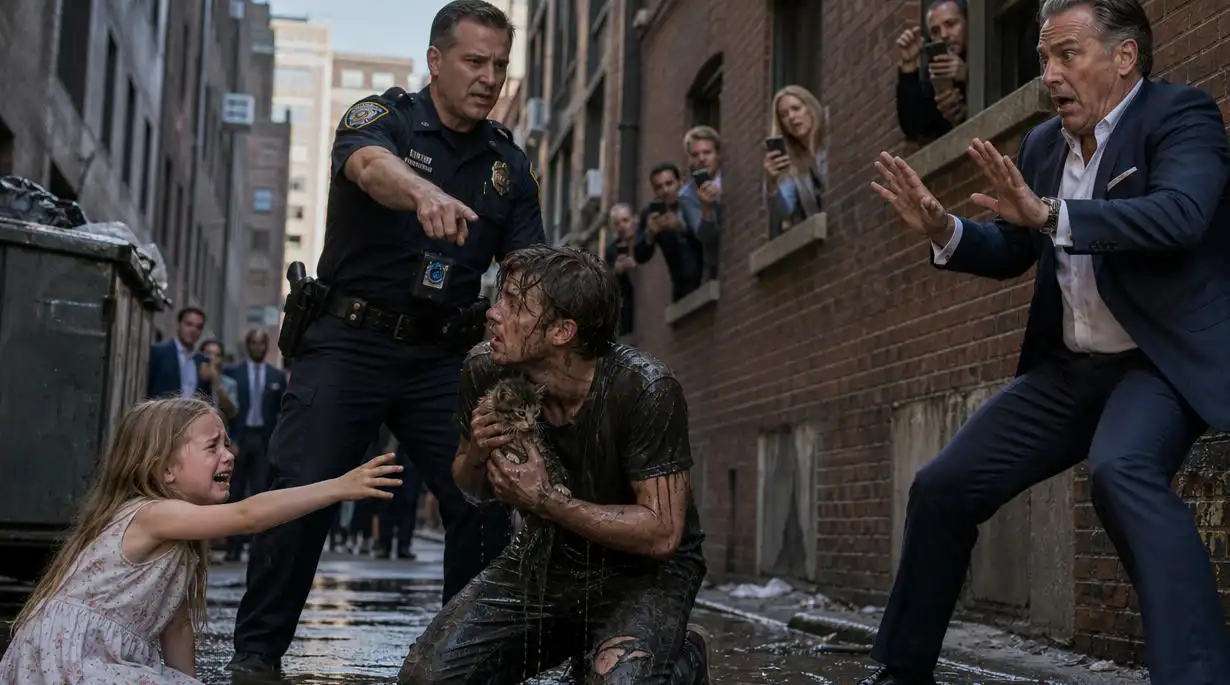
They Laughed While Security Beat the “Alley Thief”… Then One Video Made Everyone REGRET It
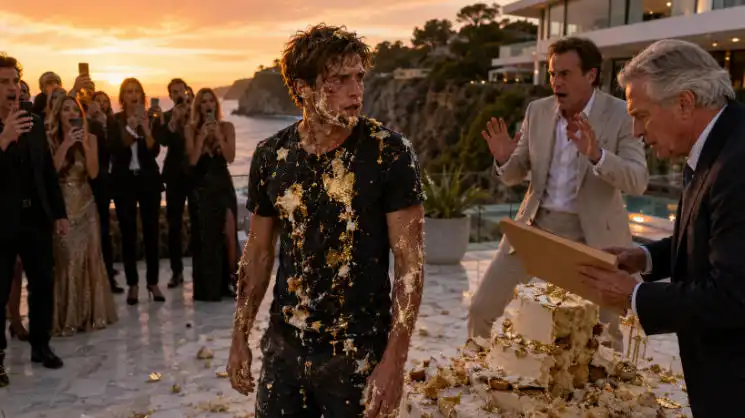
A Hollywood Producer Humiliated a Quiet Crew Worker on LIVE Video… Then KARMA Walked In Holding a Sealed Trust File
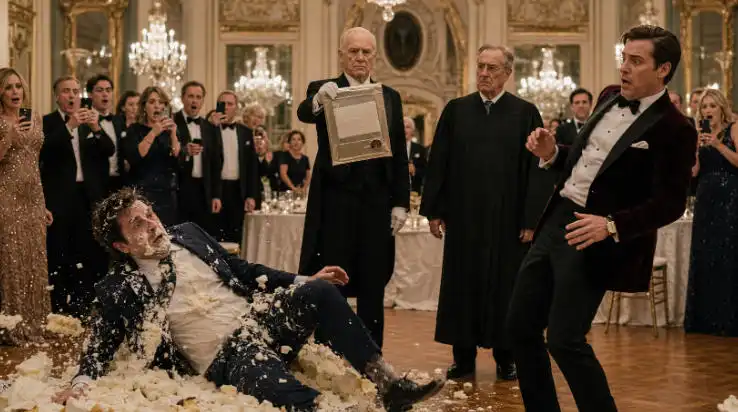
A Free Public Defender Was Shoved Into a Cake by an Ivy League Hedge Fund Prince… but They Had NO IDEA Who He Really Was 😳