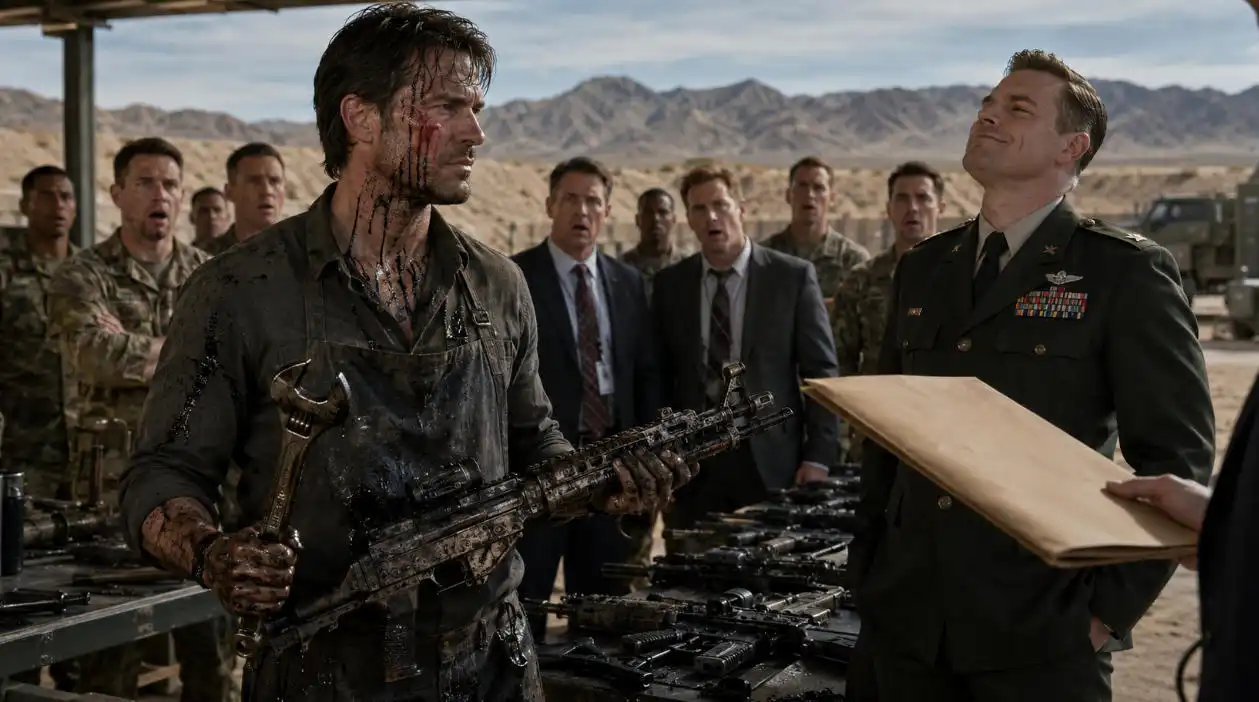

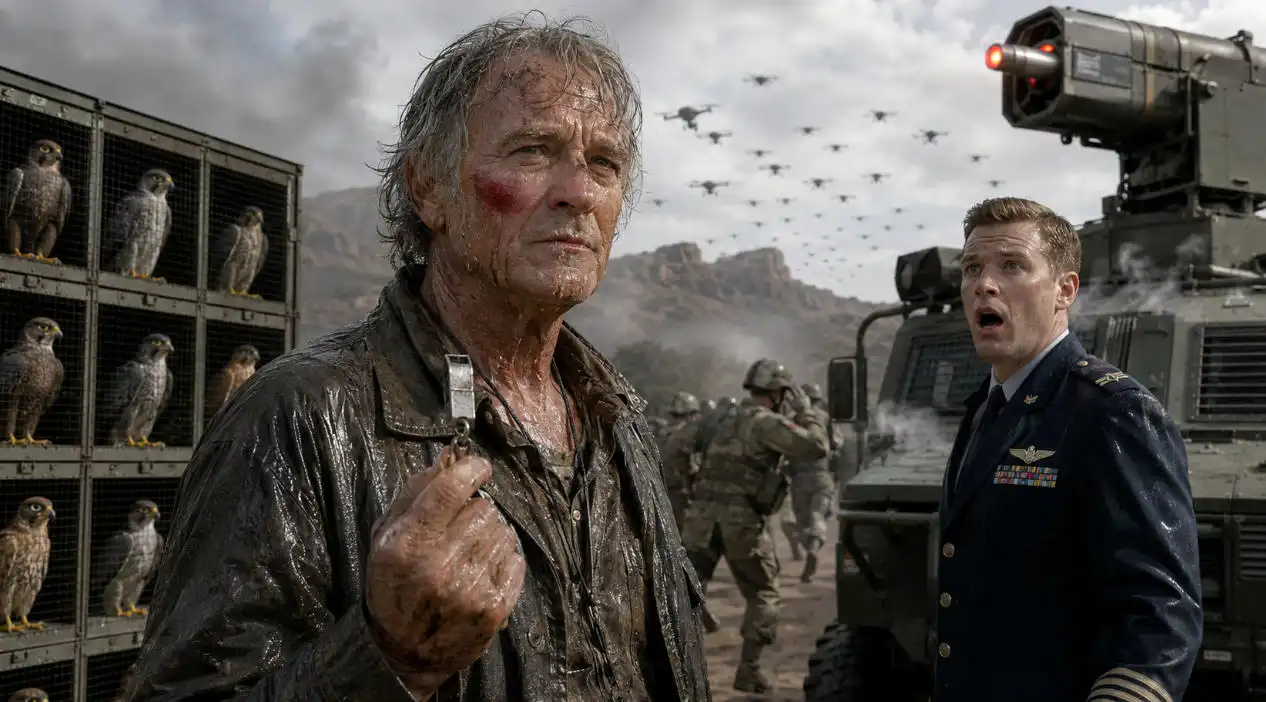
The general didn’t speak right away.
He just leaned closer to the tower glass.
Below him, Captain Benson’s million-dollar laser truck sat silent, smoking from the cooling vents.
And Luke, the old falcon handler Benson had just humiliated, had a silver whistle pressed between two fingers.
Nobody laughed now.
Not one soldier.
Not one technician.
Not even Benson.
Because the sky over the training camp had turned black with enemy micro-drones.
They came in a tight swarm, hundreds of tiny machines cutting through the morning light like angry hornets.
The laser-defense crew had trained for this.
At least, that was what Benson had told everyone.
He loved saying it.
“My system owns the sky.”
“My boys don’t miss.”
“Old methods are for museums.”
He said it loud enough for Luke to hear every morning.
Luke was sixty-one.
He had sun-damaged skin, stiff knees, and old leather gloves with claw marks across the palms.
Most people on base called him “the bird man.”
He didn’t correct them.
He woke before sunrise.
Fed twelve falcons by hand.
Cleaned cages.
Checked wing feathers.
Logged wind direction.
Tracked reaction times.
And every afternoon, while Benson’s crew aimed lasers at perfect test targets, Luke trained his birds to hunt things that did not move like normal aircraft.
Small things.
Fast things.
Unpredictable things.
The kind of things machines often noticed too late.
Benson hated that.
Not because Luke bothered him.
Because Luke made him feel unnecessary.
That morning, the camp commander had scheduled a joint demonstration.
Benson’s air-defense company would show off its new laser system.
Luke’s falcon unit would observe.
That was supposed to be all.
But Benson turned it into a public humiliation.
In front of thirty soldiers, two technicians, three visiting officers, and one major general in the tower, he pointed at Luke’s falcon cages and laughed.
“This is what we’re wasting research money on?”
A few soldiers looked down.
Nobody wanted to answer.
Luke stood by the cages with a feed bucket in one hand.
He said calmly, “Captain, the birds are only here as a backup layer.”
Benson stepped closer.
“Backup?”
He looked around at his men and grinned.
“You hear that? Grandpa thinks his pets are national defense.”
Some soldiers chuckled because their captain was watching.
Not because it was funny.
Luke said nothing.
That made Benson angrier.
Men like Benson needed fear.
They needed people to flinch.
So he grabbed the rinse bucket used to wash the falcon perches.
The water was cloudy with feathers, mud, and bird waste.
One technician muttered, “Sir, don’t—”
Too late.
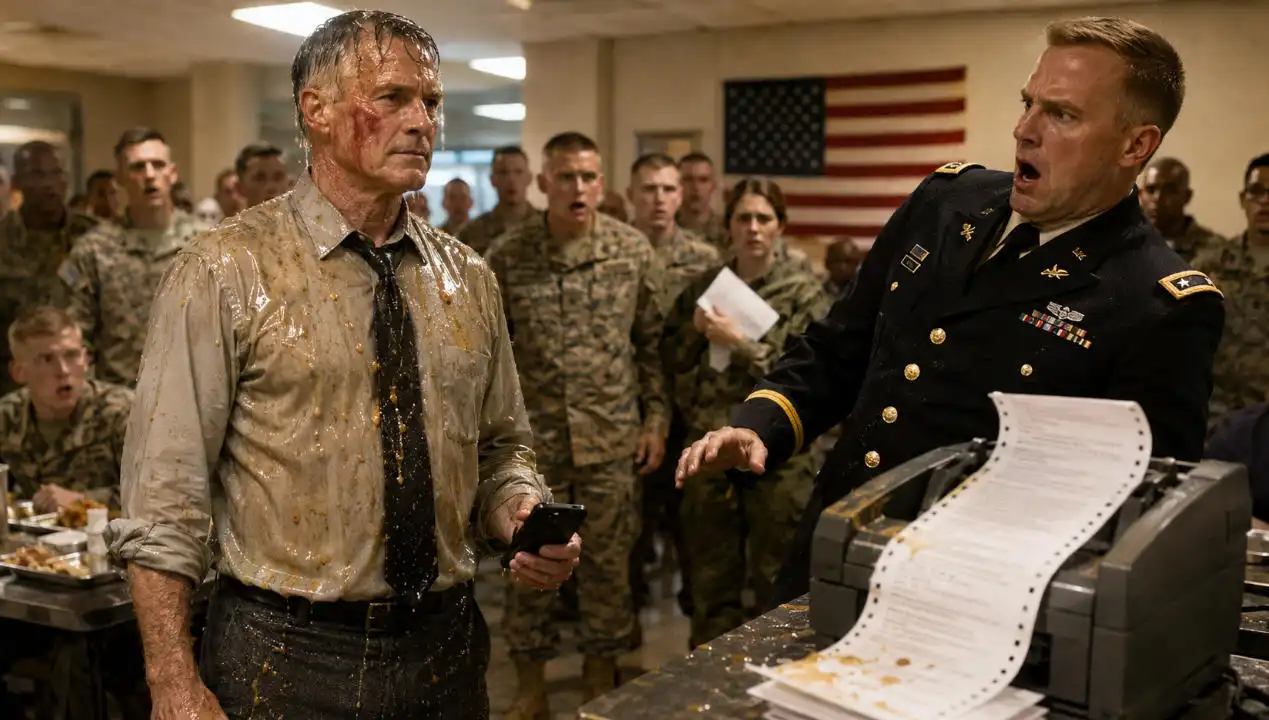
Benson dumped it over Luke’s chest.
Dirty water splashed across his jacket, his neck, and his face.
The yard went dead quiet.
Luke blinked slowly.
Benson leaned in.
“Now you look like your birds.”
Then he slapped him.
Not hard enough to injure him.
Hard enough to shame him.
The sound cracked across the yard.
A young private whispered, “Oh my God.”
Luke’s cheek turned red.
His falcon glove dropped into the mud.
But Luke did not raise a hand.
He did not curse.
He did not threaten.
He only looked at Benson and said, “You should not have done that in front of them.”
Benson laughed.
“In front of who? Your chickens?”
Luke’s eyes moved toward the tower.
Then toward the cages.
Then back to Benson.
“All of them.”
Benson didn’t understand.
He thought Luke meant witnesses.
He thought Luke was scared.
So he turned to his crew and barked, “Load the system. Show the old man what real defense looks like.”
The laser truck rotated into position.
Cooling units roared.
Screens lit up.
Soldiers snapped to their stations.
For about two minutes, Benson looked powerful again.
Then the exercise changed.
A red warning flashed across the command screen.
UNSCHEDULED SWARM SIGNATURE DETECTED.
The first technician frowned.
“That’s not one of ours.”
The second technician leaned over the console.
“Sir… these are smaller than the test drones.”
Benson snapped, “Track them.”
“Trying.”
The radar filled with dots.
Then more dots.
Then hundreds.
They poured over the ridge at low altitude, moving in broken, chaotic patterns.
Not like planes.
Not like standard drones.
Like insects.
The laser operator fired.
One drone burst.
Then another.
Then the system stuttered.
A heat warning screamed.
“Cooling failure!” a soldier yelled.
Benson shoved him aside.
“Reset it!”
The technician’s hands shook.
“Sir, the swarm is too dense. The system is cycling too fast.”
“Then override it!”
“I can’t override physics!”
That sentence hit the yard harder than the slap.
The proud laser truck whined, overheated, and shut down.
A second truck tried to engage.
It lasted eighteen seconds.
Then its cooling panel blew open with a burst of steam.
The soldiers started backing up.
One of them shouted, “They’re headed for the comms tower!”
Another yelled, “If they reach the fuel depot—”
Benson’s mouth opened.
No command came out.
That was the moment everyone looked at Luke.
He still stood where Benson had humiliated him.
Soaked.
Dirty.
Red-cheeked.
Quiet.
But his eyes were locked on the sky.
The twelve falcons inside the cages were different now.
They had heard the drones.
They had seen the movement.
Their bodies leaned forward.
Talons tightened around wooden perches.
Luke lifted the silver whistle.
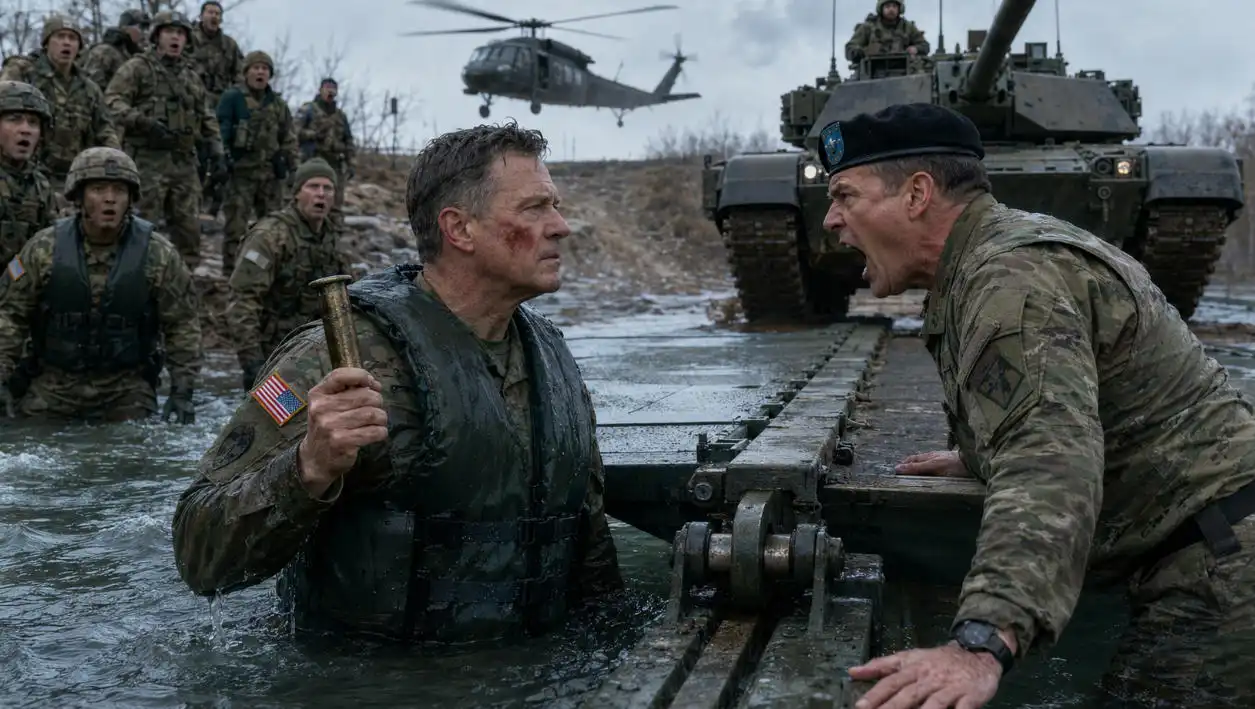
Benson grabbed his arm.
“Don’t you dare interfere with my operation.”
Luke looked down at Benson’s hand.
Then up at him.
“Your operation is down, Captain.”
Benson let go.
Not because he wanted to.
Because everyone was watching.
The general.
The soldiers.
The technicians.
His own men.
Luke put the whistle to his lips.
One sharp note cut through the alarm.
The cages opened.
Twelve falcons launched like they had been fired from cannons.
No machine hesitation.
No software reboot.
No cooling delay.
Just muscle, instinct, training, and trust.
The first falcon hit the edge of the swarm and tore through three drones before anyone understood what they were seeing.
A second dove from above.
A third banked left so sharply a soldier gasped.
The birds did not chase randomly.
They divided the swarm.
Luke had trained them to attack clusters.
To break formations.
To force small targets downward.
The drones tried to scatter.
That only made them easier prey.
One falcon knocked a drone into the dirt.
Another snatched one midair and dropped it into a sand pit.
Two birds drove a cluster away from the fuel depot and straight toward a netted capture zone Luke had installed months earlier.
Benson stared like a man watching his career leave his body.
“Those birds can’t be doing that,” he whispered.
A young private answered before he could stop himself.
“They are, sir.”
The general grabbed the tower radio.
“Who authorized the falcon release?”
The camp commander said, “Sir… technically, they’re listed as a biological counter-UAS emergency layer.”
The general turned slowly.
“Listed by whom?”
The commander swallowed.
“Luke, sir. He submitted the training protocol six months ago.”
“And did anyone approve it?”
“Yes, sir. You did.”
The general looked back down at the yard.
His face changed.
Not surprise anymore.
Recognition.
Because he remembered the proposal now.
A quiet report from an old handler nobody had taken seriously.
A report that warned laser systems could overheat during dense micro-swarm attacks.
A report that recommended a low-tech interception layer for the first three minutes of emergency response.
Three minutes.
That was all Luke had asked for.
And that was exactly what he delivered.
At two minutes and forty-one seconds, the last drone hit the ground.
The yard fell silent.
No alarm.
No laughter.
No Benson.
Just feathers drifting through sunlight.
Luke whistled twice.
The falcons returned one by one.
They landed on their marked perches, breathing hard, eyes bright, talons cleanly gripping the wood.
Luke checked each bird.
Not dramatically.
Not for applause.
Like a man doing his job.
Then the general came down from the tower.
Everyone straightened.
Benson tried to recover.
“Sir, I want it noted that my crew weakened the swarm before the birds—”
The general walked past him.
Straight to Luke.
He looked at the dirty water still dripping from Luke’s jacket.
Then at the red mark on his cheek.
Then at the mud where Luke’s glove had fallen.
“Mr. Luke Harren?”
Luke nodded.
“Yes, sir.”
The general held out his hand.
“You just protected this installation.”
Luke shook it.
“Falcons did most of the work, sir.”
That was when one of Benson’s own soldiers stepped forward.
His voice shook.
“General… Captain Benson struck him before the exercise.”
Benson snapped, “Private, stand down.”
Another soldier spoke.
“He dumped waste water on him too, sir.”
A technician raised his hand.
“We have it on the yard camera.”
Benson went pale.
The legal hammer did not fall loudly.
It fell cleanly.
The general ordered the footage secured.
The safety officer pulled the system logs.
The training evaluator reviewed Benson’s readiness claims.
And within twenty-four hours, the truth was written in black and white.
Benson’s company had failed the exercise.
Not because technology failed.
Because Benson had built his entire defense plan on pride.
He ignored heat-cycle warnings.
He dismissed backup systems.
He mocked a certified counter-UAS falconry program.
He publicly assaulted a civilian specialist assigned under a military research contract.
And worst of all, he tried to prevent the only working emergency layer from launching.
The punishment was not theatrical.
It was official.
Benson received a formal reprimand.
His command evaluation was marked unsatisfactory.
His air-defense company was removed from the next readiness showcase.
He was ordered into review for conduct unbecoming and operational negligence.
The soldiers who had laughed that morning stopped laughing forever.
Not because they were punished.
Because they learned something.
A uniform does not make a man wise.
A machine does not make a plan complete.
And an old man with dirty boots may know more about survival than a proud officer with a polished truck.
Two weeks later, Luke returned to the falcon yard.
The cages had been rebuilt.
The perches were new.
The training field had a sign now:
Raptor Counter-Swarm Research Unit
Luke hated the fancy name.
The birds did not care.
The general visited once more with several defense scientists.
One of them asked Luke, “How did you know they’d respond so fast?”
Luke looked at the falcons.
“Because I respect what they are.”
The scientist smiled.
“And Benson didn’t?”
Luke picked up his glove.
“No. He only respected what made noise.”
The project received priority funding.
Not as a replacement for modern defense.
As a reminder that blind faith in one tool can get people killed.
Luke’s falcon unit became part of a national research program.
His training notes were copied, studied, and expanded.
The young private who first spoke up was reassigned to the unit at his own request.
On his first day, Luke handed him a glove.
The private looked nervous.
“Sir, what’s the first lesson?”
Luke glanced at the falcon perched above them.
“Don’t call them pets.”
The private nodded fast.
“Yes, sir.”
Luke smiled for the first time in days.
And high above the yard, twelve falcons watched the sky like they had always known something the rest of the base was only beginning to learn.
Sometimes justice does not shout.
Sometimes it waits.
Sometimes it flies.
Disclaimer: Mention of any brand or trademark is for identification only and does not imply partnership or endorsement
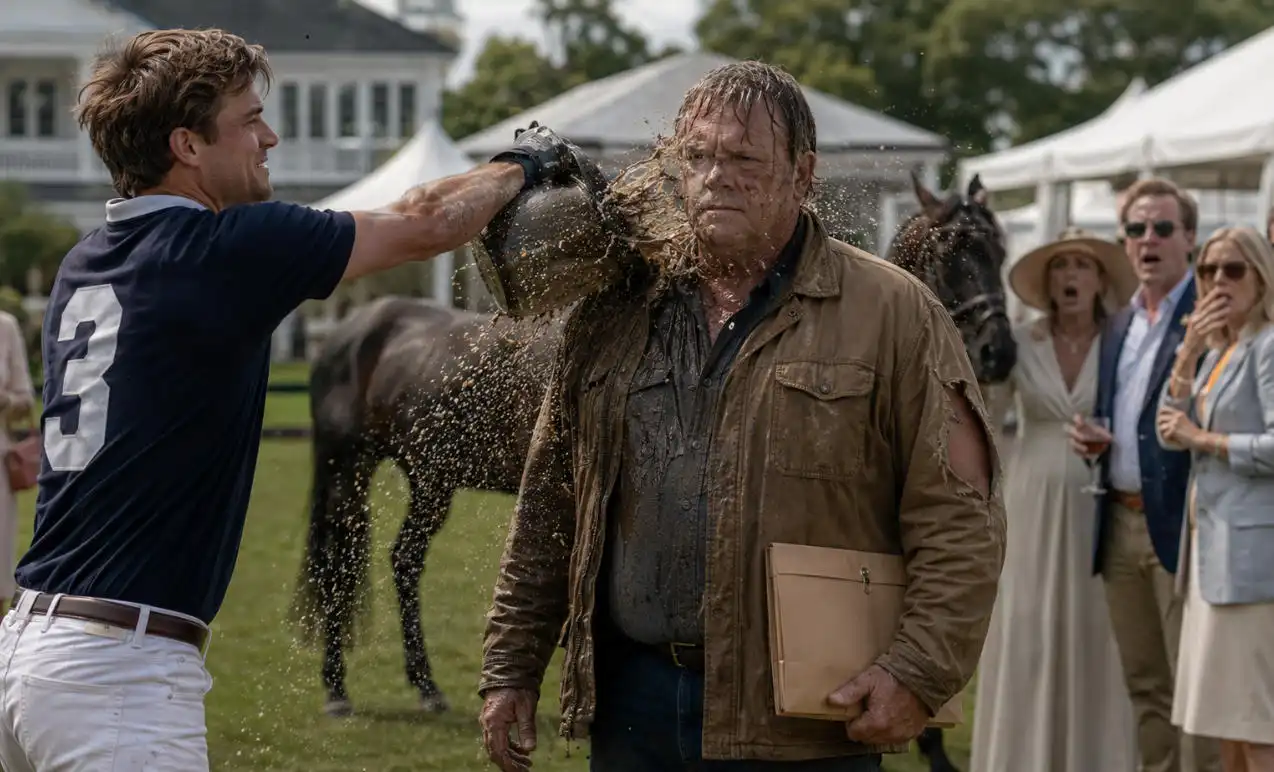
A Rich Polo Player Tore A Hardware Store Owner’s Jacket In Front Of Everyone… Minutes Later, He Was Begging On The Grass
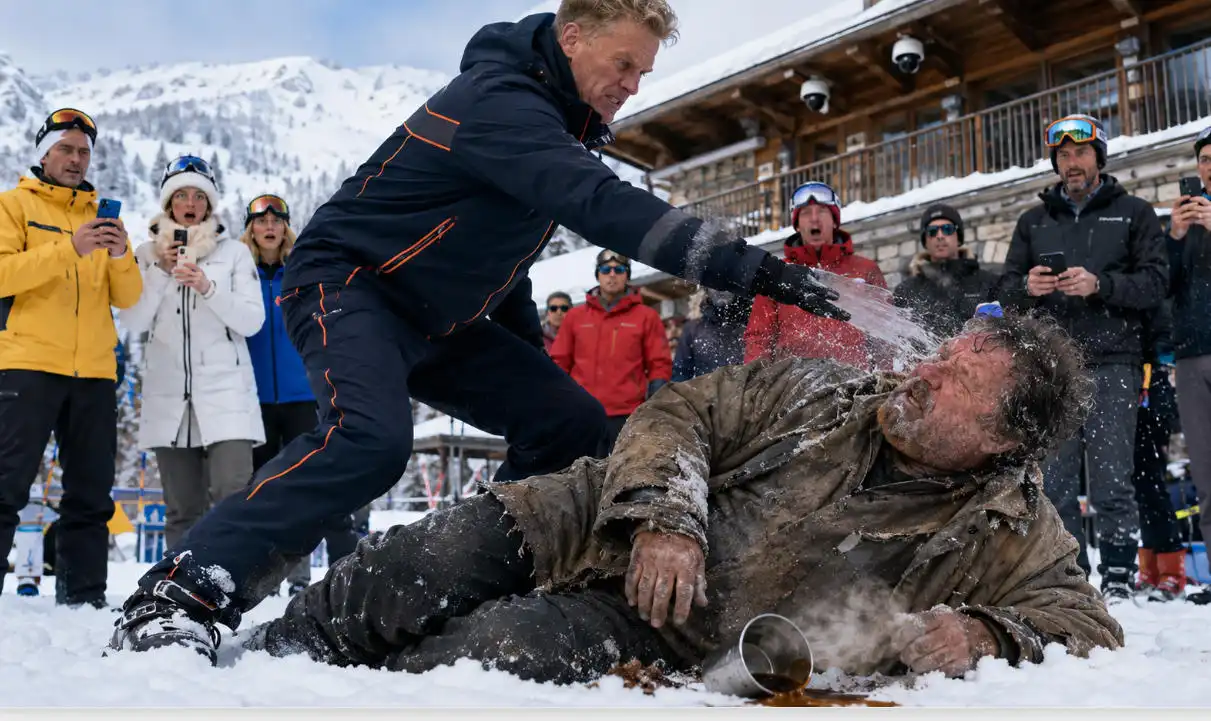
A Round-Bellied Carpenter Was Humiliated by an Elite Ski Coach in Front of Rich Guests… But Sven Had NO IDEA Who Bob Really Was 😳
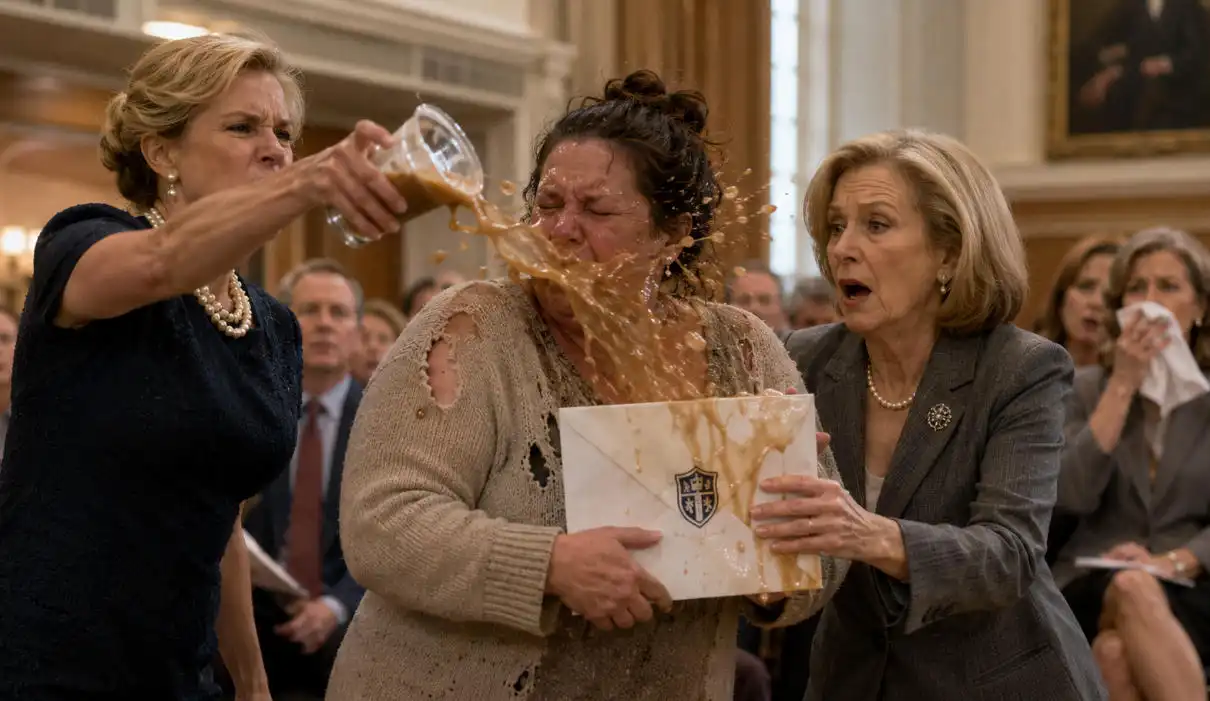
Parents Covered Their Noses When the “Cheap Mom” Walked In… Minutes Later, the PTA Queen Was on Her Knees Begging 😮