
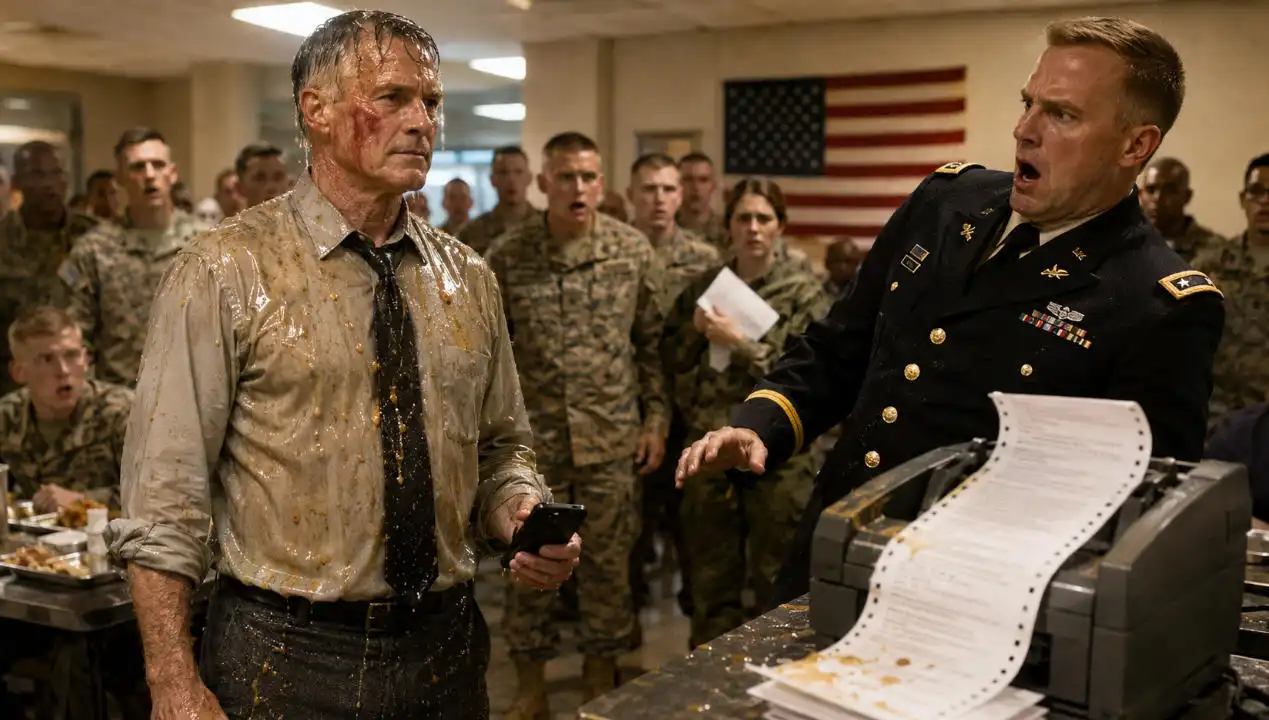
The fax machine behind the mess hall counter started screaming like an alarm.
Nobody moved.
Not the NATO recruits.
Not the American soldiers.
Not even Captain Hans Keller, who had just slapped a quiet translator in front of half the training camp.
The staff sergeant tore the first sheet from the machine, read one line, and his face went bone-white.
Then the doors opened.
Two military police officers walked in first.
Behind them came Colonel Mercer, the base commander, moving so fast his boots struck the tile like hammer blows.
Captain Keller turned with a crooked smile still hanging on his face.
“Colonel,” he said. “Good. I was just handling a discipline issue.”
Nobody answered him.
The translator stood in the center of the mess hall, soaked from collar to belt in lukewarm beef soup.
His name tag said HALE.
His cheek was red from the slap.
His expression was calm in a way that made the whole room feel colder.
Colonel Mercer looked at him and lowered his voice.
“Mr. Hale.”
That was when Hans blinked.
Not “translator.”
Not “specialist.”
Not “employee.”
Mr. Hale.
The way officers say a name when they realize the man in front of them outranks the room in a way no shoulder patch can explain.
But Hans still didn’t understand.
Or maybe his pride refused to let him.
He pointed at Philip.
“Sir, this man interfered with company training. He encouraged foreign trainees to question direct orders.”
A British recruit, barely twenty-two, stepped forward.
“That’s not true, sir.”
Hans snapped his head toward him.
“Did I ask you to speak?”
The British recruit swallowed, but he did not step back.
“You told Private Nowak he was useless because his accent was too thick.”
A Polish soldier lifted his chin.
“You called us charity cases.”
An Italian recruit added, “And you said NATO was a burden.”
Hans laughed once.
It was sharp and ugly.
“So now I’m being lectured by guests?”
That word hit the room hard.
Guests.
As if the young men standing there had not left their own countries, families, and units to train beside American soldiers under an allied agreement.
As if they were visitors at a hotel instead of soldiers under a flag of shared defense.
Philip finally wiped soup from his jaw with the back of his hand.
He did it slowly.
Not dramatically.
Not angrily.
That somehow made it worse for Hans.
“Captain Keller,” Philip said, “do you understand what agreement governs this training rotation?”
Hans rolled his eyes.
“I understand that I am the company commander.”
Philip nodded.
“Do you understand what office cleared these soldiers for joint operations training?”
Hans stepped closer.
“I understand you’re a translator.”
A few soldiers looked down.
They knew what was coming.
They could feel it.
But Hans couldn’t.
He had spent the whole morning building himself into a little king.
It began at 0600.
The NATO exchange group had arrived from the dormitory barracks in formation, still jet-lagged but disciplined.
They came from Poland, France, Britain, Italy, and Germany.
They were nervous, respectful, and trying hard to follow every instruction.
Philip had been assigned to the international exchange zone as a civilian interpreter.
That was what his badge said.
Interpreter Support.
Plain white card.
No rank.
No decorations.
No visible authority.
Just a quiet man in his early fifties with silver at his temples and a small notebook in his pocket.
Most people looked right through him.
That was the point.
Philip Hale had spent twenty-six years in rooms where the wrong word could move warships, cancel treaties, or make generals stop breathing for three seconds.
He knew when to speak.
And more importantly, he knew when to let arrogant men document themselves.
Captain Hans Keller didn’t know any of that.
He saw an older man with no rank.
He saw accents he didn’t respect.
He saw foreign uniforms as an insult.
And he saw a public room full of young soldiers he wanted to impress by being cruel.
During breakfast, Hans stopped beside Private Emil Nowak from Poland.
“Say that again,” Hans ordered.
The young man straightened.
“Sir, I asked where we should place our field gear after meal.”
Hans cupped a hand behind his ear.
“What was that?”
The table went quiet.
Private Nowak repeated himself, slower this time.
Hans smiled.
“Maybe somebody should issue subtitles.”
A few recruits laughed nervously.
Not because it was funny.
Because fear makes people do small, shameful things.
Philip looked up from his notebook.
“Captain, Private Nowak asked a valid logistics question.”
Hans turned.
“And you are?”
“Philip Hale. Interpreter support for the allied rotation.”
Hans looked him up and down.
“Then interpret this. Tell him to speak English like a soldier.”
Private Nowak’s ears turned red.
Philip did not react.
He translated the logistics instruction clearly into Polish, then back into English for the American training staff.
That made Hans’s jaw tighten.
He didn’t like being made unnecessary.
The next incident happened near the serving line.
A French recruit asked if the field medical briefing would include the standard NATO casualty report format.
Hans snatched the laminated card from his hand.
“We don’t need European paperwork slowing us down,” he said.
Philip stepped in.
“The casualty reporting format is part of the joint exercise requirement.”
Hans leaned close enough that only the nearest soldiers heard him.
“You enjoy correcting officers?”
Philip met his eyes.
“I enjoy preventing avoidable failures.”
That was when Hans decided Philip had to be humiliated.
Not corrected.
Not warned.
Humiliated.
Men like Hans never attack only the person who challenges them.
They attack the symbol.
Philip represented everything Hans resented: cooperation, discipline, diplomacy, rules above ego.
So during lunch, Hans waited until the mess hall was full.
American recruits on one side.
NATO exchange soldiers on the other.
Training staff near the wall.
Kitchen workers behind the counter.
Phones half-hidden in hands.
Whispers already moving.
Hans marched to the service station, grabbed the metal pot of leftover soup, and carried it across the aisle.
A young interpreter named Daniel saw him coming.
“Captain, don’t—”
Hans shoved past him.
Philip was standing beside the NATO table, explaining the afternoon range schedule in German.
Hans tipped the pot.
Soup hit Philip’s chest and splashed onto the floor.
A woman from food service gasped.
One tray clattered onto tile.
Philip looked down at his soaked jacket.
Then up at Hans.
The captain’s face was bright with satisfaction.
“There,” Hans said. “Now everyone understands you’re not in command here.”
Philip said nothing.
That silence annoyed Hans more than any insult could have.
So he slapped him.
Open hand.
Loud crack.
In public.
The kind of slap meant to shrink a man.
The kind of slap meant to tell every witness, “This is what happens when you forget your place.”
But Philip did not shrink.
His head turned slightly with the impact.
Then he turned back.
Hans smirked.
“Translate that.”
For three full seconds, nobody breathed.
Then Philip reached into his soaked breast pocket.
The black phone looked ordinary.
It was not.
Hans chuckled.
“What, you calling your supervisor?”
Philip pressed one button.
A secure tone chirped.
Then his voice changed.
Not louder.
Sharper.
“Secure liaison code seven-alpha. Hale, Philip. Confirm line.”
The room shifted.
Colonel Mercer, who had been walking toward the mess hall from headquarters after a separate briefing, received the alert on his own device at almost the same moment.
Inside the mess hall, Hans kept smiling.
Then Philip spoke French.
“Violation of allied exchange integrity confirmed in public setting.”
He switched to German.
“Multiple witnesses. Command-level misconduct. Physical contact initiated by host officer.”
He switched to Italian.
“Exchange personnel directly targeted and degraded.”
He switched to Polish.
“Request immediate protection of allied trainees pending command review.”
Then he returned to English.
“Connect me to International Military Cooperation Bureau. Priority classification already attached.”
The young NATO recruits stared at him as if the floor had opened.
Daniel, the junior interpreter, whispered, “Oh my God.”
Hans heard enough words to feel danger, but not enough to understand it.
He stepped forward.
“Give me that phone.”
Philip did not move.
Hans reached for it.
An American staff sergeant caught his wrist.
It was a brave thing to do.
It was also the first decent thing anyone in that room had done fast enough.
“Sir,” the staff sergeant said, voice tight, “I strongly recommend you stop.”
Hans looked at his wrist like it had been betrayed.
“Release me.”
The staff sergeant did.
But the damage was done.
Everyone saw it.
Everyone recorded it.
And now the paper trail had begun.
Three minutes later, the fax machine screamed.
The first page carried two seals.
One from the U.S. Department of Defense.
One from Allied Joint Command.
Colonel Mercer entered before the second page finished printing.
He did not look at Hans first.
He looked at Philip.
“Mr. Hale,” he said again. “Are you injured?”
Hans’s mouth opened.
“Injured? Colonel, with respect, this is being exaggerated.”
Colonel Mercer took the fax from the staff sergeant.
He read aloud, but not loudly.
That made every word more terrifying.
“Effective immediately, Captain Hans Keller is relieved of training command authority pending joint investigation.”
The mess hall went still.
Hans’s face hardened.
“Sir, you can’t relieve me by fax.”
Colonel Mercer looked at him.
“I didn’t.”
He lifted the page.
“They did.”
Hans’s eyes dropped to the signatures.
The first was Major General Robert S. Ellison, U.S. Army liaison to the International Military Cooperation Bureau.
The second was General Adrian Whitcomb, Deputy Supreme Allied Commander for Joint Training.
Hans stared as if the names might rearrange themselves into something less fatal.
They did not.
Colonel Mercer continued.
“Captain Keller, surrender your access badge.”
Hans laughed, but it came out wrong.
“This is insane. Over soup?”
Philip finally spoke.
“No, Captain. Not over soup.”
He looked at the NATO recruits.
“Over a pattern.”
Hans turned slowly.
“What pattern?”
Philip reached into his notebook and removed a folded sheet protected in a plastic sleeve.
Daniel looked like he might faint.
Philip had been writing all morning.
Times.
Names.
Statements.
Witnesses.
Training violations.
Refusal to honor agreed allied procedures.
Derogatory comments directed at allied personnel.
Public interference with exchange protocols.
Improper physical contact.
Then Philip nodded toward the security camera in the corner.
“And now,” he said, “video.”
Hans’s eyes darted upward.
He had forgotten the camera.
Cruel men often do.
They remember the crowd they want to impress.
They forget the ceiling.
Colonel Mercer handed the fax to one MP.
“Captain Keller, you are ordered to accompany military police to headquarters.”
Hans took one step back.
“You’re putting me in cuffs?”
“Not unless you make it necessary.”
The room waited.
Hans looked around for someone to save him.
The American recruits stared at their trays.
The NATO soldiers stared right at him.
The kitchen workers stared too.
Even the men who had laughed earlier looked sick now.
Hans pointed at Philip.
“You think you’re powerful because you know a few languages?”
Philip’s expression did not change.
“No. I think alliances survive because soldiers respect agreements even when their ego is bruised.”
That landed harder than a shout.
Hans’s face turned red.
“You set me up.”
Philip shook his head.
“I gave you every chance to stop.”
And that was true.
He had.
At breakfast.
At the serving line.
At the NATO table.
Before the soup.
Before the slap.
Philip had not trapped Hans.
Hans had walked into the room, built the trap himself out of arrogance, and stood proudly in the center of it.
The MPs moved beside him.
One of them said, “Sir, badge.”
Hans slapped his access card into the MP’s hand.
His fingers shook.
As they escorted him out, Private Nowak stood.
Not dramatically.
Just stood.
Then the British recruit stood.
Then the French recruit.
Then the Italian recruit.
Then the German recruit.
One by one, the allied trainees rose in silence.
Not to honor Hans.
To show they had not been broken.
Philip watched them.
For the first time that day, emotion moved across his face.
Just a flicker.
Pride.
Pain.
Maybe memory.
Because Philip Hale had not spent his career translating words.
He had translated fear into calm.
Anger into procedure.
Insults into evidence.
And now, humiliation into justice.
But the story did not end in the mess hall.
It almost never does.
By 1500 hours, Hans was inside a secure conference room with no phone, no command authority, and no audience.
That last part bothered him most.
Cruel men love witnesses when they are winning.
They hate them when the rules arrive.
Across the table sat Colonel Mercer, a legal officer, two investigators from the International Military Cooperation Bureau, and a representative from Allied Joint Command.
Philip sat at the end.
Still in a clean spare jacket.
Still calm.
Hans refused to look at him.
The legal officer opened a folder.
“Captain Keller, this is an administrative and legal inquiry into misconduct during a multinational training rotation.”
Hans leaned back.
“I demand representation.”
“You will have it,” the officer said. “This interview establishes immediate command risk and protective action.”
Hans folded his arms.
“I lost my temper. That’s all.”
Philip looked down at the table.
The legal officer slid a transcript across the table.
“This is from the dining facility audio system.”
Hans froze.
The officer read.
“Quote: ‘I don’t need outsiders.’ Quote: ‘Not Brussels. Not Paris.’ Quote: ‘If they want respect on my base, they can earn it in English.’”
Hans’s face tightened.
“That was taken out of context.”
The Allied representative spoke for the first time.
“In what context is humiliating allied soldiers appropriate, Captain?”
Hans had no answer.
The investigator turned to Philip.
“Mr. Hale, when were you assigned to observe this rotation?”
Hans looked up.
“Observe?”
Philip opened his own folder.
“My office received three prior complaints from allied liaison staff regarding Captain Keller’s conduct during preparatory calls. None were sufficient alone for removal. I was assigned to provide translation support and verify whether the training environment remained compliant.”
Hans stared.
“You were spying on me.”
Philip shook his head.
“I was observing a federally authorized allied training program.”
“You didn’t tell me who you were.”
“You never asked.”
That sentence was quiet.
It destroyed him anyway.
Because Hans remembered exactly what he had asked.
“And you are?”
Philip had answered.
Philip Hale. Interpreter support.
True.
Not complete.
But true.
The legal officer continued.
“Mr. Hale is a senior foreign liaison officer attached to the Department of Defense’s International Military Cooperation Bureau. He is also chief interpreter for classified allied coordination sessions.”
Hans’s lips parted.
The title hit the room like cold water.
Senior foreign liaison officer.
Chief interpreter.
Department of Defense.
Not a clerk.
Not a nobody.
Not a man Hans could slap and bury under a report.
Philip was the report.
The investigator placed another page on the table.
“Captain Keller, you also attempted to deny agreed medical reporting procedures this morning.”
Hans swallowed.
“It was a training preference.”
“It was a treaty-linked exchange requirement.”
“I didn’t know that.”
Philip looked at him.
“You were briefed twice.”
A second page appeared.
“Signed acknowledgment,” the investigator said.
Hans stared at his own signature.
That was the beautiful thing about the Legal Hammer.
It didn’t need rage.
It needed ink.
It needed timestamps.
It needed witnesses.
It needed the arrogant man’s own name at the bottom of the rule he thought he could ignore.
By evening, Hans’s command removal was permanent.
By the next morning, he was formally suspended from duty pending court-martial proceedings.
The charges did not say “being rude.”
They did not say “hurting feelings.”
They said conduct unbecoming an officer.
Assault.
Abuse of authority.
Obstruction of allied training obligations.
Violation of written multinational training protocols.
And because the exchange involved protected allied personnel on a secured U.S. installation, the case was referred for joint military legal review.
Hans had imagined himself a hard man defending standards.
The documents described something else.
A small man endangering trust between soldiers who might one day have to save each other’s lives.
That was the part older generals understood immediately.
An alliance is not built in speeches.
It is built in mess halls.
On ranges.
In muddy fields.
In the moment one soldier with an accent asks a question and another soldier chooses respect instead of mockery.
Hans had failed in the smallest room.
So he was removed from the largest responsibility.
Three days later, the NATO exchange rotation resumed.
No cameras.
No speeches.
Just training.
Private Nowak stood beside an American recruit named Miller during a casualty drill.
Miller fumbled the reporting format.
Nowak corrected him.
Miller grinned.
“Thanks, brother.”
Nowak smiled back.
That single word traveled farther than any official memo.
Brother.
Philip watched from near the range tower with Daniel beside him.
The young interpreter had been quiet since the incident.
Finally, he said, “Sir, I thought you were going to hit him back.”
Philip looked at the soldiers moving across the training lane.
“No.”
“Why not?”
Philip’s eyes stayed forward.
“Because then the story becomes two men fighting.”
Daniel nodded slowly.
Philip continued.
“But when you stay calm and let the rules speak, the story becomes what he did.”
That stayed with Daniel.
It stayed with a lot of people.
At the closing formation two weeks later, something happened Philip did not expect.
The allied trainees requested permission to present a courtesy salute.
Colonel Mercer approved.
Philip stood awkwardly near the edge of the parade ground, trying to disappear like he always did.
But Private Nowak called out, “Mr. Hale.”
Philip turned.
The NATO group stepped forward together.
Polish.
French.
British.
Italian.
German.
Young men from different flags, different languages, different histories.
They raised their hands in salute.
Behind them, the American recruits followed.
Not ordered.
Not prompted.
They simply did.
Philip stood very still.
For once, the man who knew five languages had no words ready.
Colonel Mercer leaned toward him.
“You should return it.”
Philip did.
His hand rose slowly.
The salute held for three seconds.
Long enough to heal something that had been injured in public.
Long enough to remind every recruit on that field what discipline actually looked like.
Not cruelty.
Not ego.
Not shouting.
Discipline was restraint when you had power.
Respect when nobody could force you.
Honor when the person in front of you seemed too small to matter.
As for Hans Keller, the consequences followed him without drama.
No heroic comeback.
No secret rescue.
No friend in high places.
His removal became final.
His security clearance was suspended.
His command evaluation was entered into the permanent record.
He was separated from service after legal proceedings and referred for further military review tied to the allied exchange breach.
The same men he once bragged would protect him did not even return his calls.
Because institutions can tolerate many flaws.
But they cannot tolerate an officer who makes allied soldiers wonder whether the host nation sees them as partners or burdens.
Months later, Philip received a letter.
It came from Poland.
Private Nowak had completed the exchange program and returned to his unit.
The handwriting was careful.
Not perfect English.
But every word mattered.
“Sir, that day I was ashamed because I could not speak like him. You showed me that dignity does not need one language. Thank you for standing still when he wanted you to fall.”
Philip read the letter twice.
Then he placed it in the back of his notebook.
Not in the official file.
Not in the evidence folder.
In the notebook.
The one that had carried insults, times, names, and violations.
Now it carried something better.
Proof that justice had done more than punish a bully.
It had restored a young soldier’s pride.
That is the part people forget.
Public humiliation wounds more than the person who gets slapped.
It teaches everyone watching what is allowed.
But public justice teaches something too.
It teaches the quiet ones that silence is not always weakness.
Sometimes silence is discipline.
Sometimes calm is a loaded weapon.
Sometimes the man wiping soup off his jacket is the highest authority in the room.
And sometimes karma does not arrive with thunder.
Sometimes it arrives through a fax machine.
One page at a time. ⚖️
So choose a side:
Captain Keller thought rank gave him the right to humiliate allied soldiers.
Philip Hale believed rules, dignity, and recorded truth mattered more than ego.
Share this if you believe the quiet man handled it exactly right.
Disclaimer: Mention of any brand or trademark is for identification only and does not imply partnership or endorsement

A Rich Polo Player Tore A Hardware Store Owner’s Jacket In Front Of Everyone… Minutes Later, He Was Begging On The Grass
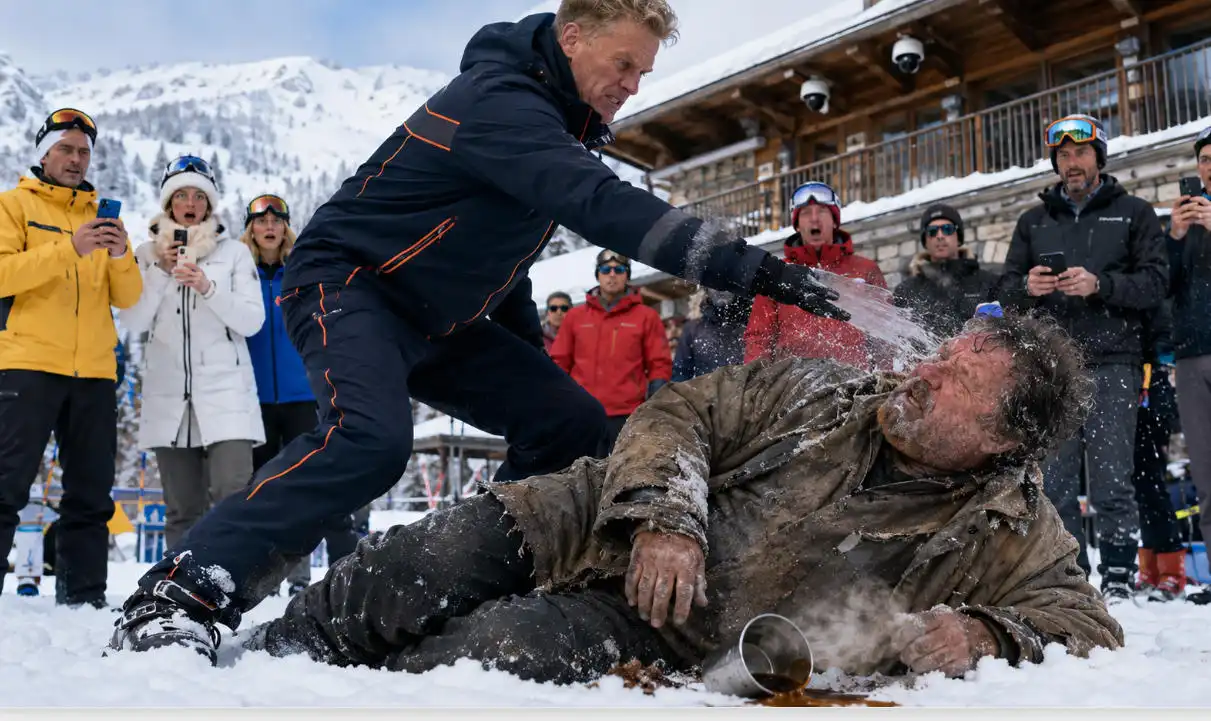
A Round-Bellied Carpenter Was Humiliated by an Elite Ski Coach in Front of Rich Guests… But Sven Had NO IDEA Who Bob Really Was 😳
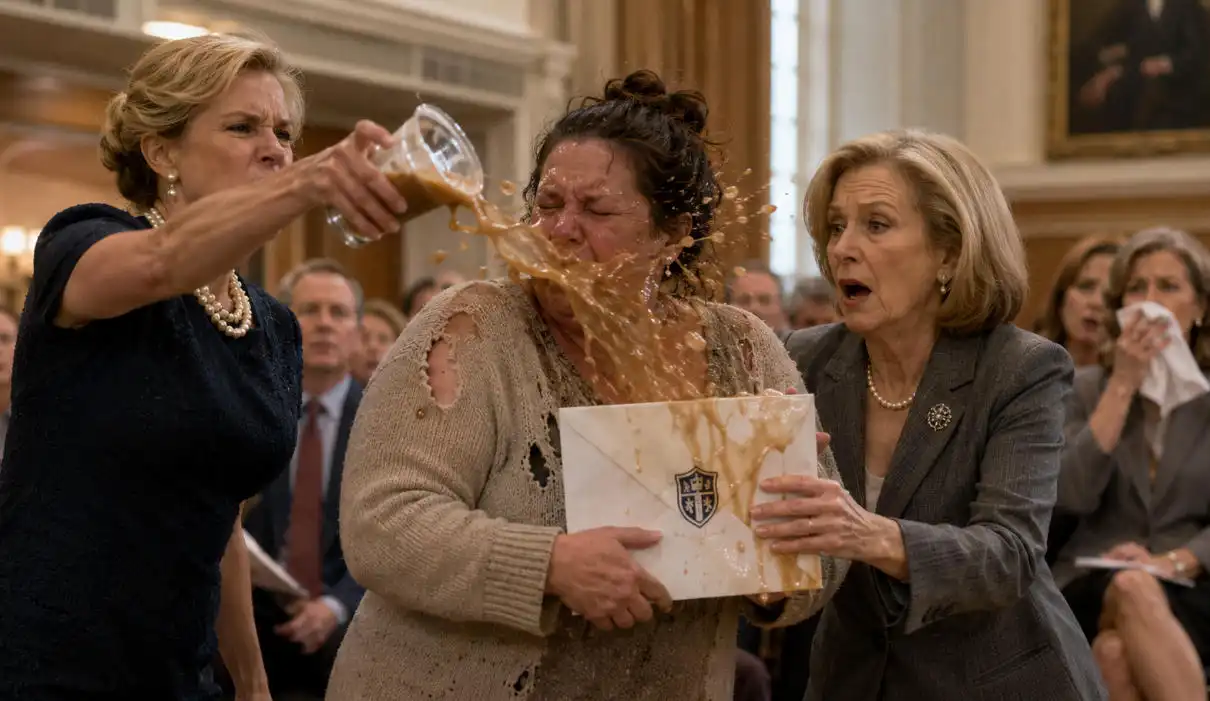
Parents Covered Their Noses When the “Cheap Mom” Walked In… Minutes Later, the PTA Queen Was on Her Knees Begging 😮