
The microphone squealed.
Nobody moved.
Preston still had one hand on Edgar’s torn jacket, but his grip suddenly looked less confident.
The sealed folder in the club president’s hand seemed to weigh more than a saddle.
And Edgar, dripping dirty stable water onto the grass, only said one quiet sentence.
“Let him finish.”
That was the part nobody understood.
Not yet.
Because five minutes earlier, Edgar had looked like the easiest man in the world to disrespect.
He was short, thick around the middle, and dressed like he had come to fix a broken gate.
Old boots.
Faded jeans.
A hardware-store jacket with the zipper half-broken even before Preston finished tearing it.
At the Hampton Royal Polo Club, appearances were everything.
Men arrived in linen.
Women arrived in pearls.
Guests donated five figures and called it “doing good.”
And Preston Whitmore acted like the entire field belonged to him.
His father’s company sponsored the charity match.
His family name was printed on banners near the champagne tent.
His friends called him “the Prince of Polo,” and Preston believed it.
So when Edgar stepped near the stables and looked at the black Arabian horse, Preston saw an opportunity.
Not to be kind.
To perform.
To make the rich people laugh.
“Lost, buddy?” Preston asked, loud enough for the nearest table to hear.
Edgar turned.
“No,” he said. “Just looking.”
“At what?”
“The horses.”
Preston smiled.
That kind of smile rich boys use when they think cruelty is charm.
“The horses?” he repeated. “You know this isn’t a petting zoo, right?”
A few people laughed.
Edgar didn’t.
Preston looked him up and down.
The boots.
The jacket.
The belly.
The tired eyes.
Then Preston raised his voice.
“Ladies and gentlemen, we have a man here who thinks staring at a horse makes him a polo patron.”
More laughter.
One woman near the rail covered her mouth and whispered, “Poor thing.”
Another man said, “He probably came with the catering crew.”
Edgar heard every word.
He just stood there.
Preston stepped closer.
“That black Arabian costs more than your house,” he said.
Edgar looked at the horse again.
The horse lifted its head.
Calm.
Alert.
Almost like it recognized him.
Preston noticed that too.
And it irritated him.
“Don’t look at him,” Preston snapped. “You couldn’t afford one hoof.”
Edgar said nothing.
That silence made Preston angrier than any insult could have.
People like Preston need fear.
They need begging.
They need someone to shrink.
Edgar didn’t shrink.
So Preston decided to make him.
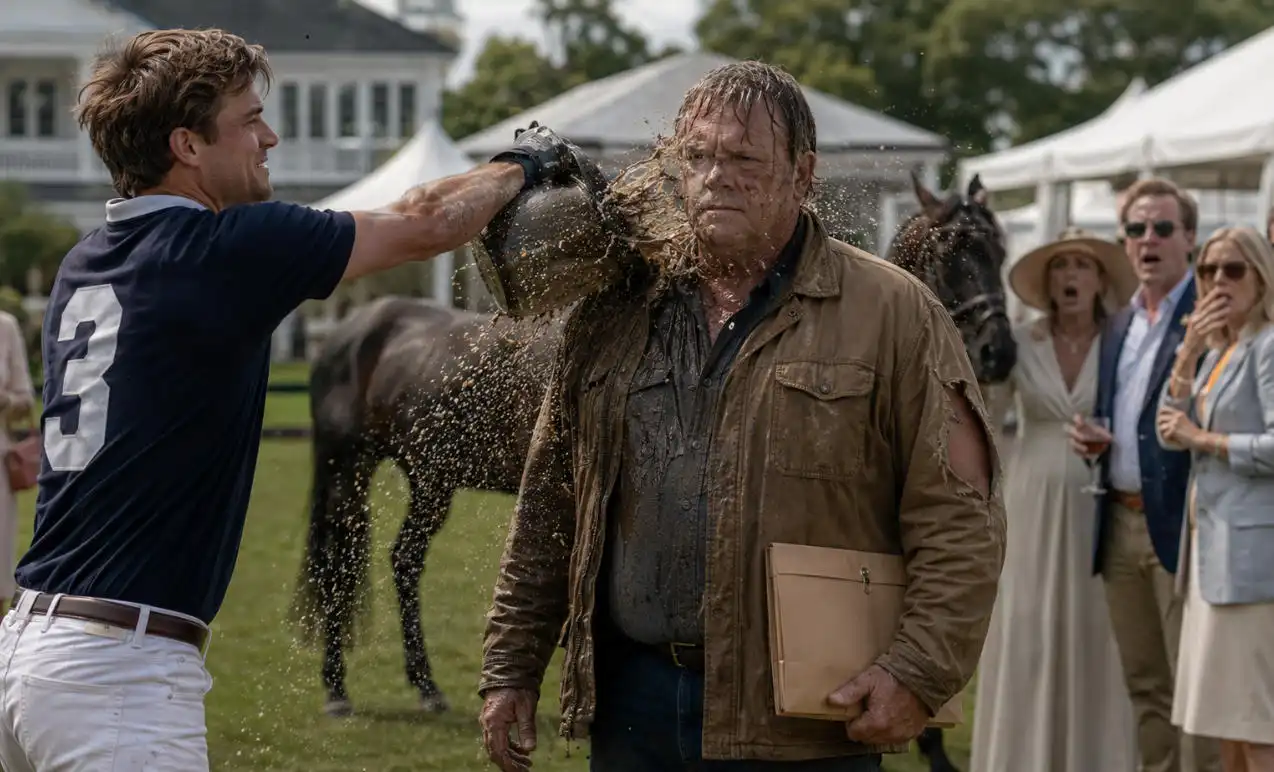
He turned toward the stable hands and grabbed a bucket sitting near the water trough.
The water inside was filthy.
Gray-brown.
Floating hay.
Mud from hooves.
The kind of water no decent person would throw on an animal, let alone a man.
One older woman gasped.
“Preston, don’t.”
But Preston loved having an audience.
He lifted the bucket.
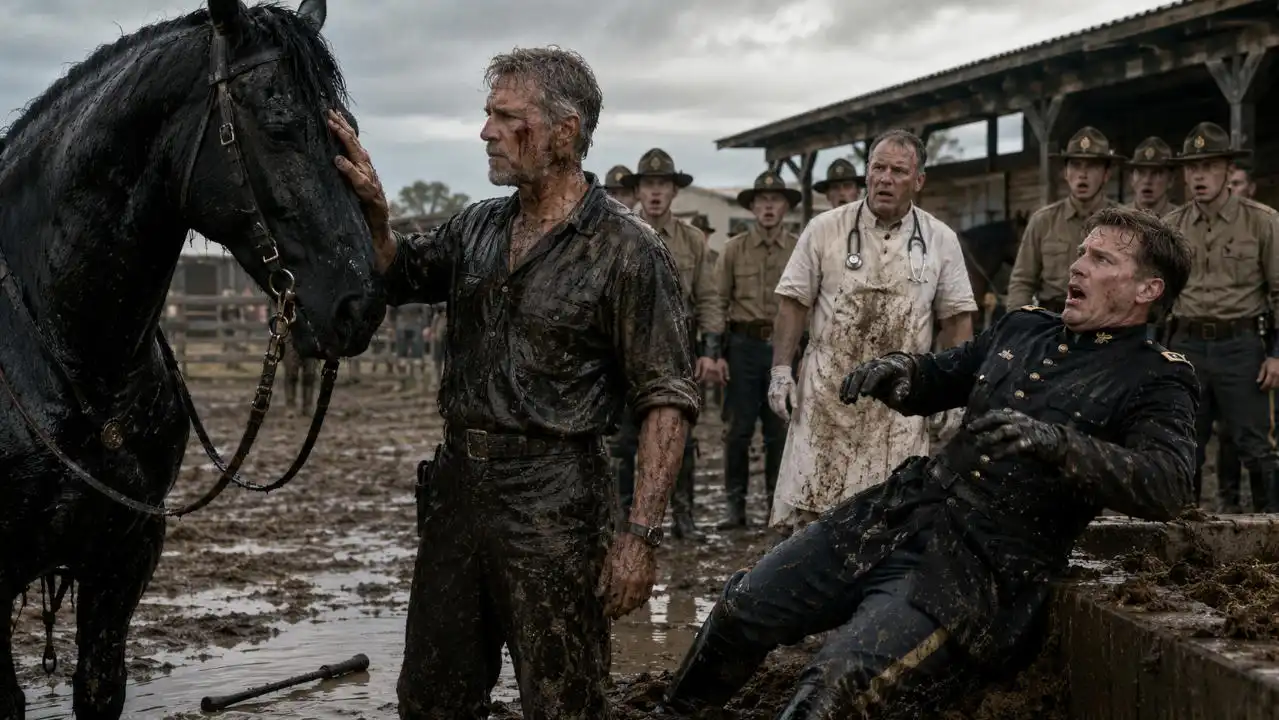
Then threw it straight into Edgar’s face.
The splash cracked through the air.
Edgar’s cap fell off.
Dirty water ran down his cheeks, into his beard, over his shirt.
The crowd went quiet for half a second.
Then Preston laughed.
“Now he smells like the stables he belongs in.”
Edgar wiped his eyes.
Still calm.
Still quiet.
That made Preston step closer.
“You deaf?”
Edgar finally looked at him.
“No.”
Preston slapped him.
Not hard enough to injure him badly.
Hard enough to humiliate him.
The sound carried across the grass.
Phones came up.
People recorded.
Nobody moved.
Preston grabbed Edgar by the hair near his temple and shoved him backward.
Edgar stumbled.
Preston pushed again.
This time Edgar fell to one knee.
The rich crowd murmured.
Some shocked.
Some amused.
Some pretending not to see.
Then Preston caught the front of Edgar’s jacket and yanked.
The zipper ripped.
The fabric tore open.
A small brass key fell out and landed in the grass.
Preston looked down at it.
“What’s that?” he sneered. “Key to the tool shed?”
More laughter.
Edgar slowly picked up the key.
He put it back in his pocket.
Then he reached inside the torn jacket and took out his phone.
Preston leaned close.
“What are you doing? Calling your manager at the hardware store?”
Edgar tapped the screen once.
Sent a message.
Two words.
Begin now.
That was when the first black SUV appeared at the club gate.
Then the second.
Then the third.
They rolled in slowly, like they belonged there.
Preston turned.
“What is this?”
The club president, Harold Winslow, had been standing near the sponsor tent.
He was a polished man.
Silver hair.
Perfect blazer.
Always smiling for donors.
But when he saw the SUVs, his face changed.
His mouth opened slightly.
His champagne glass lowered.
Then a woman from the first SUV stepped out holding a leather document case.
Behind her came two attorneys.
Behind them came the club’s financial director.
And every one of them walked straight to Edgar.
Not Preston.
Not the sponsors.
Edgar.
The crowd noticed.
So did Preston.
“What the hell is going on?” Preston demanded.
Edgar didn’t answer.
He was still wet.
His torn jacket clung to him.
There was mud on his collar.
But somehow, he looked less like a victim now.
He looked like a man who had been waiting.
The woman with the document case stopped beside him.
“Mr. Caldwell,” she said, “we’re ready.”
Preston blinked.
“Mr. who?”
The club president hurried over to the microphone near the charity stage.
His hands shook as he opened a sealed folder.
The same folder Preston had stared at moments earlier.
Gold lettering on the front:
EDGAR CALDWELL HOLDINGS
The crowd leaned in.
Preston’s father, Richard Whitmore, stepped out from the sponsor tent looking confused and annoyed.
“Harold?” he called. “What’s happening?”
Harold swallowed.
Then he spoke into the microphone.
“Ladies and gentlemen, before today’s charity match continues, I need to announce a change in club ownership.”
A ripple moved through the crowd.
Preston laughed once.
A nervous, fake laugh.
“What does that have to do with him?”
Harold looked at Edgar.
Then back at the audience.
“As of 9:00 this morning, the Hampton Royal Polo Club, its grounds, its stable operations, and every registered competition horse under the club trust were transferred to the sole ownership of Edgar Caldwell.”
Silence.
Real silence.
The kind that makes birds sound loud.
Preston’s face emptied.
Someone whispered, “That man owns the club?”
Another said, “And the horses?”
Harold nodded stiffly.
“Including the black Arabian stallion, Monarch.”
Preston slowly looked toward the horse.
The horse he had said Edgar couldn’t afford to look at.
Edgar owned him.
Edgar owned the field.
The stables.
The clubhouse.
The charity pavilion.
The trophies.
The gates Preston had walked through like a prince.
Preston turned pale.
“No,” he said. “That’s impossible.”
Edgar finally spoke.
“My grandfather built horse barns before he ever owned a house. My father sold tack out of a garage. I run hardware stores because I like honest work.”
He looked down at his torn jacket.
“And because it helps me see how people treat a man when they think he has nothing.”
The crowd shifted uncomfortably.
People who had laughed now looked at their shoes.
But Edgar wasn’t finished.
He nodded to the woman with the document case.
She handed another folder to the club president.
Harold looked at Preston’s father.
“Richard,” he said quietly, “there’s more.”
Richard Whitmore’s face hardened.
“This is a charity event. Whatever this is, it can wait.”
“No,” Edgar said. “It can’t.”
The woman opened the folder and addressed the crowd with the calm voice of someone paid to destroy excuses.
“Whitmore Sporting Goods has been in default on three major loans for eleven months. The company’s emergency collateral package included its sponsorship rights, equipment contracts, and vendor exclusivity at this club.”
Richard’s jaw tightened.
Preston stared at his father.
“Dad?”
The attorney continued.
“Those debts were purchased last week by Caldwell Holdings.”
Preston took one step back.
“No.”
“And as of this afternoon,” she said, “Caldwell Holdings has completed acquisition proceedings for the remaining assets of Whitmore Sporting Goods.”
A woman near the champagne table whispered, “Oh my God.”
Richard Whitmore’s face turned gray.
Preston looked between his father and Edgar.
“You bought our company?”
Edgar wiped a drop of dirty water from his chin.
“I bought your debt. Your lenders sold it because they lost faith in your family’s management.”
Richard snapped, “You ambushed us.”
Edgar shook his head.
“No. Your company failed before I ever made an offer. I just read the papers your own lawyers filed.”
Then he turned toward Preston.
“And you gave me something better than a signed contract.”
Preston’s eyes narrowed.
“What?”
Edgar pointed around the field.
“The cameras.”
Every phone.
Every guest video.
Every security camera mounted on the stable roof.
Every bit of audio from the charity stage.
Preston’s slap.
The shove.
The torn jacket.
The dirty water.
All of it.
Public.
Recorded.
Unedited.
Edgar looked at Harold.
“Please read the conduct clause.”
Harold’s lips pressed together.
He read from the club rules.
“Any member or guest who physically assaults, publicly degrades, threatens, or intentionally damages the property of another guest or owner may be removed permanently from the club, stripped of privileges, and barred from employment, sponsorship, or participation in club events.”
Preston tried to laugh.
“You can’t ban me. My family built this place.”
Edgar stepped closer.
“No, Preston. My family just bought it.”
That line hit harder than the slap had.
The crowd didn’t laugh this time.
They watched.
Preston turned to his father.
“Do something.”
Richard Whitmore didn’t move.
He couldn’t.
His company was gone.
His sponsorship was gone.
His power was gone.
The banners with his family name were already being taken down by club staff.
One by one.
Preston saw it happening.
The Whitmore logo peeled away from the white tent.
His name vanished from the saddle blankets.
The table reserved for his family was cleared.
His world was being removed in daylight.
In front of everyone he had performed for.
Then Edgar gave the final order.
“Preston Whitmore is banned from playing on this field.”
Preston’s mouth fell open.
“Wait—”
“He is banned from club membership.”
“Edgar, come on—”
“And his family’s vendor contract is terminated effective immediately.”
Preston’s voice cracked.
“You can’t ruin us over one mistake.”
Edgar looked at his soaked shirt.
His torn jacket.
The mud still drying on his face.
“One mistake?”
He stepped even closer.
“You poured filth on a man because you thought he was poor.”
Preston said nothing.
“You hit him because you thought nobody important would care.”
Still nothing.
“You tore his clothes because you thought money made you untouchable.”
The crowd was dead silent.
Edgar lowered his voice.
“But the problem with looking down on people, Preston, is that you never see who’s standing above you.”
That was when Preston broke.
Not with dignity.
Not with an apology.
With fear.
He dropped to his knees on the grass.
Right there in front of the donors, the riders, the cameras, the women who had laughed, and the men who had cheered him on.
“Please,” he said. “Please, Mr. Caldwell. I didn’t know.”
Edgar’s eyes hardened.
“That is exactly the problem.”
Preston raised his hand and slapped his own cheek.
Once.
Then again.
“Please,” he said. “I’m sorry.”
Another slap.
“I’m sorry.”
Another.
Edgar didn’t smile.
He didn’t enjoy it.
He simply said, “Stop embarrassing yourself. You’ve done enough of that.”
Preston froze.
His face was red.
His white riding pants were stained with grass.
His friends looked away.
Not one of them stepped forward.
That is the thing about fake power.
It travels in packs.
But it dies alone.
Two weeks later, the Whitmore estate went up for private sale.
Whitmore Sporting Goods became part of Caldwell Holdings.
Most employees kept their jobs.
Edgar made sure of that.
He fired the executives who had hidden debt from suppliers.
He paid the overdue invoices to small vendors first.
He even kept the factory open.
But Preston?
Preston received one offer.
Not as a player.
Not as a sponsor.
Not as a member.
As a stable cleaner.
Minimum wage.
Work boots required.
No special parking.
No family privileges.
When Harold asked Edgar if that was too harsh, Edgar said, “Honest work is not punishment. Thinking it is—that’s the disease.”
So Preston took the job.
Not because he was humble.
Because he had no choice.
Every morning, he cleaned the stalls of the same horses he once bragged about owning.
He scrubbed troughs.
He hauled hay.
He swept the stable aisle while men he used to mock walked past him without fear.
And Edgar never mocked him back.
Not once.
That bothered Preston more than revenge ever could.
On the first Saturday after the ownership change, the club held another charity match.
The banners were different.
No Whitmore name.
No fake royal act.
Just a simple sign:
Caldwell Foundation Match — Supporting Working Families
The guests arrived quieter this time.
More respectful.
The staff were greeted by name.
The stable workers ate from the same catered tables as the donors.
And Edgar?
He arrived in a clean jacket.
Still simple.
Still not flashy.
He walked to the end stall.
Monarch, the black Arabian, stepped forward and pressed his nose gently against Edgar’s shoulder.
Edgar smiled for the first time all day.
Then he mounted that magnificent horse.
The crowd watched as Edgar rode slowly across the field.
Not like a man showing off.
Like a man coming home.
Preston stood near the stable doors holding a broom.
He looked down.
Edgar passed him without a word.
No insult.
No sneer.
Just silence.
That silence said everything.
The same people who had laughed at Edgar now stood in respect.
Some clapped.
Then more joined.
Soon the whole field was applauding.
Edgar rode Monarch along the rail, the sunlight catching the horse’s black coat like polished glass.
For a moment, nobody saw the hardware-store owner.
Nobody saw the torn jacket.
Nobody saw the man they had judged by his boots.
They saw the owner.
The builder.
The man who had enough power to crush Preston completely…
But enough character not to become him.
And that is why the story spread through Hampton faster than any polo score ever did.
Not because a rich kid fell.
But because a quiet man proved something old-fashioned and true:
Money can buy a field.
It can buy a horse.
It can buy a name on a banner.
But it cannot buy class.
Share this if you believe Edgar handled it better than Preston deserved. And choose a side: was Edgar right to make Preston clean the stables, or should he have banned him from the property forever? 🐎
Disclaimer: Mention of any brand or trademark is for identification only and does not imply partnership or endorsement
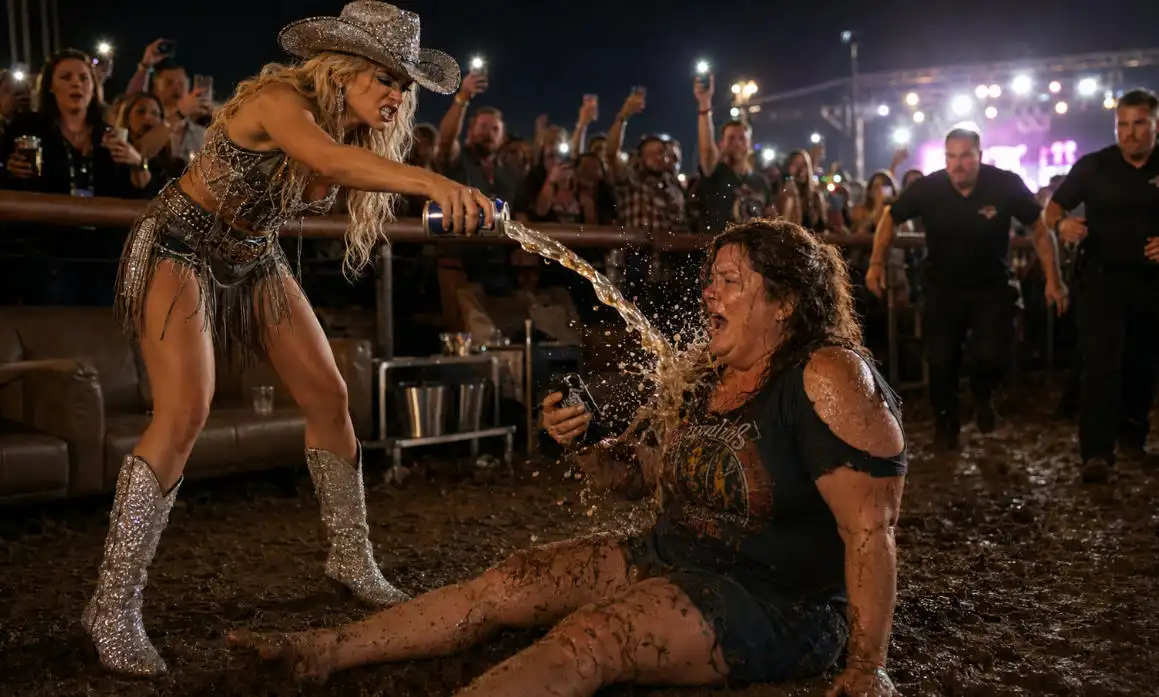
A Pop Star Slapped A Quiet Woman In The VIP Section While Fans Filmed… Her REGRET Started Before The First Song Ended
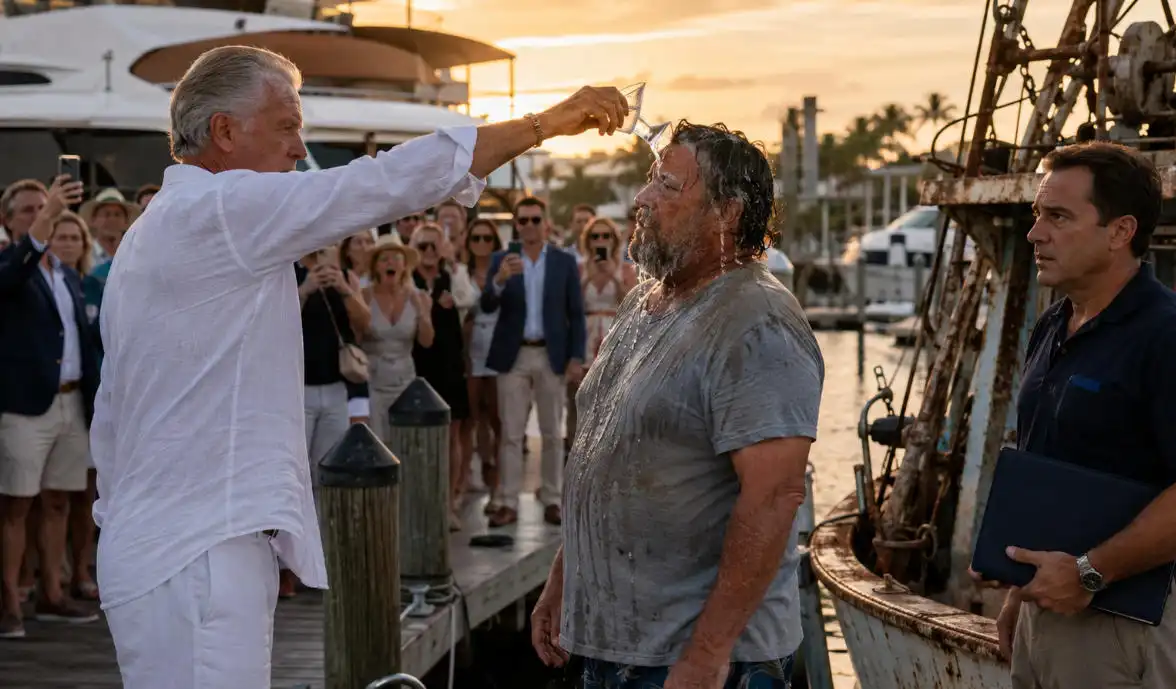
A Big-Bellied Fisherman Was Laughed Off A Miami Yacht Dock By A Snobby Club President… But Chad Had NO IDEA What Gary Had Signed That Morning 😳
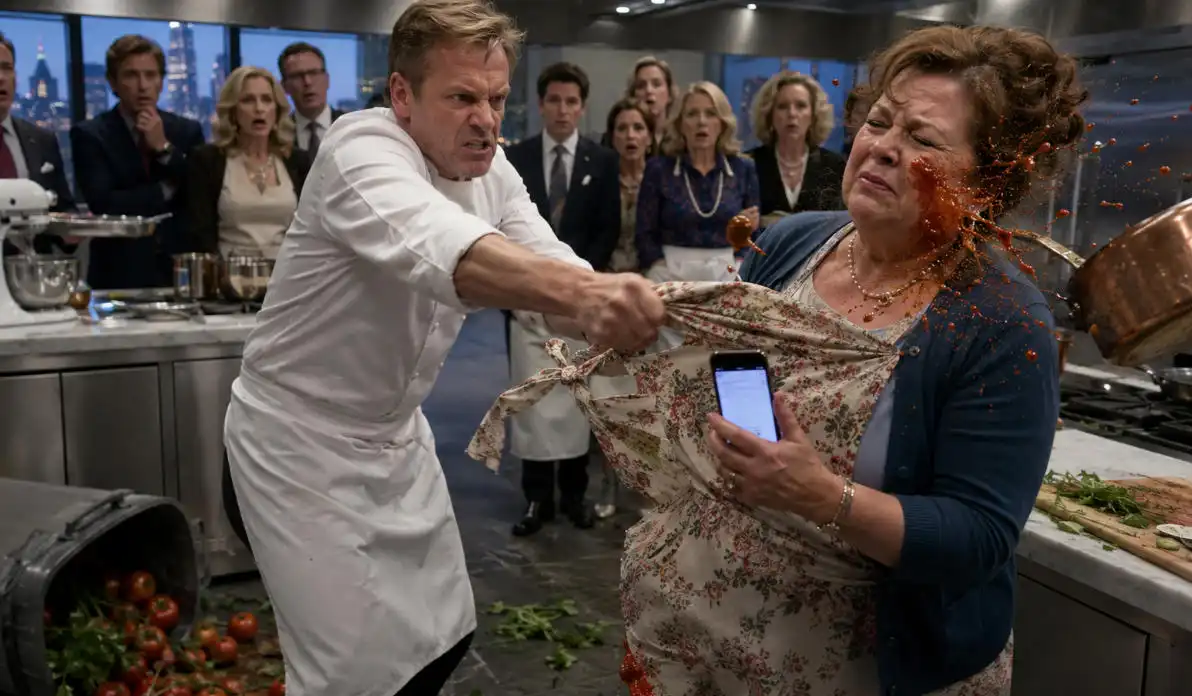
He Slapped A Quiet Housewife In Front Of Food Critics… Minutes Later, KARMA Walked Into His Own Kitchen ⚖️