

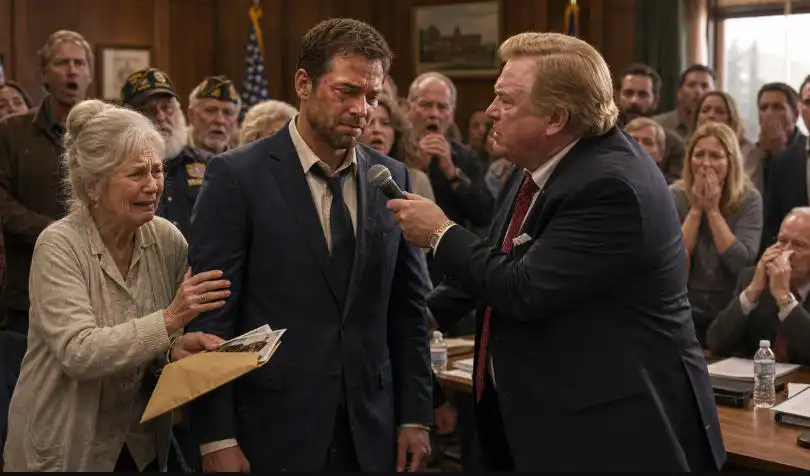
The councilman shoved the microphone into Mark’s chest hard enough to make the old speakers scream.
“Go ahead, convict,” he said. “Tell these decent people why they should trust prison trash.”
The words did not just land on Mark.
They landed on every person in that packed town hall.
The room went stiff.
A mother in the second row pulled her little boy closer.
An old veteran near the aisle lowered his eyes.
Somebody near the back gave a nervous laugh, the kind people make when they are too afraid to stand up to a bully.
Mark Reynolds stood at the center of it all in a worn blue suit, a white shirt that had been ironed too many times, and shoes polished until the leather looked tired.
Across from him stood Councilman Victor Briggs.
Gray suit.
Gold watch.
Smooth hair.
Smile like a locked door.
For eighteen years, Briggs had owned that room. He had owned the zoning board, the budget committee, the charity dinners, the ribbon cuttings, and half the men who called themselves “public servants.”
Mark owned nothing but a small rented house, a pickup truck with 211,000 miles, and a name people still whispered like a warning.
Former prisoner.
Convict.
Felon.
Mistake.
Briggs lifted a folder and waved it at the crowd.
“This man wants to sit on our town council,” he said. “This man wants to vote on our laws. This man wants your trust.”
He turned toward Mark and smiled.
“You have some nerve.”
Mark did not reach for the microphone.
He did not curse.
He did not defend himself.
That made Briggs angrier.
“You think a clean haircut and a cheap suit makes you one of us?” Briggs said.
A few people shifted in their seats.
The election board sat at a folding table near the front. Three members. All pale-faced now. None of them brave enough to interrupt.
Briggs pointed at Mark’s chest.
“You were in prison.”
“Yes,” Mark said quietly.
“For burglary.”
“Yes.”
“You stole.”
“Yes.”
“And now you want to make decisions for honest families?”
Mark’s jaw tightened.
“I want to serve the town I hurt,” he said.
Briggs laughed so loudly it bounced off the wooden walls.
“Serve? You people always have a speech.”
“You people?” Mrs. Holloway said from the third row.
Every head turned.
Eleanor Holloway was seventy-two years old, Mark’s former high school English teacher, and the kind of woman who still wrote thank-you notes by hand. She walked with a cane, wore a navy cardigan, and had a voice that could make a football player apologize for chewing gum.
Briggs rolled his eyes.
“Mrs. Holloway, with respect, this is official business.”
“With respect,” she said, “you wouldn’t recognize official business if it knocked on your door with a warrant.”
A murmur passed through the town hall.
Mark looked at her, and for the first time that evening, his face softened.
She had been there when no one else was.
When he came home from prison and nobody would hire him.
When the grocery store manager threw away his application.
When the church committee argued about whether he should be allowed to volunteer.
Mrs. Holloway had given him his first honest chance.
She paid him fifty dollars to repair her back steps. Then she told her neighbor he was reliable. Then the neighbor told the church. Then the church asked him to help patch the roof after a storm.
Slowly, Mark became useful again.
Not forgiven by everyone.
But useful.
And sometimes useful is the first step back to human.
Briggs slapped the folder against his palm.
“This is not a sermon,” he said. “This is law.”
He turned to the election board.
“I am formally requesting that Mark Reynolds be removed from the ballot immediately. His criminal record makes him morally unfit and legally disqualified.”
One of the board members, a nervous man named Mr. Cale, cleared his throat.
“Councilman Briggs, we would need to review—”
“Review?” Briggs snapped. “It’s right here.”
He threw copies of Mark’s record across the table.
The pages slid, scattered, and one fell at Mark’s feet.
A woman gasped.
That was the moment people remembered.
Not the insult.
Not the folder.
The paper at Mark’s feet.
Because Briggs did not just expose him.
He tried to make him bend down and pick up his shame.
Mark looked at the page.
Then he looked at Briggs.
And he left it on the floor.
Briggs leaned closer.
“Pick it up,” he said.
Mark said nothing.
“I said pick it up.”
Mrs. Holloway’s cane struck the floor once.
Hard.
“No,” she said.
Briggs turned on her.
“Stay out of this, Eleanor.”
She stood slowly.
The whole room watched her rise.
“That boy made mistakes,” she said. “But you just lied to this entire town.”
Briggs smirked.
“Oh, teacher wants to play lawyer now?”
“No,” Mrs. Holloway said. “I want to play witness.”
The room went silent.
Mark reached inside his jacket.
Briggs noticed.
For the first time all night, his confidence flickered.
Mark pulled out a sealed envelope.
Plain white.
No logo.
No drama.
Just one envelope.
He held it toward the election board.
“Before you remove my name from the ballot,” Mark said, “I’d like this entered into the public record.”
Briggs’ smile disappeared.
“What is that?”
Mark did not answer him.
Mr. Cale looked from the envelope to Briggs.
“Mr. Reynolds,” he said carefully, “what are you submitting?”
“Proof that my civil rights were restored eight years ago,” Mark said. “Proof that I am legally eligible to run.”
The crowd shifted.
Briggs recovered fast.
“That doesn’t make him fit,” he said. “Eligibility is not character.”
Mark nodded.
“You’re right.”
That answer seemed to surprise everyone.
Mark took the microphone gently this time.
“I was twenty-six when I broke into Mr. Lansky’s hardware store,” he said. “I was drunk. Angry. Broke. I told myself the world owed me something because my father left and my mother got sick and life had been unfair.”
He looked toward the back of the room.
“But none of that gave me the right to take what wasn’t mine.”
No one moved.
Mark continued.
“I went to prison. I deserved it. I missed my mother’s last Thanksgiving because of what I did. I missed my niece being born. I lost my name. I lost friends. And for a while, I thought maybe people were right—that once you fall, you should stay down so decent folks don’t have to look at you.”
Mrs. Holloway wiped her eye.
Mark’s voice shook, but it did not break.
“Then my old teacher gave me work. Not pity. Work. She told me if I wanted dignity, I had to earn it every day when nobody clapped.”
He turned to the town.
“So I did.”
A man in a feed-store cap nodded.
Mark said, “I repaired porches. I cleaned gutters. I fixed the church roof. I sat with Mr. Abernathy after his stroke because his son lived three states away. I coached boys who had fathers in jail because I knew what road they were standing near.”
He paused.
“I am not asking this town to pretend I never did wrong.”
He looked at Briggs.
“I am asking this town not to let a man who hides his wrongs lecture a man who confessed his.”
The room changed again.
Not loud.
Not yet.
But something had turned.
Briggs felt it.
So he did what powerful men do when shame gets too close.
He attacked harder.
“You are pathetic,” Briggs said. “You think tears erase a criminal record?”
“No,” Mark said. “But they don’t erase bank records either.”
Briggs froze.
Mr. Cale opened the envelope.
Inside were three items.
A rights restoration certificate.
A notarized statement from Mrs. Holloway.
And copies of checks.
The first check was from a development company called Pine Ridge Holdings.
The second was from the same company.
The third was not a check.
It was a photograph.
Briggs standing behind a restaurant with a man named Dale Crowley, owner of Pine Ridge Holdings, accepting a thick envelope beside a black SUV.
Someone in the crowd whispered, “Lord have mercy.”
Briggs stepped forward.
“That is fabricated.”
Mrs. Holloway raised her chin.
“No, Victor. It’s dated. So are the checks.”
Briggs pointed at her.
“You old fool.”
That was the line that finished him.
The old veteran stood up.
“Don’t you talk to her like that.”
Then another man stood.
Then a woman.
Then a young mechanic near the back lifted his phone and said, “I’ve been recording since he called Mark trash.”
Briggs looked around.
For the first time in years, the room did not belong to him.
Mark turned to the election board.
“Councilman Briggs pushed a zoning change last spring that would have forced six families on Mill Road to sell their land cheap. Pine Ridge Holdings bought options on that land two weeks before the vote.”
A woman cried out.
“My brother lives on Mill Road.”
Mark nodded.
“I know.”
He looked at her gently.
“That’s how I found it.”
The truth was simple, but deadly.
Mark had not gone hunting for revenge.
He had gone looking for why old Mrs. Turner on Mill Road had received a letter telling her the town might condemn part of her property for “commercial improvement.”
She was eighty-one.
She called Mark because he had fixed her porch rail.
“Mark,” she had said, voice trembling, “I don’t understand these papers.”
Mark did not understand them either.
So he took them to Mrs. Holloway.
Mrs. Holloway took them to a retired county clerk she knew from church.
The clerk noticed the dates.
Then Mark started attending public meetings quietly.
No speeches.
No accusations.
He sat in the back and collected agendas, minutes, donor records, and filings.
Briggs never noticed him.
That was his mistake.
He thought Mark was only a past.
He never imagined Mark could read the present.
Within a month, they had a pattern.
Pine Ridge Holdings donated to Briggs’ “community improvement fund.”
Briggs pressured the zoning board.
Families got letters.
Land values dropped.
Pine Ridge moved in.
And behind the paperwork was a councilman who spoke about morality while selling out widows.
Mr. Cale held the photograph like it had burned his fingers.
“Councilman Briggs,” he said, “is this you?”
Briggs straightened his tie.
“I don’t have to answer slander in a circus.”
“You made it a circus,” someone shouted.
Briggs grabbed his folder from the table.
“This meeting is over.”
“No,” Mrs. Holloway said. “It has finally begun.”
Two sheriff’s deputies entered from the side door.
The crowd turned.
Briggs looked at them, then at Mark.
“You did this?”
Mark shook his head.
“You did.”
The senior deputy walked to the front.
“Councilman Victor Briggs?”
Briggs tried to laugh.
“Tom, don’t embarrass yourself.”
The deputy did not smile.
“We need you to come with us. The county prosecutor has questions regarding bribery, official misconduct, and falsified disclosures.”
The town hall erupted.
Not cheering.
Not at first.
It was shock.
The kind that makes people look at their neighbors and realize they had all been quietly afraid of the same man.
Briggs’ face went red.
“This is political!”
Mark said, “No. It’s public record.”
Briggs lunged toward the table and tried to snatch the documents.
Mark stepped between him and Mrs. Holloway.
Briggs slammed into Mark’s shoulder, and for one second, the old version of Mark could have come back.
The angry version.
The version Briggs wanted the town to see.
But Mark only planted his feet.
He did not shove back.
He did not raise a fist.
He said, “Not tonight.”
The deputy took Briggs by the arm.
Briggs twisted away.
“You people are making a mistake!”
Mrs. Holloway looked at him.
“No, Victor. For once, we’re correcting one.”
They led him out under the bright lights of the town hall.
Phones recorded.
Neighbors stared.
The man who had spent years deciding whose voice counted now had no control over the whispers following him to the door.
Three weeks later, the investigation became official.
More records came out.
Briggs had taken money through fake consulting fees, campaign donations routed through shell companies, and “gifts” from developers who wanted zoning favors.
Two board members resigned.
The Mill Road project was frozen.
Families who had been pressured to sell got legal help.
And Mark Reynolds stayed on the ballot.
That part mattered most to him.
Not because he wanted power.
Because he wanted the town to decide with the truth in front of them.
Election day came cold and clear.
Mark voted at the firehouse.
He wore the same blue suit.
Mrs. Holloway came with him, leaning on her cane.
When he fed his ballot into the machine, she patted his arm.
“Your mother would have been proud,” she said.
Mark looked away fast.
“I hope so.”
“She would.”
That night, the town gathered again.
Same hall.
Same wooden walls.
Same flickering lights.
But the room felt different.
No one owned it.
That was the beauty of it.
When the results came in, Mr. Cale read them twice because his hands were shaking.
Mark Reynolds had won by a landslide.
For a second, Mark just stood there.
Then the applause began.
Not polite applause.
Not charity applause.
It came from people who had watched him fall, watched him return, watched him refuse to become cruel even when cruelty was handed to him in public.
Mrs. Turner from Mill Road hugged him first.
Then the old veteran.
Then the mechanic who had recorded the meeting.
Then a man Mark did not recognize said, “I didn’t vote for you because I felt sorry for you. I voted for you because you told the truth when it cost you something.”
Mark nodded.
“That’s the only kind worth telling.”
His first proposal as councilman was not dramatic.
It was practical.
All town contracts had to be posted publicly.
All council members had to disclose gifts and outside payments.
Zoning changes required plain-language notices mailed to residents.
Public comment could no longer be cut off because a councilman felt “disrespected.”
And anyone with a criminal record who had completed their sentence and had legal rights restored could apply for town jobs without being automatically thrown away.
Some people fought that last part.
Mark expected it.
At the meeting, a man stood and said, “So now we’re rewarding criminals?”
Mark looked at him calmly.
“No,” he said. “We’re rewarding work, honesty, and accountability. Prison is punishment. Coming home should be responsibility. But if we lock every door forever, don’t act shocked when people stop knocking.”
The room was quiet.
Then Mrs. Holloway said, “Amen.”
People laughed.
And this time, the laughter healed something.
Months passed.
The church roof stopped leaking.
Mill Road families kept their homes.
The town website, once useless, became a place where regular people could actually see where money went.
Mark still heard whispers sometimes.
He knew he always would.
But whispers no longer ruled him.
One evening, after a council meeting, Mark stayed behind to stack chairs.
Mrs. Holloway watched from the doorway.
“You’re a councilman now,” she said. “You don’t have to do that.”
Mark smiled.
“That’s exactly why I do.”
She walked over slowly and handed him a small envelope.
He laughed softly.
“Another one?”
“This one won’t get anyone arrested,” she said.
Inside was an old paper from his high school days.
An essay he had written at seventeen.
The title was: “The Man I Hope To Become.”
Mark read the first line and had to sit down.
He had written:
“I want to be the kind of man people can trust with the lights on and the doors unlocked.”
He covered his face.
For a long moment, he said nothing.
Mrs. Holloway put a hand on his shoulder.
“You’re not the boy who wrote that,” she said. “And you’re not the man who went to prison.”
Mark looked up.
“Then who am I?”
She smiled.
“The man who came back and kept going.”
The next Sunday, Mark visited his mother’s grave.
He brushed leaves from the stone and stood there with his hands in his pockets.
“I’m sorry it took me so long,” he said.
The wind moved through the trees.
No answer came.
But for the first time, Mark did not feel like he was speaking to the past.
He felt like he was bringing it peace.
That is what Briggs never understood.
A record can tell you what a person did.
It cannot tell you who they fought to become.
Briggs had a clean image and dirty hands.
Mark had a stained past and honest ones.
In the end, the town did not choose a perfect man.
It chose a truthful one.
And sometimes that is the closest thing to justice a town can get. ⚖️
Share this if you believe a person who owns their mistakes deserves a second chance—and comment SECOND CHANCE if you stand with Mark, or NEVER if you think the past should decide everything.
Disclaimer: Mention of any brand or trademark is for identification only and does not imply partnership or endorsement
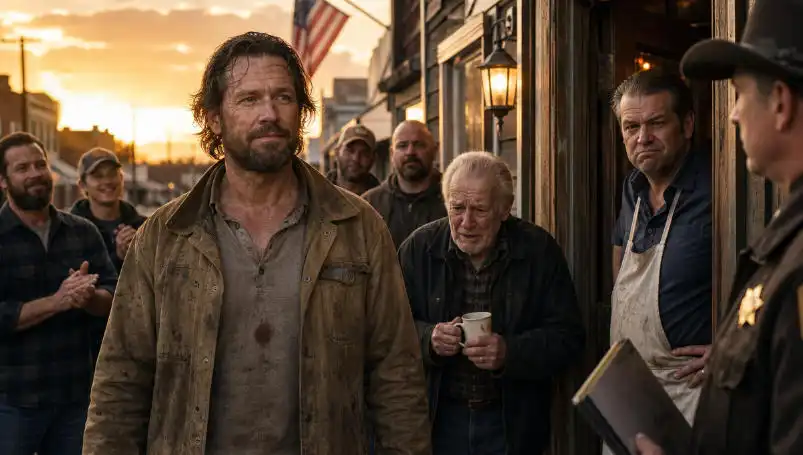
The Tavern Owner Set A Trap To Make Paul Drink Again… But He Had NO IDEA The Entire Town Was Watching 👀
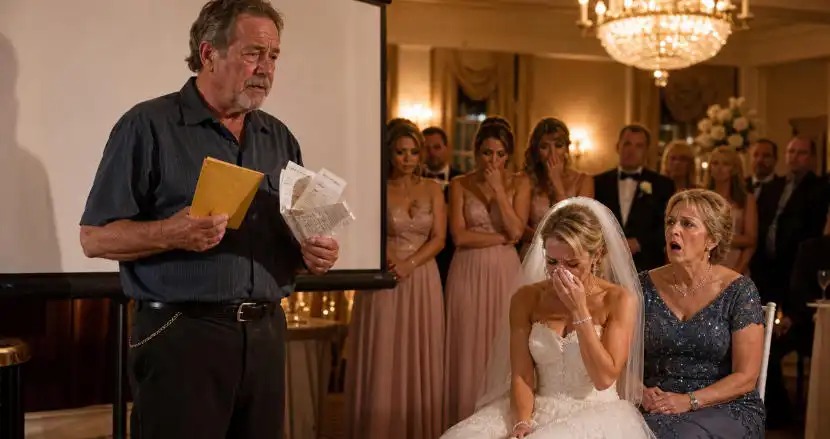
My Stepdaughter Thought Her Real Father Paid for Her Golf Club Wedding… Then I Showed the Guests the Letter He Sent Me

She Called My Aunt “A Bankrupt Fake” In Front Of The Whole Table… Then The Ship’s Captain Got Down On One Knee ⚓