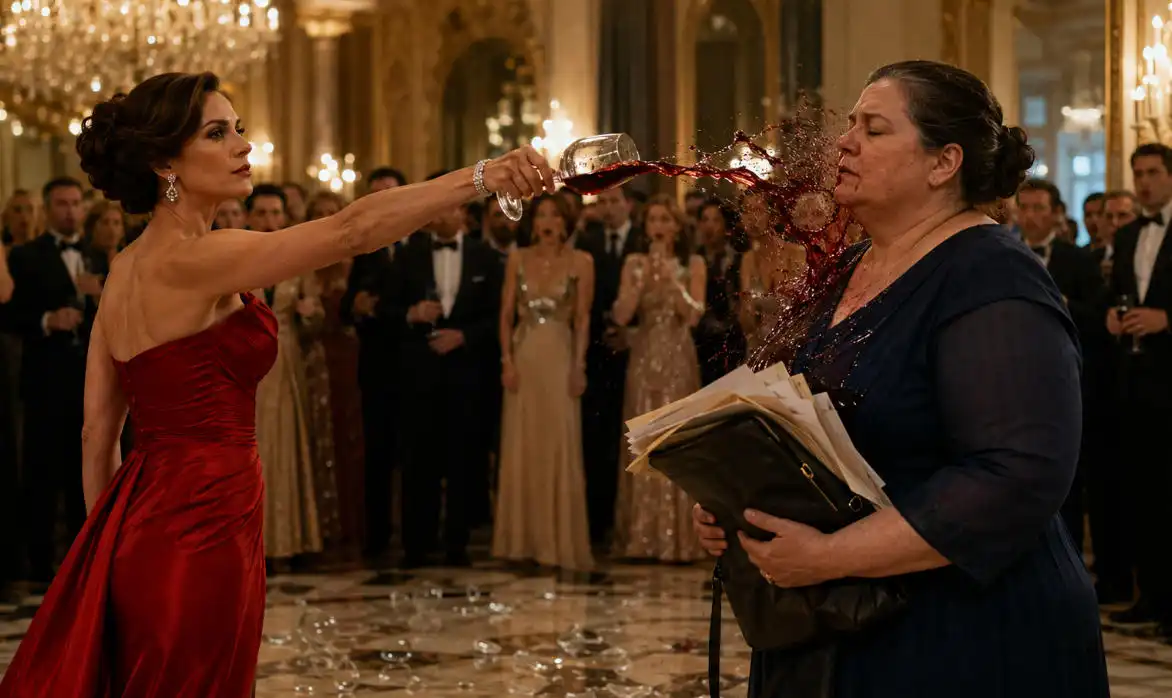
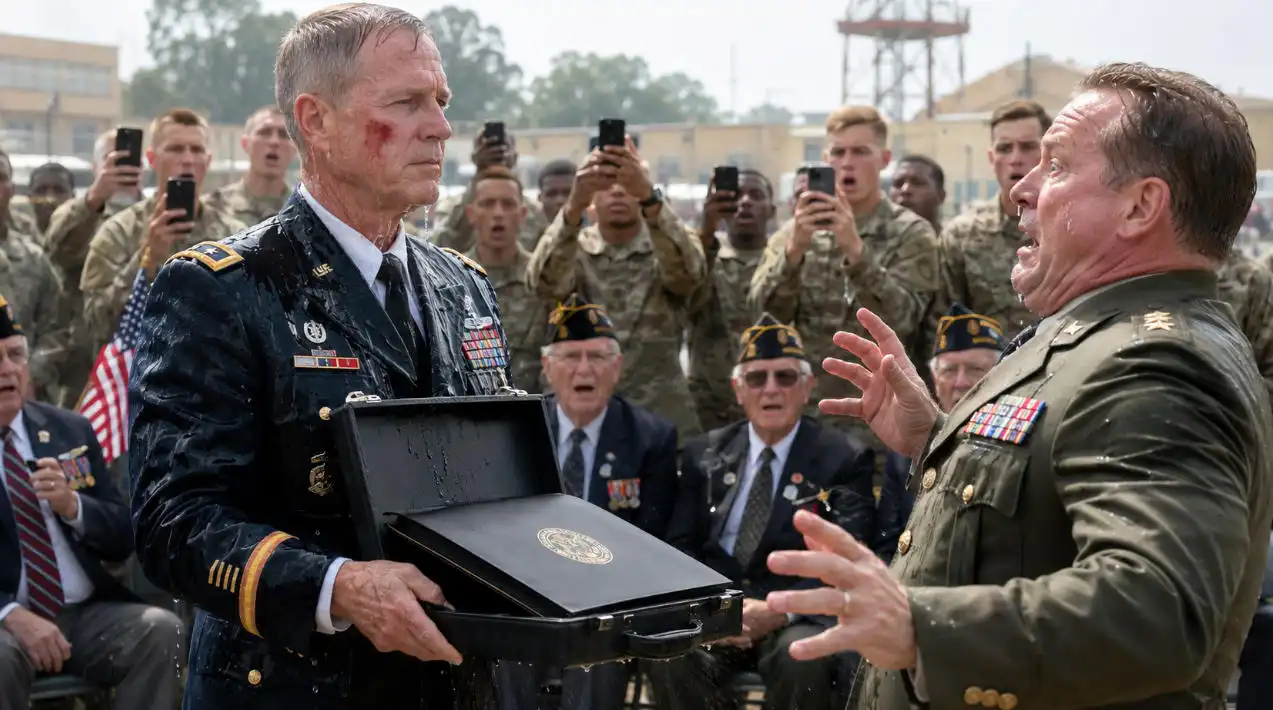
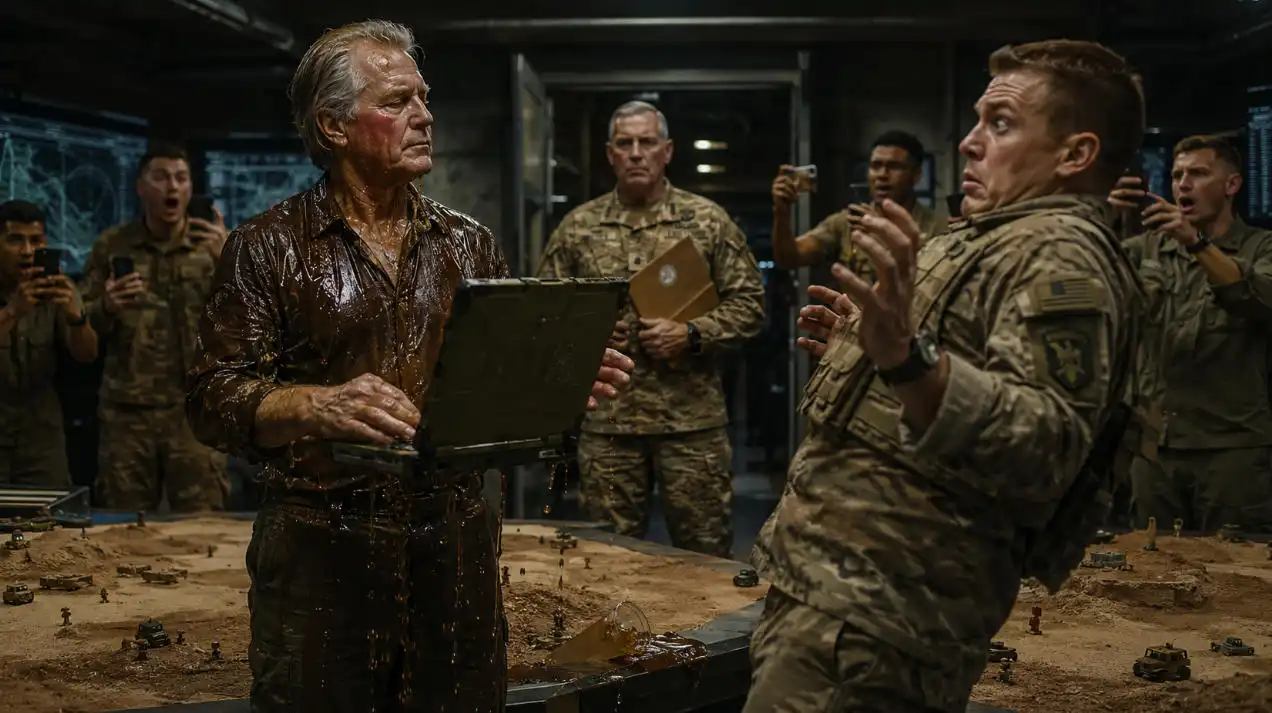

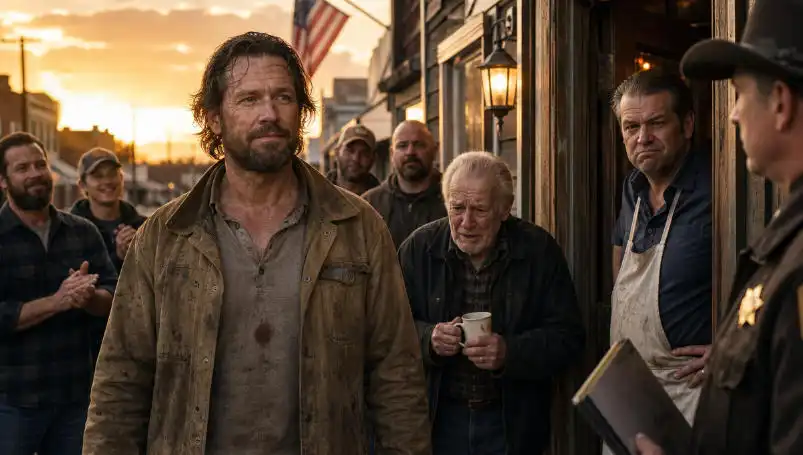
Sheriff Miller stepped onto the tavern porch holding a sealed folder—and said the one sentence Earl Whitaker never expected.
“Earl, step away from that glass.”
The whole street went silent.
Even the neon beer sign in Whitaker’s Tavern seemed to buzz softer.
Earl’s hand was still hanging in the air, fingers curled around the whiskey glass he had just shoved against my chest.
The smell of it was on my shirt.
Sharp.
Sweet.
Familiar.
Three years earlier, that smell would have pulled me under like a hook through the ribs.
But not that day.
Not in front of Harlan.
Not in front of Bill.
Not in front of every shaking, ashamed, half-broken man who had come to believe Earl Whitaker owned the door between them and sobriety.
Earl forced a laugh.
“Sheriff, this is none of your business.”
Sheriff Miller didn’t laugh back.
“It became my business when you started using debt, intimidation, and free liquor to keep men drinking after they asked you to stop serving them.”
A woman near the curb whispered, “Lord have mercy.”
Earl turned red.
“That’s a lie.”
I wiped whiskey from my jacket with the back of my hand.
“Then you won’t mind if he opens the folder.”
Earl looked at me like he wanted to swing.
A month earlier, he probably would have.
A year earlier, I might have swung first.
That was the thing about men like Earl.
They studied your worst day and tried to make it your name.
He called me “convict” so often some folks in town forgot I had a first name.
Paul Mercer.
That was my name.
I had served four years for a bar fight that almost killed a man.
I had earned every day of that sentence.
I had no excuse for who I used to be.
But I had also spent three years sober.
Three years working maintenance at the church.
Three years sitting in basements with men who smelled like sweat, coffee, shame, and survival.
And six months earlier, I had started something small.
Wednesday nights.
Folding chairs.
Burnt coffee.
No judgment.
We called it the Back Door Meeting because the church basement entrance was in the alley.
Earl called it “my little pity parade.”
At first, he laughed.
Then the men stopped coming into his tavern before noon.
Then they stopped buying bottles on credit.
Then they started showing up at work on time.
Then their wives started smiling at the grocery store.
That was when Earl stopped laughing.
Because Whitaker’s Tavern was not just a bar.
It was a trap with a jukebox.
Earl let men drink on credit.
He kept little notebooks behind the register.
Red ink for debts.
Black ink for paid.
Shame for interest.
He knew whose wife had left.
He knew whose paycheck came Friday.
He knew which old men got Social Security on the third of the month.
He called it friendship.
It was feeding.
The first man who told me the truth was Harlan Beck.
He came into the church basement on a rainy Wednesday with his hat crushed in both hands.
Seventy-one years old.
Widower.
Retired truck mechanic.
He sat in the back and stared at the floor.
After the meeting, he waited until everyone else left.
Then he said, “Paul, I need to tell somebody something ugly.”
I made more coffee.
He took one sip and started crying.
“Earl’s got my check.”
I thought he meant Earl cashed it for him.
He shook his head.
“No. I signed it over. He said I owed him. Said if I didn’t, he’d call my daughter and tell her I was back at the bottle.”
“Were you?”
Harlan looked at me.
“I was trying not to be.”
That sentence stayed with me.
I was trying not to be.
That is where recovery starts.
Not with speeches.
Not with pride.
With a man whispering the truth because lying has finally become heavier than pain.
A week later, Bill showed me his tab.
Two hundred and twelve dollars.
Some of the drinks were dated on nights Bill swore he wasn’t there.
Roy had the same story.
Then Carl.
Then Marvin.
Then a woman named Dottie came to one meeting and said Earl had told her husband, “Your wife likes you better drunk because at least then you’re quiet.”
When I heard that, something old woke up in me.
The old Paul wanted to go straight to Whitaker’s Tavern and drag Earl over the bar.
The old Paul loved simple solutions.
A fist.
A chair.
A broken nose.
A night in jail.
A lifetime proving every bad thing people already thought about him.
But I wasn’t that man anymore.
So I called my sponsor, Frank.
Frank was sixty-three, bald, and had the kind of calm that made angry men feel overdressed.
He listened without interrupting.
Then he said, “Paul, you can’t fight a dirty man with dirty hands. You’ll only prove his point.”
“So what do I do?”
“You build a clean case.”
That became our secret weapon.
Not revenge.
Not fists.
Paper.
Witnesses.
Records.
Every man who had been threatened wrote down what happened.
Dates.
Times.
Amounts.
Exact words.
Nobody exaggerated.
Nobody guessed.
If they weren’t sure, they wrote, “I am not sure.”
Frank said truth does not need perfume.
One of our recovery friends, Denise, worked as a clerk at the county office.
She told us what public forms to request.
Another friend, Ray, was a retired insurance investigator.
He showed us how to organize statements.
And one quiet man who had been coming to meetings for only two weeks finally raised his hand one night and said, “I inspect liquor licenses for the county.”
His name was Nathan Cole.
Earl had no idea who he was because Nathan had never entered through the front door of the tavern.
He had slipped into our basement meeting wearing a plain jacket and a baseball cap, ashamed that he had started drinking again after his divorce.
He didn’t come as an inspector.
He came as a man who needed help.
But when he heard what Earl was doing, his face went still.
“Paul,” Nathan said, “serving men after they ask to be cut off is bad enough. But using debt threats to push them back into drinking? Keeping false tabs? That needs to be reported.”
I asked, “Can we prove it?”
Nathan looked around the basement.
“Maybe not yet.”
So we waited.
That was the hardest part.
Waiting.
Earl kept laughing at us.
He would stand in the tavern doorway while we walked men home after meetings.
“Careful, Paul,” he’d call out. “Don’t let your flock smell the beer. They might remember they’re human.”
Some people laughed because cruelty feels safer when you pretend it is comedy.
Others looked away.
That hurt more.
One Saturday, I found a flyer taped to the church basement door.
RECOVERY MEETING CANCELED. GO TO WHITAKER’S FOR FREE DRINKS.
At the bottom, someone had drawn prison bars.
I took it down.
I folded it.
I put it in the folder.
The next Wednesday, only four men showed up.
Harlan sat trembling in the front row.
He said, “Maybe Earl’s right. Maybe we always go back.”
I pulled out the flyer and held it up.
“This isn’t proof that you’re weak. It’s proof that somebody is scared of you getting strong.”
Harlan looked at me like nobody had ever said anything like that to him before.
After the meeting, we moved the chairs into a circle.
Frank brought sandwiches.
Denise brought a cake from the grocery store.
Ray brought a stack of notebooks.
Nathan brought a box of pens.
That night, we made a rule.
No man walks past the tavern alone.
No woman goes home without a ride if she asks.
No relapse becomes gossip.
And no threat from Earl goes unanswered in writing.
That is how a town starts changing.
Not with a parade.
With a clipboard.
With coffee.
With somebody saying, “I’ll come with you.”
Two weeks later, Earl made his move.
He sent a message through one of his bartenders.
Paul, if you’re such a big man now, come talk in public. Noon Saturday. My front door.
Frank told me not to go.
Denise told me to go only if we were ready.
Nathan said, “He wants you angry. He wants witnesses to see you become the man he says you are.”
I knew they were right.
But I also knew men like Harlan needed to see something.
Not violence.
Not revenge.
They needed to see a man get humiliated and stay standing.
So I went.
At noon on Saturday, Whitaker’s Tavern had more people outside than it had seen in months.
Earl made sure of that.
He had told everybody I was coming to beg him to leave my “club” alone.
The barber came.
The mailman came.
Two church ladies came with purses tight under their arms.
A couple of Earl’s regulars leaned on the wall, already smirking.
Harlan stood behind me with a paper cup of coffee shaking in his hand.
“You don’t have to do this,” he whispered.
“Yes,” I said. “I do.”
Earl stepped out in a clean white shirt and polished boots like he was running for mayor.
He spread his arms.
“Well, well. The prison preacher arrives.”
A few people chuckled.
He pointed at my jacket.
“Still dressing like the laundry room at the county jail, I see.”
I didn’t answer.
That bothered him.
Bullies hate silence.
It gives them nothing to grab.
He walked down the porch steps until he was inches from me.
“You’ve cost me money, Paul.”
“No,” I said. “Sobriety cost you money.”
His smile tightened.
“You think these men are loyal to you?”
He pointed at Bill.
“Bill will drink by Tuesday.”
Bill stared at the ground.
He pointed at Roy.
“Roy begged me for whiskey last winter.”
Roy’s jaw clenched.
Then Earl pointed at Harlan.
“And that one? That old fool signed over his Social Security check because he knows he’ll never be anything but thirsty.”
That was when Harlan flinched.
I saw it.
So did everyone else.
Earl wanted that.
He wanted shame to do what whiskey used to do.
He wanted Harlan alone inside his own skin.
I stepped between them.
“Don’t talk to him.”
Earl’s eyes lit up.
There it was.
The opening.
He shoved me hard with both hands.
I stumbled backward into the mud.
People gasped.
Someone said, “Earl!”
But Earl was performing now.
He stood over me and laughed.
“Go on, preacher boy. Show us what an ex-con is really worth.”
I could feel the old heat in my chest.
The animal part.
The part that counts teeth.
The part that wants a crowd to gasp for a different reason.
My fingers dug into the mud.
Then I looked at Harlan.
His eyes were wet.
Not because I fell.
Because he was afraid I would get up as the old Paul.
So I stood slowly.
I wiped my hands on my pants.
And I said nothing.
Earl hated that even more.
He snapped his fingers.
His bartender, Pete, came out holding a glass of whiskey.
Pete looked miserable.
Earl grabbed the glass and pushed it into my chest.
“Come on, Paul. One drink. Prove you’re stronger than the rest of them.”
Whiskey splashed down my shirt.
The smell hit me.
For half a second, I was back in my old kitchen, hearing my wife cry.
Back in a jail cell, hearing a metal door close.
Back in the courtroom, hearing a judge say, “You are lucky this man survived.”
Then Frank’s voice came from behind me.
“Breathe, Paul.”
So I did.
In.
Out.
In.
Out.
Earl leaned close.
“You’re not a leader. You’re a relapse waiting to happen.”
That was when I smiled.
Not because it was funny.
Because he had finally said it loud enough.
Across the street, Ray stepped out from beside his truck with his phone held low.
Denise stood next to him with the folder.
Nathan walked beside them, county badge clipped to his belt.
Earl noticed the badge last.
His face changed.
Just a little.
But enough.
I looked at the tavern sign and said, “You should’ve read the papers before you tried to set me up.”
Then Sheriff Miller arrived.
He took the folder from Denise.
He stepped onto the porch.
And he told Earl to step away from the glass.
Earl tried to laugh.
Nobody joined him.
Sheriff Miller opened the folder.
“Earl Whitaker, we have sworn statements from eight people claiming you used false bar tabs and threats of public humiliation to pressure recovering alcoholics into drinking again.”
“That’s hearsay,” Earl snapped.
Nathan stepped forward.
“We also have copies of handwritten tabs with dates that don’t match your register.”
Earl looked at Pete.
Pete looked away.
Sheriff Miller continued.
“We have a flyer falsely claiming the church recovery meeting was canceled.”
Denise held up the original.
“And,” Nathan said, “we have two witnesses who heard you offer free alcohol today to a man you knew was in recovery, after publicly challenging him to relapse.”
Earl pointed at me.
“He came here! He wanted attention!”
“No,” Harlan said.
His voice was thin, but it carried.
Everyone turned.
Harlan stepped forward with his coffee cup shaking.
“He came because I asked him not to let me die.”
Earl rolled his eyes.
“Oh, don’t be dramatic.”
For the first time, the crowd turned on him.
Not loudly.
Worse.
Quietly.
A quiet crowd has already decided.
Harlan reached into his coat and pulled out a folded paper.
“My daughter wondered why my check was short. I lied to her. Told her it was medicine. It wasn’t.”
He handed the paper to Sheriff Miller.
“That man told me if I didn’t pay him, he’d tell my grandchildren I was a drunk.”
Earl shouted, “You owed me money!”
Harlan looked at him.
“I owed you for drinks you kept pouring after I asked you to stop.”
Bill stepped forward next.
Then Roy.
Then Marvin.
Then Dottie, who had been standing near the curb with her arms crossed so tight it looked painful.
“My husband died thinking he was weak,” she said. “Maybe he was sick. Maybe you knew that and sold it back to him by the glass.”
Earl’s mouth opened.
Nothing came out.
That was the first moment I saw him understand.
He hadn’t lost customers.
He had lost control.
Sheriff Miller handed him a paper.
“Your liquor license is suspended pending review.”
Earl snatched it.
“You can’t do that!”
Nathan said, “The board can. And it has.”
The tavern doorway behind Earl suddenly looked smaller.
Pete the bartender stepped out and untied his apron.
Earl spun around.
“Where do you think you’re going?”
Pete swallowed.
“I’m done.”
“You need this job.”
Pete looked at the crowd.
“No. I needed a paycheck. I don’t need to help you poison people.”
He dropped the apron on the porch.
That sound was soft.
But it felt like a door closing.
Earl lunged toward him, but Sheriff Miller stepped between them.
“Careful.”
Earl froze.
He looked at me then.
Not at the sheriff.
Not at Nathan.
At me.
“You planned this.”
I shook my head.
“You planned it. We documented it.”
His face twisted.
“You think you’re better than me now?”
“No,” I said. “I think I’m sober. There’s a difference.”
For a moment, nobody moved.
Then Harlan walked past me.
Straight to Earl.
The old man’s hand was still shaking, but his eyes were clear.
“I want my check back.”
Earl laughed bitterly.
“Get a lawyer.”
Denise lifted her phone.
“Already did.”
That was the second part of the folder.
Not criminal.
Civil.
A local attorney from the next town had agreed to help the men challenge the debts.
Not because they were perfect.
Not because every dollar could be recovered.
But because false records, coercion, and intimidation have consequences when people stop being too ashamed to speak.
Over the next few weeks, Whitaker’s Tavern became a different kind of gathering place.
Not inside.
Outside.
People stood across the street and watched notices appear on the door.
LICENSE SUSPENDED.
HEARING PENDING.
CLOSED UNTIL FURTHER NOTICE.
Earl tried to reopen as a “private club.”
The county shut that down.
He tried to claim Paul Mercer had led a personal vendetta.
Then Pete gave a statement.
So did two former bartenders.
So did Earl’s own bookkeeper, a quiet woman named Sandra who had kept copies of everything because, as she told Sheriff Miller, “I knew someday God would ask me why I stayed silent.”
The hearing was held in a plain county room with bad lighting and hard chairs.
Earl wore a suit.
I wore my work jacket.
Harlan wore his Sunday shirt.
The board listened for three hours.
Earl’s lawyer tried to make the men look unreliable.
“Mr. Beck, isn’t it true you have struggled with alcohol for years?”
Harlan nodded.
“Yes, sir.”
“So your memory may be questionable.”
Harlan leaned toward the microphone.
“My memory is why I’m sober now.”
Nobody laughed.
The lawyer moved on.
When it was my turn, he tried me too.
“Mr. Mercer, you are a convicted felon, correct?”
“Yes.”
“For assault?”
“Yes.”
“So you have a violent history.”
I looked at Earl.
Then at the board.
“Yes. And that is why I did not touch him when he shoved me. That is why I kept records. That is why I came here instead of becoming the man he needed me to be.”
For once, my past did not bury me.
It testified for me.
The board revoked Earl’s liquor license.
The false debts were voided.
Several families recovered partial payments through settlement.
Earl was fined.
His insurance carrier dropped him.
Within three months, Whitaker’s Tavern was closed for good.
The sign came down on a windy Thursday.
I stood across the street with Harlan and watched two workers lower it onto the back of a truck.
Harlan said, “Feels strange.”
“What does?”
“I hated that place. But part of me thought I belonged there.”
I nodded.
“That’s how cages work when you sit in them long enough.”
He looked at me.
“You ever miss it?”
“The drinking?”
He nodded.
I told him the truth.
“Some days.”
He seemed surprised.
I smiled.
“Sober doesn’t mean never tempted. It means I don’t have to obey the temptation.”
Harlan looked back at the empty building.
“What happens to it now?”
I didn’t answer right away.
Because that question had been sitting in my chest for weeks.
The church basement was too small now.
Wednesday meetings had become Monday, Wednesday, and Friday.
Wives were coming.
Sons were coming.
A schoolteacher asked if we could start a family support night.
The judge from my old case sent a note saying he had heard what happened and wanted to know if I would speak to men coming out of county jail.
At first, I thought it was a mistake.
Me?
Speak?
Lead?
Men like me don’t usually get asked to stand at the front of rooms unless there is a defendant’s table nearby.
But Frank said, “Paul, stop confusing humility with hiding.”
So we made an offer on the building.
Not me alone.
All of us.
The church helped.
A local contractor donated labor.
Denise organized paperwork like a general.
Ray found grants.
Nathan helped us meet safety requirements.
Pete, the bartender who quit, showed up one morning with a toolbox.
“I don’t know if I’m welcome,” he said.
Harlan looked at him for a long second.
Then handed him a paintbrush.
“You are if you’re useful.”
Pete cried in the bathroom ten minutes later.
Nobody teased him.
Men cry differently when they finally feel safe.
We tore out the bar first.
That was important.
The old wooden counter was scarred with knife marks, cigarette burns, and decades of elbows from men trying not to go home.
We carried it out in pieces.
Roy said, “Should’ve burned it.”
Frank shook his head.
“No. Make something better.”
So we did.
A carpenter from church used part of the old bar wood to build a long coffee table.
We sanded it smooth.
We sealed it.
Then Harlan carved a small line underneath where nobody would see unless they looked.
NO MAN DROWNS ALONE.
When the building reopened, it was not Whitaker’s Tavern anymore.
It was Mercer House Recovery Center.
I argued against the name.
I lost.
The first night, we had forty-three people.
Some came because they needed help.
Some came because they were curious.
Some came because small towns like to see what happened after a scandal.
I stood at the front of the room where the whiskey bottles used to sit.
My hands shook a little.
Not from craving.
From the weight of being trusted.
I looked at the faces.
Harlan in the front row.
Bill with his wife beside him.
Roy holding his son’s hand.
Dottie sitting alone but smiling for the first time I could remember.
Pete near the back.
Frank by the coffee.
Sheriff Miller leaning quietly against the wall.
And outside, where Earl used to stand and mock us, people were still coming in.
I cleared my throat.
“My name is Paul.”
The room answered.
“Hi, Paul.”
I swallowed hard.
“I used to think my worst mistake was the truest thing about me.”
Harlan wiped his eyes.
“But I was wrong. Your worst day can explain you. It does not have to own you.”
Nobody moved.
So I kept going.
“This building used to sell men a lie. It told them pain could be poured into a glass and swallowed. But pain doesn’t disappear that way. It just waits for your children. Your wife. Your body. Your soul.”
Pete lowered his head.
“Tonight,” I said, “we are going to do something different. We are going to tell the truth before it kills us.”
That first meeting lasted two hours.
Nobody wanted to leave.
Afterward, Harlan came up to me and handed me a small envelope.
Inside was a check.
Not large.
But real.
“What’s this?” I asked.
“My first donation.”
“Harlan, you don’t have to—”
He raised a finger.
“Don’t take this from me. For years, my money helped keep that place open. I want my first clean check to help keep this place open.”
I hugged him.
He shook.
I shook too.
That winter, three men from our group stayed sober through Christmas.
One got his commercial driver’s license back.
One repaired things with his daughter.
One relapsed, came back the next night, and said, “I thought you’d throw me out.”
Frank poured him coffee.
“We save chairs for men who come back.”
As for Earl Whitaker, he left town before spring.
Some said he moved in with his brother two counties over.
Some said he tried to buy into another bar and was denied.
I don’t know.
I do know this.
For a long time, I wanted an apology.
Then one day, I realized I didn’t need one.
Earl had been punished by the law.
But the better justice was quieter.
Every night the lights stayed on at Mercer House, his old kingdom became a refuge.
Every cup of coffee poured where whiskey used to be was a verdict.
Every man who walked past that old door and did not go under was a victory.
One year after the day Earl shoved me into the mud, we held a cookout outside the center.
Kids ran around the parking lot.
Church ladies brought pies.
Sheriff Miller burned the hot dogs and blamed the grill.
Harlan stood near the entrance greeting newcomers like he owned the place.
In a way, he did.
They all did.
A young man I had never seen before stopped at the door.
He looked thin.
Scared.
Angry at being scared.
I knew that look.
He stared at the sign, then at me.
“You Paul?”
“Yes.”
He looked down the street like he might run.
“My dad said you help people who mess everything up.”
I stepped aside and opened the door.
“No,” I said. “We help people before they believe they can be helped.”
He walked in.
Harlan handed him coffee.
No speech.
No shame.
Just coffee.
That is how healing begins more often than people think.
Not with thunder.
With a chair pulled out.
With a door left open.
With someone who knows the mud saying, “You can stand up now.”
So when people ask me if Earl got what he deserved, I tell them yes.
But not because he went broke.
Not because his tavern closed.
Not because the whole town finally saw him for what he was.
He got what he deserved because the men he tried to own became free right in front of him.
And I got something I never thought I deserved.
A second life.
A clean name.
A room full of people who call me Paul.
Not convict.
Not drunk.
Not relapse waiting to happen.
Paul.
If you believe Earl was finally exposed by the very people he mocked, share this story. If you believe a man’s past should never be used to trap his future, stand with Paul. 🙏
Disclaimer: Mention of any brand or trademark is for identification only and does not imply partnership or endorsement
The Store Manager Splashed Hot Coffee On A Poor-Looking Electrician’s Face… But She Had NO IDEA He Owned The Power Behind Her Throne
A Plump HOUSEWIFE Was Humiliated At A Cartier VIP Event… But The Snobby Appraiser Had NO IDEA Who She Really Was 💎
A Chubby Shelter Volunteer Was HUMILIATED In A Luxury Beverly Hills Pet Spa By A Rich Woman… But They Had NO IDEA Who She Really Was 😳