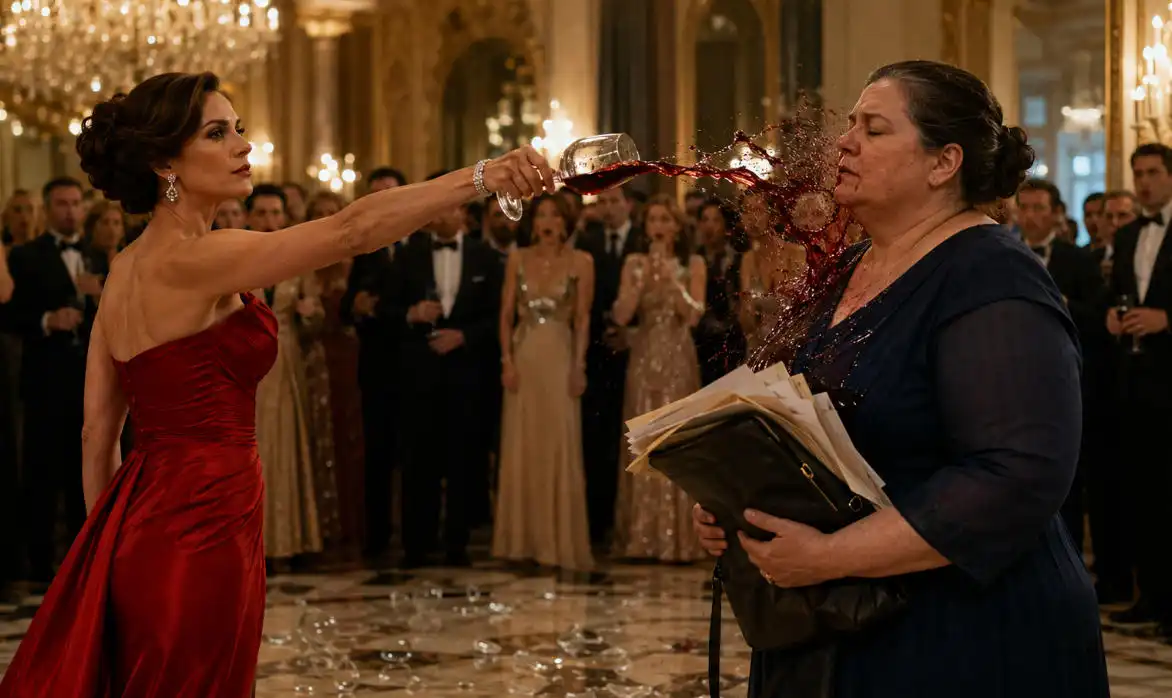



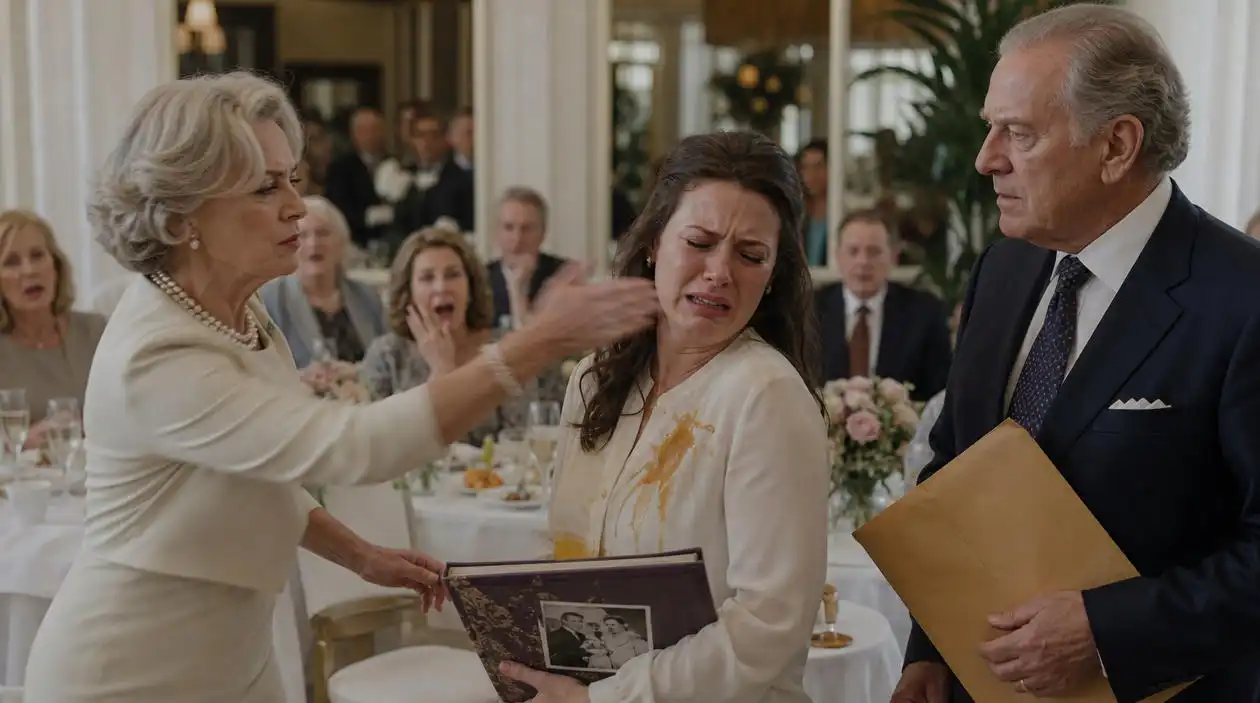
The folder landed beside my wife’s ruined Mother’s Day gift.
My mother’s hand was still raised.
Emily’s cheek was still red.
And for the first time in thirty-seven years, my father looked at Margaret Caldwell like he was done being afraid of her.
“Richard,” my mother said, her voice suddenly polished again. “Do not make a scene.”
My father looked around the country club dining room.
The crystal chandeliers.
The white roses.
The women from Margaret’s charity board staring over their mimosas.
The grandchildren frozen with forks in their hands.
Then he said, quietly:
“She already did.”
Nobody moved.
Not even the waiter holding the silver coffee pot.
My name is Daniel Caldwell, and until that Mother’s Day morning, I thought my father was the weakest man in our family.
I don’t say that proudly.
I say it because that was what Margaret trained all of us to believe.
She was the one with the pearls.
The club membership.
The perfect Christmas cards.
The big laugh at charity luncheons.
The sharp little comments that sounded like jokes until you were the one bleeding from them.
My father, Richard, was the opposite.
Soft-spoken.
Slow to anger.
The kind of man who apologized to waiters when my mother snapped her fingers.
The kind of man who folded his napkin twice before speaking, as if even his words needed permission.
And Emily, my wife, had been my mother’s favorite target from the day I brought her home.
Emily came from a small farming town in Iowa.
Her father fixed tractors.
Her mother cleaned houses and sang in church.
Emily worked two jobs through nursing school and still wrote thank-you notes by hand.
She was kind in a way rich people often mistake for weakness.
The first time she met Margaret, she brought homemade lemon bars.
My mother smiled and said, “How quaint. Daniel, you didn’t tell me she was so… practical.”
Emily laughed politely.
I should have said something then.
I didn’t.
That was my first mistake.
By the time Mother’s Day came, Emily had already survived four years of Margaret’s little punishments.
Being seated at the far end of the table.
Being “accidentally” left off family invitations.
Being introduced as “Daniel’s current wife” at a fundraiser.
Being told, “Some women marry into legacy. Some simply visit it.”
Every time, Emily would squeeze my hand under the table.
“Don’t,” she’d whisper. “It’ll only make it worse.”
And every time, I hated myself for listening.
But this Mother’s Day was supposed to be different.
Emily wanted peace.
She spent three nights making Margaret a gift by hand.
A memory album.
Not cheap.
Not lazy.
Not thoughtless.
It had old photos of Margaret holding my sister as a baby.
My father at our first Little League game.
Recipes from Margaret’s mother copied in Emily’s neat handwriting.
A page titled, “Things Your Family Loves Because You Taught Them.”
Emily even wrote a letter.
One sentence still burns in my memory:
“Thank you for raising the man who became my home.”
She believed that if she honored Margaret enough, Margaret might finally soften.
That morning, the country club was packed.
Mother’s Day brunch was Margaret’s stage.
She wore a cream designer suit, diamonds at her throat, and the expression of a woman who expected everyone to admire her before the appetizers arrived.
Her friends were there.
Her charity board.
Our cousins.
My brother Michael and his wife.
My sister Claire.
Our kids.
My father sat beside Margaret, quiet as always, his hand resting near a brown leather folder tucked under his chair.
I noticed it.
I didn’t ask.
I was too busy watching Emily walk toward Margaret with the gift in both hands.
“Happy Mother’s Day,” Emily said.
Her voice was soft.
Hopeful.
Margaret didn’t touch the album at first.
She looked at the wrapping paper.
Plain ivory paper.
Blue ribbon.
No designer logo.
No glossy store bag.
Her mouth curved.
“Oh,” she said. “How… handmade.”
A few people chuckled because they thought they were supposed to.
Emily smiled nervously.
“I made it myself. It has family photos, and some of your mother’s recipes, and—”
Margaret opened it.
She flipped one page.
Then another.
Too fast.
Like the pages were dirty.
Then she held it up for the table to see.
“Ladies,” she said to her charity friends, “this is what happens when people confuse effort with value.”
My stomach dropped.
Emily’s smile disappeared.
“Mom,” I said.
Margaret didn’t look at me.
She looked at Emily.
“Did you think this would impress me? A scrapbook? At my club?”
Emily swallowed.
“I thought it might mean something.”
“It means you still don’t understand this family.”
My father’s eyes lifted.
Just slightly.
Margaret leaned back in her chair and sighed, as if Emily had exhausted her.
“Daniel could have married anyone. A woman with breeding. Education. Taste.”
Emily’s fingers tightened around the album.
“She has education,” I snapped. “She’s a nurse.”
Margaret laughed.
“A nurse is a job, Daniel. Not a pedigree.”
The table went so quiet I could hear ice shifting in glasses.
Emily stood there in her blue dress, holding a gift full of love, while my mother performed cruelty like it was etiquette.
Then Margaret picked up her teacup.
My sister Claire whispered, “Mother, don’t.”
Margaret smiled.
“Someone needs to teach her.”
The tea flew.
It wasn’t boiling, but it was hot enough.
It splashed across Emily’s chest and collarbone, staining the blue fabric dark.
Emily gasped and stepped back.
The album fell against the table, pages bending.
Our daughter Lily cried, “Mom!”
I stood so fast my chair nearly tipped.
But before I reached Emily, Margaret stood too.
And slapped her.
Hard enough that the sound cracked across the dining room.
A woman at the next table covered her mouth.
A waiter froze.
My son stood up, shaking.
Emily’s cheek flushed red.
She touched it with trembling fingers.
Margaret pointed at her.
“Don’t you dare make yourself the victim. You embarrassed me with that trash in front of people who matter.”
That sentence did something to the room.
Even Margaret’s friends stopped pretending.
My brother Michael stared at his plate.
His wife looked sick.
My sister had tears in her eyes.
And my father?
My father stood.
Slowly.
His chair scraped the marble floor.
It was not loud because he shoved it.
It was loud because the whole room had gone silent enough to hear one honest man finally move.
“Margaret,” he said.
One word.
No shouting.
No rage.
But my mother turned toward him like she had heard a gunshot.
“Sit down, Richard.”
He didn’t.
“Not today.”
Her face tightened.
“This is between women.”
“No,” he said. “This is between right and wrong.”
I had never heard my father say anything like that to her.
Not once.
He reached down and picked up the brown leather folder.
Margaret’s eyes flicked to it.
For half a second, her face changed.
The confidence drained.
Then she recovered.
“Don’t be dramatic,” she said, laughing too loudly. “You always get emotional when Daniel’s wife cries.”
My father walked around the table.
He didn’t go to Margaret.
He went to Emily.
He took a clean napkin, handed it to her, and said, “I am sorry.”
Emily’s eyes filled.
“For what?”
“For all the times I stayed quiet before today.”
That broke me more than the slap.
Because my father wasn’t only apologizing for that morning.
He was apologizing for years.
For all of us.
Then he placed the folder on the table.
Right beside the handmade album.
The cheap gift, as Margaret called it.
The proof of Emily’s love sitting next to the proof of Margaret’s lies.
My mother’s voice dropped.
“Richard. We can discuss this at home.”
He looked at the club manager, who had approached with security hovering behind him.
“Mr. Ellis,” my father said, “please call the number on the first page. That is my attorney. I would also like security present, because my wife just assaulted my daughter-in-law in front of witnesses.”
Margaret’s mouth opened.
Assaulted.
That word stripped the pearls off the moment.
It wasn’t “family drama.”
It wasn’t “women being emotional.”
It wasn’t “Margaret being Margaret.”
It was what it was.
A grown woman had thrown hot tea on another woman and slapped her in public.
“Richard,” Margaret hissed, “you will not use that word against me.”
“I already did.”
Then he opened the folder.
Margaret reached for it.
My father moved it back without looking at her.
“No.”
One simple word.
She froze.
I had never seen anyone tell my mother no and survive it.
He pulled out a stack of bank statements.
Then property records.
Then notarized copies of transfers.
I didn’t understand at first.
Neither did most of the table.
Margaret tried to laugh again.
“Are you showing our family finances at brunch? Have you lost your mind?”
My father looked at her.
“No. I finally found it.”
There it was.
The first crack.
Margaret’s hand went to her necklace.
My father turned one document toward us.
“For the last nine months, Margaret has been transferring marital assets out of joint accounts and into shell entities controlled by her sister, Evelyn.”
My aunt Evelyn, sitting two chairs away, went pale.
My mother’s head snapped toward her.
Evelyn whispered, “Margaret…”
The room shifted.
People leaned closer.
Phones came out, though nobody dared raise them too high.
My father continued.
“She also attempted to refinance the lake house without my consent using a forged authorization form.”
My brother Michael finally looked up.
“What?”
Margaret slammed her palm on the table.
“That is private!”
My father’s voice stayed calm.
“It became less private when you used family money to threaten my daughter-in-law.”
Emily looked confused.
So did I.
My father pulled out another page.
“This is the payment record for the investigator you hired.”
Margaret’s face went white.
I turned to her.
“What investigator?”
My father looked at me then.
And I saw grief in his eyes.
Not weakness.
Grief.
“She hired a private investigator to dig into Emily’s family. Her parents’ mortgage. Her student loans. Her mother’s medical bills. She wanted leverage.”
Emily whispered, “Why?”
Margaret’s mask slipped.
Just enough.
“Because you were never supposed to stay,” she snapped.
The words came out before she could dress them up.
The table recoiled.
My father nodded, as if that confession confirmed something he already knew.
“She planned to push Emily out,” he said. “Then pressure Daniel into signing a postnuptial agreement that would protect Caldwell family assets from any children Emily had.”
I stared at my mother.
“Our children?”
Margaret rolled her eyes.
“Oh, don’t be naïve. I was protecting the family.”
“My children are your family.”
“They are half hers.”
The silence after that was different.
Colder.
Even the people who had tolerated Margaret for years could not smooth over that sentence.
Emily stepped closer to our daughter, who was crying quietly.
My father’s jaw tightened.
“That is enough.”
But Margaret wasn’t done.
Cruel people rarely stop when the room finally sees them.
They double down because truth feels like disrespect.
“She came here with nothing,” Margaret said, pointing at Emily. “No name. No money. No class. And suddenly I’m supposed to pretend she belongs at my table?”
My father picked up the handmade album.
He opened to the first page.
A photo of Margaret as a young mother.
A recipe copied carefully beneath it.
He turned the page toward Margaret.
“This woman spent three nights honoring you.”
Then he tapped the legal folder.
“And you spent nine months stealing from the man who paid for the life you use to humiliate her.”
Margaret inhaled sharply.
“That money is mine too.”
“Some of it,” he said. “Not all of it. And not the part you moved after I filed a preliminary separation notice with my attorney.”
Margaret blinked.
“What?”
There it was.
The moment.
The real one.
My father had not snapped that morning.
He had prepared.
Quietly.
Legally.
Carefully.
While we all thought he was folding napkins and avoiding conflict, he had been building the wall Margaret was about to hit.
“I met with Harrison & Lowe eleven weeks ago,” he said. “I did not file for divorce then because I wanted a clean inventory first.”
Margaret looked around the table, searching for allies.
No one moved.
Not Michael.
Not Claire.
Not Evelyn.
Not even her charity friends.
My father continued.
“The court can consider dissipation of marital assets. The transfers have been documented. The forged authorization has been referred for handwriting analysis. Evelyn’s involvement is documented. The club’s security cameras recorded what you did to Emily today.”
The club manager cleared his throat.
“Yes, Mr. Caldwell. The dining room cameras cover this section.”
Margaret turned on him.
“You work for members.”
He stiffened.
“I work for the club, Mrs. Caldwell.”
That landed.
Because Margaret had spent years confusing service with ownership.
My father took a final document from the folder.
This one had a blue tab.
“I am filing for divorce.”
Margaret laughed once.
Sharp.
Fake.
“You would never.”
“I already signed.”
Her mouth closed.
“The papers will be served tomorrow morning,” he said. “I intended to do this privately. But after what you did to Emily, I am adding today’s incident to the record.”
“Richard,” she whispered.
Not commanding now.
Begging.
But not because she was sorry.
Because people were watching.
That was what mattered to her.
Not Emily’s cheek.
Not the grandchildren crying.
Not the hot tea on a woman who had only tried to love her.
Only the audience.
My father finally raised his voice.
Not much.
Just enough for the surrounding tables to hear.
“For thirty-seven years, I let you convince me that keeping peace meant staying quiet. It doesn’t. It means protecting the people who don’t deserve your cruelty.”
Emily began to cry then.
Quietly.
My father turned to her.
“You and Daniel will take the kids to the house on Willow Ridge tonight.”
I frowned.
“Dad, what?”
He looked at me.
“I bought it six months ago.”
Margaret’s head jerked up.
“You what?”
“I bought a villa under my separate inheritance trust,” he said. “The same trust my father left me before our marriage. It was never marital property.”
My mother gripped the back of her chair.
“You hid a house from me?”
My father looked at her without blinking.
“No, Margaret. I protected one.”
The room practically held its breath.
He turned back to Emily.
“It is in Daniel’s and Emily’s names now. The deed was recorded last week.”
Emily shook her head.
“Richard, we can’t accept that.”
“You can,” he said. “And you will. Because my grandchildren deserve a home where nobody teaches them that cruelty is tradition.”
Our daughter sobbed harder.
My son wiped his eyes with his sleeve.
I could barely breathe.
For years, I thought my father didn’t see what was happening.
He saw everything.
He had simply been waiting until he could act without losing.
That is a painful thing to admit.
Because it means I had less courage than the man I had judged.
Security stepped closer.
Margaret looked at the guards, then at the women from her board, then at the phones now openly recording.
“You can’t remove me,” she said.
The manager spoke carefully.
“Mrs. Caldwell, after the physical altercation, we need you to leave the dining room.”
Her face twisted.
“This is my Mother’s Day brunch.”
My father closed the folder.
“No. It was Emily’s trial. And you failed.”
Margaret grabbed her purse.
Then she looked at me.
“Daniel, tell them.”
It was the same tone she used when I was a child.
The tone that said loyalty meant obedience.
For one second, I was twelve again.
Standing in a hallway.
Listening to her tell my father he was embarrassing her.
But then I looked at Emily.
Her cheek red.
Her dress stained.
Her handmade gift bent at the edges.
And I finally found my spine.
“No,” I said.
Margaret stared at me.
“What did you say?”
“I said no.”
Her eyes watered, but still not with remorse.
With fury.
“You are choosing her over your mother?”
I reached for Emily’s hand.
“I am choosing my wife. My children. And basic decency.”
A few people at the next table murmured.
Someone whispered, “Good for him.”
Margaret heard it.
That hurt her more than anything.
Public disapproval was the only language she respected.
Aunt Evelyn started crying.
“I didn’t know she would go this far,” she said.
My father looked at her.
“You knew enough to sign.”
Evelyn covered her face.
The lawyer arrived twenty minutes later.
Harrison was a small, silver-haired man in a navy suit who looked like he had been born inside a courthouse.
He didn’t raise his voice.
He didn’t need to.
He reviewed the folder at the table while Margaret stood near the entrance with security, refusing to leave until she understood how much damage had been done.
Then Harrison looked at her and said, “Mrs. Caldwell, I strongly recommend you do not speak further without counsel.”
That was when she finally understood.
This wasn’t family gossip.
It wasn’t a dramatic brunch.
It was a legal record forming in real time.
Witnesses.
Security footage.
Financial documents.
Admissions made in public.
The perfect storm, created by her own arrogance.
Margaret left through the side door.
Not the grand staircase where she liked to make an entrance.
The side door beside the coat room.
The same door staff used.
No applause.
No dramatic screaming.
Just the sound of her heels getting smaller.
And for once, nobody followed her.
The aftermath was not instant magic.
Real life rarely is.
Emily’s cheek bruised lightly.
The tea left redness across her collarbone but no lasting injury.
The club documented the incident and suspended Margaret’s membership pending review.
Two of her charity board friends resigned from committees she chaired before Monday afternoon.
By Tuesday morning, Margaret was served divorce papers at the house she still believed she controlled.
By Friday, my father’s attorney filed motions regarding dissipation of marital assets and requested preservation of all financial records involving Evelyn.
The forged authorization form became a separate issue.
Margaret claimed she had “misunderstood” what she was signing.
But the handwriting expert found otherwise.
Evelyn eventually cooperated.
Not because she became noble.
Because she became scared.
She admitted Margaret had asked her to “temporarily hold” funds until the divorce could be “managed.”
My father’s attorney called it what it was:
Asset hiding.
The court did not find it charming.
Margaret’s world shrank quickly.
The country club suspended her indefinitely.
The charity board asked her to step down “for the good of the organization.”
Her social circle, the one she had spent decades feeding with gossip and champagne, suddenly discovered moral standards.
That part almost made me laugh.
Almost.
But the real justice came quieter.
My father moved into a modest townhouse near the park while the divorce proceeded.
He said he wanted something simple.
Something peaceful.
Something with a porch where the kids could leave bikes in the driveway without being scolded for “visual clutter.”
Emily and I moved into the Willow Ridge villa.
Not because we wanted to profit from pain.
Because my father insisted it was not a gift of luxury.
It was a correction.
The first night there, Emily walked from room to room like she was afraid to touch anything.
The house had wide windows, pale stone floors, and a kitchen that opened into a garden.
Our daughter found the bedroom with the window seat and whispered, “Can I really sleep here?”
Emily knelt and hugged her.
“Yes, baby.”
Then our son asked, “Is Grandma allowed to come?”
The room went still.
I looked at Emily.
She looked at me.
Then my father, who had come over with pizza and paper plates, answered before either of us could.
“Not unless she learns how to knock on doors and hearts.”
It was the most poetic thing I had ever heard him say.
Emily laughed through tears.
A month later, Margaret moved out of the mansion.
Not to the street.
Not to some cartoon punishment.
But to a small rental apartment across town after the temporary financial orders limited her access to disputed funds.
To her, it was humiliation.
No club valet.
No garden staff.
No marble foyer.
Just a second-floor unit above a dentist’s office with beige carpet and a parking spot marked 17B.
She called me once.
I answered because I wanted to know if remorse had finally found her.
It had not.
“I hope you’re happy,” she said.
I looked through the kitchen window at Emily planting hydrangeas with our daughter.
“I am getting there.”
“She stole my family.”
“No,” I said. “You spent years pushing us away. She just stopped apologizing for standing there.”
Margaret was silent.
Then she said, “Your father will regret this.”
I looked at my father in the living room, building a toy barn with my son on the floor.
“No,” I said. “I think he regrets waiting.”
I hung up.
That was the last real conversation we had for a long time.
The divorce finalized eight months later.
Margaret lost far more than she expected.
Not everything.
Courts are not revenge machines.
But she lost the mansion.
She lost access to accounts she had tried to drain.
She lost credibility.
She lost the version of herself that depended on everyone else staying quiet.
Evelyn repaid a portion of the transferred funds as part of a settlement and no longer attends family events.
Michael apologized to Emily for not speaking up.
Claire did too.
I apologized most of all.
One night, after the kids were asleep, I found Emily at the kitchen table with the Mother’s Day album.
The pages were warped from tea.
The ribbon had a stain.
The letter was still readable.
I said, “We can remake it.”
Emily shook her head.
“No.”
I sat beside her.
She touched the bent cover.
“This one tells the truth.”
“What truth?”
“That love offered to the wrong person still proves something about the person who offered it.”
I didn’t know what to say.
So I held her hand.
The next Mother’s Day, we hosted brunch at Willow Ridge.
No country club.
No champagne tower.
No pearls used as weapons.
Just family.
Real family.
My father brought flowers for Emily.
Not expensive ones.
Garden roses from his townhouse.
He handed them to her and said, “Happy Mother’s Day to the woman who taught this family what grace actually looks like.”
Emily cried.
My daughter asked if crying at brunch was allowed.
My father said, “In this house, yes.”
We laughed.
Then Emily brought out the old album.
The stained one.
She had added new pages.
Photos of the villa.
The kids in the garden.
My father covered in flour while making pancakes.
A copy of the recorded deed.
Not to brag.
To remember.
On the last page, she placed one sentence:
“Peace is not the absence of conflict. Peace is when cruelty no longer gets a seat at the table.”
That page still makes my father cry.
As for Margaret, she lives alone now.
She still has nice clothes.
Still attends smaller luncheons with women who don’t know the whole story.
Still tells people she was “betrayed by an ungrateful family.”
Maybe she believes it.
Maybe she has to.
But every Mother’s Day, she sends a card to my father.
He does not open them.
He places them in a drawer.
Not out of bitterness.
Out of boundaries.
And Emily?
Emily no longer tries to earn a place in a family she already holds together.
She laughs louder now.
She sits at the head of our table when she wants.
She teaches our children that kindness is strength, but silence in the face of cruelty is not kindness.
It is permission.
My father visits every Sunday.
He still speaks softly.
Still folds his napkin twice.
But nobody mistakes that for weakness anymore.
Because on the day everyone expected him to stay quiet, he stood up.
He did not scream.
He did not throw anything.
He did not become cruel to defeat cruelty.
He simply opened the folder.
And the truth did the rest. ⚖️
So pick a side:
Was Richard wrong for exposing Margaret at Mother’s Day brunch after she humiliated Emily in public?
Or did Margaret choose the stage herself the moment she raised her hand?
TEAM EMILY if you believe kindness deserves protection. TEAM RICHARD if you believe quiet people are the most dangerous when they finally have proof.
Share this with someone who knows that “family peace” should never mean protecting the cruelest person in the room.
Disclaimer: Mention of any brand or trademark is for identification only and does not imply partnership or endorsement
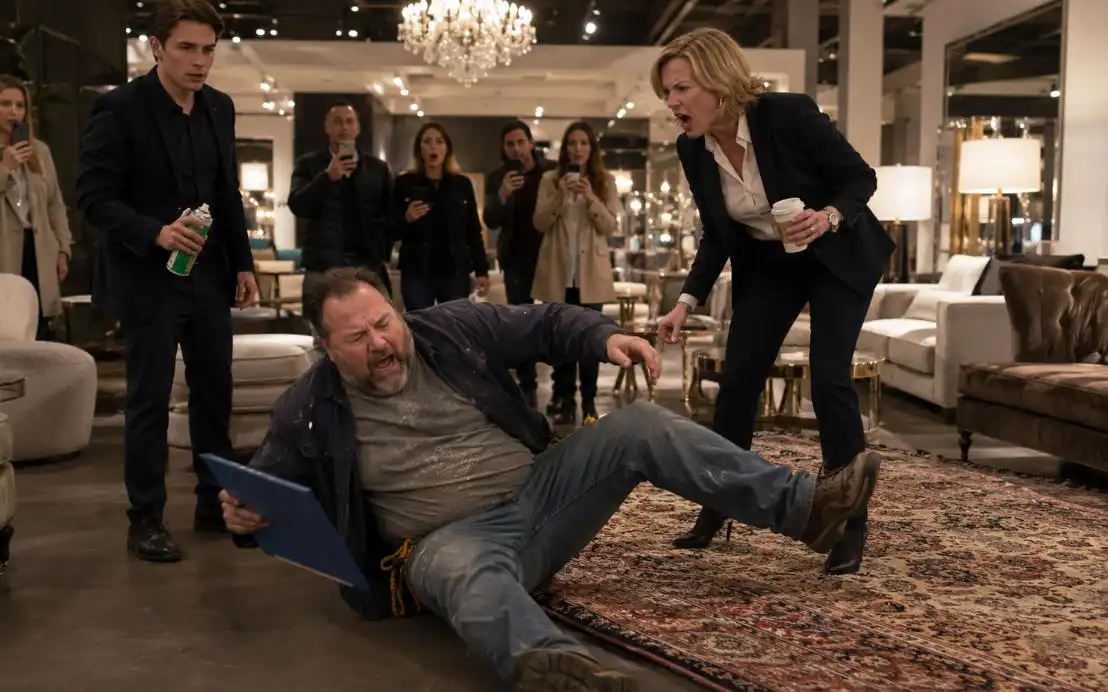
The Store Manager Splashed Hot Coffee On A Poor-Looking Electrician’s Face… But She Had NO IDEA He Owned The Power Behind Her Throne
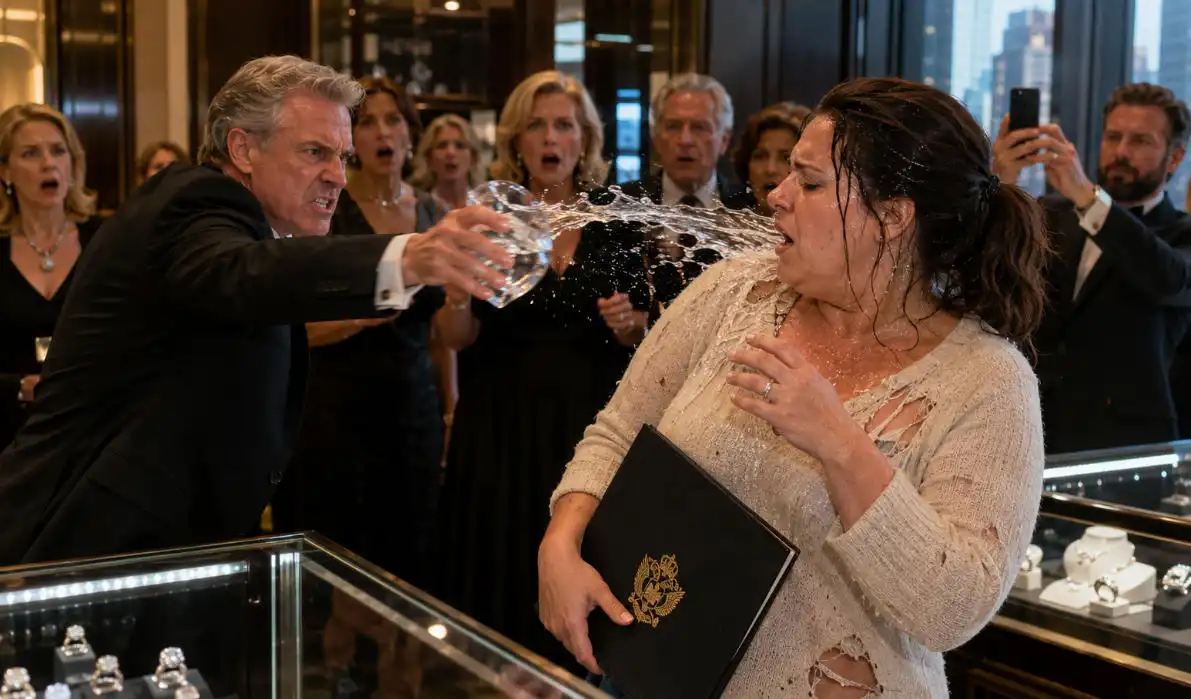
A Plump HOUSEWIFE Was Humiliated At A Cartier VIP Event… But The Snobby Appraiser Had NO IDEA Who She Really Was 💎
A Chubby Shelter Volunteer Was HUMILIATED In A Luxury Beverly Hills Pet Spa By A Rich Woman… But They Had NO IDEA Who She Really Was 😳