
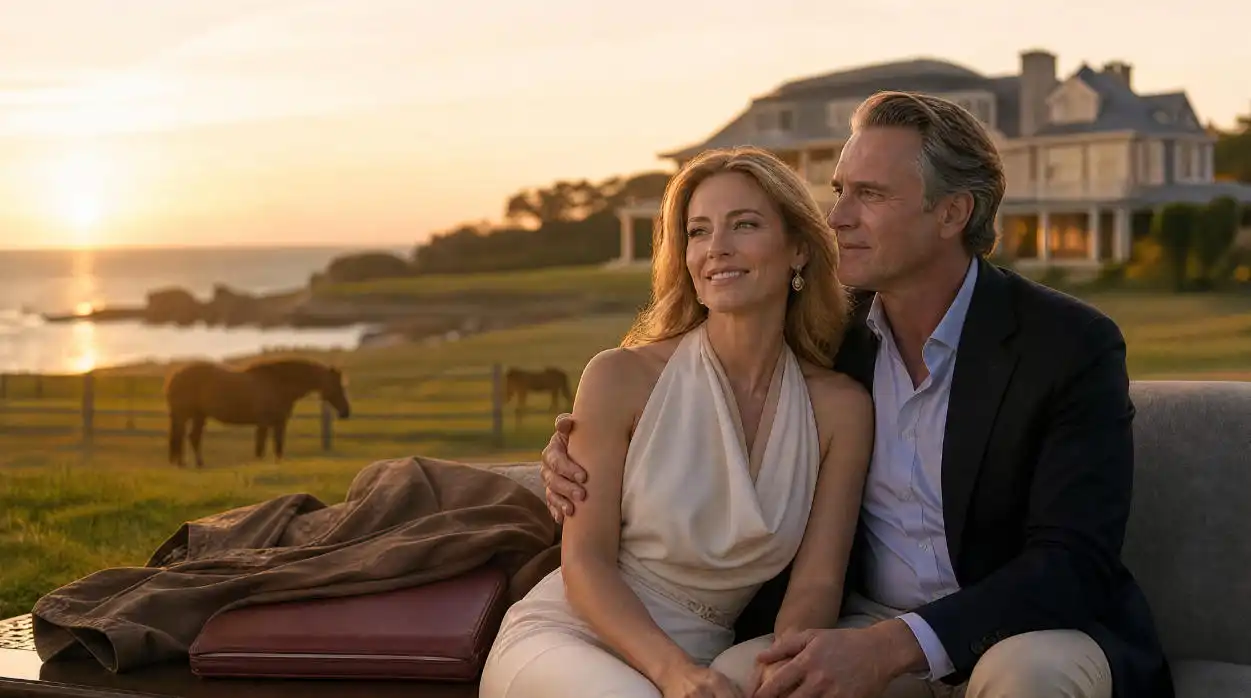
The coffee was still hot when Harrison threw it on me.
Not spilled.
Thrown.
Right across my old brown farm coat in the middle of a Hamptons boutique where a pair of gloves cost more than my monthly feed bill.
The whole store froze.
A salesgirl held a silk scarf in both hands and forgot how to breathe.
A woman near the perfume counter whispered, “Oh my God.”
Harrison Vale smiled.
The same Harrison who used to sleep beside me in a drafty farmhouse when we had nothing but debt, rain leaks, and one shared dream.
Now he stood in a navy suit with a senator’s pin on his lapel and a woman half his soul standing beside him.
Alexis.
Blonde.
Perfect.
Expensive.
Empty in the way only cruel people can be.
She looked at the coffee soaking into my sleeve and laughed.
“Careful, Harrison,” she said. “That coat might be the nicest thing she owns.”
The boutique girls lowered their eyes.
Nobody stepped in.
That was the Hamptons.
People would watch a woman get humiliated as long as the man doing it had enough money.
Harrison leaned close.
“Look at you, Olivia,” he said. “Still dragging mud into rooms you don’t belong in.”
I touched the sleeve of my coat.
The burn wasn’t bad.
The shame was worse.
“I came to pick up one thing,” I said quietly.
Alexis lifted one eyebrow.
“A job application?”
Harrison laughed.
A few people in the store laughed too.
Not because it was funny.
Because powerful men train rooms how to behave.
I looked at him and saw the boy he used to be.
The one who swore he loved me under a leaking barn roof.
The one who told me we would build something honest.
The one who took my family contacts, my land records, my trust paperwork, my silence, and turned them into his empire.
Then he divorced me publicly and called me unstable.
He told donors I was “a sad rural chapter” of his life.
He told reporters I had refused help.
He told friends I had been too bitter to move on.
But the truth was simpler.
He left before the inheritance cleared.
He left before the London solicitors found me.
He left before anyone knew that my grandfather’s side of the family had owned something far larger than our little American farm.
A royal estate in Europe.
Centuries old.
Quietly held.
Quietly leased.
Quietly connected to land rights across several companies Harrison had built his “self-made” fortune on.
And that morning, in the pocket of my ruined old coat, I had the final documents.
Harrison did not know that.
Alexis did not know that.
They only saw coffee stains.
They only saw a woman they thought had lost.
Alexis stepped closer.
“You should leave,” she said. “Before people think Harrison still associates with you.”
“I need my parcel,” I said to the clerk.
The clerk swallowed.
“Mrs.— I mean, Ms. Olivia, it’s right here.”
She held out a small wrapped box.
Alexis snatched it from her hand.
“What’s this?” she asked.
“Mine,” I said.
She shook it beside her ear like a child.
“Jewelry? That’s adorable. Did you pawn a tractor?”
Harrison smirked.
“She always did love pretending she came from class.”
I reached for the box.
Alexis pulled it back.
Then she slapped me.
Hard.
The sound cracked through the boutique.
My cheek snapped to the side.
The whole store went silent.
I heard someone gasp.
I heard a phone camera begin recording.
I heard Harrison say, “Alexis.”
But not like he was horrified.
Like he was mildly inconvenienced.
Alexis shoved the box against my chest.
“Take your little farm trinket and go.”
Then she pushed me.
I stumbled backward into the boutique door.
My shoulder hit the glass.
The bell above the door rang.
For one second, I almost cried.
Not because of the slap.
Not because of the coffee.
Because I remembered every winter morning I had fed cattle before sunrise while Harrison slept, telling myself I was helping my husband build a future.
A future he planned to enjoy with someone else.
I picked up my box.
I looked at Harrison.
He smiled for the people watching.
“Olivia,” he said, low and sharp, “do not embarrass yourself tonight.”
Tonight.
His charity gala.
His victory lap.
His celebration after announcing a massive luxury development deal.
A deal that sat on land he had no right to control.
I wiped coffee from my wrist.
Then I said, “I won’t.”
Harrison looked pleased.
He thought I meant I would disappear.
I meant something else entirely.
That evening, the Hamptons Charity Gala looked like a movie made for rich people who needed applause to feel human.
White tents glowed under chandeliers.
Champagne moved on silver trays.
TV cameras lined the entrance.
A banner behind the stage read:
VALE FOUNDATION ANNUAL HIGH-STAKES GALA
Harrison stood under the lights like he had been born there.
His parents sat in the front row.
His mother wore pearls the size of marbles.
His father kept introducing himself to donors as “the senator’s father,” like it was a royal title.
Alexis wore a silver dress and diamonds that caught every flashbulb.
She saw me before Harrison did.
I was standing near the back, still in the same old coat.
Cleaned as best as I could.
Still stained faintly with coffee.
Alexis smiled.
Not kindly.
Hungrily.
She walked over with two women following her.
“Well,” she said, loud enough for nearby donors to hear, “the entertainment arrived.”
One woman covered a smile with her champagne glass.
“Olivia,” Alexis said, “did security let you in by mistake?”
“I’m on the list.”
“As what? A cautionary tale?”
Harrison appeared beside her.
For one flicker of a second, irritation crossed his face.
Then the politician smile returned.
“Olivia,” he said warmly for the cameras, “I’m glad you came. It’s always good to see old friends supported by our foundation.”
Old friends.
Supported.
Foundation.
Every word was a little knife wrapped in velvet.
I said nothing.
He leaned closer so only I could hear.
“Don’t start anything. There are cameras everywhere.”
“I know.”
His eyes narrowed.
“You’re not welcome on that stage.”
“I know.”
That made him uneasy.
He preferred tears.
Anger.
Pleading.
Silence confused him.
The program began.
A children’s choir sang.
A hedge fund manager pledged two million dollars.
A real estate developer praised Harrison’s “vision for coastal renewal.”
Then Harrison stepped to the microphone.
The applause was loud.
He placed one hand over his heart.
“My friends,” he said, “tonight is about legacy.”
I almost laughed.
Legacy.
That was exactly what tonight was about.
He continued.
“My company’s new development will create jobs, housing, and opportunity. It is a dream years in the making.”
He looked right at me.
“And it proves that no matter where you start, with discipline and character, you can rise above your past.”
His mother dabbed her eyes.
Alexis blew him a kiss.
The crowd clapped.
Then the large screen behind him flickered.
Not dramatically.
Not like a movie.
Just one small technical shift.
A black-and-white scanned document appeared.
At first, people kept clapping.
Then someone in the front row stopped.
Then another.
Then a donor whispered, “What is that?”
Harrison turned.
His face changed.
On the screen was a deed.
A very old one.
Stamped.
Witnessed.
Recorded.
The name at the top was not Vale.
It was Wrenford Estate Holdings.
My family’s estate.
A European royal land trust that Harrison had treated like a dead signature on a dusty file.
The room grew quieter.
Harrison looked toward the AV booth.
“Cut that off,” he snapped.
Nobody moved.
Because the AV technician was standing beside my London solicitor.
Mr. Whitcomb.
Seventy-one years old.
White hair.
Straight posture.
A man who could ruin someone politely.
I walked toward the stage.
Security stepped forward.
Mr. Whitcomb raised one finger.
They stopped.
Harrison forced a laugh.
“Ladies and gentlemen, forgive the interruption. My ex-wife has had a difficult few years.”
I climbed the steps.
Alexis stood up.
“You are humiliating yourself,” she hissed.
I turned to her.
“No, Alexis. I’m finished being humiliated.”
The microphone caught it.
The whole room heard.
A few people murmured.
I reached into my coat and removed the envelope.
The same one that had been inside when Harrison poured coffee on me.
I placed two documents on the podium.
Then I picked up the microphone.
“My name is Olivia Wrenford.”
The room shifted.
Some donors recognized the name.
Harrison did too.
He went pale.
“My grandfather was the last direct American heir of Wrenford Estate Holdings,” I said. “The estate completed probate this month. As of yesterday morning, I am the sole controlling heir.”
Alexis laughed too loudly.
“This is insane.”
I looked at her.
“Is it?”
The screen changed again.
Maps appeared.
Coastal parcels.
Leases.
Holding companies.
Subsidiaries.
Lines connecting one entity to another.
Then Harrison’s company name appeared in red.
VALE COASTAL DEVELOPMENT GROUP
Someone at the front whispered, “Oh no.”
I turned back to Harrison.
“For seven years, your company represented that it owned clear title to land it was only leasing through estate contracts. Those leases expired six months ago.”
Harrison gripped the podium.
“That is a private commercial issue.”
“No,” I said. “It became public when you raised investor funds on land you did not own.”
A man from a financial news crew lifted his camera higher.
Another donor stood.
Harrison’s father said, “Son?”
His mother looked confused.
Alexis looked furious.
“This is your revenge?” she said. “You bitter little farm girl.”
I picked up the first document.
“This is our marriage annulment agreement.”
Harrison’s lips parted.
“That was sealed.”
“It was,” I said. “Until your campaign publicly misrepresented the circumstances of our marriage.”
The screen showed another file.
A letter from Harrison’s attorney.
An admission.
He had pressured me to sign financial waivers while hiding active corporate negotiations involving my family-linked parcels.
The crowd began murmuring louder.
I picked up the second document.
“And this is an eviction notice.”
Harrison stared at it.
“Eviction from what?”
“Your flagship office.”
He laughed.
It was thin.
Desperate.
“You can’t evict a senator.”
“No,” I said. “But I can evict a tenant in default.”
The room exploded.
Not with applause.
With shock.
People stood.
Phones came up.
Reporters pushed forward.
Alexis grabbed Harrison’s arm.
“Tell them she’s lying.”
Harrison said nothing.
That silence was the first honest thing he had given me in years.
I turned to the audience.
“I did not come here to discuss my divorce. I came here because this man used my name, my land history, and my silence to build a public image of honesty while privately concealing title defects from investors, donors, and state ethics investigators.”
Harrison lunged toward the microphone.
“Enough!”
Before he reached me, two federal agents entered from the side of the tent.
Then two more.
One held a folder.
One spoke clearly.
“Senator Harrison Vale, we have a warrant.”
His mother screamed.
His father stood too fast, knocked over his chair, and collapsed back into it.
Alexis stumbled backward.
The TV cameras swung toward Harrison.
Every donor watched.
Every reporter recorded.
The man who had poured coffee on me that morning was handcuffed at his own gala that night.
His face was gray.
“Olivia,” he whispered, “don’t do this.”
I looked at him for a long second.
I wanted to say something sharp.
Something cruel.
Something that would make the room laugh at him the way he had made people laugh at me.
But revenge, the real kind, does not need screaming.
It needs paperwork.
So I said, “I didn’t do this, Harrison. You signed it.”
The agents led him away.
His mother sobbed.
His father shouted for a lawyer.
Alexis tried to slip toward the exit, but a reporter blocked her.
“Ms. Alexis, did you know about the land dispute?”
“I— no— Harrison handles business.”
“Did you assault Ms. Wrenford earlier today?”
Her mouth opened.
Behind her, the boutique video played on the gala screen.
Coffee.
Laughter.
The slap.
The shove.
The old coat.
The sealed envelope.
Alexis covered her face.
The room turned on her instantly.
That is the funny thing about cruelty.
People will tolerate it when it looks powerful.
They despise it when it becomes evidence.
By midnight, Harrison’s arrest was live on every major local station.
By morning, his campaign suspended all events.
By the end of the week, his company’s lenders froze credit lines.
Investors sued.
The state ethics board opened an inquiry.
His development deal collapsed.
His family, once so proud to sit in the front row, stopped answering reporters outside their estate.
Alexis disappeared from social media after the boutique assault clip hit millions of views.
She had wanted to become a senator’s wife.
Instead, she became the woman America watched slap the wrong ex-wife.
But there was one more thing I did.
Harrison loved cars.
One car most of all.
A limited-edition Italian sports car he had talked about for years.
Red.
Rare.
Ridiculous.
He once told me, when we were still married, “Someday I’ll own that car, and people will know I made it.”
He finally bought one using money routed through one of the companies now under investigation.
So when the bankruptcy sale began, I bought it.
Not because I wanted it.
Because I remembered every winter he told me we couldn’t afford a new heater for the farmhouse.
Every spring he told me my boots could last one more season.
Every summer he told me my dreams were too small.
A week after the gala, cameras gathered outside a salvage yard.
The car sat shining under the morning sun.
Reporters thought I might auction it for charity.
Instead, I stepped forward in jeans, boots, and the same old coat.
Clean now.
Mended.
Still mine.
A reporter called out, “Ms. Wrenford, why buy the car?”
I looked at the machine.
Then at the camera.
“Because some things only look valuable until you remember what they cost.”
The crusher roared to life.
The red sports car rolled forward.
Metal screamed.
Glass burst.
The hood folded like paper.
People gasped.
Some cheered.
I did not smile until it was done.
Not because destroying a car healed me.
It did not.
But watching Harrison’s favorite symbol of power become scrap reminded me that false kingdoms collapse quickly when the foundation was stolen.
Months passed.
I returned to the farm first.
Before Europe.
Before the lawyers.
Before the island.
I walked through the pasture at sunrise and touched the fence posts my father had installed by hand.
I cried there.
Not loudly.
Not dramatically.
Just enough to let the old pain leave.
I had spent years thinking I was the abandoned woman.
The failed wife.
The broke farm owner people pitied.
But I had never been weak.
I had been patient.
There is a difference.
A year later, I married again.
His name was Thomas.
Not a senator.
Not a man who needed cameras.
A quiet billionaire who funded agricultural restoration projects and asked permission before touching my hand.
The first time he visited my farm, he wore expensive shoes and ruined them in the mud without complaining.
I apologized.
He looked down at them and laughed.
“Good,” he said. “Now they have a story.”
That was when I knew.
We married on a private island with twenty-seven guests, no television crew, no politicians, and no speeches about legacy.
Just wind.
Ocean.
Family.
Peace.
My old coat hung on the back of my chair during dinner.
Thomas noticed.
“Do you want me to put that somewhere safe?” he asked.
I touched the sleeve.
“No,” I said. “It already is.”
Because that coat had carried the envelope.
It had carried the proof.
It had carried the woman Harrison thought he had broken.
And now it carried something better.
A reminder.
Never confuse a quiet woman with an empty one.
Never confuse mud on someone’s boots with poverty of character.
And never, ever humiliate someone in public just because you think nobody powerful is standing behind them.
Sometimes, no one is standing behind her.
Sometimes, everything is standing inside her. 🕊️
Share this if you believe Olivia was right to expose him publicly.
Choose one side:
A) Harrison deserved every second of public humiliation. B) Olivia should have spared his family from watching it.
Disclaimer: Mention of any brand or trademark is for identification only and does not imply partnership or endorsement
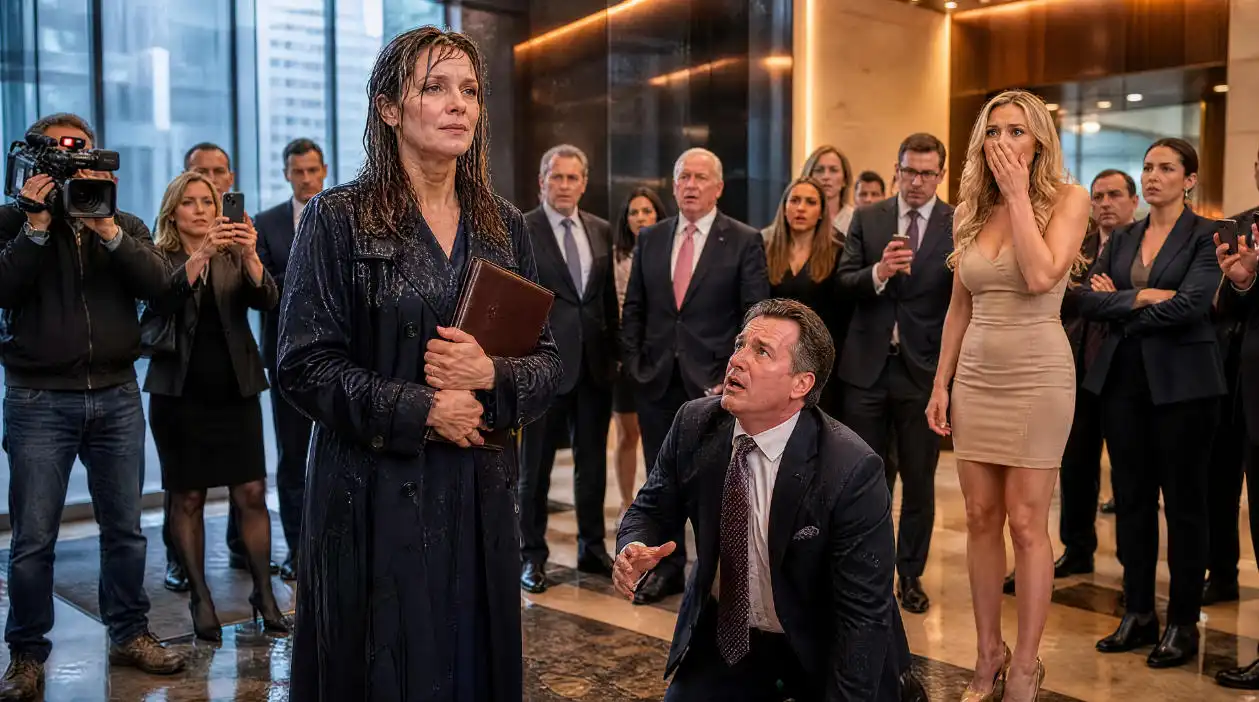
Thrift Store Customer Harper Was SLAPPED and Soaked in Coffee by Her Millionaire Ex… But He Had NO IDEA Who Really Controlled His Mansion 😳
Frat Boys Stole Her Spot, Dumped Beer on Her Head, and Called Her “Nobody”… Their REGRET Came Fast
She Was Just an Elderly Woman in a Straw Hat… Until One Paper Made a BILLION-DOLLAR Project Freeze