
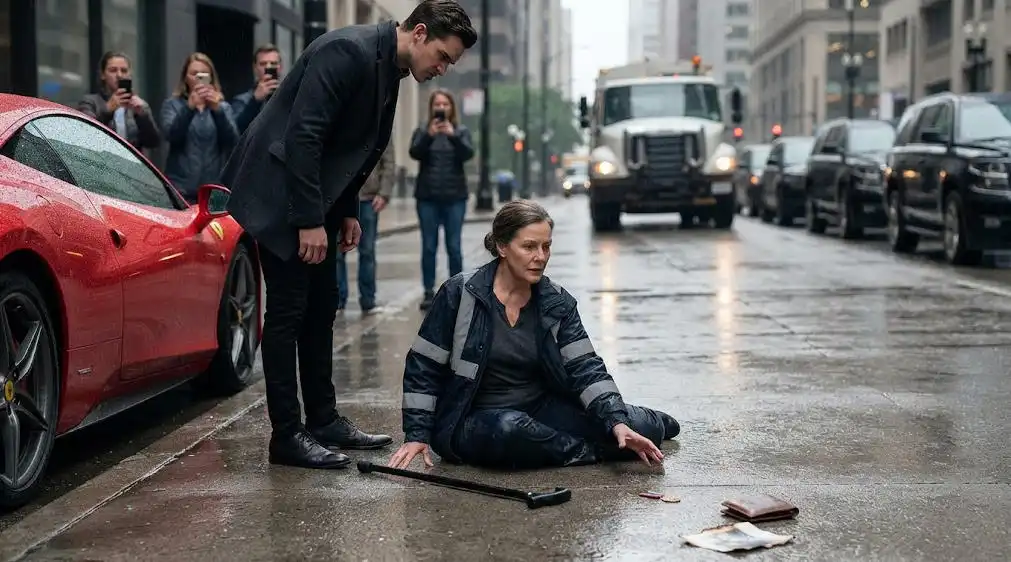
Daniel did not look at Grant first.
He crossed the last few feet to Eleanor, stepped into the shallow gutter, and lowered himself beside her.
His expensive shoes became soaked immediately.
“Ma'am, may I help you?”
Eleanor looked up at him uncertainly. She had expected another person to tell her to move, another stranger to complain that she was making a scene.
Instead, this man was holding out his hand.
She hesitated before accepting it.
Daniel helped her sit more comfortably against the curb, then removed his charcoal designer coat and carefully placed it around her shoulders.
“It's cold out here,” he said.
“I can manage.”
“I know.”
He said it quietly, without the slightest trace of impatience.
His assistant, Marcus Reed, approached carrying the tablet and the medal. Daniel glanced at the medal, then at the burned photograph lying beside Eleanor's broken wallet.
He had already seen the archive entry.
But seeing the woman in front of him was something entirely different.
“Eleanor Brooks?” he asked.
She nodded slowly.
“That's me.”
Daniel swallowed.
“My name is Daniel Mercer.”
The name meant something to nearly everyone in Chicago. His company owned major commercial developments, operated logistics businesses, and held investments across several industries.
Eleanor, however, seemed more concerned about the old photograph than his identity.
“Your assistant has my medal,” she said. “Please make sure he doesn't lose it.”
Daniel looked at Marcus.
“Give it back to her.”
Marcus placed the medal gently in Eleanor's palm.
Daniel then rolled up the left sleeve of his shirt.
A network of thick, pale burn scars crossed his forearm. Another cluster extended from beneath his collar along the left side of his neck.
Eleanor stared at them.
Daniel turned his arm slightly so she could see the scars clearly.
“St. Agnes Children's Home,” he said. “October, twenty years ago. I was twelve.”
Her expression changed.
“The fire?”
“Yes.”
For several seconds, neither spoke.
Daniel looked down at the old photograph.
“That night, you carried me down the east staircase. I couldn't stop coughing. You wrapped your coat around my head and kept telling me to stay low.”
His voice tightened.
“I remember asking you whether the other children had made it out.”
Eleanor's lips parted.
“And you told me not to worry about them until I was somewhere safe.”
Daniel nodded.
“You said, 'One child at a time, Danny. Keep moving.'”
Eleanor looked at his face again.
The boy in her memory had been frightened, small, and struggling to breathe. She remembered his blue sweater. She remembered the weight of him in her arms. She remembered the heat coming through the staircase walls and the sound of children crying behind her.
She had carried fourteen children out of that building.
She had never known what happened to most of them.
“Danny?” she whispered.
Daniel smiled faintly.
“Yes, ma'am.”
She studied his face, then his scars.
“Oh, my goodness.”
Her hand rose toward her mouth.
“You were so little.”
“I was.”
“I wondered if you survived.”
Daniel's eyes became wet.
“I survived because you didn't leave me there.”
Marcus stepped closer and showed her the tablet.
“The public municipal archive confirms the medal's serial number,” he explained. “It's the original Chicago Medal of Civic Valor, number 0417. The award record identifies you as the night attendant at St. Agnes Children's Home. Fourteen children rescued during the fire.”
He turned the tablet toward her.
The official record included a photograph from the rescue.
It showed a younger Eleanor standing outside the building, her clothes covered in soot, holding a child wrapped in a blanket.
The same photograph had been reproduced in the city archive's historical collection.
The old picture in her wallet was a smaller print from that night.
Daniel looked at it for a long moment.
“I've been looking for you for twenty years.”
Eleanor lowered her eyes.
“Why?”
“To thank you.”
He explained that after the fire, he had spent months recovering from his injuries. His family had tried to locate the woman who saved him, but the children's home had closed, the old staff records were incomplete, and the contact information attached to the award was outdated.
Eleanor had declined interviews and public appearances. She had never tried to become famous for what happened.
Eventually, Daniel had grown up, built his company, and continued searching.
Every lead had ended somewhere else.
He had found former employees, contacted the city, and revisited the old building site.
But he had never found her.
Until now.
Eleanor looked at the medal resting in her palm.
“I didn't save anyone for a reward,” she said.
“I know.”
“I was just doing my job.”
Daniel shook his head.
“No. You were doing something most people would have been too frightened to do.”
He glanced toward the red sports car.
“And that man just treated you like you were nothing.”
Grant Caldwell had been listening.
At first, he had assumed the stranger was simply another wealthy man who wanted to complain about the traffic.
But now the situation was beginning to frighten him.
He stepped forward.
“Look, I don't know what story she's telling you, but she was in my way. I barely touched her.”
Daniel finally turned toward him.
“You pushed a sixty-five-year-old woman into a puddle.”
“She was blocking the road.”
“You stepped on her wallet.”
“She dropped it.”
“You kicked her medal.”
Grant shrugged.
“It's probably fake.”
Daniel's expression hardened.
“It's a city-issued medal with a registered serial number. The public record is on that tablet. And the woman you just shoved carried fourteen children out of a burning orphanage.”
Grant looked at the tablet.
Then he looked at Daniel.
“Wait. You're Daniel Mercer?”
“Yes.”
The name seemed to drain the color from Grant's face.
He knew exactly who Daniel was.
Caldwell Industrial Supply, his family's business, had spent years depending on contracts connected to Mercer's companies. His father had repeatedly told him that maintaining the relationship with Daniel Mercer was essential to their future.
Grant looked toward the SUVs.
“Mr. Mercer, this is a misunderstanding.”
“No,” Daniel replied. “It isn't.”
“I'll pay for her things.”
“You think this is about the wallet?”
Daniel pointed toward Eleanor.
“She was working. She asked you to move your illegally parked car. You decided that her age, her uniform, and her inability to defend herself made her an acceptable target.”
Grant's jaw tightened.
“I'm sure we can work something out.”
Daniel stood.
He looked at Marcus.
“Call emergency medical services. Get her checked immediately. Make sure the photographs and medal are protected.”
Then he looked at the head of security.
“Clear the area around that red car. Make certain nobody is inside it.”
The security chief glanced toward the vehicle.
“Understood.”
Daniel turned back toward Grant.
“Your car seems to be the most important thing in your world. Let's see how you feel when it isn't.”
Grant frowned.
“What?”
Daniel's voice became cold.
“Use the lead SUV. Put that car into scrap.”
For the first time, the people filming stopped laughing.
Grant took a step backward.
“You can't be serious.”
Daniel did not answer him.
His security chief instructed the nearby pedestrians to move behind the municipal cleaning truck. Another guard checked the sports car and confirmed that the driver was outside and nobody remained inside.
Grant stood frozen, his car keys clenched in his fist.
“Don't you dare!”
The security driver climbed into the black armored SUV.
The engine started.
The vehicle moved forward, slowly at first, then with deliberate force.
CRUNCH.
The reinforced front bumper struck the red sports car. Its hood folded upward, the front end collapsed, and the vehicle lurched sideways.
Grant screamed.
“STOP! STOP!”
The SUV reversed.
The driver adjusted its position and struck the car again.
Metal twisted. The rear section buckled. The sports car was pushed against the curb, its bodywork crushed beyond repair.
A third controlled impact finished the destruction.
The expensive vehicle had become a twisted, unusable wreck.
The street fell silent except for the idling engines.
Grant stared at what remained of his car.
“You just destroyed a six-figure vehicle!”
Daniel looked at him.
“You should have thought about the consequences before you put your hands on an elderly woman.”
Grant pulled out his phone.
“I'm calling the police!”
“Good,” Daniel replied. “I'll be here when they arrive.”
He turned toward Marcus.
“Notify our general counsel. Terminate every supply, purchasing, logistics, and distribution agreement our group has with Caldwell Industrial Supply. Review the contracts, issue the appropriate termination notices, and stop routing new orders through them.”
Marcus nodded.
Daniel added one more instruction.
“Make sure any outstanding payments owed to their employees and independent vendors are handled properly. I want the business relationship ended, not innocent workers punished for their employer's decisions.”
Grant's expression changed.
“Wait. You're talking about my family's company?”
“I'm talking about the company that gave you a position and apparently taught you that other people don't matter.”
“My father will never allow this!”
“Then your father can speak with our legal department.”
Grant began dialing.
But the people around him were no longer interested in his threats.
Several of them had recorded everything.
One woman who had initially laughed at Eleanor's fall slowly lowered her phone. She looked at the old woman sitting under Daniel's coat, then at the broken wallet and the crushed car.
Another pedestrian approached Marcus.
“I have the whole thing,” he said. “From the moment he pushed her.”
Marcus gave him the company's legal contact information and asked him to preserve the original recording.
The woman who had laughed earlier approached Eleanor.
“I'm sorry,” she said quietly. “I should have helped you.”
Eleanor looked at her.
“Then don't delete what you recorded.”
The woman nodded.
“I won't.”
That simple answer mattered more than the apology.
Within minutes, emergency medical personnel arrived.
Eleanor was examined beside the cleaning truck. Her right knee was badly aggravated by the fall, and the pain was making it difficult for her to stand.
Daniel stayed beside her.
“You're going to the hospital,” he told her.
“I can't afford a private hospital.”
“You don't have to worry about the bill.”
She looked at him carefully.
“I don't want anyone buying my silence.”
Daniel crouched beside her again.
“No one is asking you to stay quiet. I want you to tell the police exactly what happened. I will cover your medical treatment. Those are two separate things.”
Eleanor studied him.
Then she nodded.
“Then I will tell them the truth.”
The police arrived shortly afterward.
Grant immediately began explaining that he had been provoked, that Eleanor had blocked his vehicle, and that the entire situation had been exaggerated.
But the recordings told a different story.
One video showed him pushing Eleanor backward into the puddle.
Another showed his shoe crushing her wallet.
A third clearly captured him kicking the medal away while she was trying to retrieve it.
Eleanor gave her statement. The responding officers collected the recordings and witness information, and Grant was taken into custody for the assault investigation.
Daniel also gave his own statement.
He did not pretend that ordering the destruction of the sports car had been an official police action. He told the officers exactly what he had instructed his security team to do, provided the vehicle's camera footage, and accepted responsibility for the property damage.
His attorney would handle that matter separately.
But Daniel made one thing clear.
He would not use his influence to erase what Grant had done.
The medal was photographed, documented, and returned to Eleanor.
The burned photograph was carefully placed inside a protective evidence sleeve before being returned to her as well.
She held both items against her chest.
For the first time that morning, she no longer looked as though she was trying to disappear.
The business consequences moved much faster than Grant had expected.
Caldwell Industrial Supply was a family-run regional distribution company founded by his father, Robert Caldwell.
For years, the company had expanded through large purchasing and logistics agreements connected to Mercer Group projects.
Those contracts represented its most important source of revenue. Its warehouses, delivery fleet, and revolving credit arrangements were built around the expectation that those orders would continue.
Daniel's termination notices removed that foundation.
The company's lenders immediately began reviewing its credit exposure. With the largest contracted revenue stream disappearing, the bank restricted further borrowing.
Other customers, after seeing the videos spreading across social media, suspended pending orders while reviewing their own relationships with the company.
Suppliers began demanding payment before releasing new shipments.
Within hours, Robert Caldwell was on the phone with Daniel's office.
He demanded an explanation.
Marcus answered.
“The decision has already been made. Your son is facing a criminal investigation, and our company will not continue its business relationship with your organization.”
Robert tried to argue that his son had acted independently.
But the video had already been watched thousands of times.
The family had no convincing explanation for the footage.
By the end of the business day, Caldwell Industrial Supply could no longer meet its immediate financial obligations. Its credit facilities were frozen, and its largest distribution operations were suspended.
The following morning, the company filed for bankruptcy protection.
The Caldwell family's business empire, built over decades, had effectively collapsed overnight.
Grant's criminal case continued separately.
The recordings, witness statements, medical documentation, and recovered medal established the sequence of events. Prosecutors subsequently charged him with aggravated battery.
His father's wealth could pay lawyers.
It could not make the recordings disappear.
Eleanor was transported to a leading private hospital in Chicago.
Daniel arranged for the hospital to evaluate her immediately, but he made sure that she met the orthopedic specialist before any treatment decisions were made.
The examination confirmed that her right leg had suffered from long-standing damage that had become increasingly difficult to manage.
The fall had aggravated the condition.
The doctor explained the treatment options, including surgery and a lengthy rehabilitation period.
Eleanor listened carefully.
She had spent years putting away money for that operation.
She had calculated how many shifts she needed to work, how much she could spend on groceries, and how long she could postpone other expenses.
She had even kept a small envelope in her apartment marked LEG TREATMENT.
There had never been enough inside.
Now, for the first time, she could make a medical decision based on what was best for her body rather than what she could afford.
Daniel paid for the treatment.
But Eleanor insisted on choosing her doctor and understanding every part of the procedure.
He agreed.
The city contractor she worked for was also informed of the incident. Her employment was documented, her medical leave was protected, and her position would remain available if she chose to return after recovery.
She no longer had to choose between protecting her health and losing the income she depended on.
The surgery went well.
Recovery was not instant. There were difficult days, painful rehabilitation exercises, and moments when Eleanor became frustrated because her leg did not move as easily as she wanted.
Daniel visited regularly.
Sometimes he brought flowers.
Sometimes he brought books.
Once, he arrived with an old photograph he had found in his family's belongings.
It showed a group of children outside St. Agnes after the fire.
Daniel was standing near the center, wrapped in a blanket.
Eleanor recognized him immediately.
“You were always looking over your shoulder,” she said, studying the photograph.
Daniel laughed softly.
“I was trying to make sure the others were there.”
“You were a good boy.”
“I was terrified.”
“So were all of us.”
He sat beside her bed.
“Do you remember what happened after we got outside?”
Eleanor thought for a moment.
“I remember counting children. I remember the firefighters taking you away. I remember thinking that I had to go back for the next one.”
Daniel nodded.
“You went back several times.”
“I couldn't leave them.”
He looked at the scars on his arm.
“I've spent twenty years thinking about what you did.”
Eleanor shook her head.
“Don't spend the rest of your life trying to repay something that happened twenty years ago.”
“Then what should I do?”
She considered the question.
“Make sure the next person who falls doesn't have to lie in the street waiting for someone to care.”
Daniel looked down.
“I can do that.”
He later established a long-term medical and care arrangement for Eleanor, including accessible housing options and ongoing rehabilitation support. He did not ask her to give up her independence, and he never treated her as an obligation.
He simply made sure that the woman who had once carried him to safety would not have to spend her remaining years choosing between food, work, and medical treatment.
Eleanor accepted the help.
Not because she wanted to become wealthy.
Because she had finally been given the chance to live without being afraid of the next medical bill.
Several weeks later, afternoon sunlight streamed through the large windows of Eleanor's private hospital room.
Her surgery had been completed, and she was recovering comfortably.
A soft blanket covered her legs. Her walking frame stood near the window, ready for her next rehabilitation session.
On the bedside table sat her restored leather wallet.
Inside it were the old burned photograph and the Medal of Civic Valor.
The broken clasp had been repaired.
Eleanor looked toward the window.
“It's a beautiful day,” she said.
Daniel was sitting in the chair beside her bed.
He had taken off his jacket and rolled up his shirt sleeves. The old scars on his arm were visible as he held a fresh apple in one hand and a small knife in the other.
He was carefully peeling the skin in one long, unbroken strip.
“You know,” Eleanor said, “I used to eat lunch standing beside a garbage truck.”
Daniel smiled.
“I hope this is an improvement.”
She laughed.
“It certainly has better windows.”
He finished peeling the apple and cut it into small pieces.
Then he placed them neatly on a plate and set it within her reach.
“Here you are, Eleanor.”
She looked at the plate, then at the man sitting beside her.
Twenty years earlier, she had carried a frightened little boy down a burning staircase, never knowing whether she would see him again.
Now that same boy, grown into one of the most powerful men in the city, was sitting beside her hospital bed, carefully preparing her afternoon snack.
“Thank you, Danny,” she said.
Daniel lowered his eyes for a moment.
Then he smiled.
Outside, the Chicago afternoon continued in its usual rush.
But inside that sunlit room, there was no traffic, no shouting, no one telling Eleanor to move out of the way.
She sat comfortably in the sunlight while Daniel respectfully peeled the next apple beside her.
Disclaimer: Mention of any brand or trademark is for identification only and does not imply partnership or endorsement
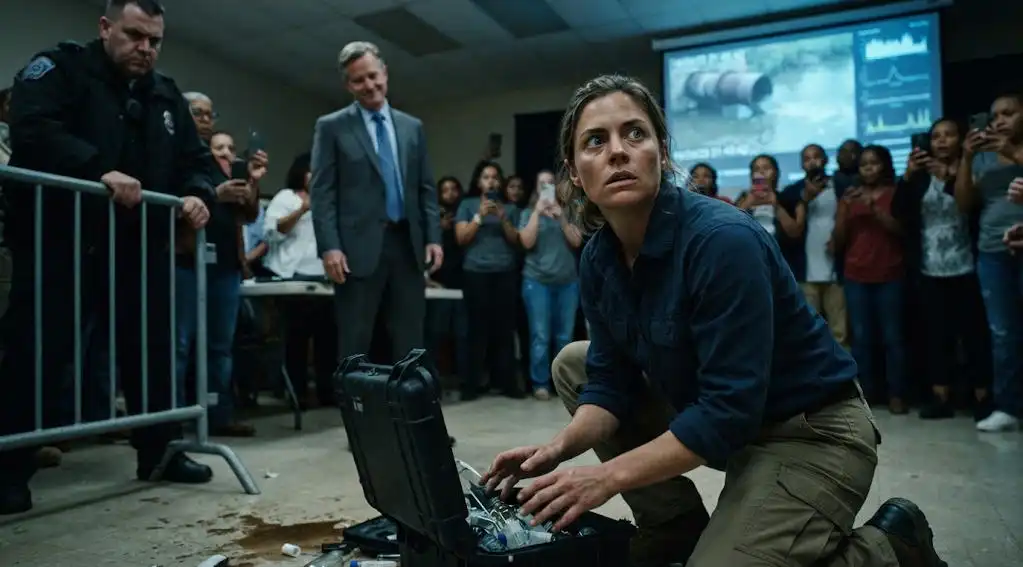
A Chemical Plant Guard Mocked an OVERWEIGHT Water Scientist and Smashed Her Sample Case in Public. He Had NO IDEA What She’d Already Recorded 😱
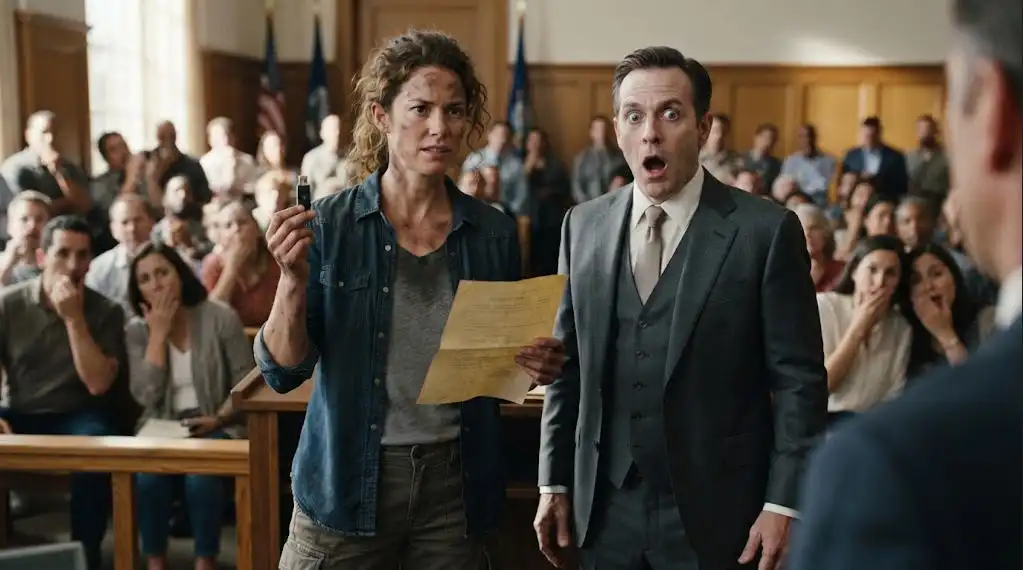
A Polished Developer Had His Men Shove a Postpartum Home Repairwoman Into the Mud. He Had NO IDEA What She Was Bringing to City Hall 😱
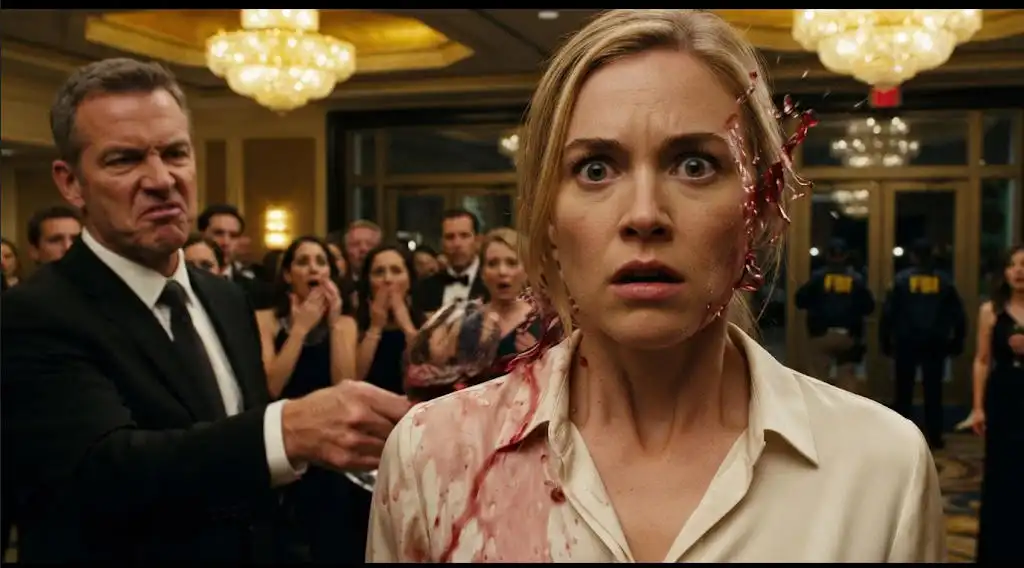
A Quiet Las Vegas Hotel Auditor Was DRENCHED in Red Wine by a Powerful VP in Front of Dozens of Guests. He Had NO IDEA What She’d Already Saved... 😱