
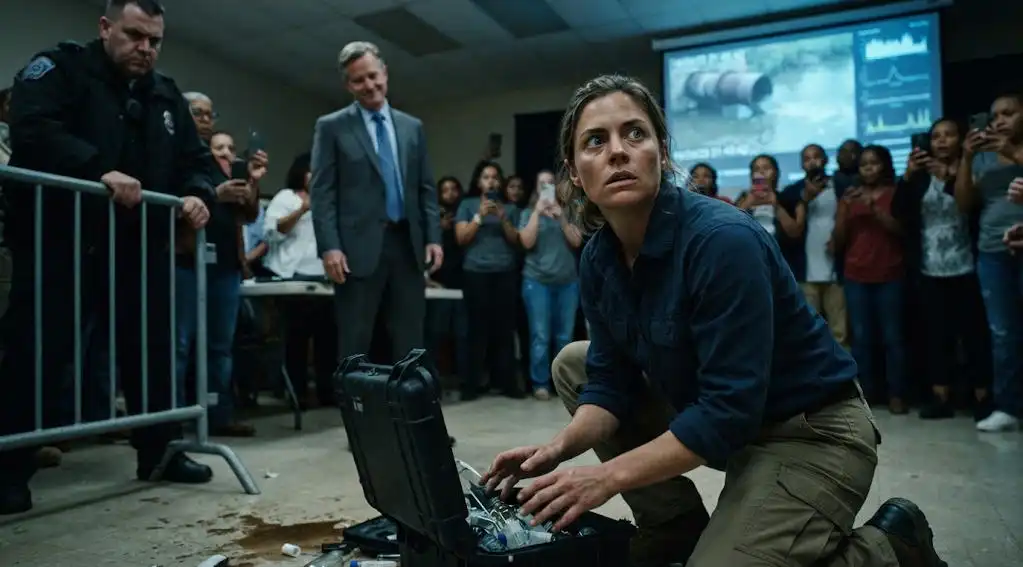
The projector clicked, and the screen stayed black for one long second.
Grant Mercer leaned back in his chair.
He wore the calm, expensive smile of a man who had spent his life watching problems disappear after a phone call.
Behind him, two local officials stared at their folders. Across the aisle, residents in work boots and faded church clothes held their breath.
I kept my hands flat on the table, trying not to think about the broken glass that had cut my palm weeks earlier.
Then a timestamp appeared in the corner of the screen.
12:17:08 A.M.
The footage showed a blue floodlight illuminating the side of a chemical storage tank. Beneath the tank, partly hidden by marsh grass, a narrow pipe discharged a dark stream into the bayou.
The camera held steady.
The flow continued.
Grant’s smile weakened.
Dana Whitlock, the EPA investigator, paused the footage.
“Mr. Mercer,” she said, “your company’s official discharge records show no release at that location or at that time. Would you like to explain the discrepancy?”
He adjusted his tie.
“That video could have been recorded anywhere.”
Dana nodded calmly.
“Then you should have no objection to reviewing the remaining evidence.”
I watched the screen and remembered the night I first understood how badly my town had been betrayed.
Three months earlier, most people in Bayou Belle knew me as the woman who drove an aging government truck along the coast, carrying coolers, sample bottles, field meters, and far too many notebooks.
I was thirty years old and worked as a marine environmental monitoring specialist for a state coastal water program.
My job was not glamorous.
I woke before sunrise, drove to remote sampling sites, measured water conditions, collected specimens, and documented changes in the marshes and waterways.
Some days, I worked twelve hours without a proper lunch. Other days, I ate whatever I could find at a gas station between inspections.
Over the years, my irregular schedule had changed my body. I had gained weight, and I knew people noticed.
I also knew that none of that changed my training.
Water chemistry did not care what size a scientist wore.
Neither did the chain of custody on a properly collected sample.
But Grant Mercer would eventually show me that some people cared more about appearances than evidence.
Bayou Belle depended on Gulf Crown Chemicals, the sprawling industrial facility that stood beyond the southern edge of town.
The plant provided jobs, supported local businesses, and paid taxes that helped fund schools and public services.
For many families, it represented the difference between staying in their hometown and leaving to search for work somewhere else.
That dependence made the growing water complaints difficult to discuss.
Ruth Landry, a retired school bus driver who lived near the bayou, told me her well water had developed an unusual taste.
A fisherman reported changes in the water near his usual launch.
Several families had sought medical care for recurring stomach problems and skin irritation.
None of those complaints alone established what was causing the illnesses. But together, they raised questions that deserved a serious investigation.
I began collecting additional samples from downstream locations, nearby private wells, and comparison sites upstream.
The early results worried me.
Several samples contained solvent residues and metals at concentrations that warranted further testing. The pattern was not consistent with what we would expect from the relatively clean upstream locations.
I checked the equipment.
I recalibrated the instruments.
I repeated the measurements.
Then I sent split samples to independent accredited laboratories.
The results came back with the same troubling pattern.
I prepared a preliminary report and requested a public meeting so residents could hear what we knew, what we did not yet know, and what further testing was needed.
Grant Mercer attended that meeting in a dark blue suit.
He looked like the sort of executive who never had to wait in line for anything.
His hair was perfectly arranged. His shoes were polished. His smile seemed permanently attached to his face.
When I presented my findings, he folded his arms.
“These are preliminary numbers,” he announced. “You cannot frighten an entire community because a few measurements look unusual.”
“I’m not asking anyone to jump to conclusions,” I replied. “I’m asking for a complete investigation and access to the records needed to determine the source.”
He smiled at the audience.
“What this town needs is stability. Gulf Crown employs local people. We support local families. We cannot allow careless accusations to threaten that.”
A few residents nodded reluctantly.
They were not necessarily convinced by him. They were afraid of what might happen if he was right about their jobs being at risk.
I explained that the independent laboratory results required follow-up and that the public deserved accurate information.
That was when Mercer’s security guard stepped forward.
His name was Dale Rusk.
He looked at my sample case, then at me.
“You expect people to take you seriously?” he said.
Before I could answer, he grabbed a heavy steel barrier base from beside the meeting entrance and raised it over my case.
I barely had time to step back.
He brought it down.
The impact cracked the plastic shell. Glass bottles burst inside. Water and fragments scattered across the floor.
Several people gasped.
Someone shouted for him to stop.
Rusk pointed at me.
“You don’t look fit to test water,” he said. “Why should anybody trust you?”
I felt every eye in the room.
My face burned. My hands trembled, partly from anger and partly because I was trying not to cut myself on the broken glass.
Mercer did not reprimand his guard.
He did not apologize.
Instead, he turned toward the residents.
“This is exactly what happens when people let emotion replace professional judgment,” he said. “We have hundreds of families depending on this plant. Are you going to believe her, or are you going to protect your livelihoods?”
It was a cruel question because he had framed the choice dishonestly.
Protecting the town's jobs and protecting its water should never have been mutually exclusive.
But in that room, people were frightened enough to accept his version of reality.
I could have shouted back.
I could have told him exactly what I thought of his behavior.
Instead, I took photographs of the damaged case, documented the incident, and asked the town clerk to preserve the meeting recording.
Then I left.
Mercer believed he had humiliated me into silence.
He had made a mistake.
I returned to the field the next morning.
My first priority was to protect the integrity of the investigation.
The destroyed case meant that some of the physical samples could no longer be used. But the evidence did not depend on those bottles alone.
Split samples had already been delivered to independent laboratories. The laboratories retained their own intake records, analytical results, and documentation.
My original field notes recorded the locations, collection times, equipment calibration, and handling procedures.
I organized the records into a single evidence package.
Then I went back to the water.
Over the next several nights, I collected additional samples from established public monitoring locations.
I followed the required collection procedures, documented the chain of custody, recorded the time and coordinates, and used clean equipment to reduce the risk of contamination.
I included comparison samples from upstream sites.
I did not trespass onto Gulf Crown property.
I did not need to.
From a public marsh access point, I could observe part of the drainage channel running beside the plant’s perimeter.
The official records described the discharge system as inactive during the late-night hours.
But the water samples suggested otherwise.
I returned after dark and watched the facility from the public shoreline.
At 12:17 a.m., a blue floodlight illuminated the side of a storage tank.
A dark stream emerged from a narrow pipe beneath the vegetation.
It flowed into the bayou and disappeared into the moving water.
I recorded the scene, making sure the timestamp and fixed landmarks were visible.
I returned on another night.
The discharge happened again.
The next morning, I submitted the additional samples for independent analysis.
The laboratory results strengthened the case for a formal investigation. The downstream samples repeatedly showed a concerning chemical pattern that did not appear in the upstream comparison samples.
The video provided a separate line of evidence: a physical discharge occurring at a location and time inconsistent with the plant’s official reports.
Together, the records demanded answers.
That was when the pressure began.
My supervisor called me into his office.
He closed the door before speaking.
“Erin, the plant has contacted senior officials,” he said. “They claim your work is damaging their reputation.”
“My work is measuring water quality.”
“They say your preliminary report is incomplete.”
“Then we should complete the investigation. We should not bury it.”
He looked exhausted.
“I'm telling you to withdraw the report until the matter can be reviewed.”
I asked whether the independent laboratory results had changed.
He did not answer.
That afternoon, the shared folder containing my draft report disappeared.
The next morning, I discovered that the preliminary findings had been removed from the packet prepared for the next public meeting.
I felt the first real wave of fear.
I had a steady government job. I had spent years building a career that allowed me to do useful work without worrying about whether my next paycheck would arrive.
I knew what could happen if I openly challenged the people who controlled my department’s budget and relationships with local industry.
But I also knew that the independent laboratories still held the original records.
And the footage had not disappeared.
I made a formal submission to the U.S. Environmental Protection Agency, providing the relevant laboratory reports, field documentation, and original video files.
I did not embellish the findings.
I did not claim to know the precise cause of every illness in Bayou Belle.
I documented what I had measured, where I had measured it, what the independent laboratories had confirmed, and what the video showed.
Then I waited.
A week later, an EPA investigator named Dana Whitlock called me.
She did not promise that everything would be fine.
She asked detailed questions.
How had each sample been collected?
Who had handled it?
Were the laboratory records original?
Could I identify the exact location shown in the video?
Did I have another recording from a different night?
I answered every question and provided the documentation she requested.
Dana explained that the EPA would conduct its own investigation and independent sampling.
That was the first time I felt the weight of the problem shift away from my shoulders.
I was no longer the only person asking questions.
A federal team visited the area. Investigators examined the discharge route, reviewed available records, and collected their own samples.
They also began examining the plant’s discharge reports and the approvals issued by local officials.
Gulf Crown responded with a polished public statement.
The company denied wrongdoing and described the allegations as speculative.
Grant Mercer appeared at another community meeting and insisted that the plant had complied with its obligations.
He looked directly at the cameras.
“We welcome a thorough review,” he said. “We have nothing to hide.”
I watched the broadcast from my kitchen.
For a moment, I wondered whether I had underestimated how much power he possessed.
Then my phone rang.
Dana Whitlock was calling to tell me that the case was moving toward a public federal enforcement hearing.
The hearing in New Orleans was open to the public. Residents attended alongside reporters, environmental specialists, attorneys, and representatives of the company.
I sat at the evidence table with my records arranged in front of me.
Grant Mercer sat across the room.
He looked as confident as he had at the town hall.
When Dana asked whether he recognized the blue floodlight in my recording, he dismissed the footage as unreliable.
That was when she pressed PLAY.
The first clip showed the pipe discharging into the bayou at 12:17 a.m.
The second clip showed the same location three nights later.
Then Dana displayed the independent laboratory reports.
She explained how the results from the downstream samples compared with the upstream controls. She presented the collection records and the laboratory documentation. She also described the EPA team’s independent sampling, which had confirmed violations requiring enforcement action.
The video was not standing alone.
It was supported by a documented series of samples, independent analytical results, and a location that investigators could inspect themselves.
Mercer leaned forward.
“These findings are being misrepresented,” he said.
Dana did not raise her voice.
“Then let us examine the company’s records.”
The next set of documents changed the entire hearing.
Investigators had found discrepancies between Gulf Crown’s official discharge reports and its operating records.
The plant had reported periods of no discharge even when other records indicated that its wastewater system had been operating.
Investigators also found records of maintenance and waste handling that did not match the company’s public claims.
Then came the financial records.
Payments had been routed through a consulting company connected to a local water official, Howard Pike.
Pike had signed inspection documents indicating that required checks had been completed.
Investigators found evidence that several of those inspections had not actually taken place as recorded.
The payments and false paperwork were not my original proof of the discharge. They were evidence developed during the broader investigation, and they helped explain why the warnings had been ignored.
Mercer had wanted to avoid the cost of upgrading the plant’s waste-treatment system and interrupting production.
Pike and other local officials had helped maintain the appearance of compliance while the plant continued operating.
The company’s economic importance gave Mercer leverage.
The officials’ cooperation gave him cover.
And the residents’ fear of losing their jobs had helped keep the questions quiet.
For months, the people who depended on Gulf Crown had been told that protecting their livelihoods meant trusting the company.
Now the evidence showed that the people asking for clean water had been the ones telling the truth.
😱 Mercer stood and demanded a recess.
His attorney leaned toward him and whispered urgently.
The cameras kept recording.
Dana turned to the hearing panel.
“The evidence establishes sufficient grounds for enforcement action,” she said. “The discharge records, laboratory findings, and independent observations will be referred for the appropriate proceedings.”
Mercer no longer looked amused.
The hearing did not end with a dramatic speech or a spontaneous confession.
It ended with documents being entered into the record, questions being answered under oath, and investigators preparing the next legal steps.
That was more powerful than a shouting match.
The process continued for months.
Federal and state authorities pursued enforcement action. A court order halted the unlawful discharge while the site underwent investigation and remediation.
The company faced a multimillion-dollar penalty and a court-supervised cleanup obligation.
Its discharge operations were stopped, and officials posted closure notices at the facility while the violations were addressed.
Further investigation exposed the false records and improper payments. The responsible officials faced legal consequences, and Mercer’s position at Gulf Crown became untenable.
The plant never returned to its former operations.
For Bayou Belle, however, the most important work had only begun.
Stopping a discharge did not instantly make contaminated water safe.
The cleanup required monitoring, treatment, and repeated testing. Residents needed reliable information about their wells and water supplies. The community also needed a way to verify that the promises being made were actually being kept.
Independent testing continued.
Temporary water assistance and remediation measures helped protect residents while the work progressed.
Results were published and reviewed rather than simply announced at a press conference.
Over time, the water quality improved.
Residents gradually regained confidence in their water supplies as repeated testing confirmed that the relevant safety requirements were being met.
Families who had spent months worrying about what came out of their taps could finally begin to relax.
Ruth Landry called me one afternoon.
“I filled my kettle without thinking about it for the first time in months,” she said.
Then she paused.
“I know that sounds like a small thing.”
“It doesn't sound small to me,” I told her.
I had wanted that kind of relief from the beginning.
But there was a cost I could not ignore.
Not long after I submitted my evidence to the EPA, my position at the state monitoring office became increasingly difficult to maintain.
My supervisor stopped assigning me field investigations. Important meetings took place without me. Requests for clarification went unanswered.
Eventually, I was informed that my position was being eliminated as part of an administrative reorganization.
The official explanation did not mention my report.
I knew what had happened, but I also knew that proving retaliation would take time and resources I no longer had.
I lost the steady government job I had worked hard to build.
I lost the predictable income, the benefits, and the future I had imagined when I first entered public service.
For a while, I wondered whether I should have stayed quiet.
I could have avoided the hearing, the hostile meetings, and the long months of uncertainty.
I could have kept my job.
Then I remembered Ruth and the other residents who had depended on people like me to take their concerns seriously.
I had not caused the town’s problem.
I had refused to pretend it did not exist.
That distinction mattered.
A small coastal restoration nonprofit eventually offered me a position helping communities establish independent water-monitoring programs.
It was not the secure career path I had once imagined, and it took time to rebuild my finances.
But I could once again do the work I believed in.
I taught residents how to document environmental changes, preserve records, and understand the difference between an alarming rumor and a verified finding.
I reminded them that good evidence mattered, that proper procedures protected everyone, and that no company should be allowed to replace independent oversight with its own assurances.
The years passed.
The old Gulf Crown site underwent remediation and was eventually transformed into a coastal ecology park.
Where industrial fencing and drainage equipment had once dominated the landscape, native grasses returned. Walking trails crossed restored marshland. Educational signs explained the area’s recovery and the importance of protecting coastal water.
The first time I visited, I stood on the boardwalk and watched sunlight move across the water.
The sky was clear.
A breeze carried the smell of salt and wet earth.
I had changed, too.
I ate more regularly now. I had learned to protect my health instead of treating exhaustion as a badge of honor. I was stronger, more comfortable in my own body, and no longer measuring my worth by the opinions of people who had never bothered to understand my work.
My body had never made my evidence less valid.
It never should have been a question in the first place.
A group of schoolchildren walked past with their teacher. One boy stopped beside the railing and pointed toward the marsh.
“Is the water really clean now?” he asked.
I explained that the site had undergone extensive cleanup and that ongoing monitoring remained important. I told him how scientists collected samples, compared results, and checked whether the evidence supported their conclusions.
He listened carefully.
Then he nodded and ran to catch up with his class.
I watched them cross the boardwalk, laughing beneath the bright Louisiana sky.
For years, Grant Mercer had treated the town as though its people were too dependent, too frightened, or too insignificant to challenge him.
He had mistaken their fear for consent.
He had mistaken my appearance for weakness.
And he had mistaken the destruction of one sample case for the destruction of the truth.
He was wrong about all three.
I raised my hand and waved as the children disappeared down the trail.
Behind me stood the restored land that had once carried the plant’s hidden discharge. Ahead of me lay the water I had spent months fighting to protect.
I had lost my secure government position.
But the town had gained something more important: a cleaner environment, a documented record of what had happened, and a community that understood why independent oversight mattered.
I would never pretend that doing the right thing was easy, or that every whistleblower received a happy ending.
I would never tell another scientist that courage alone could replace legal protections, sound procedures, or a fair investigation.
But I would tell them this:
A paycheck can support a family. Clean water protects the life that family gets to live. Neither should ever be used as an excuse to sacrifice the other.
If you believe a whistleblower deserves protection for exposing environmental wrongdoing, stand with the people who demand clean water.
If you believe powerful companies should be allowed to hide pollution to protect their profits, stand with the people who tried to silence them.
Choose a side: protect the scientist who risked her livelihood to tell the truth, or protect the executives and officials who concealed the danger.
Share this story with someone who believes that a community’s health matters more than a corporation’s reputation. 👇
Disclaimer: Mention of any brand or trademark is for identification only and does not imply partnership or endorsement
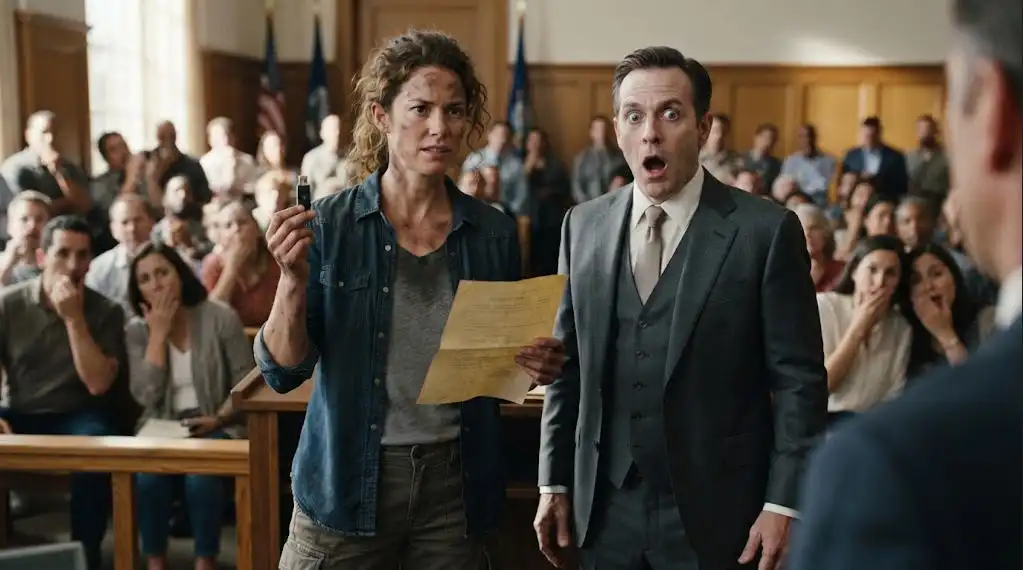
A Polished Developer Had His Men Shove a Postpartum Home Repairwoman Into the Mud. He Had NO IDEA What She Was Bringing to City Hall 😱

A Quiet Las Vegas Hotel Auditor Was DRENCHED in Red Wine by a Powerful VP in Front of Dozens of Guests. He Had NO IDEA What She’d Already Saved... 😱
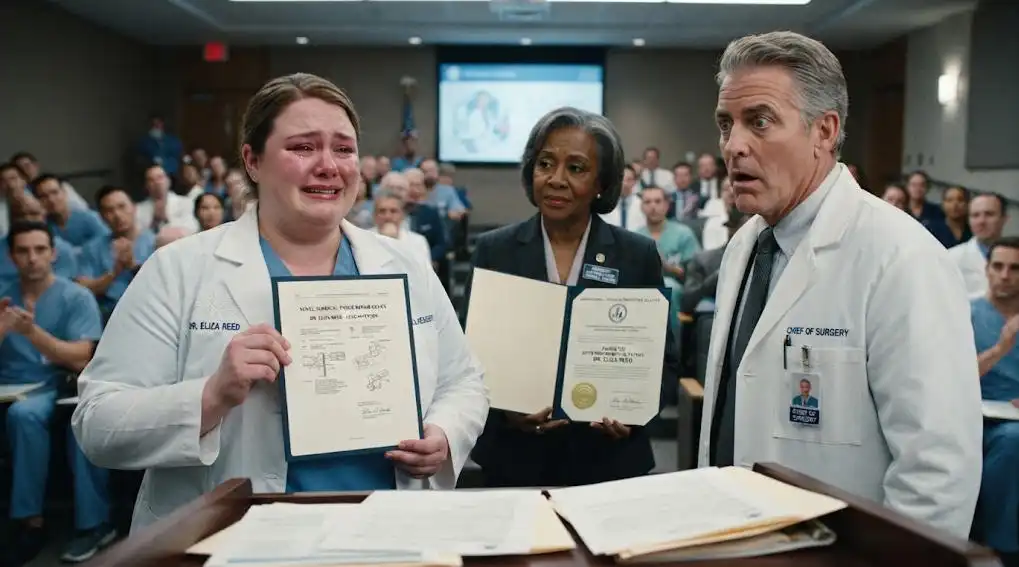
A Powerful Surgeon Slapped a Plus-Size Resident’s Medical Report Against Her Face and Stole Her Research. He Had NO IDEA Her Name Was Already on the International Patent... 😱