
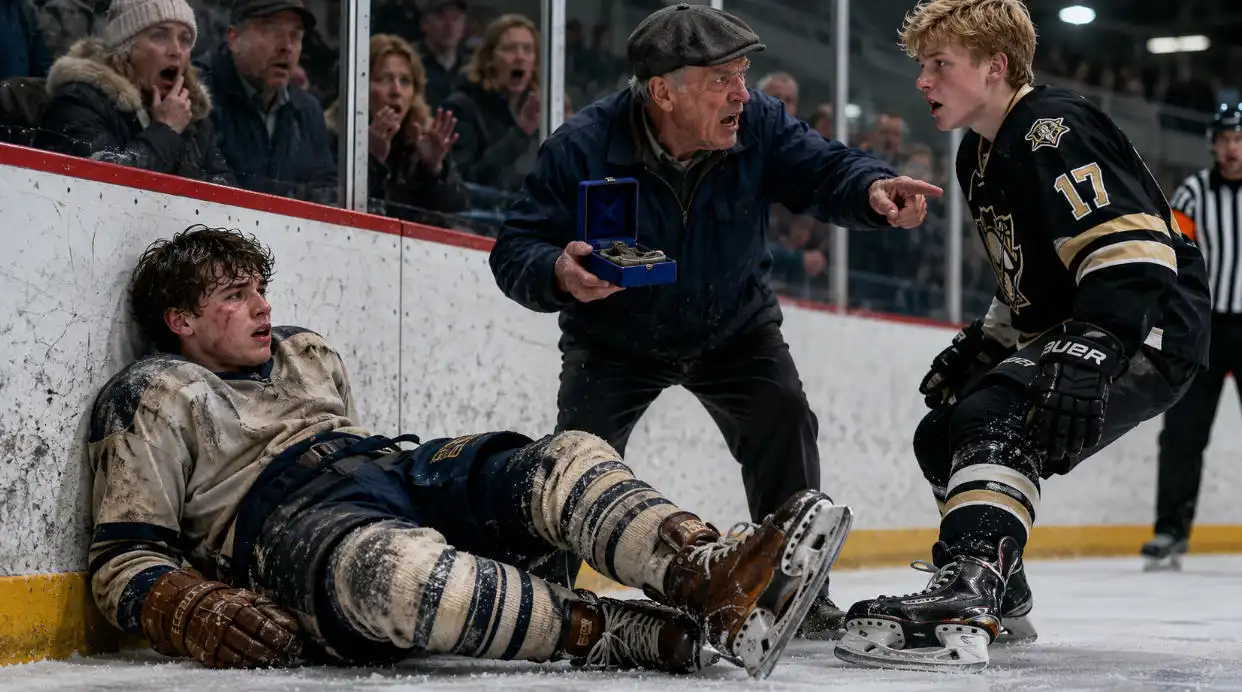
“Before anyone calls those skates trash again…”
Mr. Larsen’s voice carried across the Minnesota community rink like a church bell in a snowstorm.
The old rink attendant stood near center ice with a small blue velvet box in his trembling hand. Caleb was still on one knee by the boards, breath shaking after Justin Mallory’s dirty hit, while his father, Peter, stood frozen in his salt-stained snowplow jacket.
Nobody moved.
Not the referee.
Not the parents.
Not even Justin, who had been laughing five seconds earlier.
The box was the size of a prayer.
And Peter looked at it like it could destroy him.
“Mr. Larsen,” Peter said quietly. “Please don’t.”
That was when Caleb looked at his father and realized something was wrong.
Not wrong like a fight.
Wrong like a secret.
The rink was the old North Pines Ice Center, a sagging community arena outside Duluth, Minnesota, where the lobby smelled like burnt coffee, wet gloves, and cold rubber mats.
Peter Novak had driven his city snowplow since 3:40 that morning, clearing two-lane roads while lake-effect snow buried mailboxes and swallowed sidewalks.
He had come straight from work.
No shower.
No clean coat.
No proud-parent smile.
Just cracked hands, red eyes, and a canvas bag with a pair of old hockey skates Caleb wished he could throw into the nearest trash can.
Across the ice stood Justin Mallory.
Eighteen years old.
Team captain.
League darling.
A forward with custom skates, a carbon stick, and a father whose name was printed on banners above the concession stand.
MALLORY DEVELOPMENT GROUP — PROUD SPONSOR OF NORTH PINES HOCKEY.
That banner had made Justin brave.
Money does that to certain boys.
It teaches them every room belongs to them.
Caleb had felt small before the puck even dropped.
He was sixteen, tall but thin, fast on his feet but quiet in the locker room. His mother had died three winters earlier after a long illness that turned their house silent and their savings into medical bills.
Since then, Peter had worked days on the plow.
Nights wherever he could.
Snow removal.
Engine repair.
Skate sharpening.
Cash jobs that left his hands bleeding around the knuckles.
Caleb knew some of it.
He did not know all of it.
And because grief can turn love into anger, he had started mistaking Peter’s silence for failure.
That morning in the locker room, when Peter pulled out the old skates, Caleb had felt his face burn.
“Dad,” he whispered. “No.”
Peter held them carefully, almost tenderly.
“They’ll hold your edge better than the rentals.”
“They look fifty years old.”
“Thirty-two,” Peter said.
That strange answer made Caleb blink.
“What?”
Peter looked down.
“Nothing.”
Justin heard enough.
He walked over in his perfect navy warmups, chewing gum like he owned the air.
“Those things come with a tetanus shot?” he asked.
The boys around him laughed.
Not all of them wanted to.
But they did.
That is how public cruelty works.
It recruits cowards.
Caleb stared at the floor.
Peter knelt and reached for the laces.
Caleb jerked his foot back.
“I told you I needed real skates.”
The locker room went quiet.
Peter’s hand stayed in the air for one painful second.
Then he nodded.
“I know.”
Justin leaned against the bench.
“Maybe your dad can plow my driveway next week. I’ll tip him five bucks so you can upgrade to this century.”
A few parents in the hall heard it.
Nobody corrected him.
Peter tightened Caleb’s laces anyway.
Slowly.
Patiently.
Like each loop was a promise.
Then Caleb whispered the thing he would regret for the rest of his life.
“Why do you always make me look poor?”
Peter did not flinch.
That almost made it worse.
He just pulled the knot tight and said, “Give those skates one clean shift, and I’ll show you they were never trash.”
Justin laughed.
“That’s the big deal? One shift?”
Peter stood, knees stiff from years of cold work.
“One clean shift.”
Justin spread his arms.
“Fine. I’ll give him a shift to remember.”
Nobody liked the way he said it.
The first period started with a whistle and a scrape of blades.
Caleb pushed off, expecting the old skates to wobble.
They didn’t.
They bit into the ice like they remembered it.
On his first turn, he cut hard near the blue line, and the edge held so cleanly that he nearly over-skated the puck.
A father near the glass muttered, “Whoa.”
Caleb heard it.
So did Justin.
A minute later, Caleb took a pass through the neutral zone. He dipped his left shoulder, shifted his weight, and slid past a defender with a smooth inside-out move he had never pulled off in practice.
The old leather creaked.
The blades sang.
For half a second, Caleb forgot shame.
He felt fast.
Not new-fast.
True-fast.
Like the ice had opened a lane just for him.
He snapped a low shot at the goalie’s pads.
The puck didn’t go in.
But it kicked out to his teammate Mason, who buried the rebound.
The bench exploded.
Caleb’s coach slapped the boards.
“Novak! That edgework! Again!”
Caleb turned toward the stands without meaning to.
Peter stood behind the glass, both hands in his coat pockets, trying not to smile too much.
But Justin saw it too.
And that was when the game changed.
He stopped playing hockey.
He started hunting pride.
On Caleb’s next rush, Justin slashed his stick across Caleb’s gloves.
No call.
On the next shift, he shoved him from behind after the whistle.
No call.
Then he skated past Peter’s side of the boards and said loudly, “You shine those relics yourself, Mr. Plow?”
Peter stared through the glass.
“Play clean, Justin.”
Justin grinned.
“Or what?”
That was the question the whole rink heard.
Or what?
What could Peter Novak do?
He wasn’t rich.
He wasn’t a sponsor.
He wasn’t the coach.
He wasn’t the kind of man people noticed unless snow had buried their street.
Justin’s father, Warren Mallory, sat three rows up in a black overcoat, scrolling his phone like the rink was merely another property he could buy, rename, and sell.
When a mother complained about Justin’s slash, Warren didn’t even look up.
“That’s hockey,” he said.
The second period grew meaner.
Caleb tried to stay calm, but he was sixteen. His ribs hurt. His pride hurt. His father’s silence hurt most of all.
Then came the hit.
Caleb gathered the puck near center ice and crossed the red line with his head up.
Justin came late from the blind side.
High shoulder.
Full speed.
No attempt at the puck.
The sound of Caleb hitting the boards cracked through the arena.
A woman screamed.
The whistle blew.
Caleb folded to the ice, clutching his side.
Peter dropped his coffee so hard it burst across the rubber mat.
For one second, he was not a tired father.
He was something else.
Something older.
Something locked away.
Justin coasted past Caleb and muttered, “Should’ve bought better skates.”
That sentence traveled farther than he meant it to.
Parents heard it.
Players heard it.
Peter heard it.
And so did Mr. Larsen, who had been watching from the Zamboni tunnel with his jaw clenched so tight his face had gone white.
Mr. Larsen was seventy-four and looked like the rink itself had grown a beard. He had worked at North Pines since before Caleb was born. He fixed boards, flooded ice, sharpened blades, patched nets, and knew every good kid and every cruel one by the sound of their skates.
He stepped onto the ice carefully.
“Justin Mallory,” he said, “you don’t have the right to spit on those skates.”
Justin laughed, though less confidently now.
“They’re garbage.”
Mr. Larsen pointed a bent finger at him.
“Those skates have more honor in one blade than your family bought in this whole building.”
That line silenced the rink.
Then Jerry Walsh stood from the first row.
Jerry owned Walsh Sporting Goods, the only equipment shop in town that still sharpened skates by hand. He was built like a refrigerator and had a face that turned red when he was emotional.
“Peter,” Jerry said. “They need to know.”
Peter shook his head.
“No.”
Jerry looked at Caleb on the ice.
“Yes.”
Then Mr. Larsen walked to center ice with the blue velvet box.
That was where the story had stopped for everyone watching.
But it did not stop for Peter.
To Peter, that small box contained every winter he had tried to bury.
Mr. Larsen opened it.
Inside lay an Olympic gold medal.
The crowd did not understand at first.
People leaned forward.
A few phones rose.
Warren Mallory finally looked up.
Justin frowned.
Caleb stared from the ice, breathing hard.
Mr. Larsen lifted the medal by its ribbon.
The metal caught the rink lights and flashed against the white ice.
“This belonged,” Mr. Larsen said, “to Peter Novak.”
A sound moved through the arena.
Not a cheer.
Not a gasp.
Something deeper.
Confusion turning into shame.
Peter closed his eyes.
Caleb whispered, “Dad?”
Mr. Larsen’s voice shook.
“Long before he drove a plow, long before some of you decided his coat made him invisible, Peter Novak wore the red, white, and blue and brought home gold.”
Jerry Walsh stepped onto the rubber mat beside the bench.
“And those skates,” he said, pointing at Caleb’s feet, “are the skates he wore in the championship game that got him there.”
Caleb looked down at the cracked leather.
The same leather he had hated.
The same laces his father had tied with bleeding hands.
His throat tightened.
“No,” he whispered.
Peter finally spoke.
“They were just old skates, Jerry.”
“No,” Jerry said. “They were your old skates.”
Peter looked at the floor like a man begging the past to stay quiet.
But the truth had waited too long.
Jerry turned to the crowd.
“Three months ago, Peter came into my shop asking for junior elite skates. He had cash in an envelope. Small bills. Ones, fives, tens. He said Caleb’s feet had grown and he wanted him in the best pair before playoffs.”
Caleb’s eyes filled.
Jerry swallowed hard.
“I had the skates boxed up. Then Peter got a call from the rink office. Training fees were overdue. Tournament travel was due. If he didn’t pay, Caleb couldn’t play.”
The rink stayed silent.
Even the compressor seemed to hush.
“So Peter handed me the envelope and asked if I could hold the new skates for a week,” Jerry continued. “Then he left and came back two hours later with these.”
He pointed again.
“His own skates. The ones he had kept wrapped in an old towel for thirty years.”
Peter whispered, “Jerry.”
But Jerry shook his head.
“No. You let them laugh at you. You let your own boy think you failed him. I’m not letting that stand.”
Caleb pressed his glove over his mouth.
Jerry’s voice softened.
“He asked me to restore the blades. He worked in my back room after snow shifts, sharpening rentals and cleaning gear to pay the bill. Some nights he fell asleep sitting on a bucket. But he never missed a payment for Caleb’s ice time.”
A mother in the bleachers began to cry.
Mr. Larsen held the medal lower now, like it had become too heavy.
“And when his wife got sick,” Mr. Larsen added, “Peter sold almost everything from his hockey years. Jerseys. sticks. photos. Awards. But he wouldn’t sell that medal, and he wouldn’t sell those skates.”
Peter stared through the glass at his son.
“I was saving them,” he said.
Caleb’s voice cracked.
“For what?”
Peter’s eyes shone.
“For the day you needed to know you came from more than bills.”
That sentence broke something in the room. 💔
Caleb tried to stand, but his side seized.
Peter moved toward the gate.
The referee stepped in.
“Sir, you can’t come on the ice.”
Peter looked at Caleb.
Then at Justin.
Justin was backing toward his bench now, face red, jaw tight.
“This is stupid,” Justin snapped. “So he played hockey. Big deal.”
Warren Mallory stood.
“Enough of this theater. My son made a hit. Call the penalty and move on.”
Mr. Larsen turned slowly.
“A hit?”
Jerry pointed toward the corner.
“There’s a camera over the penalty box. It caught the whole thing.”
Warren’s face changed.
Just slightly.
But every parent saw it.
The referee skated to the scorers’ table.
Coach, rink manager, and two officials gathered around the small monitor.
The video played once.
Then again.
Justin coming late.
Justin aiming high.
Justin laughing afterward.
The referee removed his helmet.
“Match penalty,” he said. “Intent to injure.”
Justin exploded.
“You can’t do that! My dad pays for this dump!”
That was the wrong sentence.
It landed in the rink like gasoline.
Warren grabbed his son’s arm.
“Quiet.”
But Justin jerked away.
“No, I’m done. This poor kid gets a pity story and now I’m the bad guy?”
Caleb was still kneeling by the boards, hurt and pale.
Peter opened the gate.
This time nobody stopped him.
He stepped onto the ice in work boots.
Not skates.
Boots.
The crowd sucked in a breath.
Rubber soles on ice are a terrible idea.
Any normal man would slip.
Peter didn’t.
He moved slowly at first, then steadier, knees bent, weight centered, like the ice recognized him even through leather boots.
For a heartbeat, people saw the ghost of the athlete he had been.
Justin saw it too.
And pride made him stupid.
He grabbed his stick off the bench and skated hard toward Caleb, shouting, “Get up, charity case!”
The referee yelled.
“Justin, stop!”
Justin didn’t.
He cut across the ice toward the injured boy.
Peter placed himself between Justin and Caleb.
“Enough,” Peter said.
Justin came faster.
What happened next took less than one second.
Peter lowered his shoulder.
Not wild.
Not angry.
Controlled.
A perfect old-school body position, planted like a wall.
Justin hit him and bounced.
The rich forward flew sideways over the low gate near the boards, crashed into the padded front row, and disappeared in a storm of popcorn, gloves, and shocked screams. 😱
Nobody cheered at first.
They were too stunned.
Peter had barely moved.
He stood on the ice in his work boots, breathing hard, one hand pressed to his ribs, eyes never leaving Caleb.
Then a little boy in the front row whispered, “That was awesome.”
The sound snapped the arena back to life.
Parents surged to their feet.
Not because a boy had fallen.
Because someone had finally stood between cruelty and its target.
Justin wasn’t badly hurt.
His ego took the worst of it.
Two ushers helped him up while he shouted about lawsuits, sponsors, and “trash people.”
Warren Mallory pointed at Peter.
“You just ended this rink.”
Peter looked at him.
“No,” Peter said. “Your son tried to end a kid’s season.”
Then Peter knelt beside Caleb.
All the noise faded.
Caleb looked at his father like he was seeing him for the first time.
“Dad,” he whispered. “I’m sorry.”
Peter’s face crumpled.
“No, buddy.”
“I called them trash.”
“They’re skates.”
“I called you poor.”
Peter put one hand on Caleb’s helmet.
“We were poor.”
Caleb shook his head, tears sliding down his cheeks.
“No. I mean… I made you feel small.”
Peter let out a broken laugh.
“You’re my son. You don’t know how big you make me feel.”
The medic checked Caleb’s ribs. Bruised, not broken. Painful, but not season-ending.
That was the first mercy.
The second came when Coach Benson walked over and crouched beside Caleb.
“Can you breathe?”
Caleb nodded.
“Can you stand?”
Another nod.
“Can you skate?”
Peter immediately said, “He’s done.”
Caleb grabbed his sleeve.
“No.”
Peter stared at him.
Caleb wiped his face with his glove.
“One clean shift,” he said.
Peter’s chin trembled.
“Caleb—”
“One clean shift,” Caleb repeated. “With your skates.”
The coach looked at the medic.
The medic frowned, checked Caleb again, then said, “No contact. If he feels sharp pain, he stops immediately.”
Peter looked like he wanted to say no.
Then Caleb reached down and touched the old leather.
“I need to finish this right.”
So Caleb stood.
The crowd stood with him.
Justin was ejected.
His team lost their star forward and their swagger at the same time.
When the puck dropped again, the rink had changed.
Every scrape sounded louder.
Every pass mattered.
Caleb did not play like a boy trying to impress rich kids anymore.
He played like a son carrying his father’s silence.
Late in the third period, the score was tied.
North Pines had one last rush.
Caleb took the puck near the blue line.
The defender expected him to go wide.
Instead, Caleb used the same deep edge that had shocked everyone in the first period.
The old skate blade carved a clean half-moon into the ice.
A real, visible cut.
Sharp.
Precise.
Unmistakable.
The defender slid the wrong way.
The crowd rose.
Caleb drove toward the net.
His ribs screamed.
He heard Peter’s voice in his memory.
They’ll hold your edge.
He pulled the puck across his body and snapped it low.
Five-hole.
Goal.
For one second, nobody breathed.
Then North Pines Ice Center erupted.
Gloves hit the ice.
The horn blared.
Mothers cried.
Fathers hugged kids they had forgotten to hug.
Peter stood alone behind the glass, one hand over his mouth, shaking like the cold had finally reached his bones.
Caleb did not skate to the bench first.
He skated to the glass.
He pressed his glove against it.
Peter pressed his cracked palm to the other side.
No speech could have done more.
The league review happened the next morning.
The video from the penalty box was clear.
So were the witness statements.
Justin Mallory was expelled from the league for malicious contact and unsportsmanlike conduct after an injury.
Warren Mallory tried to threaten everyone.
He promised to pull his funding.
He promised the rink would close by Christmas.
He promised lawyers, headlines, and empty seats.
Then the community did something he had never expected.
They stopped being afraid of his money.
Parents started a fundraiser before lunch.
The equipment store donated gear.
Former players sent checks.
A local contractor repaired the locker room roof for free.
Jerry Walsh posted a sign in his shop window:
NO KID GETS SHAMED FOR OLD SKATES HERE.
By the end of the week, North Pines had raised more money than Warren Mallory had ever donated.
Warren pulled his investment anyway.
But that decision backfired.
His private travel team had been built around Justin’s name and his company’s cash. Once the league expelled Justin and families saw the video, sponsors vanished. Parents withdrew. Deposits were refunded with money the team did not have.
Mallory Development Group had already been drowning under failed projects.
The hockey scandal did not create the bankruptcy.
It revealed it.
Three months later, the Mallory banner came down from the rink.
Mr. Larsen folded it without saying a word.
Then he helped hang a new one.
NORTH PINES COMMUNITY HOCKEY — BUILT BY FAMILIES.
Spring came late in Minnesota that year.
It always does.
But Caleb kept skating.
He trained before school.
He worked weekends at Jerry’s shop to help other kids afford repairs.
And every time he tied those old skates, he did it slowly.
With respect.
Not because they were famous.
Because they were his father’s.
At the state championship, North Pines was not supposed to win.
They were too small.
Too cold.
Too underfunded.
Too easy to overlook.
But overlooked kids know how to fight for inches.
Caleb scored twice in the semifinal.
In the final, with the score tied and forty seconds left, he took the puck behind his own net and started up ice.
Peter stood by the boards in his snowplow jacket.
Same coat.
Same cracked hands.
Different eyes.
Caleb crossed center.
A defender stepped up.
Caleb cut left on those old blades, and the defender lost him.
Another came from the right.
Caleb leaned into the edge his father had trusted before anyone else did.
The ice carved white beneath him.
Then he passed.
Not shot.
Passed.
Mason, the teammate who had buried that first rebound months earlier, slammed the puck into the net.
North Pines won the state championship.
The boys threw their sticks.
The crowd lost its mind.
Caleb was named tournament MVP, but when the reporter tried to interview him, he looked past the camera.
“My dad,” he said. “Talk to him.”
Peter tried to wave it off.
Caleb wouldn’t let him.
He took the state championship trophy, carried it through the crowd, and walked straight out into the parking lot.
Snow was falling again.
Big soft flakes.
The kind that make even ugly pavement look forgiven.
Peter’s orange snowplow truck sat under a parking light, dented, rusted, and still running because Peter knew how to keep broken things alive.
Caleb climbed onto the bumper and tied the trophy to the front grill with hockey tape.
Peter laughed through tears.
“What are you doing?”
Caleb hopped down.
“Putting it where it belongs.”
Peter shook his head.
“That trophy belongs to the team.”
Caleb looked at the truck.
Then at his father.
“This truck got me to every practice. It paid every fee. It cleared the roads before I even woke up. It belongs here first.”
Peter tried to speak.
Nothing came out.
So Caleb hugged him.
Not quickly.
Not like a teenager embarrassed by love.
He wrapped both arms around his father in the falling snow and held on.
“I thought you gave me old skates,” Caleb whispered.
Peter closed his eyes.
“I gave you what I had.”
“No,” Caleb said. “You gave me who you were.”
Behind them, teammates, parents, coaches, Jerry, and Mr. Larsen stood quietly around the truck.
Some cried.
Nobody teased them.
Nobody rushed them.
The trophy shone against the plow blade like a small gold sunrise.
Mr. Larsen walked over and placed Peter’s Olympic medal in Caleb’s hand.
Peter started to object.
The old man stopped him.
“Let the boy understand the weight of it.”
Caleb held the medal and looked at the old skates slung over his shoulder.
Then he handed the medal back to Peter.
“I don’t need people to know you were a champion,” Caleb said. “I need to remember you were my dad first.”
That was the healing.
Not the win.
Not the trophy.
Not Justin’s fall.
The healing was a son finally seeing the man who had been standing in the cold for him all along.
So choose the side that still believes in quiet fathers, worn-out hands, and sacrifices nobody claps for.
Share this for the parent who gave everything without making a speech. 👇
Disclaimer: Mention of any brand or trademark is for identification only and does not imply partnership or endorsement
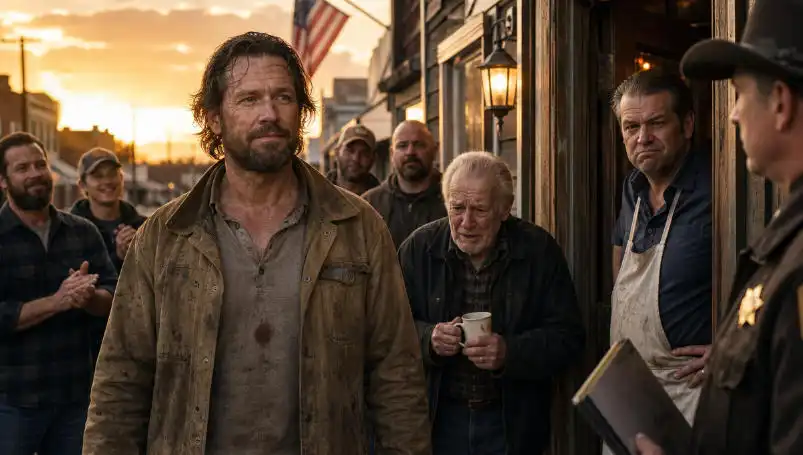
The Tavern Owner Set A Trap To Make Paul Drink Again… But He Had NO IDEA The Entire Town Was Watching 👀
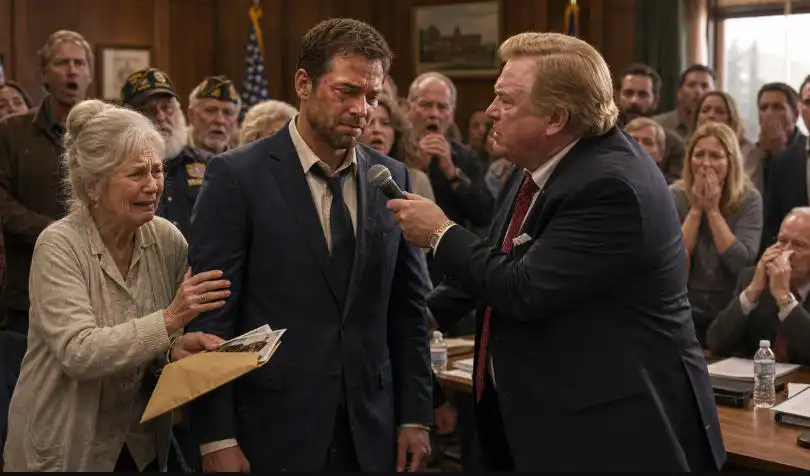
They Laughed When Mark Announced He Was Running for Office… Then One Sealed Envelope Made the Whole Room Go Silent 😳
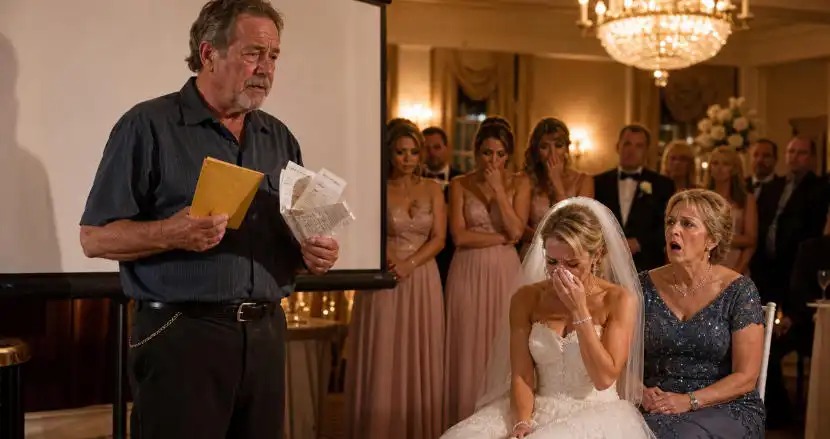
My Stepdaughter Thought Her Real Father Paid for Her Golf Club Wedding… Then I Showed the Guests the Letter He Sent Me