
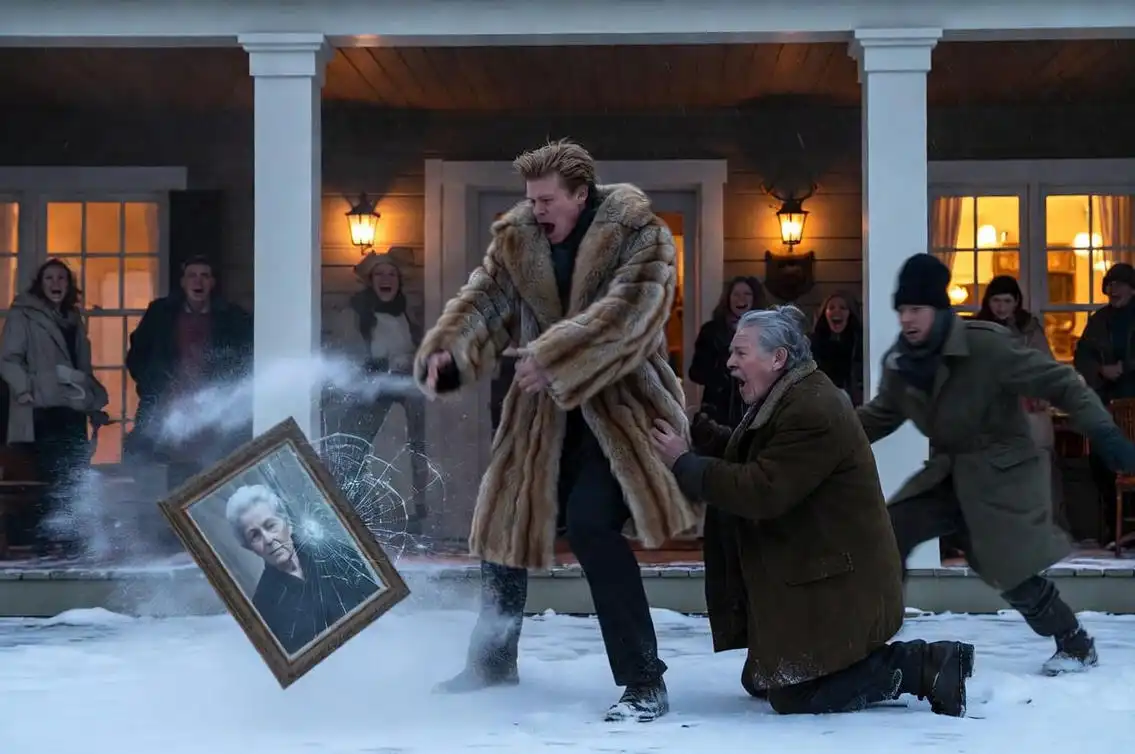
By the time Kevin opened that front door the next morning, the storm had nearly buried the porch steps.
He was still in the robe he had worn to bed.
His hair was a mess.
His face still carried that lazy smile spoiled men wear when they believe consequences are for other people.
Then he saw the sheriff.
Then he saw the governor.
Then he saw the papers in my hand.
And for the first time in years, my grandson stopped smiling.
But that was not where the story began.
It began the night before, in the dining room of the house my wife and I built with forty-seven years of work, debt, sweat, and prayer.
The house sat on twelve thousand acres of Montana land.
Cattle pasture.
Wheat fields.
A long creek that froze blue in January.
An old red barn that leaned a little to the left but had outlasted three generations of men who thought they could replace it.
Inside the main house, Kevin had decorated for New Year’s Eve like he was filming a magazine spread.
Crystal glasses.
Imported bourbon.
A fireplace big enough to roast a whole steer.
And mounted deer heads staring down from the walls like silent judges.
Kevin loved that room.
Not because it meant family.
Because it made him feel important.
I stood near the back hallway in an old brown coat, watching him entertain bankers, real estate men, and two of his drinking friends from Bozeman.
He was thirty-two years old.
Handsome, I’ll give him that.
Clean haircut.
Good teeth.
Expensive watch.
The kind of man people mistake for successful because his boots cost more than a ranch hand’s monthly grocery bill.
He raised his glass and said, “To new ownership.”
A few people laughed.
I didn’t.
He glanced at me.
“Grandpa, you don’t have to stand there looking tragic. You knew this was coming.”
A banker cleared his throat.
One of Kevin’s friends whispered, “Is that him?”
Kevin grinned.
“Yeah. The old cowboy himself.”
I felt every eye in that room land on me.
Some curious.
Some embarrassed.
Some entertained.
I had lived long enough to know the difference.
Kevin walked toward me slowly, like he was performing.
“You see, folks,” he said, “this ranch used to be something. But sentiment doesn’t pay bills. Grandpa here thought handshakes and old cowboy honor could save a dying operation.”
His friends chuckled.
My son, Kevin’s father, had passed away twelve years earlier.
My daughter-in-law moved to Arizona not long after.
So Kevin was the last blood relative I had left.
Maybe that’s why I tolerated so much from him for so long.
The gambling.
The trucks.
The women.
The business schemes.
The credit cards he said were “temporary.”
The checks he asked me to write because “family helps family.”
For years, I told myself he would grow up.
For years, Mary warned me with gentle eyes.
“John,” she used to say, “blood tells you where a person came from. Choices tell you who they are.”
Mary died three winters before that night.
And after she was gone, Kevin stopped pretending.
He visited less.
Asked for more.
Started calling the ranch “dead equity.”
He told me cattle were a poor man’s pride.
He told me land was only useful if someone rich wanted to buy it.
Then, six months before that New Year’s Eve, he came to me with panic in his voice.
He had borrowed against assets he didn’t own.
He had promised investors access to land he didn’t control.
He had used my last name like a blank check.
And when the debts started circling, he looked at me like I was the emergency exit.
“Just refinance,” he said. “You’re old anyway. Let me fix this before it gets ugly.”
So I let him believe I did.
I let him believe the bank was taking the ranch.
I let him believe I was too tired, too lonely, and too broken to understand paperwork.
That was my first quiet move.
My second was calling an old friend in Helena.
My third was changing my will.
My fourth was asking my attorney to sit on one sealed envelope until midnight on December 31.
Because some men will not show you who they are until they think you have nothing left to give.
That night, Kevin showed me.
He stepped closer in front of everyone.
“You should be grateful,” he said. “I’m giving you a chance to leave with dignity.”
I looked at the fireplace.
Above it hung Mary’s photograph.
Not the little framed one from my bedside table.
The big one.
The one from our fortieth anniversary, where she wore a blue dress and held wildflowers in both hands.
I said, “This house still has your grandmother in it.”
Kevin rolled his eyes.
That hurt more than the cold would later.
“Grandma is gone,” he said. “And honestly? She would’ve understood progress better than you.”
The room went quiet.
Even his friends knew that was low.
I said, “Don’t use her name like that.”
Kevin’s smile hardened.
“Or what?”
The banker looked down at his drink.
A woman near the kitchen shifted uncomfortably.
Somebody’s phone was already up.
Kevin saw it and liked it.
That was the kind of man he had become.
He wanted an audience.
He wanted humiliation to have witnesses.
He walked down the hall, disappeared into my bedroom, and came back holding the small framed photo I kept on my nightstand.
Mary sitting on the porch in June.
Mary smiling at me from behind the camera lens.
The last photo I ever took of her.
I moved toward him.
“Put that back.”
He lifted it higher.
“Oh, now he moves fast.”
A few people laughed nervously.
Kevin turned toward the front door.
Outside, the blizzard hammered the glass.
The ranch yard was pure white.
Wind bent the pines near the driveway.
The temperature had dropped so hard that the windows had frost crawling up their corners.
Kevin opened the door.
Cold slammed into the room.
Then he tossed Mary’s picture into the snow.
The frame landed face down.
Something inside me cracked, but I did not let it show on my face.
Kevin pointed outside.
“Go on. Take your memories with you.”
I heard a woman gasp.
I heard one of his friends mutter, “Damn.”
But nobody moved.
That is the thing about public cruelty.
Most people hate it.
Few people stop it.
I stepped out onto the porch.
The cold hit my lungs like a fist.
My boots slid on the icy wood.
I bent slowly, knees burning, and picked up Mary’s picture.
Snow had stuck to the glass.
I wiped it with my sleeve.
Her face appeared little by little.
Still smiling.
Still patient.
Still too good for the world she had left behind.
Behind me, Kevin said, “Don’t come back inside. The bank owns this house now.”
He slammed the door.
The lock clicked.
Through the window, I saw warm light, champagne glasses, and people pretending they had not just watched an old man be thrown into a blizzard.
I stood there for maybe ten seconds.
Maybe thirty.
Time acts strange when dignity is all you have left.
Then I turned toward the barn.
The old horse barn sat about sixty yards from the house.
In summer, that walk was nothing.
In a blizzard at eighty years old, it might as well have been a mile.
The wind pushed me sideways.
Snow filled my collar.
My fingers went numb around Mary’s frame.
I had almost reached the gravel path when I heard shouting.
“Mr. John!”
I turned.
A figure came running from the direction of the worker cabins.
Tall.
Lean.
No hat.
An old quilt pulled over his shoulders.
Tom Miller.
He was twenty-two, maybe twenty-three.
No family that I knew of.
His mother had died when he was a boy.
His father had been the kind of man who disappeared before anyone could expect anything decent from him.
Tom grew up on scraps of kindness from neighbors and odd jobs.
He started helping me at sixteen.
Fence work.
Hay hauling.
Calving season.
Repairs.
He was quiet at first, always expecting someone to tell him he was in the way.
Mary took to him immediately.
She packed him lunches.
She remembered his birthday.
She made him sit at our table for Thanksgiving even when he tried to eat in the mudroom.
After she died, Tom still came by.
Not because I paid well.
I didn’t.
Because he noticed when the porch light burned out.
Because he knew when I had trouble lifting feed bags.
Because he was the only person under thirty who never treated me like an inconvenience.
That night, he ran across the yard and grabbed my arm.
“What happened?”
I nodded toward the house.
“Kevin’s having a party.”
Tom looked at the locked door.
Then at Mary’s picture.
His jaw tightened.
“He did that?”
I didn’t answer.
I didn’t have to.
Tom walked toward the porch like he was about to break the door off its hinges.
I caught his sleeve.
“No.”
“But—”
“No,” I said again. “Not that way.”
At that moment, Kevin opened the door just wide enough for the warm light to spill out behind him.
“Well, look at that,” he called. “The stray came running.”
Tom froze.
Kevin smirked.
“That’s fitting. One unwanted old man and one unwanted kid. Maybe you two can share a pile of hay.”
Tom’s face went red.
The people inside were watching again.
Kevin lifted his glass.
“Don’t scratch the door on your way out of my life, Grandpa.”
Then he laughed.
A full laugh.
The kind a person gives when he thinks he has already won.
Tom took one step forward.
I held him back.
“Help me to the barn,” I said.
He looked at me like I had asked him to swallow fire.
But he listened.
That mattered.
More than Kevin would ever understand.
The barn was colder than a church basement in January.
Tom shoved open the old sliding door and guided me inside.
The horses had been moved to the lower shelter earlier that day, so the stalls were empty except for clean hay, tack, and the smell of old wood.
Tom made me sit on two stacked bales.
He wrapped the quilt around my shoulders.
Then he found a metal barrel, some scrap wood, and a box of matches.
His hands shook so badly it took him four tries to light the first piece of paper.
“I’m sorry,” he kept saying.
Like he had done something wrong.
Like poverty had made him responsible for rich men’s cruelty.
When the fire finally caught, orange light flickered across his face.
He dragged more hay over and built a kind of bed.
Not comfortable.
But dry.
Then he handed me his coat.
I said, “You’ll freeze.”
He shrugged.
“I’ve been colder.”
That sentence told me more about his life than a hundred conversations.
He sat on an overturned bucket beside me, staring at the barn door as the wind rattled it.
After a while, he said, “Why didn’t you tell him?”
I looked at him.
“Tell him what?”
Tom’s eyes dropped to my coat pocket.
He had noticed the envelope.
Tom noticed everything.
I slid my hand inside and touched the thick paper.
The sealed purchase agreement.
The trust amendment.
The documents my attorney had overnighted from Helena.
I said, “Because if a man is only decent when he thinks you can reward him, that’s not decency.”
Tom swallowed.
“He’s your family.”
I looked at Mary’s photo resting against a hay bale, safe near the firelight.
“No,” I said quietly. “He’s my blood.”
Tom didn’t answer.
The difference sat between us like another person.
At midnight, fireworks went off somewhere far down the valley.
Not much.
Just a few bright cracks behind the storm clouds.
From the house, we heard cheering.
Kevin and his friends shouting “Happy New Year” while Tom fed the fire and I sat in a barn holding my dead wife’s picture.
A lesser man might have felt defeated.
I felt certain.
By three in the morning, the storm had slowed.
By five, the sky had turned the color of steel.
By six, the first black SUV came up the long road, tires grinding through snow.
Then another.
Then a sheriff’s truck.
Tom stood at the barn door, staring.
“Mr. John…”
“I know,” I said.
He looked worried.
“Are they here for Kevin?”
“Not yet.”
I stood slowly.
Tom helped me into my coat.
We crossed the yard together.
The snow was knee-high in places.
My body ached.
My fingers were stiff.
But I had never walked steadier.
The front door opened before I knocked.
Kevin stood there in his robe, blinking into the morning.
He saw me first.
Then Tom.
Then the sheriff.
Then the governor of Montana stepping carefully onto the porch in a dark overcoat, flanked by two attorneys.
Kevin’s face changed so fast it was almost beautiful.
Confusion.
Annoyance.
Fear.
Then anger trying to dress itself up as confidence.
“What the hell is this?” he snapped.
The sheriff said, “Watch your tone.”
Kevin laughed once.
“This is private property.”
I looked at him.
“Yes,” I said. “It is.”
He pointed at me.
“You’re trespassing. The bank took this place. You said so yourself.”
“I said the ranch was in danger,” I replied. “You assumed the rest.”
One of the attorneys opened a leather folder.
Kevin’s friends appeared behind him, hungover and pale.
The banker from the night before came down the hall buttoning his coat.
He stopped when he saw my attorney.
Then he looked at Kevin.
And I saw it.
The moment he realized the lie he had participated in had become bigger than a party trick.
The governor removed his gloves.
“Mr. Bennett,” he said to Kevin, “your grandfather and I have business to finalize. I suggest you step aside.”
Kevin’s mouth opened.
No sound came out.
I stepped into the house.
Warm air hit my face.
The same mounted deer heads stared down from the walls.
The same fireplace burned.
But now nobody was laughing.
People gathered in the hallway.
Guests.
Ranch hands.
Two neighbors who had come after seeing the sheriff’s lights.
Even old Mrs. Hall from the neighboring property stood near the kitchen, coat buttoned wrong, eyes sharp as a hawk’s.
Kevin said, “Grandpa, tell them this is a misunderstanding.”
I looked at him for a long moment.
“Last night you told me I didn’t matter.”
He swallowed.
“I was drunk.”
“You threw your grandmother’s photograph into the snow.”
His eyes flicked around the room.
Everyone heard it.
Everyone knew it.
He lowered his voice.
“Can we talk privately?”
“No.”
That word landed harder than shouting would have.
The attorney placed the papers on the dining table.
“Mr. John Bennett is the sole legal owner of Bennett Creek Ranch and all associated acreage. The ranch was never transferred to Kevin Bennett. It was never seized by the bank. A bridge loan was negotiated, then retired through a conservation purchase agreement and private agricultural investment.”
Kevin stared at the papers.
“That’s impossible.”
The banker took a step back.
My attorney continued.
“Mr. Bennett also created a succession trust. As of 12:01 a.m. this morning, his prior heir designation was revoked.”
Kevin’s face went white.
“What?”
He looked at me.
“You can’t do that.”
“I already did.”
“I’m your grandson.”
“You are.”
His voice cracked with rage.
“That land is mine.”
A murmur moved through the room.
There it was.
Not “our family land.”
Not “Grandma’s home.”
Not “what can I do to make this right?”
Mine.
That one word finished what last night had started.
The governor looked at me.
“John, whenever you’re ready.”
I turned to Tom.
He was standing near the wall like he did not belong in a room that had once fed him Thanksgiving dinner.
His hands were stuffed in his pockets.
His boots were wet.
His face was red from cold and shock.
“Tom,” I said.
He looked up.
“Come here.”
He shook his head slightly.
“Mr. John, no.”
“Come here.”
Every eye followed him.
He walked slowly to the table.
Kevin laughed, but it came out thin.
“You’ve got to be kidding me.”
I picked up the pen.
“This ranch needs a man who understands work. Not image. Not entitlement. Work.”
Kevin lunged forward.
The sheriff stepped between us.
“Back up.”
Kevin pointed at Tom.
“He’s nobody!”
Tom flinched.
I put the pen down.
Then I faced my grandson.
“Last night, when you believed I had nothing left, you locked me outside in a blizzard. You threw your grandmother’s photograph into the snow. You mocked an orphan boy for protecting me. You did all of that in front of witnesses.”
Kevin’s lips pressed together.
I continued.
“Tom had less than anyone in this room. And he gave me his coat.”
Silence.
The kind that makes guilty people sweat.
I signed the final page.
Then I turned the document toward Tom.
His eyes filled.
“I can’t take this.”
“You’re not taking it,” I said. “You earned it.”
The governor placed his hand on the table.
“The state recognizes Bennett Creek Ranch under the new stewardship trust. Tom Miller will assume controlling ownership upon Mr. Bennett’s passing, with immediate operating authority beginning today.”
Kevin slammed his hand on the table.
“This is insane!”
The sheriff took one step closer.
My attorney opened another folder.
“We also need to address Mr. Kevin Bennett’s unauthorized use of ranch credit lines, forged vendor approvals, and personal expenditures falsely listed as agricultural operations.”
Kevin went still.
The banker whispered, “Kevin…”
I watched my grandson’s eyes dart toward the guests.
There it was again.
Not guilt.
Fear of being seen.
My attorney read the list calmly.
A truck bought under equipment expense.
A luxury vacation coded as livestock transport consultation.
Credit card charges from casinos.
Jewelry.
Private parties.
Cash advances.
The total made several people in the room gasp.
“Mr. Bennett,” the attorney said, “you will be required to repay every fraudulent personal charge. Failure to cooperate will result in civil action and referral for criminal review.”
Kevin’s face twisted.
“You wouldn’t do that to family.”
I looked at him.
“Family doesn’t leave family to freeze.”
That was the hammer.
Not dramatic.
Not loud.
Just the truth, in a room full of people who had finally stopped looking away.
Over the next three months, Kevin’s life changed.
Not in a movie way.
In a paperwork way.
Which is worse for men like him.
His investor friends disappeared.
The banker refused to cover for him.
The ranch accounts were audited.
His truck was repossessed.
The parties stopped.
The expensive watch went missing from his wrist.
A judge ordered repayment of the misused funds.
My attorneys gave him one option before pursuing harsher remedies.
Work off part of the debt under supervised labor.
So Kevin came back to Bennett Creek Ranch.
Not through the front door.
Through the manure yard.
The first morning, Tom handed him gloves and a pitchfork.
Kevin stared at them like they were dead animals.
“You expect me to shovel this?”
Tom didn’t smirk.
That’s why I trusted him.
He simply said, “The cattle don’t care what your last name is.”
Kevin looked toward me.
I was sitting on the porch with coffee in my hand and Mary’s photo beside me.
He wanted me to save him from the humiliation.
I didn’t.
For the first time in his life, Kevin learned that land does not respect attitude.
It respects hands.
Cold mornings.
Sore backs.
Fence wire cutting into gloves.
Boots sinking into mud.
Animals needing care whether you feel special or not.
Some days he cursed.
Some days he quit before lunch.
Some days he came back because the court order said he had to.
I did not enjoy watching him suffer.
That may disappoint some people.
I was angry, yes.
But anger is a fire.
You can warm yourself with it for a little while.
You cannot build a home inside it.
Tom never humiliated him.
He never called him names.
He never brought up the snowstorm unless Kevin did.
That, more than anything, made Kevin look smaller.
Because grace is hard to stand next to when you have none.
Spring came slow that year.
The creek broke open.
Calves dropped in the lower pasture.
The first green pushed through the brown fields.
And one morning, I found Tom standing by the front gate.
The old sign still read:
BENNETT CREEK RANCH
The new stone pillars had been finished the day before.
A carved plaque sat covered under canvas.
Tom stared at it like it might bite him.
“Ready?” I asked.
He shook his head.
“No.”
I laughed.
“That’s usually how you know you are.”
The governor did not come that day.
No cameras.
No fancy ceremony.
Just ranch hands, neighbors, Mrs. Hall, my attorney, and a few folks who had known Mary back when she sold pies at the church fundraiser to help us make payroll.
Kevin was there too.
Court-ordered, yes.
But there.
Mud on his boots.
A bruise on his pride.
He stood near the fence with his arms crossed.
I could feel him watching.
Tom took the rope and pulled.
The canvas fell.
The new plaque read:
BENNETT CREEK RANCH Steward: Thomas Miller In Honor of Mary Bennett “Family Is Proven In The Storm.”
Nobody spoke for a second.
Then Mrs. Hall started crying.
That woman had not cried at her husband’s funeral, so I took it seriously.
Tom covered his face with one hand.
I put my arm around his shoulders.
He leaned into me like a son.
And I let him.
Kevin looked at the sign.
At the land.
At the name that was not his.
For the first time, I saw something other than rage in his face.
Maybe regret.
Maybe shame.
Maybe just the realization that inheritance is not love, and blood is not a receipt.
He walked over slowly.
Tom stiffened.
Kevin looked at him, then at me.
“I shouldn’t have touched Grandma’s picture,” he said.
It was not enough.
Not even close.
But it was the first honest sentence I had heard from him in years.
I nodded once.
“No,” I said. “You shouldn’t have.”
He looked at the ground.
“I’m sorry.”
Tom did not rush to forgive him.
Neither did I.
Some apologies are seeds.
They are not trees.
You still have to see if they grow.
That summer, Tom moved into the small foreman’s house near the creek.
He kept the place simple.
A table.
A bed.
A shelf of repair manuals.
And on the wall, he hung a framed photo of Mary.
Not the one Kevin threw into the snow.
That one stays on my nightstand.
Tom hung the big anniversary photo.
Blue dress.
Wildflowers.
That smile.
Every Sunday, he comes to the main house for dinner.
Sometimes he brings invoices.
Sometimes fence maps.
Sometimes just a pie from Mrs. Hall.
He still calls me Mr. John when he’s nervous.
I still pretend not to notice.
Kevin still works the ranch three days a week under supervision.
He hates the manure yard less now.
Or maybe he has learned not to say it out loud.
He has paid back a third of what he owes.
The court is watching.
So am I.
I don’t know whether he will become a better man.
That is no longer the condition of my peace.
My peace came the night a boy with nothing gave me his coat.
My peace came when the whole room saw the truth.
My peace came when Mary’s name was carved into the ranch forever, not as a memory thrown into snow, but as the heart of everything we built.
People ask me if I regret cutting Kevin out.
I tell them the same thing every time.
I did not cut him out for being broke.
I did not cut him out for failing.
I did not cut him out for needing help.
I cut him out because when he thought I was powerless, he chose cruelty.
And I gave the ranch to Tom because when he had nothing to gain, he chose love. ❤️
So pick a side and say it plain:
Would you leave the ranch to the grandson who shared your blood…
Or the orphan boy who saved your life in the storm?
Disclaimer: Mention of any brand or trademark is for identification only and does not imply partnership or endorsement
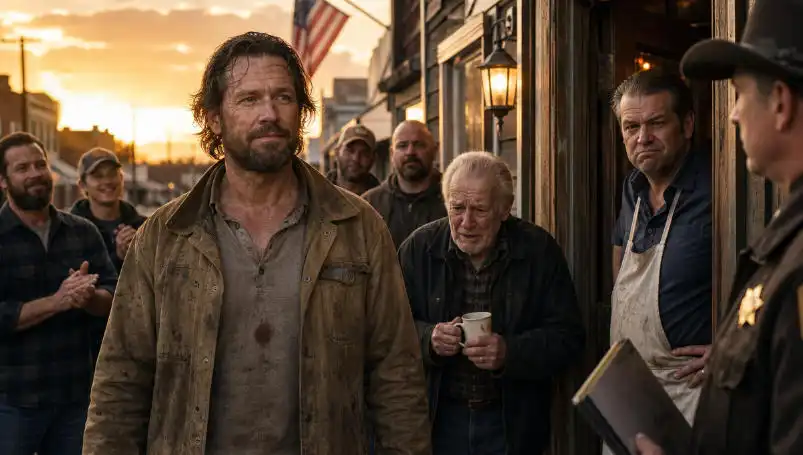
The Tavern Owner Set A Trap To Make Paul Drink Again… But He Had NO IDEA The Entire Town Was Watching 👀
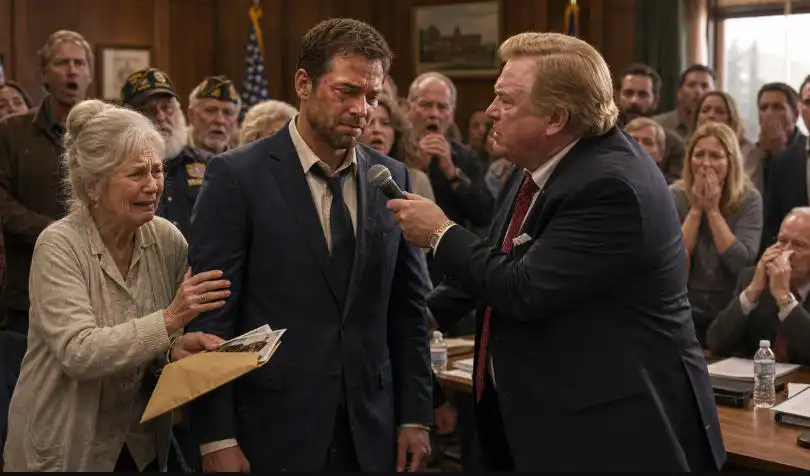
They Laughed When Mark Announced He Was Running for Office… Then One Sealed Envelope Made the Whole Room Go Silent 😳
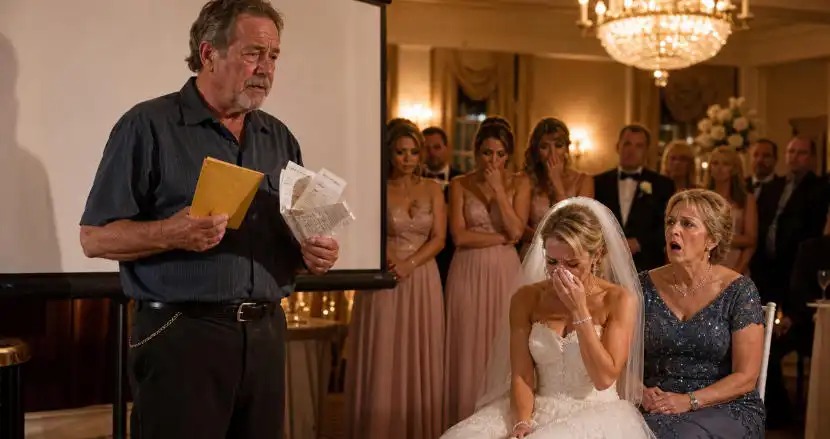
My Stepdaughter Thought Her Real Father Paid for Her Golf Club Wedding… Then I Showed the Guests the Letter He Sent Me