
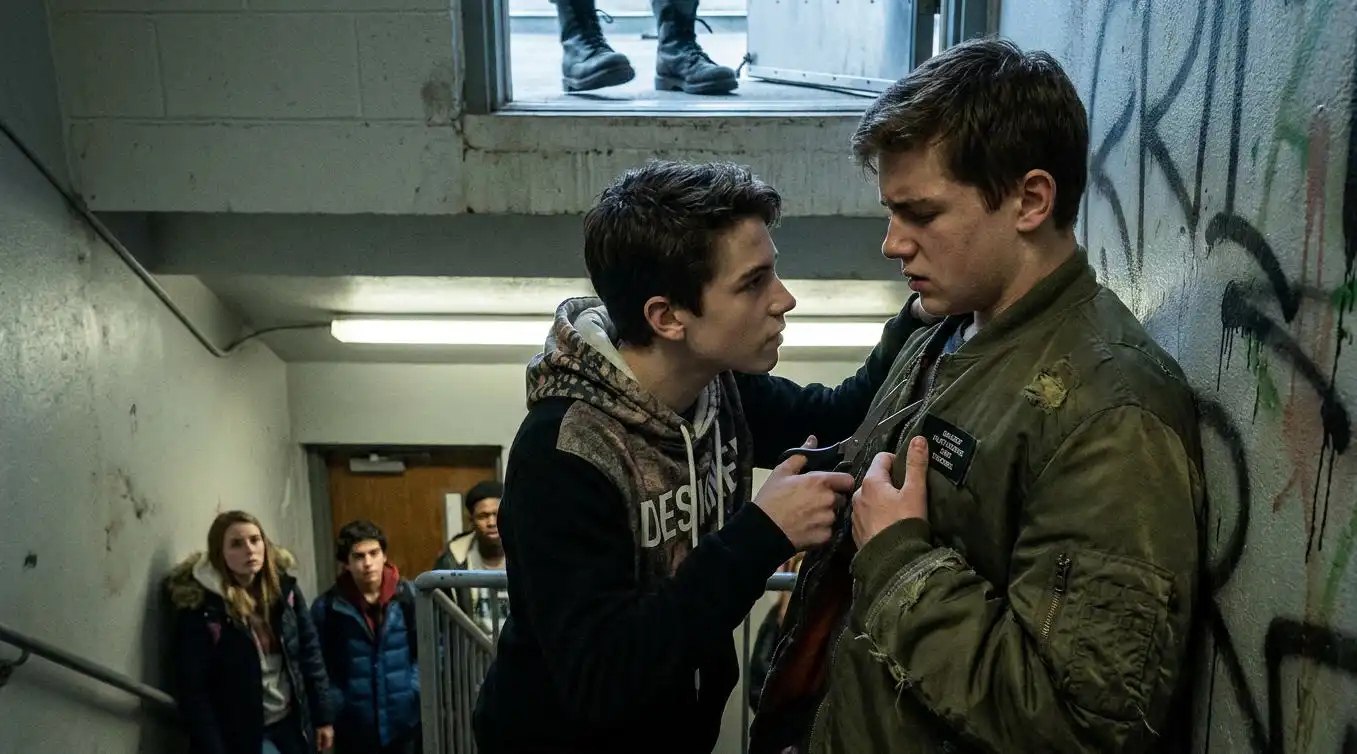
The first black boots hit the stairwell landing.
No one screamed at first.
The old west stairwell went so quiet I could hear Ayden Pryce breathing through his teeth.
A second pair of boots landed behind the first.
Then a third.
The rope above us swung once, slow and silent, like the building itself had stopped moving.
Ayden still had my hair twisted in his fist.
The scissors were still in his other hand.
And the strip he had cut from my flight jacket was lying on the dirty stair like it was nothing.
Like it wasn’t the only thing my brother had ever given me before he disappeared into a job nobody in town was allowed to ask about.
Ayden looked up.
His friends looked up.
I didn’t.
I already knew what was coming.
But I had been trained not to look relieved too soon.
That was one of my brother’s rules.
Never celebrate before the room is safe.
Never speak when silence is working.
And never let a bully choose the witnesses.
My name is Benjamin Hale.
At school, most people knew me as “that aviation-club kid.”
I built model planes in a storage room behind the science lab. I fixed broken wings with glue. I measured lift with cardboard ramps. I talked more to tiny engines than I talked to people.
Teachers called me “quiet.”
Students called me “weird.”
Ayden called me “the charity case.”
He was wrong about almost everything.
But he was right about one thing.
I was quiet.
Words never came easy for me. Not when people crowded me. Not when someone laughed in my face. Not when a teacher asked me to explain why my hands shook.
My brother Caleb used to say, “You don’t have to be loud to be dangerous, Benny. You just have to be exact.”
Caleb was loud enough for both of us when we were little.
Then he left for the military.
Then he stopped coming home in uniform.
Then he stopped coming home at all, except in black SUVs at weird hours, with men and women who never gave last names and always watched windows before they sat down.
My mom told me not to ask.
My brother told me less.
All he gave me was the jacket.
A worn brown flight jacket with a faded patch inside the lining.
“Looks old,” I said when he handed it to me.
“It is,” Caleb said.
“Is it yours?”
“For now, it’s yours.”
Then he pointed to a tiny black tag stitched inside the inner seam.
“If something ever goes bad and you can’t talk, squeeze that hard for three seconds.”
I laughed because I thought he was joking.
He didn’t laugh back.
“Only if you can’t get out,” he said. “Only if there’s a real threat.”
For two years, I never touched it.
Not when Ayden dumped milk into my backpack.
Not when he taped a sign to my locker that said FUTURE BASEMENT PILOT.
Not when his friends surrounded my model plane at lunch and snapped the propeller off while one of them recorded it.
I told myself those weren’t real threats.
They were humiliations.
There’s a difference.
That morning, I thought I could survive another one.
Ayden had been angry since first period because Mr. Collins, our physics teacher, picked my aviation project for the county showcase instead of his.
Ayden’s “project” was a glossy drone kit his father’s office had donated to the school.
Mine was a handmade glider with balsa wood wings and a small wind-data chart I had spent six months building.
Mr. Collins said mine showed actual work.
Ayden smiled like he didn’t care.
Then he leaned toward me and whispered, “You embarrassed me in front of a teacher.”
I looked down at my notebook.
That made him smile wider.
“That means I get to embarrass you in front of everyone.”
By lunch, people were already following him.
That was how Ayden worked.
He never bullied alone.
He needed an audience the way fire needs air.
He caught me near the west building, where the old stairwell smelled like dust, old paint, and wet concrete. The west building was used for storage and overflow classes now. Half the cameras were dead. Everybody knew it.
That was why Ayden chose it.
That was his mistake.
He thought no camera meant no proof.
He forgot people carry cameras in their pockets.
He forgot old buildings echo.
And he never imagined the quiet kid knew how to document a threat better than he knew how to beg.
“Going somewhere, airplane boy?” Ayden asked.
I kept walking.
He stepped in front of me.
His friends spread out behind him.
There were five of them.
Dylan, the one with the lighter.
Marcus, the one who always laughed first.
Two juniors I barely knew.
And a girl named Tessa who held up her phone like this was content.
Ayden wore a navy blazer even though students didn’t have to dress up.
His father had a campaign event after school.
Ayden liked reminding people.
“My dad is speaking to the board tonight,” he said. “You know what that means?”
I said nothing.
“It means nobody in this building touches me.”
He pushed me backward.
My shoulder hit the stair rail.
People at the doorway stopped.
A sophomore girl whispered, “Ayden, don’t.”
He turned on her fast.
“What? You want your dad’s permit application lost again?”
She went pale.
That was Ayden’s real power.
Not fists.
Not money.
Names.
He knew whose parents needed licenses. Whose mom worked for the city. Whose uncle had parking tickets. Whose family restaurant needed inspection approval.
He carried his father’s office around like a weapon.
Then he used it on kids.
“Look at him,” Ayden said, pointing at me like I was something on a sidewalk. “This is what happens when teachers reward pity.”
His friends laughed.
I felt my throat lock.
I hated that part the most.
Not the shove.
Not the laughing.
The way my own body trapped my words before they could come out.
Ayden stepped closer.
“Tell them you’re sorry for stealing my showcase spot.”
I shook my head once.
His smile vanished.
He grabbed my hair and slammed me into the wall.
My vision flashed white.
Someone gasped.
Someone else laughed because they thought they were supposed to.
“Say it,” Ayden whispered.
I swallowed.
My hand slid into my jacket pocket.
Not yet, I told myself.
Not yet.
He slammed me again.
This time the back of my head hit the old painted brick.
Dylan snapped the lighter open.
Click.
Click.
Click.
The sound was tiny.
It still filled the stairwell.
“Let’s make him talk,” Dylan said.
He brought the flame near my collar.
Heat touched my neck.
I squeezed the black tag.
Once.
Twice.
Three seconds.
Then I let go.
I didn’t know what would happen.
I didn’t expect helicopters.
I didn’t expect ropes.
Honestly, part of me expected nothing.
Maybe the tag was old.
Maybe Caleb had been trying to make me feel safe.
Maybe nobody heard it.
Ayden smelled the fear on me and leaned in.
“There it is,” he said. “Now you understand.”
Then he pulled scissors from his blazer pocket.
Small silver scissors.
The kind used for ribbon cuttings.
He pressed them against my jacket.
“This thing matters to you, doesn’t it?”
For the first time, I looked directly at him.
That was another mistake.
He saw it.
He saw the thing he could hurt.
His face lit up.
“Oh,” he said softly. “It does.”
Snip.
The first cut opened the sleeve seam.
Snip.
The second cut took off the corner of the inner lining.
A piece of brown leather and cloth slid down the stairs.
My stomach dropped.
Tessa’s phone was still recording.
The sophomore girl near the doorway had tears in her eyes.
Nobody moved.
That’s what people don’t understand about public humiliation.
It doesn’t always make the crowd brave.
Sometimes it freezes them.
Everybody waits for someone else to be the first decent person.
Ayden lifted the scissors again.
“You’re going to learn something today, Benjamin,” he said. “People like you don’t win. You get tolerated.”
He grabbed my hair harder.
I felt my knees bend.
He pulled my head toward the wall.
That was when the roof door clicked.
Ayden paused.
His friends stopped laughing.
The fluorescent light buzzed overhead.
The door opened.
A rope dropped.
Then the black boots came down.
The first man landed on the upper stair landing like he weighed nothing.
Black uniform.
Black gloves.
Black mask.
No badge I recognized.
No school security logo.
No local police patch.
Just a small gray emblem on his shoulder that looked like a bird with its wings folded.
Then another came down.
And another.
Dylan dropped the lighter.
It clattered down two steps.
Ayden tried to recover.
He always tried to recover when an audience was watching.
“What is this?” he shouted. “You can’t be in here! My father—”
The first masked man moved so fast the sentence died.
He grabbed Ayden’s wrist.
The scissors hit the floor.
Ayden yelped.
The man turned Ayden’s hand away from my face and forced him down to one knee with a motion so clean it looked practiced a thousand times.
Not wild.
Not angry.
Controlled.
Final.
“Release the minor,” the man said.
His voice was low.
Ayden stared at him.
“I said release him.”
Ayden’s fingers let go of my hair.
I stumbled backward.
A second black-clad operator caught me before I fell.
“Benjamin Hale?” she asked.
I nodded.
“Can you stand?”
I nodded again.
She looked at my jacket, then my head, then the red mark near my collar.
Her jaw tightened.
“Medical on standby,” she said into her radio.
Ayden tried to yank his arm free.
The first man twisted him just enough to stop him.
Ayden screamed louder than the movement deserved.
His friends backed into the wall.
“Don’t touch me!” Ayden shouted. “Do you know who my dad is?”
The masked man leaned close.
“No,” he said. “But he’s about to know who we are.”
Then every door in the west building opened at once.
Not magically.
Not loudly.
Just coordinated.
Black-clad men and women moved through the halls with radios, securing exits, moving students back, ordering teachers to shelter in classrooms.
Principal Warren came running up from the lower floor, red-faced and breathless.
“What is happening?” she cried. “Who authorized—”
A woman in black turned and held up a slim folder.
Principal Warren stopped walking.
Her mouth opened.
No sound came out.
That was when I knew this wasn’t just Caleb’s emergency tag.
This was bigger.
The woman said, “This building is now under federal protective control pending an active assault and ignition threat involving a protected dependent.”
Protected dependent.
I had never heard those words applied to me.
Ayden heard them too.
His eyes flicked to me.
For the first time since I had known him, he looked unsure.
Then the man holding Ayden removed his mask.
My chest tightened.
Caleb.
Older.
Harder.
A thin scar near his cheek that had not been there the last time I saw him.
But still Caleb.
My brother.
The boy who used to build paper planes with me at the kitchen table.
The man who now had the whole stairwell obeying his breathing.
He didn’t smile.
Not yet.
He looked at my hair.
My collar.
The torn jacket.
The strip on the stairs.
Then he looked at Ayden.
Very slowly, Caleb picked up the cut piece of jacket lining.
He held it between two gloved fingers.
“You cut this?” he asked.
Ayden swallowed.
“My dad is Councilman Pryce.”
Caleb blinked once.
“That wasn’t the question.”
Ayden’s voice cracked. “He attacked me first.”
Tessa lowered her phone.
The sophomore girl at the door suddenly said, “No, he didn’t.”
Everyone turned.
She looked terrified.
But she kept going.
“Benjamin didn’t do anything. Ayden dragged him in here.”
Dylan muttered, “Shut up, Emma.”
Caleb’s eyes moved to Dylan.
Dylan shut up.
Then phones started coming out.
Not one.
Not two.
Six.
Ten.
Students had recorded pieces from the doorway. From the hall. From the lower landing.
Ayden’s kingdom had always been built on public fear.
Now public memory turned on him.
Caleb nodded once to the woman in black.
She collected phones without taking them away, simply instructing students to send original files to an evidence portal she displayed on a tablet.
No shouting.
No chaos.
Just procedure.
That scared Ayden more than anger would have.
Because procedure meant this wasn’t going away.
Principal Warren finally found her voice.
“Benjamin,” she said, too softly, too late. “Why didn’t you come to me?”
I looked at her.
I wanted to answer.
I wanted to say I had.
Three times.
Once after the milk in my backpack.
Once after the broken glider.
Once after Ayden cornered me outside the gym and said my mother’s job at the county records office could become “complicated.”
But the words didn’t come.
So I reached into my pocket and handed Caleb a folded envelope.
He took it.
His eyes flicked over the contents.
Copies of emails.
Screenshots.
Photos.
A log of dates.
I had written them down because speaking was hard.
Writing wasn’t.
Caleb read silently.
Then he passed the envelope to the woman.
She read it and looked at Principal Warren.
“You received notice of escalating threats involving fire, physical assault, and coercion tied to a public official’s family?”
Principal Warren’s face drained.
“I… I believed it was a student conflict.”
Caleb’s voice went colder.
“A lighter near a child’s hair is not a conflict.”
No one argued.
Downstairs, sirens approached.
Not school sirens.
Real ones.
Ayden heard them and started struggling again.
“My father will ruin you!” he shouted at Caleb. “He’ll ruin this whole school! He’ll have your job!”
Caleb crouched until his face was level with Ayden’s.
“You still think this is about school.”
Then Caleb stood.
“Call his father.”
Principal Warren fumbled with her phone.
“No,” the woman in black said. “We already did.”
Ayden went still.
The operator turned her tablet around.
On the screen was Victor Pryce.
Councilman Victor Pryce had the kind of face that belonged on yard signs and church fundraiser banners. Gray hair. White teeth. American flag pin.
But on the tablet, he looked like a man who had opened the wrong door.
“Where is my son?” he demanded.
Caleb stepped into frame.
“Your son is being detained pending investigation for assault, attempted ignition assault, unlawful restraint, witness intimidation, and destruction of protected property.”
Victor Pryce’s face hardened.
“Do you have any idea who you’re speaking to?”
Caleb said nothing.
Another voice entered the call.
Not on camera at first.
Older.
Calm.
Official.
“Councilman Pryce, this is the Office of the President’s liaison for domestic protective operations.”
The stairwell seemed to shrink.
Victor Pryce stopped breathing for half a second.
The voice continued.
“You are instructed not to interfere, threaten witnesses, contact school officials, or use municipal resources related to this incident. Any attempt to obstruct will be referred for federal review.”
Victor Pryce’s mouth opened.
Closed.
Opened again.
“I’m on my way.”
“Good,” the voice said. “You should be.”
The call ended.
Ayden’s face had gone gray.
For years, he had lived behind his father’s name.
Now the name had been answered by something larger.
His friends were separated and escorted downstairs.
Dylan kept saying, “I didn’t burn him.”
Nobody cared what he meant to do.
The lighter was bagged.
The scissors were bagged.
The cut jacket piece was bagged.
The footage was uploaded.
The hallway filled with students who had never seen Ayden quiet.
I sat on the lower step while a medic checked my head.
Caleb crouched in front of me.
Only then did his voice change.
“Benny.”
My eyes burned.
I hated that.
Not the pain.
The tenderness.
I could survive cruelty better than tenderness sometimes.
He touched the shoulder of the jacket, careful not to disturb the torn seam.
“I’m sorry,” he said.
That broke me more than the wall had.
I shook my head.
He understood.
He always had.
“You did it right,” he said. “You stayed clean. You kept proof. You got out alive.”
I whispered, “He cut it.”
Caleb looked at the jacket.
Then back at me.
“It’s a jacket,” he said.
I looked down.
He added, “You’re my brother.”
That was when I cried.
Not loud.
Not dramatic.
Just enough that Emma, the sophomore girl, turned away to give me privacy.
Thirty-four minutes later, Victor Pryce arrived.
Not in a private plane yet.
That came later.
He arrived first in a black town car, sweating through a campaign shirt, followed by two aides who looked like they wanted to evaporate.
By then local police were outside, federal vehicles blocked the lot, and half the student body was watching from behind the glass.
Victor tried to enter like a man still in charge.
Caleb did not move aside.
“My son,” Victor said.
“Is being processed,” Caleb replied.
“I need to speak with him.”
“You need to speak with counsel.”
Victor leaned closer.
“You people have made a mistake.”
Caleb held up the cut jacket lining.
“No. Your son did.”
Then the woman in black handed Victor the evidence summary.
His eyes moved down the page.
Fire threat.
Scissors.
Physical assault.
Recorded coercion.
Prior complaints.
Administrative inaction.
Potential public corruption.
Witness intimidation.
His face changed line by line.
The politician disappeared.
The father remained.
Then even the father started calculating.
Ayden was brought to the lower landing in restraints.
Not rough.
Not beaten.
Just no longer free to perform.
“Dad!” he shouted. “Tell them!”
Victor looked at him.
For one second, I thought he might do what fathers are supposed to do.
Not rescue him.
Not excuse him.
Just ask, “What did you do?”
Instead, he turned toward Caleb.
“My son is a minor. This can be handled privately.”
Caleb’s expression did not change.
“It became public when he wanted an audience.”
That sentence spread through the school faster than any video.
By evening, it was everywhere.
Not because Caleb leaked it.
Students did.
Parents did.
Teachers did.
The same public pressure Ayden used as a weapon became the reason his father couldn’t bury it.
That night, Victor Pryce’s campaign event was canceled.
By midnight, a statement came from the governor’s ethics office.
By morning, the city attorney announced a review of municipal pressure complaints tied to Councilman Pryce’s office.
By the next afternoon, Victor Pryce’s aides had resigned.
But the part everyone remembers happened at 6:17 p.m. the day after the stairwell.
Victor Pryce came back to the school.
This time he did arrive by private plane first, then car, because he had been at a donor retreat two states away when the second call came.
The one that told him this was not just a school discipline matter.
It was federal.
It was recorded.
And it had witnesses.
Parents were gathered outside the west building.
Students stood behind them.
News vans waited by the curb.
Principal Warren stood near the entrance, looking smaller than I had ever seen her.
I was there because Caleb asked if I wanted to witness the apology.
I said no at first.
Then I thought of Emma.
I thought of every kid who had looked away because Ayden’s father made the town feel small.
So I went.
Victor walked up the steps.
His face looked ten years older.
Ayden was not with him.
His attorney was.
Victor stopped in front of me.
Cameras lifted.
Caleb stood behind my right shoulder.
Not touching me.
Just there.
Victor’s mouth tightened.
For a second, I thought pride would win.
Then his phone buzzed.
He looked at the screen.
Whatever he saw finished breaking him.
He lowered himself onto one knee.
The crowd gasped.
“Benjamin Hale,” he said, voice shaking, “my son harmed you. I used my position to create a town where people were afraid to report him. I am responsible for that.”
Then he slapped his own cheek.
Once.
Sharp.
His attorney whispered, “Victor—”
He did it again.
The second sound echoed off the brick.
“I am sorry,” Victor said.
I stared at him.
The old me would have nodded just to make it stop.
The old me would have accepted the apology because everyone was watching and pressure makes quiet people agreeable.
But Caleb’s words were still in my head.
You don’t have to be loud.
You just have to be exact.
So I said the longest sentence I had said at school all year.
“Your apology belongs to every kid you taught him to scare.”
The crowd went silent.
Victor’s eyes filled with something that might have been shame.
Or fear.
Maybe both.
He turned toward the parents.
Then the students.
“I’m sorry,” he said again.
No one clapped.
That mattered.
It wasn’t a performance.
It was a reckoning.
Two weeks later, Victor Pryce resigned.
A month later, state investigators confirmed his office had pressured permit reviewers, school donors, and administrative staff to protect his son’s reputation.
Three administrators were removed, including Principal Warren.
Mr. Collins stayed.
Emma received a community courage award, though she told me it felt weird to be rewarded for finally saying what everyone saw.
Dylan’s family tried to claim it was “a prank gone wrong.”
The lighter evidence ended that conversation.
Ayden’s case moved through juvenile court first.
Then prosecutors filed enhanced charges because of the weapon, the fire threat, and the pattern of intimidation.
He was sent to a secure juvenile facility pending long-term placement.
His father’s name did not open the door.
It closed behind him.
As for me, the school offered to replace my jacket.
I said no.
Caleb took the torn one to someone he trusted.
Three weeks later, he brought it back.
The cuts were still visible, but stitched with dark thread that looked like flight paths.
Inside the lining, where Ayden’s scissors had sliced through, Caleb had added a new patch.
Small.
Gray.
A folded-wing bird.
I ran my fingers over it.
“What does it mean?” I asked.
Caleb smiled for the first time.
“It means you’re under the wing.”
A black helicopter waited on the practice field that evening.
No markings.
No school logo.
No dramatic music.
Just rotors turning slow in the sunset while half the campus watched through windows.
I climbed in beside my brother.
For once, nobody laughed.
Nobody whispered “freak.”
Nobody called me charity.
They just watched the quiet aviation kid lift off in a machine Ayden Pryce would have begged to touch.
As the ground dropped away, Caleb handed me a small wooden glider.
The kind we used to build as kids.
“You still making these?” he asked.
I nodded.
“Good,” he said. “The world needs people who know how to build things instead of break them.”
I looked down at the west building.
At the stairwell window.
At the place where I had been humiliated in front of everyone and still somehow left with my dignity.
The truth is, I didn’t win because my brother had power.
I won because Ayden believed power meant no one would ever say no.
He believed silence meant weakness.
He believed an audience belonged to him.
He was wrong every time.
Sometimes justice doesn’t arrive loud.
Sometimes it waits.
Records.
Witnesses.
Proof.
Then it lands in black boots on an old stairwell and reminds everyone that cruelty is not confidence.
It’s just cowardice with spectators.
Pick a side and share this: Benjamin was right to stay silent until proof could bury Ayden, or he should have fought back the moment Ayden touched him.
Disclaimer: Mention of any brand or trademark is for identification only and does not imply partnership or endorsement
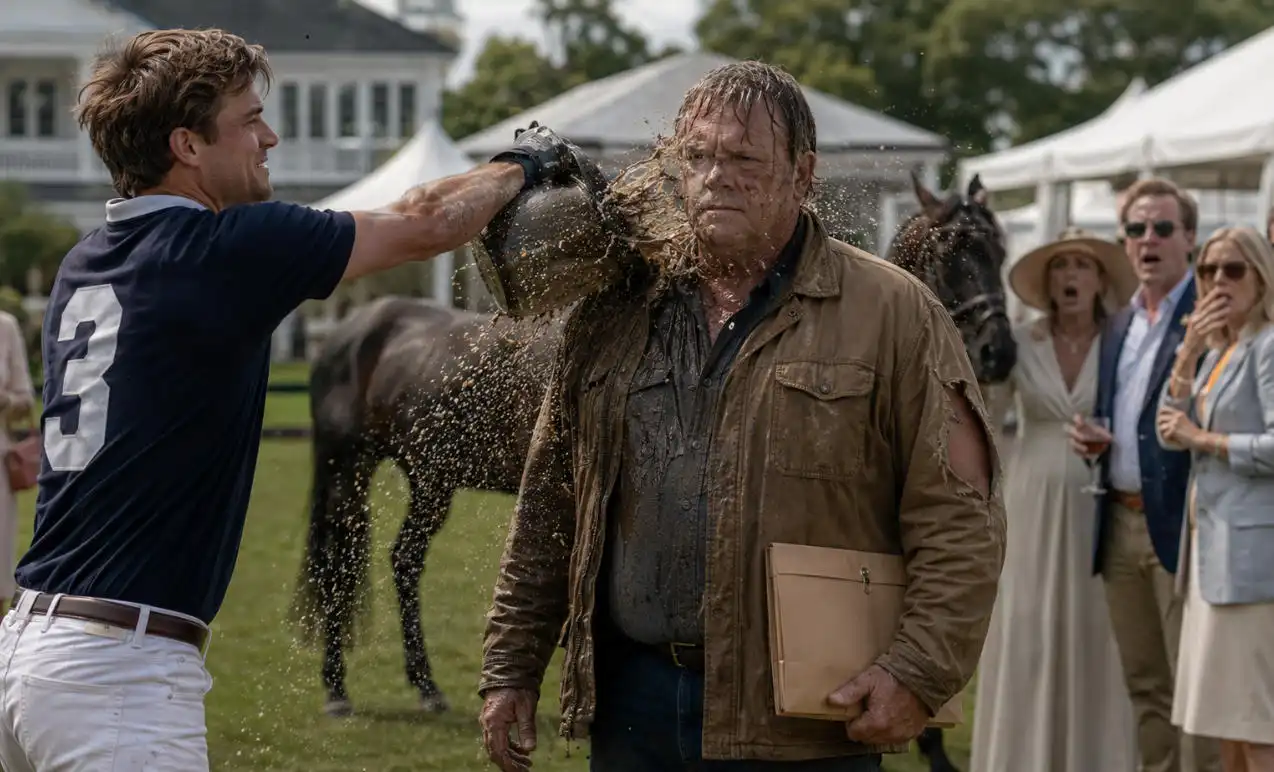
A Rich Polo Player Tore A Hardware Store Owner’s Jacket In Front Of Everyone… Minutes Later, He Was Begging On The Grass
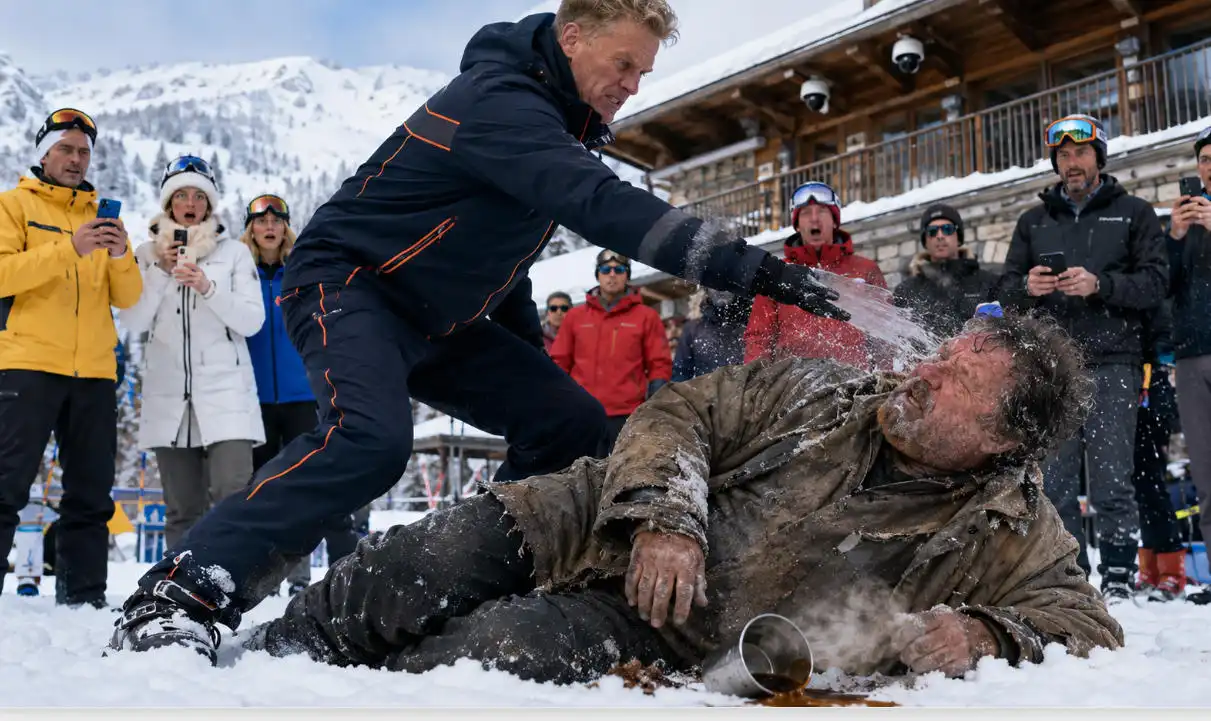
A Round-Bellied Carpenter Was Humiliated by an Elite Ski Coach in Front of Rich Guests… But Sven Had NO IDEA Who Bob Really Was 😳
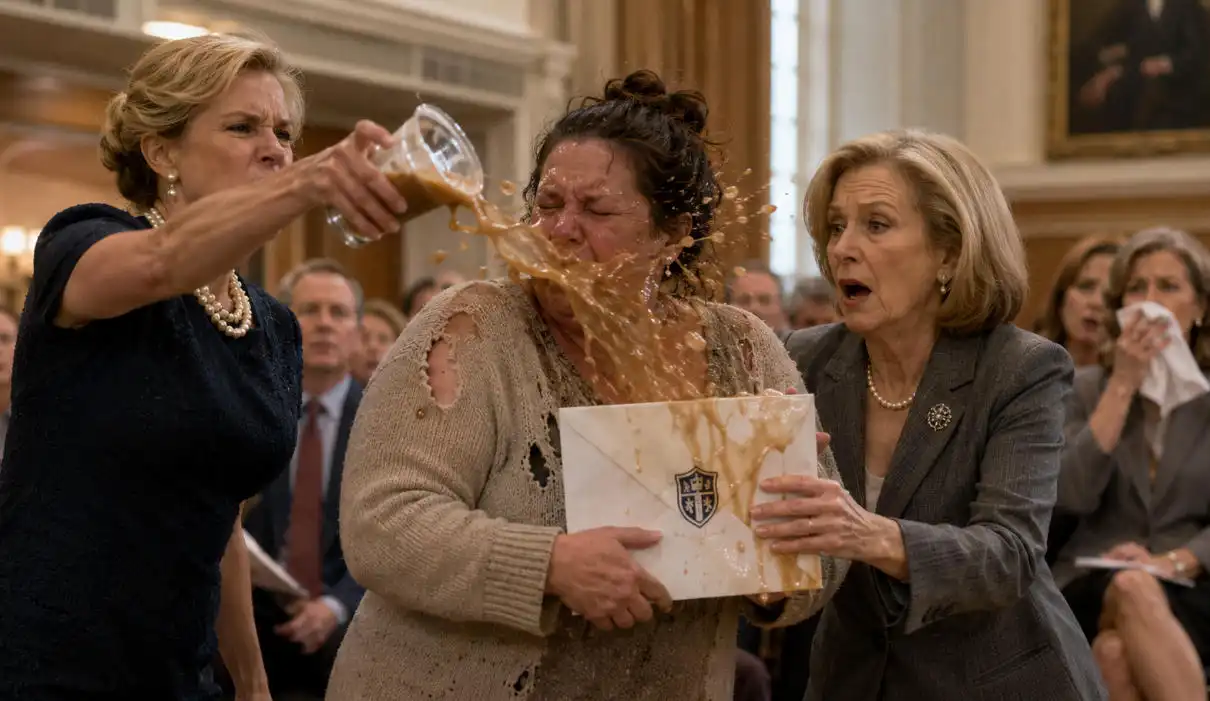
Parents Covered Their Noses When the “Cheap Mom” Walked In… Minutes Later, the PTA Queen Was on Her Knees Begging 😮