
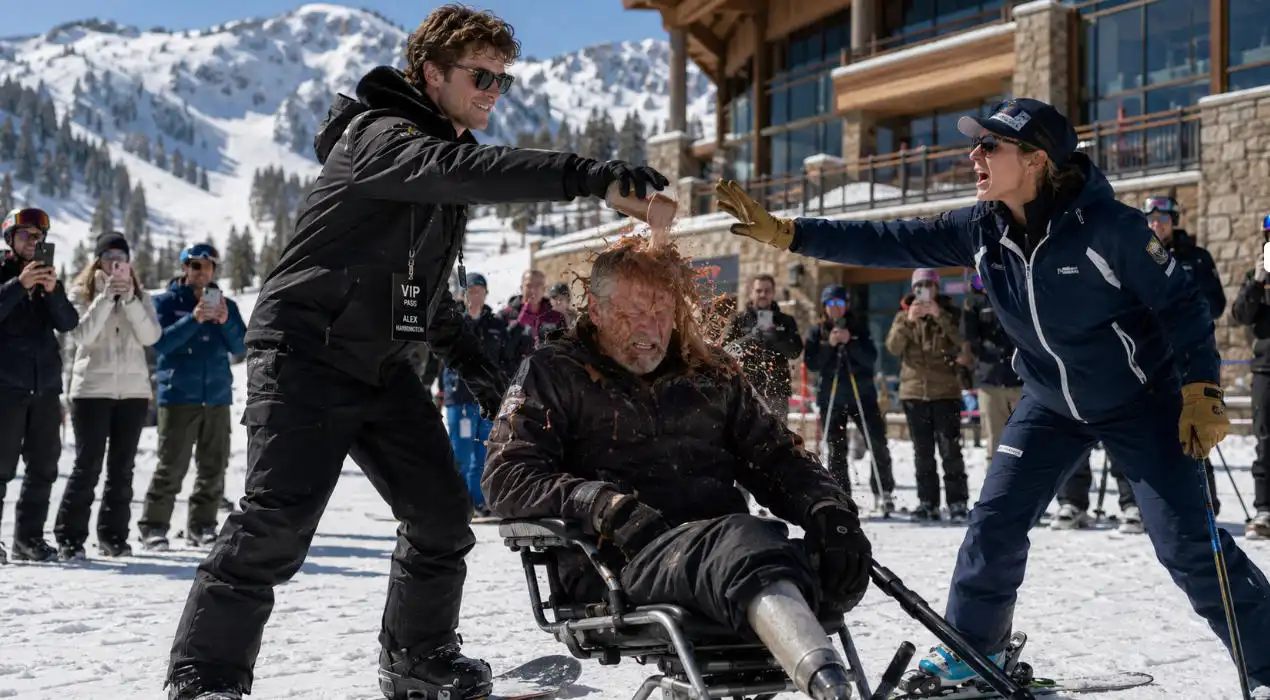
The man in black ski gear didn’t shout at first.
That somehow made it worse.
The whole mountain had gone silent except for the scrape of his skis cutting into the hard-packed snow.
Lance still had the empty cocoa cup in his hand.
I was still on my side, half buried in powder, with my adaptive sled twisted behind me like a broken lawn chair.
The man stopped so close to Lance that the front of his skis nearly touched Lance’s snowboard.
Then he lifted his goggles.
His face was older than Lance’s by twenty years, maybe more.
Sun-browned.
Hard around the eyes.
The kind of face that had learned not to waste anger on words.
He looked down at me first.
Not at the cocoa.
Not at the sled.
Not at the crowd.
At me.
“David,” he said quietly. “Can you move your shoulder?”
That was the first moment Lance’s smile cracked.
Because Lance didn’t know my name.
My coach did.
A few of the veterans in the adaptive group did.
But this man had come flying down from the upper ridge like a bullet and said my name like he’d been waiting for it for years.
I flexed my fingers inside my glove.
Pain shot across my shoulder, but it moved.
“I’m okay,” I said.
The man’s jaw tightened.
“No, you’re not.”
Lance gave a little laugh, the nervous kind people use when they realize a joke isn’t landing anymore.
“Who are you supposed to be?” he snapped. “Mountain police?”
The man turned to him slowly.
“No.”
Then he pointed one gloved finger toward the lodge, the lifts, the restaurant deck, the ski school, the patrol station, the whole shining resort wrapped in blue sky and white snow.
“I’m the man whose name is on every deed under your feet.”
The crowd shifted like wind through pine trees.
Someone whispered, “That’s Rafael Ortiz.”
Another voice said, “The owner?”
Lance blinked.
For the first time all morning, he looked small.
But he still didn’t look sorry.
People like Lance don’t become sorry when they’re caught.
They become offended.
He threw the empty cocoa cup into the snow.
“So what?” he said. “Your little veteran program blocked half the run. I was just trying to ride.”
My coach, Emma, stepped forward.
Her face was red from cold and rage.
“You crossed three safety ropes,” she said. “I warned you twice.”
Lance rolled his eyes.
“Yeah, and I ignored you because I actually know how to snowboard.”
A few people gasped.
Emma didn’t flinch.
She tapped the small camera mounted to the side of her helmet.
“That’s recorded.”
Then one of the teenagers near the lift line raised his phone.
“So is this.”
Another tourist lifted hers.
“And this.”
The whole mountain seemed to wake up at once.
Phones came up.
Whispers turned sharp.
Parents pulled their kids closer.
Ski patrol began moving down from the side trail.
Lance looked around and realized the one thing he couldn’t buy had already turned against him.
Witnesses.
I tried to sit up.
Rafael crouched beside me before anyone else could move.
“Easy,” he said.
That voice dragged me backward fifteen years.
Dust instead of snow.
Heat instead of cold.
A mountain road in Afghanistan, cracked open by an explosion.
My ears ringing.
Smoke so thick it turned noon into evening.
A young sergeant trapped under twisted metal, blood on his sleeve, yelling for everyone else to get out first.
His name had been Rafael Ortiz.
Back then he was twenty-six and stubborn enough to argue while bleeding.
I had been Staff Sergeant David Miller.
I had two good legs then.
I also had a rule:
Nobody gets left behind.
So I carried Rafael.
Not far, maybe eighty yards.
But in war, eighty yards can be the rest of your life.
I didn’t remember falling.
I remembered waking up in Germany and learning part of me had stayed behind on that road.
Rafael remembered everything.
He remembered my hands under his vest.
He remembered me telling him to breathe.
He remembered me lying about being fine.
And now here we were, years later, on his mountain, with cocoa steaming on my jacket and a rich kid laughing at my sled.
Life has a cruel sense of timing.
Rafael looked at my damaged adaptive sled.
Then at the broken safety rope behind Lance.
Then at the brown stain spreading across my parka.
“Patrol,” he called.
Two ski patrollers arrived in red jackets.
One knelt beside me.
The other stood between Lance and the crowd.
Lance threw his hands up.
“Oh, come on. This is insane. He fell. Disabled people fall. That’s why he’s in the training lane.”
The words hung there.
Ugly.
Public.
Impossible to take back.
An older man in the lift line said, “Shame on you.”
A woman with two children said, “My husband served. You should be embarrassed.”
Lance snapped, “Mind your business.”
That was when Rafael moved.
Not like a man losing control.
Like a man ending a situation.
He stepped forward, hooked the edge of his ski boot against Lance’s board, and shoved him back with one hard motion.
Lance lost his balance and went sprawling into the powder bank beside the lane.
Snow exploded around his designer jacket.
The crowd gasped.
Before Lance could scramble up, Rafael stood over him and delivered one sharp, open-handed slap across the side of his helmet.
Not brutal.
Not bloody.
But loud enough to echo off the lodge windows.
“Never,” Rafael said, “speak about a wounded man like that on my mountain again.”
Nobody laughed.
Nobody cheered at first.
It was too sudden.
Too clean.
Too final.
Then Lance’s friend, the one who had handed him the cocoa, muttered, “Dude…”
Lance pushed himself up, face burning.
“You hit me,” he said, stunned.
Rafael looked at the ski patrol officer.
“Document it.”
The officer nodded.
Rafael looked back at Lance.
“And document what happened before it.”
Lance’s eyes darted.
That was when he realized this wasn’t going to be handled with a quick apology and a refund.
This was going to become paperwork.
Paperwork terrifies entitled people because paperwork has memory.
It doesn’t care who your father is.
It doesn’t care what car you drove up in.
It doesn’t get intimidated by a jacket that costs more than someone’s rent.
Paperwork simply waits for signatures.
And Lance had signed plenty.
The patroller asked for his pass.
Lance refused.
“You can’t take my pass.”
Rafael held out his hand.
“I can.”
“My father knows the board.”
“I am the board.”
“My family sponsors events here.”
“Not anymore.”
The crowd murmured again.
Lance’s face changed.
That one landed.
Because for Lance, being cruel to a stranger was nothing.
Losing access was everything.
He yanked the black-and-blue elite pass from his jacket and slapped it into Rafael’s palm.
Rafael didn’t even look at it.
He handed it to the patroller.
“Scan it.”
The patroller pulled out a handheld device.
One beep.
Then another.
His expression tightened.
“Mr. Ortiz,” he said, “he was flagged at Chair Seven thirty minutes ago for reckless speed near the ski school.”
Emma nodded.
“I reported him.”
The patroller continued reading.
“Also warned yesterday for cutting through a closed avalanche-control area.”
Lance shouted, “That was a shortcut!”
Rafael said, “That was a misdemeanor if patrol wanted to push it.”
Lance went pale.
The other veterans from our adaptive group had moved closer now.
One was a Marine named Colby who used a sit-ski after a spinal injury.
Another was Ruth, a Navy corpsman with a prosthetic below her left knee.
They didn’t say anything.
They just stood there.
That silence did something words couldn’t.
It made Lance look exactly like what he was:
A healthy man surrounded by people who had paid more for their country than he had paid for his lift ticket.
And he was still complaining.
Rafael crouched again beside me.
“David,” he said, “I need to ask you something in front of patrol.”
I knew that tone.
It wasn’t emotional anymore.
It was procedural.
“Did he intentionally make contact with your adaptive equipment?”
“Yes.”
“Did he cross into a marked adaptive training lane after being warned?”
“Yes.”
“Did he pour a hot beverage on you after you were down?”
“Yes.”
“Do you want this handled privately or formally?”
Lance jumped in.
“Privately. Obviously privately.”
Rafael didn’t look at him.
He waited for me.
My whole life, people had mistaken quiet for weakness.
In hospitals.
At airports.
At grocery stores when I took too long getting out of the truck.
Even at veterans’ events where strangers wanted to call me a hero until my body made them uncomfortable.
I had learned that anger burns energy faster than pain.
So I saved mine.
I looked at Lance.
Snow clung to his expensive goggles.
His mouth was open.
His eyes were begging now, but not because he cared.
Because the bill had arrived.
“Formally,” I said.
Emma’s shoulders dropped like she had been holding her breath for ten minutes.
Rafael nodded once.
“Good.”
The patrol officer began radioing.
“Base, we need sheriff’s liaison at Adaptive Lane Two. Possible assault, reckless endangerment, equipment damage, hot beverage incident, multiple witnesses.”
Lance’s friend backed away so fast his snowboard scraped sideways.
“Don’t involve me,” he whispered.
Lance turned on him.
“You gave me the cup!”
“You asked for it!”
Rafael looked at both of them.
“Stay where you are.”
That was when a woman in a white fur-trimmed ski jacket hurried from the lodge deck.
She looked expensive in a way that seemed planned by a committee.
Behind her came an older man in a gray parka, red-faced and furious.
“Lance!” the woman called. “What did you do?”
Lance’s expression shifted again.
Not guilt.
Calculation.
“Mom, this is being blown way out of proportion.”
The older man stopped when he saw Rafael.
His whole body stiffened.
“Mr. Ortiz.”
Rafael nodded.
“Mr. Whitmore.”
So that was the father.
The sponsor.
The family name behind Lance’s elite pass.
Whitmore Development had banners all over the resort that week.
WHITMORE WINTER CLASSIC.
WHITMORE YOUTH FREESTYLE CUP.
WHITMORE LUXURY CHALETS.
I had seen the signs while driving in and thought nothing of them.
Now the logo felt like a warning label.
Mr. Whitmore looked from Rafael to the patrol officer to me.
His eyes paused on the cocoa stain.
Then on my sled.
Then on the cameras.
A man who understood liability can see disaster the way a sailor sees weather.
“What happened?” he asked carefully.
Lance spoke first.
“He was blocking the run.”
Emma’s helmet camera was still blinking.
Ruth stepped forward.
“He was in a closed adaptive lane.”
Colby added, “Your son came in hot, ignored the coach, mocked him, shoved his sled, and dumped cocoa on him.”
Mrs. Whitmore covered her mouth.
Mr. Whitmore closed his eyes for half a second.
Then Lance made everything worse.
“He’s not even really skiing,” Lance said. “It’s a sled.”
That sentence did what the slap hadn’t.
It broke something open in the crowd.
A father near the rope shouted, “My kid’s in that program!”
An older veteran pointed at Lance and said, “You don’t belong on a mountain with decent people.”
A woman yelled, “Ban him!”
Then another voice.
“Lifetime ban!”
Then another.
“Take his pass!”
The sound spread.
Not like a mob.
Like a verdict.
Lance looked at Rafael.
“You can’t ban me because people are emotional.”
Rafael pulled a folded document from the inside pocket of his ski jacket.
It was laminated.
Of course it was.
Men like Rafael prepare.
“This is the conduct agreement attached to elite-access accounts,” he said.
Lance scoffed.
“I didn’t read that.”
“You signed it.”
“My assistant probably signed it.”
“Your digital signature is enough.”
Mr. Whitmore’s face hardened.
Rafael read from the document.
“Harassment, reckless operation of ski or snowboard equipment, intentional contact with adaptive equipment, entering closed instructional terrain, and behavior creating risk to guests or staff may result in immediate revocation of all resort privileges, cancellation of sponsorship agreements, financial liability for damaged equipment, removal from property, and referral to law enforcement.”
He folded it again.
Then he looked at Lance’s father.
“Your son managed all of them before lunch.”
Mr. Whitmore said nothing.
His silence was louder than Lance’s excuses.
The sheriff’s liaison arrived on a snowmobile ten minutes later.
By then, patrol had moved me onto a medical sled, not because I wanted the drama but because Emma insisted my shoulder needed checking.
I hated being carried in front of people.
I hated the old helpless feeling.
But Rafael skied beside me the whole way down.
Not in front.
Not behind.
Beside me.
At the base clinic, they checked my shoulder.
Bruised.
Not broken.
My pride had taken the heavier hit.
Through the clinic window, I could see Lance standing outside with patrol, his parents, and two resort security officers.
He talked with his hands.
Then he pointed toward the clinic.
Then Mr. Whitmore grabbed his arm and yanked it down.
That almost made me smile.
Almost.
Emma came in holding my ruined parka in a clear bag.
“Evidence,” she said.
I raised an eyebrow.
“You always this official?”
“With men like him? Yes.”
She sat beside the exam table.
“I’m sorry, David.”
I looked at her.
“For what?”
“For not stopping him sooner.”
“You warned him.”
“I should’ve stepped harder.”
“You stood between us.”
Her eyes watered, and she looked away fast.
People think disabled veterans only need ramps and programs.
Sometimes what we need is one person willing to stand there and say, “No, you don’t get to treat him like that.”
Emma had done that.
I wouldn’t forget it.
Rafael came in a few minutes later.
He had taken off his helmet.
His hair was more silver than I remembered.
That bothered me.
Not because he looked old.
Because it meant I did too.
He shut the door behind him.
For a few seconds, neither of us spoke.
Then he said, “You were supposed to call me when you arrived.”
I looked at my gloves.
“I didn’t want special treatment.”
His mouth tightened.
“David, I own a ski resort because I got to come home and build a life.”
I knew what was coming.
He said it anyway.
“I came home because you carried me.”
I stared at the floor.
“I didn’t carry you so you could embarrass rich kids for me.”
“No,” Rafael said. “You carried me because you believed people were worth saving before they deserved it.”
That one landed too deep.
I swallowed.
Outside, a cheer rose near the lift line.
Emma opened the blinds slightly.
On the big digital board above the ticket office, Lance’s name had appeared under a resort safety notice.
Not as a spectacle.
Not with insults.
Just facts.
GUEST REMOVED FOR VIOLATION OF CLOSED TERRAIN AND SAFETY CONDUCT POLICY.
Below that, a second message rotated in.
WHITMORE WINTER CLASSIC SUSPENDED PENDING REVIEW.
Emma whispered, “Oh my God.”
Rafael looked at me.
“That sponsorship is done.”
I shook my head.
“Rafael…”
“No,” he said. “The program lane exists because men and women like you deserve access without being treated like obstacles. If a sponsor’s son can attack a participant and still keep the family banner on my lodge, then the policy means nothing.”
That was the legal hammer.
Not revenge.
Rules.
Signed documents.
Video evidence.
Safety reports.
A resort owner willing to enforce the fine print against someone rich enough to think fine print was for other people.
By two o’clock, the story had already spread across the mountain.
Not because Rafael leaked anything.
Because dozens of guests had filmed it.
By three, Whitmore Development released a statement calling it “an unfortunate misunderstanding.”
By three-fifteen, Emma’s helmet footage reached the sheriff’s liaison.
By four, the resort issued its own statement:
No misunderstanding.
Marked adaptive lane.
Multiple warnings.
Intentional contact.
Guest removed.
Lifetime ban from all Ortiz Mountain properties.
Sponsorship terminated.
Equipment replacement billed.
Investigation referred to authorities.
No insults.
No drama.
Just a clean row of nails hammered into Lance’s public reputation.
That night, the ski forums found him.
Then the local news.
Then the national veteran pages.
I don’t celebrate online pile-ons.
I really don’t.
But I won’t lie and say I felt sorry when people who had watched the clip wrote:
“This is why adaptive programs need protection.”
“That veteran showed more class on the ground than Lance did standing up.”
“Money bought him a pass, not character.”
By morning, Lance’s snowboard sponsor dropped him.
His private club posted a notice that his membership was under review.
The regional freestyle association suspended his competition credential pending a conduct hearing.
His father’s company lost two charity partnerships tied to veterans’ housing.
That last part mattered most to me.
Because cruelty rarely stays in one lane.
A man who laughs at an amputee in public usually has other victims.
People just needed a camera to believe them.
Three days later, Rafael called me back to the resort.
I almost didn’t go.
My shoulder still hurt.
My jacket smelled faintly like cocoa even after cleaning.
And part of me didn’t want to become the sad veteran in everybody’s inspirational story.
But Emma texted me one sentence:
You left before the best run.
So I went.
The sky was the same impossible blue.
The snow looked clean enough to forgive the whole world.
Rafael met me at the adaptive center, not the main lodge.
No cameras.
No crowd.
No speeches.
Just him, Emma, Colby, Ruth, and a brand-new adaptive sit-ski waiting in the snow.
Top-tier model.
Custom suspension.
Carbon frame.
Fresh outriggers.
The kind of equipment I had stared at online and closed the tab because the price made my chest hurt.
I looked at Rafael.
“No.”
He smiled.
“Yes.”
“I can’t accept that.”
“You already did.”
“I did not.”
“You accepted it in 2011 when you dragged me out of a burning truck and told me to shut up because I was slowing you down.”
Colby laughed.
Ruth wiped her eyes.
I tried to glare at Rafael, but my face didn’t cooperate.
Emma stepped forward.
“It’s fitted to you. We adjusted it yesterday.”
I looked at the sled.
Then at the mountain.
Then at the lane where I had fallen.
I felt something twist in me.
Not fear exactly.
Not shame.
Memory.
A body remembers impact.
A body remembers laughter.
A body remembers being looked at like an inconvenience.
Rafael must have seen it.
He set one hand on my shoulder.
“The run is closed for you.”
I frowned.
“What?”
He pointed uphill.
The VVIP ridge trail.
The one with the wide turns and untouched corduroy snow.
Usually reserved for private guests, celebrities, and people whose names were printed on buildings.
Today, the sign at the gate read:
ADAPTIVE VETERANS PROGRAM — PRIVATE SESSION
My throat went tight.
“You didn’t have to do that.”
“I know.”
“That’s a lot of mountain for one guy.”
“It’s not for one guy.”
He nodded behind me.
The rest of the adaptive veterans were gearing up.
Some nervous.
Some excited.
Some pretending not to be either.
Emma clipped my outriggers into place.
“You ready, David?”
I looked up at the ridge.
For years, I had told myself I was done chasing speed.
Done trusting balance.
Done letting gravity have a vote.
But the truth was uglier.
I was tired of public spaces reminding me what I had lost.
That morning, Lance had tried to make the mountain say, “You don’t belong here.”
Rafael had answered with deeds, policy, cameras, bans, and one brand-new sled.
But the final answer had to come from me.
I pushed forward.
The sled slid smooth.
No wobble.
No scrape.
Just motion.
Emma skied backward a few feet in front of me.
“Easy turn right.”
I turned right.
The ski caught.
Clean.
“Left.”
I turned left.
Snow hissed under the blade.
My chest loosened.
At the top of the VVIP run, Rafael pulled beside me.
For a second, we were back on a mountain in another country.
Only this one didn’t smell like smoke.
This one smelled like pine and cold air and second chances.
He looked at me.
“You carried me down mine.”
I looked at the open trail below.
“Then I guess you can follow me down this one.”
He grinned.
“Yes, Staff Sergeant.”
Emma counted us in.
Three.
Two.
One.
I pushed.
The sled tipped into the slope.
Wind hit my face.
The lodge shrank behind me.
The crowd disappeared.
For the first time all week, nobody was watching me fall.
They were watching me fly.
Halfway down, I started laughing.
Not polite laughter.
Not brave-veteran laughter for other people’s comfort.
Real laughter.
The kind that hurts your ribs and clears old dust from places you forgot were closed.
Rafael came beside me, skis carving bright lines in the snow.
Emma whooped behind us.
Colby yelled something I couldn’t hear.
Ruth passed on my left and shouted, “Move it, Miller!”
At the bottom, I stopped in a spray of powder.
Not graceful.
Not perfect.
But upright.
The veterans came in around me one by one.
Rafael pulled up last.
He didn’t say anything.
He just held out his hand.
I took it.
Then he pulled me into a hug so hard my bruised shoulder complained.
I let him.
The resort later renamed that adaptive lane.
Not after me.
I refused that.
They named it The No One Left Behind Trail.
That felt right.
Lance never returned.
His lifetime ban held.
His family’s sponsorship never came back.
The official conduct review stripped his competition privileges for the season, and the video followed him everywhere rich excuses used to open doors.
I heard he tried to claim he was “set up.”
But it’s hard to call it a setup when every rope, every warning, every signature, and every camera tells the same story.
As for me, I kept skiing.
Not every day.
Not perfectly.
But enough.
Enough to remember that dignity is not something a cruel stranger can pour cocoa on and ruin.
Enough to remember that silence is not surrender.
Enough to remember that sometimes the strongest man on the mountain is the one lying in the snow, refusing to become as ugly as the person standing over him.
So here’s the line:
Lance didn’t lose everything because David was a veteran.
He lost it because he thought decency was optional when nobody powerful was watching.
He was wrong.
Someone powerful was watching.
So was everyone else.
And this time, the mountain answered. ❄️
Pick a side: lifetime ban was deserved, or Lance should’ve gotten only a warning. Share this if you believe public cruelty should have public consequences.
Disclaimer: Mention of any brand or trademark is for identification only and does not imply partnership or endorsement
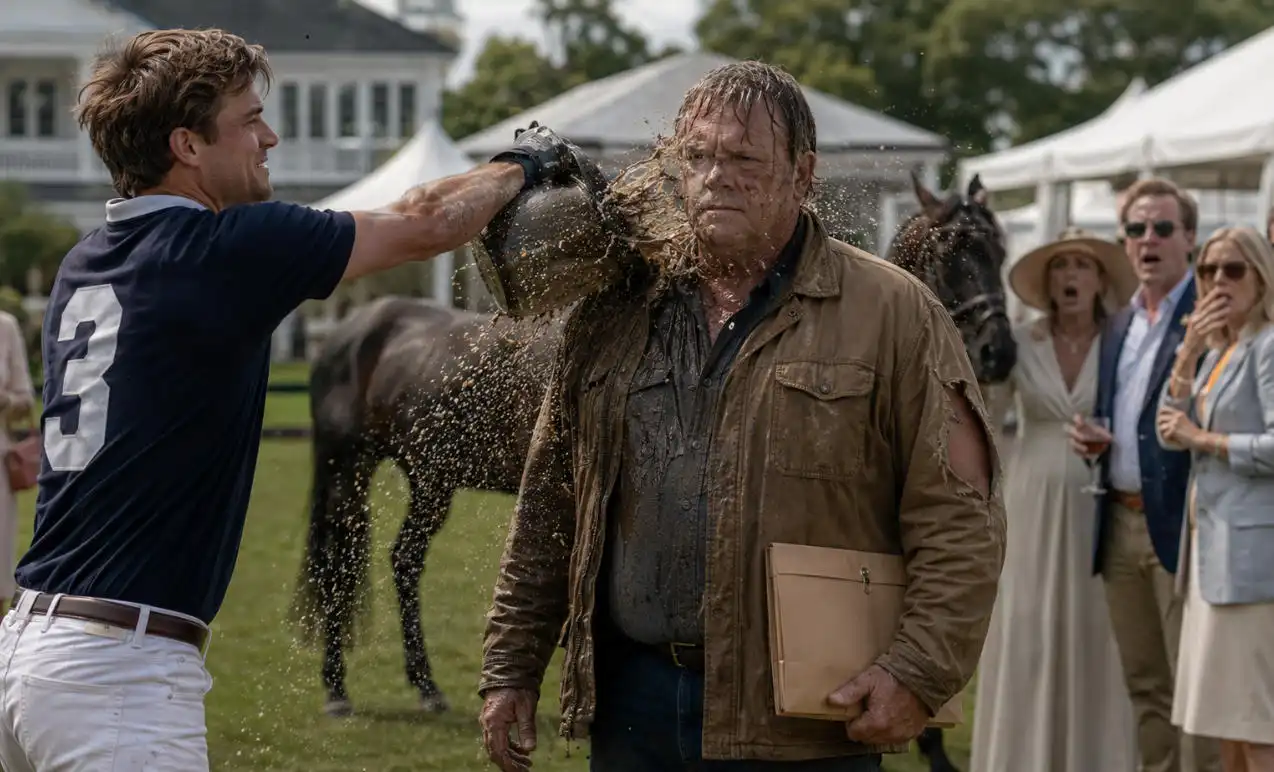
A Rich Polo Player Tore A Hardware Store Owner’s Jacket In Front Of Everyone… Minutes Later, He Was Begging On The Grass
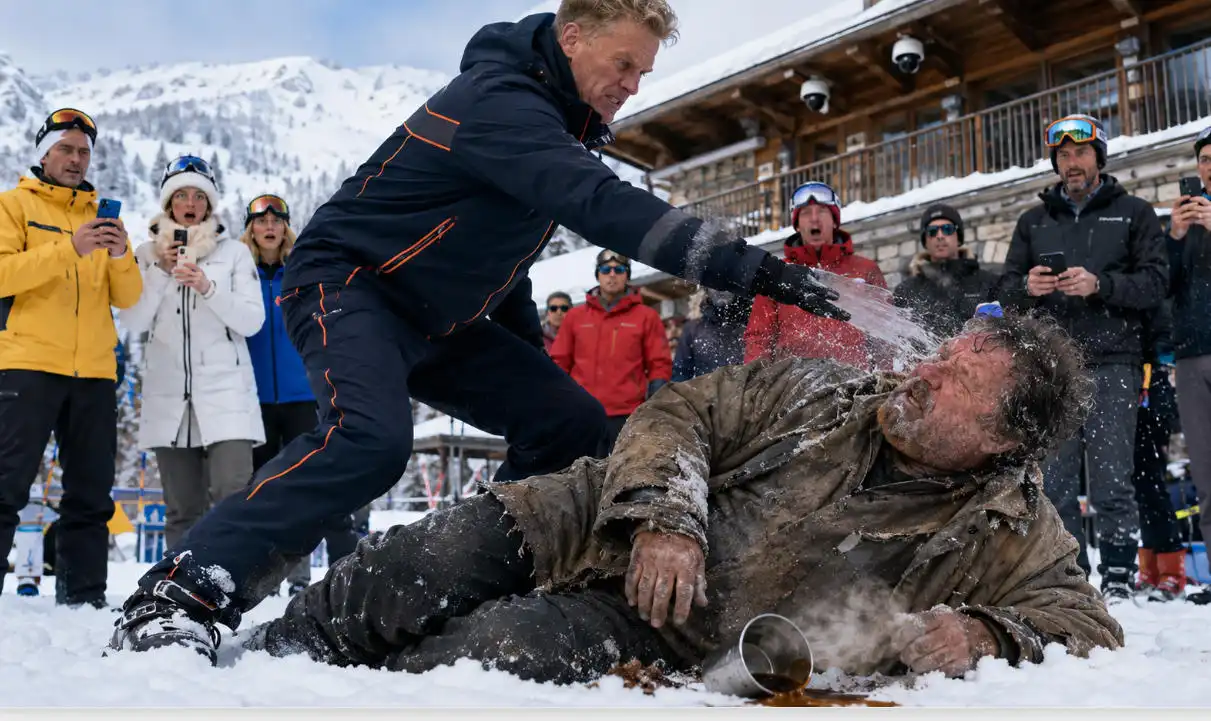
A Round-Bellied Carpenter Was Humiliated by an Elite Ski Coach in Front of Rich Guests… But Sven Had NO IDEA Who Bob Really Was 😳
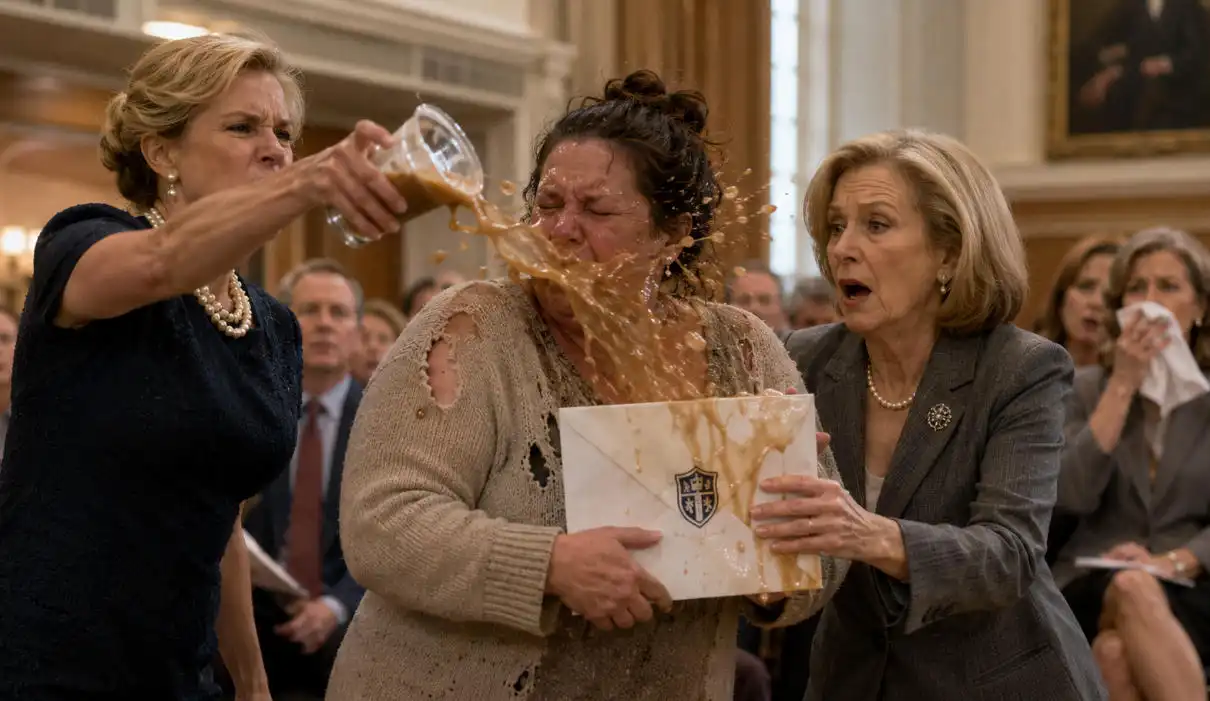
Parents Covered Their Noses When the “Cheap Mom” Walked In… Minutes Later, the PTA Queen Was on Her Knees Begging 😮