
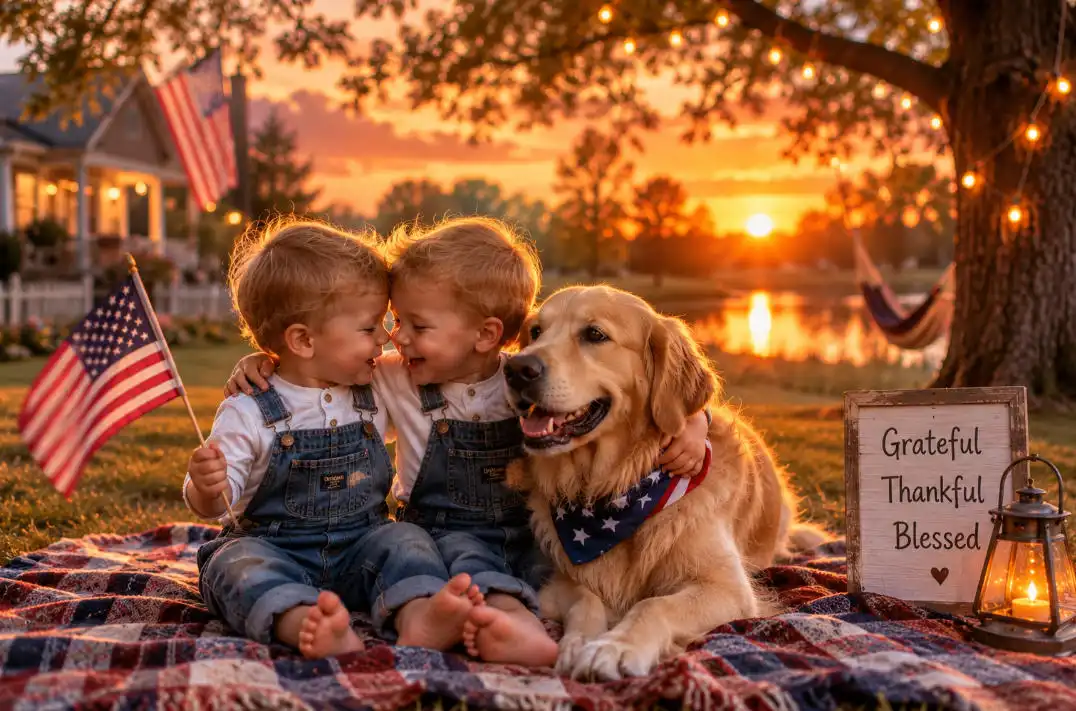
The lead attorney opened the black folder in front of everyone.
Cassandra Vale stopped breathing.
Not fainting.
Not crying.
Just standing there with one hand still wet from the dirty paint water she had thrown into my sons’ faces.
The red alarm washed over the glass sunroom like a warning from God.
Outside, the Pacific slammed against the cliffs.
Inside, nobody moved.
Not the sous-chef.
Not the housekeepers.
Not the guests with their phones halfway raised.
Not Cassandra’s assistant, who had been filming her “gentle luxury motherhood retreat” thirty seconds before she hit a child.
My twins stood behind me, shaking.
Noah’s cheek had a thin red line where her ring had cut him.
Miles had gray water dripping from his eyelashes.
They were six.
Six years old.
And Cassandra had looked at them like they were trash because they stood between her and a perfect camera angle.
“Close the folder,” Cassandra said.
Her voice came out thin.
The attorney did not move.
“I said close it,” she snapped louder, trying to sound rich again. “You people don’t understand what kind of brand you’re interfering with.”
I looked at her.
For six years, I had kept my sons away from cameras.
Not because I was ashamed of them.
Because I knew what cameras did to children.
I built one of the largest AI infrastructure companies in Silicon Valley. I had watched adults sell their dignity for attention, contracts, sponsorships, and status.
I refused to let my sons become props.
That was why the twins had never appeared in press photos.
That was why most people knew me as a private founder, not as a father.
And that was why Cassandra Vale had made the worst assumption of her life.
She saw two quiet boys in little suits.
She saw no nanny rushing forward.
She saw no mother posting them.
She saw no public family name attached to their faces.
So she decided they were nobody.
She decided she could hurt them.
“You are trespassing in a secured private residence,” the attorney said.
Cassandra laughed, but it cracked at the end.
“Trespassing? I was invited here.”
“To film a sponsored maternal wellness luncheon,” he said. “Not to assault minor beneficiaries of the estate. Not to tamper with protected art. Not to broadcast private rooms. And certainly not to endanger the legal owners of this property.”
Cassandra blinked.
“The what?”
Behind me, Noah whispered, “Dad, can we go home?”
That nearly broke me.
I wanted to pick him up and carry him out.
I wanted to shout.
I wanted to do what every father in that room knew I had the right to do.
But my sons were watching.
So I stayed calm.
I took a clean linen napkin from the marble bar and gently wiped Miles’s face.
“You’re safe,” I told him.
Miles nodded, but his chin trembled.
Noah kept staring at Cassandra.
Not with anger.
With confusion.
That was the part people never understand.
Children do not immediately hate adults who hurt them.
First, they wonder what they did wrong.
That is why I did not let Cassandra leave with a simple apology.
The lead security officer stepped between Cassandra and the doors.
Behind him, more men entered the sunroom in black suits.
Some were private security.
Some were attorneys.
Two were art preservation officers.
One was the head of estate compliance.
At the far end of the room, Cassandra’s assistant slowly lowered her phone.
“Keep recording,” I said.
Everyone looked at me.
Cassandra’s eyes widened.
I pointed to the guests.
“All of you. Keep recording.”
The room went silent.
“If she was confident enough to humiliate children in public,” I said, “she can hear the truth in public.”
Cassandra’s face hardened.
“There is no truth,” she said. “Your kids interrupted a professional shoot. They were running wild. They damaged a priceless room. I corrected them because nobody else had the spine to do it.”
The sous-chef looked away.
One of the housekeepers started crying silently.
Cassandra saw weakness and took it as permission.
“Exactly,” she said, pointing at the staff. “Ask them. They saw everything.”
Nobody answered.
Cassandra smiled.
That ugly little smile of someone used to making poorer people afraid.
“You see?” she said. “They know.”
I turned to the housekeepers.
“You will not lose your jobs for telling the truth.”
The older housekeeper lifted her head.
Cassandra whipped around.
“Maribel,” she warned. “Think very carefully.”
Maribel’s hands shook.
Then she looked at my sons.
And something in her changed.
“She told us not to touch the children,” Maribel said softly.
Cassandra’s smile vanished.
“She said they were blocking her light,” Maribel continued. “She told us if anyone stepped into the shot, she would have the agency replace the entire house staff by morning.”
A younger maid began sobbing.
“She made them stand near the wall,” the maid said. “They weren’t running. They weren’t touching anything.”
The sous-chef crossed his arms.
“That’s not my memory,” he said coldly.
I looked at him.
He had watched Cassandra lift the cup.
He had watched her slap Noah.
He had watched my boys tremble.
And now he still chose the woman with followers.
“Your memory won’t be necessary,” the attorney said.
He tapped a tablet.
The Van Gogh painting moved another inch from the wall.
A hidden panel opened behind it.
Cassandra stared at it.
Inside the panel was not only a retinal scanner.
There were security cameras.
Audio sensors.
A biometric emergency system.
And a private archive tied to my sons’ trust.
The attorney touched the screen.
The room speakers played Cassandra’s own voice.
“Move them. They’re ruining the lighting.”
Then Noah’s tiny voice.
“Ma’am, we’re sorry.”
Then the splash.
Then the slap.
Then Cassandra’s words, sharp and cruel:
“You spoiled little animals. No manners. No breeding.”
The room changed after that.
Phones rose higher.
Guests who had stayed quiet suddenly looked sick.
The sous-chef’s face turned gray.
Cassandra took one step back.
“No,” she whispered. “That’s edited.”
The attorney did not even blink.
“It is timestamped, encrypted, and automatically transmitted to three legal custodians under the Rook Family Trust security protocol.”
That was the first time Cassandra looked directly at me.
Not at my clothes.
Not at my watch.
Not at my sons.
At me.
“You’re Rook?” she said.
I did not answer.
She already knew.
Everyone in Silicon Valley knew Rook Systems.
They knew the company that built the AI logistics backbone for half the country’s hospitals, ports, and emergency networks.
They knew the name Ethan Rook.
They just did not know my children’s faces.
Cassandra’s mouth opened.
Then closed.
Then opened again.
“You should have said something,” she whispered.
I stepped closer.
“No,” I said. “You should have treated them like children before you knew whose children they were.”
That sentence did more damage than shouting could have.
Her assistant began crying.
One guest muttered, “My God.”
Another said, “She hit him.”
Cassandra snapped.
“He was bleeding because he stumbled! I didn’t cut him!”
The attorney turned another page.
“The ring on your right hand matches the injury pattern. The medical team is documenting it now.”
Two paramedics entered and knelt beside my sons.
Miles clung to my jacket.
Noah tried to be brave.
“I’m okay,” he said.
I knelt in front of him.
“You do not have to be okay just because adults are watching.”
His lips pressed together.
Then he started crying.
The sound of that cry did what the alarm could not.
It made the room human again.
Maribel covered her mouth.
A guest lowered his phone and looked ashamed.
Even the ocean outside seemed quieter.
Cassandra looked around and realized her audience had changed.
Five minutes earlier, they were afraid of her.
Now they were witnesses.
She raised both hands.
“All right. Fine. I lost my temper. But this is being exaggerated. I’m a mother. I advocate for children. My followers know who I am.”
“No,” I said. “They know who you pretend to be.”
The attorney placed three documents on the glass table.
The first was her education file.
The second was her licensing file.
The third was her brand partnership file.
Cassandra went still.
“Don’t,” she said.
I looked at the attorney.
“Read it.”
He did.
Cassandra Vale had built her empire on three claims.
A degree in developmental psychology from Stanford.
A certificate in early childhood behavioral therapy.
A foundation partnership supporting abused children.
All three were false.
The Stanford degree was a paid digital credential from an offshore diploma mill using a name designed to look similar on social media.
The therapy certificate belonged to a retired licensed professional named Cassandra Vail, spelled with an “i,” whose credentials had been copied and altered.
The foundation had never received the money Cassandra raised through her “luxury motherhood healing retreats.”
The donations had been routed through shell accounts tied to Cassandra’s husband and sister.
The room went dead silent.
Cassandra lunged for the folder.
Security stopped her before she reached the table.
“Those are private documents!” she screamed.
The attorney looked at her calmly.
“They are evidence in a civil fraud complaint, a child endangerment report, a trademark misuse filing, an insurance investigation, and a referral to federal authorities.”
Cassandra’s assistant backed away from her.
The sous-chef tried to slip toward the side door.
The security officer blocked him.
“You too,” the attorney said.
The sous-chef froze.
The young maid pointed at him with shaking hands.
“He helped her,” she said. “He told us to keep quiet when she screamed at the boys earlier in the kitchen. He said Cassandra’s people paid better than the house did.”
The sous-chef cursed under his breath.
Another staff member stepped forward.
“He let her crew into the protected wing,” he said. “He gave them the access code.”
That mattered.
Because behind the Van Gogh was not only a security system.
It was part of the estate’s child-protection trust.
The cliffside mansion had belonged to my late wife’s family before I bought it back into the trust for our sons. It was not a party rental. It was not Cassandra’s content house.
It was Noah and Miles’s protected residence.
They were not guests.
They were not background extras.
They were the legal beneficiaries.
And as of that morning, after a trust transfer finalized, each boy became a controlling beneficiary of a billion-dollar estate portfolio.
Not because I wanted headlines.
Because my wife had asked me before she died.
“Make sure nobody ever makes them beg for a place to belong,” she had said.
That was the secret Cassandra never knew.
She had assaulted the two youngest legal owners of the mansion she was using as a backdrop.
The painting behind her was not decoration.
It was the last piece my wife chose for the house.
The security system was tied to our sons’ retinal scans because my wife had feared kidnappers, fake caregivers, and social climbers long before the internet made cruelty profitable.
Cassandra had triggered the one system designed to protect them from people exactly like her.
The attorney read the final notice.
“Cassandra Vale, all brand access, estate access, and partnership permissions are terminated immediately. Your pending contracts connected to Rook Systems, HelixCare AI, Pacific Children’s Trust, and all affiliated philanthropic arms are void for cause.”
Cassandra’s face twisted.
“You can’t do that.”
“I can,” I said.
“No,” she hissed. “You don’t own motherhood. You don’t own the internet. You don’t own me.”
“I own the contracts you lied to get.”
That shut her up.
The attorney slid over another document.
“This is a notice to every platform, sponsor, and licensing body attached to your name. It includes the unedited footage, credential fraud documentation, financial routing records, and sworn statements from staff.”
Cassandra’s knees weakened.
Her assistant whispered, “Cassie… what did you do?”
Cassandra spun on her.
“Don’t you dare act innocent. You edited the bios.”
The assistant’s face collapsed.
“I edited what you gave me.”
“Liar!”
That was when Cassandra’s husband walked in.
He was supposed to arrive later for the luncheon finale.
Tall.
Polished.
Expensive suit.
The kind of man who thought a smile could buy silence.
He looked at the guards, the red lights, the phones, the documents, and finally Cassandra.
“What happened?”
Before she could answer, the attorney handed him a copy of the financial routing records.
His confident expression faded line by line.
Then he made a choice that told the whole room who he really was.
He did not ask if the children were okay.
He did not ask why his wife had hit them.
He looked at me and said, “How much?”
Cassandra closed her eyes.
The guests murmured.
I almost laughed.
Not because it was funny.
Because men like him always think there is a price for everything.
Children.
Silence.
Dignity.
Truth.
“How much to make this go away?” he repeated.
I stood between him and my sons.
“There is not enough money in your family to buy back what she did in front of mine.”
His jaw tightened.
“You’re making an enemy.”
“No,” I said. “I’m enforcing a boundary.”
The attorney continued.
“Your travel privileges connected to the investor visa review are now under legal scrutiny due to suspected financial fraud. Until the investigation concludes, your family’s corporate residency sponsorships will be challenged. You will be removed from all Rook-affiliated global networks.”
Cassandra’s husband turned red.
“You can’t blacklist us globally.”
The attorney looked at the folder.
“Actually, the partner network can. Every company listed here has a morality, fraud, and child-safety clause.”
The first sponsor cancellation came while everyone was still standing there.
Cassandra’s phone buzzed.
Then buzzed again.
Then again.
Her assistant looked at her own phone and whispered, “Oh my God.”
A major baby brand.
Gone.
A luxury stroller line.
Gone.
A private school parenting conference.
Gone.
An international wellness retreat in Monaco.
Gone.
A children’s charity gala.
Suspended.
A foundation board seat.
Revoked.
Cassandra grabbed her phone with wet fingers.
“No. No, no, no.”
Then the big one hit.
Her social platform froze her monetization pending investigation.
The woman who had made millions preaching kindness to mothers stood in a room full of witnesses, exposed for hitting children, stealing credentials, faking charity work, and threatening workers.
And still, she tried to blame my sons.
“They baited me,” she said.
Noah flinched.
I turned slowly.
Cassandra saw my face and stepped back.
I did not yell.
I did not touch her.
I just said, “Take that back.”
For the first time, she had no performance left.
Her lips trembled.
“I…”
“Take. It. Back.”
She looked at the cameras.
At the staff.
At her husband.
At the painting.
At the two little boys she had called animals.
“I’m sorry,” she said.
Noah shook his head.
Miles hid behind me.
I looked at her.
“Not to me.”
Cassandra swallowed.
She lowered herself slightly, not quite kneeling, still too proud to fully bow.
“I’m sorry,” she said to the boys.
Noah whispered, “You only said it because Dad came.”
That sentence spread through the room like a verdict.
Cassandra broke.
Not beautifully.
Not dramatically.
Just with a small, ugly sound from someone realizing the world had finally seen her without filters.
Security escorted her and her husband out through the glass doors.
But the consequences did not end at the driveway.
By sunset, the staff had given sworn statements.
Maribel kept her job and received full legal protection.
The young maid was promoted into household operations.
The sous-chef was terminated for security violations and referred for conspiracy and obstruction.
Cassandra’s assistant turned over archived messages showing how Cassandra mocked poor mothers, underpaid staff, copied credentials, and staged “charity moments” with rented children’s clothes.
Within forty-eight hours, Cassandra’s polished brand collapsed.
Her degree page disappeared.
Her sponsors posted statements.
Her foundation partners demanded audits.
Her husband’s accounts were frozen during the investigation.
Their visas and corporate residency privileges became subject to review because the financial fraud touched international accounts.
They were ordered to leave the protected estate network immediately.
Later, his family business sent him to a remote mining operation in Africa to salvage what remained of their assets.
Not as punishment from me.
As consequence from the people he had embarrassed.
Cassandra went with him.
No cameras.
No glam team.
No gentle motherhood retreats.
No marble sunrooms.
No stolen credentials.
Just heat, dust, silence, and a reputation that followed her everywhere.
As for the global blacklist, it was not gossip.
It was contractual.
Every Rook-affiliated company, charitable trust, private school network, estate vendor, art insurer, security partner, and child-safety organization received the same evidence packet.
Her name could no longer clear a background review.
Her family could no longer buy their way into rooms built on trust.
And the certificates she had framed so proudly on her studio wall?
They came down in front of her entire team.
Not quietly.
Not with a soft PR statement.
At a legal hearing, the judge allowed the forged credentials, copied seals, and fake charity claims into the record.
The attorney placed them one by one on the table.
Then he tore the copies down the middle.
Not for drama.
For evidence marking.
But every person in that room understood what it meant.
The empire Cassandra built on fake compassion had been split open.
My sons did not watch that part.
I would not let revenge become their childhood.
Instead, I took them back to the sunroom three weeks later.
The red alarms were off.
The broken gate had been repaired.
The ocean was blue again.
The Van Gogh was back in place, still guarding the wall like a quiet promise.
Noah stood in front of it and asked, “Was Mom scared when she made the scanner?”
I knelt beside him.
“Yes,” I said. “But she was also brave.”
Miles touched the frame gently.
“Did she know bad people would come?”
I looked at my boys.
“She knew powerful people are not always kind,” I said. “And she wanted you to know the difference.”
Noah looked down.
“Are we really billionaires?”
I sighed.
Technically, yes.
The trust made them two of the youngest billionaire beneficiaries in the world.
But that was not what I wanted them to remember.
“You are responsible,” I said. “That matters more.”
Miles frowned.
“What does responsible mean?”
“It means when you have more than others, you protect more than others.”
Noah nodded slowly.
“Like Maribel?”
“Exactly like Maribel.”
That evening, the staff came back to the sunroom.
Not for a brand event.
Not for a shoot.
For dinner.
Maribel sat at the table with us.
So did the young maid, the gardener, the driver, the art preservation officer, and the security guard who had carried Miles’s blanket from the SUV that day.
The boys wore soft sweaters instead of suits.
No cameras were allowed.
No influencers.
No fake laughter.
No one telling children to move because they ruined the light.
Halfway through dinner, Miles spilled a little juice.
He froze.
His eyes flew to mine.
The whole table went quiet.
Then Maribel reached over with a napkin and smiled gently.
“Accidents are not crimes,” she said.
Miles breathed again.
That was the healing.
Not Cassandra losing sponsors.
Not her name vanishing from elite invitations.
Not her husband being shipped off to a mining outpost by his own furious investors.
The real victory was my son learning that a spill would not cost him love.
Noah looked at the empty wall panel behind the Van Gogh and asked if the red light would ever come back.
“Only if you need it,” I said.
He leaned against me.
“I don’t think I need it tonight.”
I kissed the top of his head.
“No,” I said. “Tonight, you don’t.”
Before bed, Noah asked one more question.
“Dad, why didn’t you tell her who we were before she hurt us?”
I sat on the edge of his bed.
“Because who you are should never be the reason someone treats you kindly.”
He thought about that.
Then he said, “So she failed the test?”
I looked at my sons, safe under the same roof their mother had protected before they were old enough to understand it.
“Yes,” I said softly. “She failed the easiest test in the world.”
The next morning, a handwritten note from Maribel appeared on the breakfast table.
It said:
Thank you for letting the truth be louder than fear.
I kept that note.
Not in a vault.
Not behind a painting.
In my desk drawer.
Because one day, when Noah and Miles are old enough to inherit everything, I want them to read it and understand what really happened in that glass sunroom.
A famous woman lost her empire.
A dishonest family lost its access.
A frightened staff found its voice.
Two little boys learned they were protected.
And a father learned that justice does not have to roar to be powerful.
Sometimes it arrives in a red alarm.
Sometimes it arrives in a sealed black folder.
Sometimes it arrives when a child says, “You only apologized because Dad came,” and the whole room finally understands the truth.
Cassandra thought my sons were nobody because they were quiet.
She learned too late that quiet children can carry the loudest legacy.
So choose your side clearly:
Stand with the children who were humiliated, or stand with the powerful woman who only regretted it after the cameras turned on her. Share this if you believe children deserve respect before anyone knows their last name. 🚨
Disclaimer: Mention of any brand or trademark is for identification only and does not imply partnership or endorsement
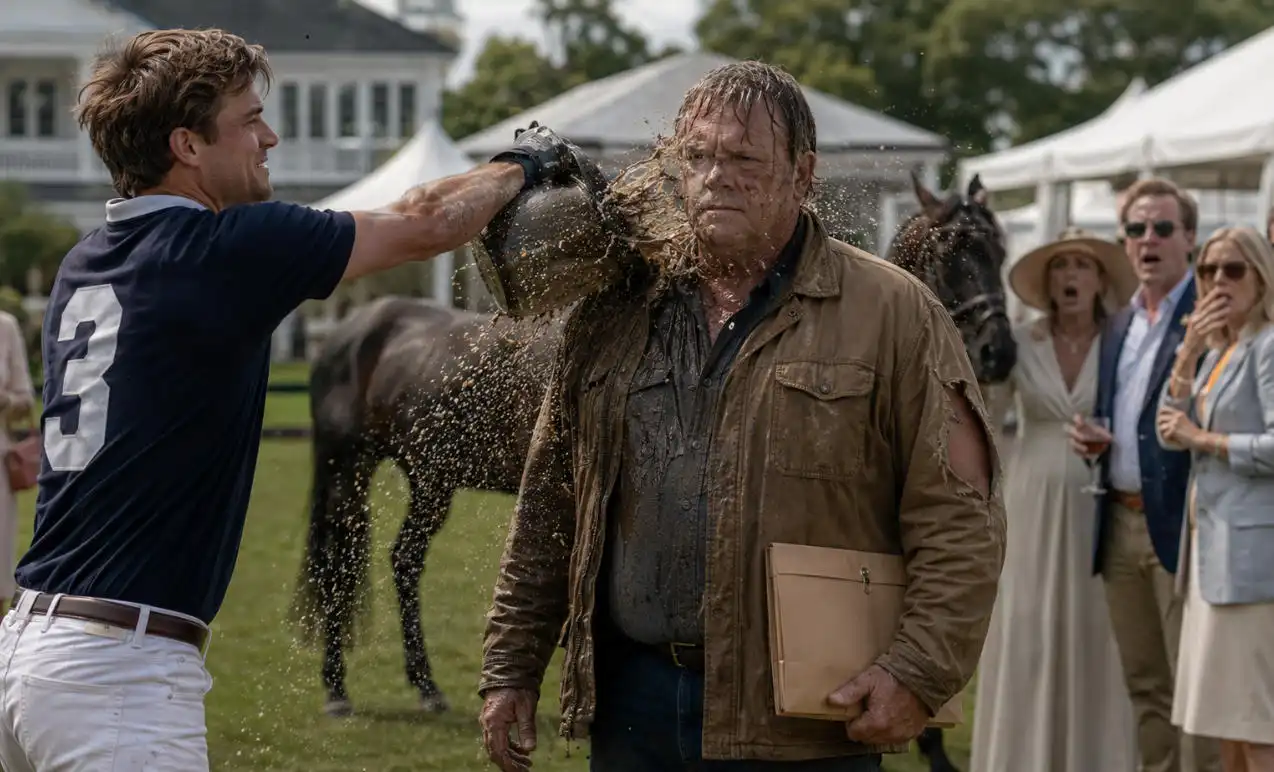
A Rich Polo Player Tore A Hardware Store Owner’s Jacket In Front Of Everyone… Minutes Later, He Was Begging On The Grass
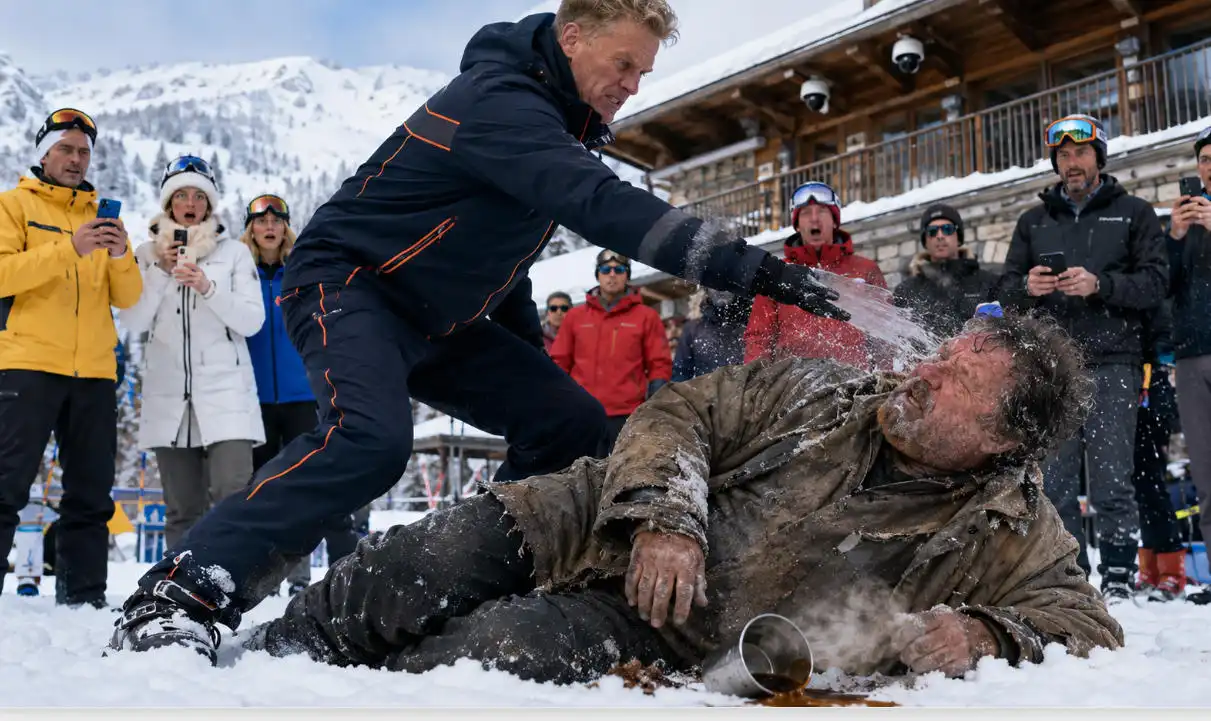
A Round-Bellied Carpenter Was Humiliated by an Elite Ski Coach in Front of Rich Guests… But Sven Had NO IDEA Who Bob Really Was 😳
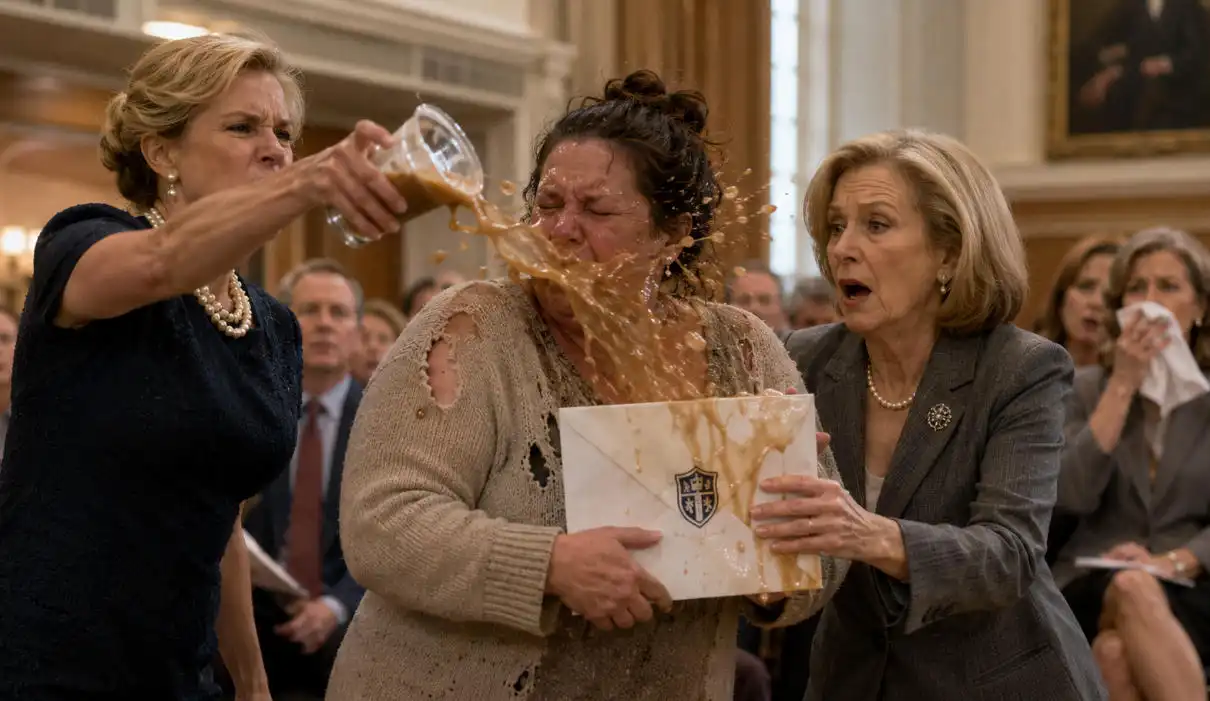
Parents Covered Their Noses When the “Cheap Mom” Walked In… Minutes Later, the PTA Queen Was on Her Knees Begging 😮