
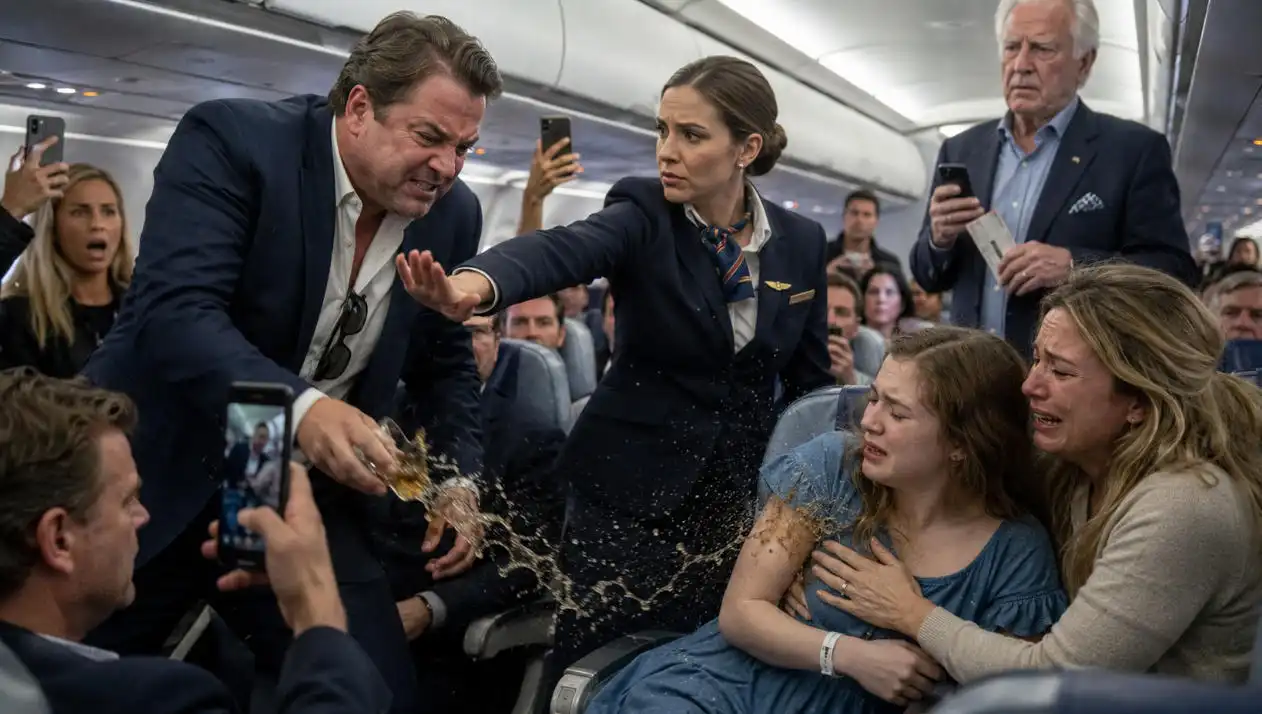
The name on the old man’s boarding pass made Greg’s mouth go dry.
He stared at it like the letters had turned into a warning.
The cabin was still silent.
Mia sat frozen beside the window, whiskey soaking the front of her blue dress, her little hands pressed flat against her knees like she was trying not to disappear.
The old man did not yell.
He did not threaten.
He simply stepped into the aisle and said, “Mr. Calder, I think you and I need to talk before this plane lands.”
Greg blinked.
“Do I know you?”
The old man looked at Mia first.
Then at the stain on her dress.
Then at the half-empty glass in Greg’s hand.
“No,” he said. “But by tomorrow morning, you will wish you had.”
The flight attendant, whose name tag read Rebecca, stood between Greg and Mia like a locked gate.
“Sir,” she said firmly, “you need to return to your assigned seat immediately.”
Greg tried to recover his attitude.
He tugged at his sleeves.
He looked around at the passengers filming him.
Then he gave the kind of laugh men give when they are frightened but still want people to think they are in charge.
“This is ridiculous. It was an accident.”
Mia’s mother, Ellen, looked up with red eyes.
“You forced your way into her seat.”
Greg pointed at her.
“Don’t start with me.”
The pediatric doctor from the next row stepped forward.
He was a broad-shouldered man in his fifties with tired eyes and a wedding ring.
“I saw the whole thing,” he said. “So did everyone else.”
Greg snapped, “I don’t care what you think you saw.”
The doctor’s voice hardened.
“I saw a grown man shove into a child’s space, strike her shoulder with his elbow, and spill alcohol on her after being told not to move. That is not a seating issue anymore.”
Greg’s face flushed.
“You people are dramatic.”
Rebecca turned to him.
“Sir, you were instructed by crew to move. You refused. That is a federal matter.”
That got a reaction.
For one second, Greg’s confidence cracked.
Then he pointed toward first class.
“I want the captain. I want the purser. I want names. I’m a Platinum Executive member.”
The old man in the navy sweater smiled without warmth.
“Not anymore.”
Greg looked at him.
“What did you say?”
The old man held up his phone.
“Your account has been locked pending a conduct review.”
Greg scoffed.
“You can’t do that.”
Rebecca swallowed.
Her face had gone pale because she knew exactly who the old man was.
The doctor knew too. So did the purser, who had just come from the front cabin.
The old man extended a hand toward Ellen.
“Ma’am, my name is Arthur Caldwell.”
Ellen hesitated, then shook his hand.
“Mia’s mother,” she whispered.
Arthur nodded gently.
“I’m very sorry your daughter was treated this way on one of our aircraft.”
Greg laughed again, louder this time.
“One of your aircraft?”
Arthur looked at him.
“Yes.”
The purser stood beside Rebecca and said quietly, “Mr. Caldwell is the airline’s largest individual shareholder.”
A ripple moved through the cabin.
Someone whispered, “Oh my God.”
Another passenger lifted their phone higher.
Greg’s smile died.
But only for a moment.
Then pride came rushing back in to save him from shame.
“You’re a shareholder,” Greg said. “Not God.”
Arthur’s expression did not change.
“No. Just someone who understands consequences.”
Mia looked up at him.
Her voice was barely louder than the hum of the plane.
“Am I in trouble?”
Arthur turned soft immediately.
“No, sweetheart. Not you.”
Mia touched the wet fabric of her dress.
“I didn’t mean to make a scene.”
That broke something in the cabin.
A woman across the aisle covered her mouth.
Ellen pressed a hand to her chest.
The doctor looked away.
Even Rebecca blinked hard.
Greg muttered, “Oh, come on.”
Arthur’s eyes moved back to him.
“That,” he said quietly, “was the last mistake you made on this flight.”
Greg opened his mouth, but the captain’s voice came over the intercom.
“Ladies and gentlemen, this is your captain. We are aware of a disturbance in the cabin. The crew is handling the matter. Please remain seated unless instructed otherwise.”
Everyone stayed silent.
Except Greg.
“This is insane,” he said. “I was asking for a seat.”
Rebecca answered immediately.
“No, sir. You were demanding one.”
The doctor added, “From a child.”
Ellen said, “From my child.”
Mia whispered, “I just wanted to see the water.”
Greg rolled his eyes.
And that eye roll sealed his fate more than the whiskey did.
Arthur saw it.
The passengers saw it.
Rebecca saw it.
So did the man in 18C, who had recorded the entire confrontation from the moment Greg first said, “Adults with real jobs need rest.”
Arthur lowered his voice.
“Rebecca, please move Mia and her mother to the forward window seats beside me.”
Greg snapped, “That’s my seat.”
Arthur looked at him.
“No, Mr. Calder. Your seat is the one printed on your boarding pass. The one you refused to sit in.”
The purser stepped forward.
“Mr. Calder, you will return to 32D. You will remain seated for the duration of the flight. You will not consume any more alcohol.”
Greg stared at her.
“You can’t cut me off.”
Rebecca took the glass from his hand.
“We just did.”
A few passengers murmured approval.
Greg’s ears turned red.
He had built his whole life around rooms where people moved aside for him.
Restaurants.
Lounges.
Boardrooms.
Airport clubs.
He was used to staff apologizing even when he was wrong.
He was used to assistants fixing things.
He was used to money making the world softer.
But this was a full plane at 36,000 feet.
No private exit.
No side door.
No driver waiting outside.
Just rows of strangers watching him become exactly what he had always been.
A bully in a good shirt.
He walked back to 32D with two crew members behind him.
Every step felt longer than the last.
Someone whispered, “Shame on you.”
Another passenger said, “All for a window seat.”
Greg stopped and turned.
Arthur spoke before Greg could.
“Keep walking.”
Greg did.
Mia and Ellen were moved to the forward cabin.
Rebecca brought Mia a blanket and helped her change into an airline sleep shirt.
A woman from first class offered a scarf.
The doctor checked Mia’s shoulder.
“It will bruise,” he told Ellen softly. “But she’s okay.”
Ellen’s hand shook as she brushed Mia’s hair out of her face.
“She’s been through so much already.”
Arthur sat across the aisle.
He did not ask for details at first.
He waited.
That was the difference between power and arrogance.
Arrogance interrupts.
Power listens.
After a few minutes, Mia looked out the window.
The clouds had opened.
Below them, the Pacific stretched forever.
Blue.
Silver.
Endless.
Mia pressed her palm to the glass.
“Oh,” she whispered.
Ellen began to cry again, but quietly this time.
Mia smiled.
“I didn’t know it was that big.”
Arthur looked away for a moment.
His own granddaughter would have been Mia’s age.
That was the part no one in the cabin knew.
Years earlier, Arthur had lost his granddaughter to a rare blood disorder.
He had learned that some trips are not vacations.
Some trips are prayers.
Some window seats are not comfort.
They are goodbye gifts.
After Mia fell asleep under the blanket, Arthur asked Ellen one question.
“Is this her first time seeing the ocean?”
Ellen nodded.
“She wanted Hawaii. Not Disney. Not a big party. Just… Hawaii.”
“Why?”
Ellen smiled through tears.
“She said if heaven has colors, she wanted to see the closest one first.”
Arthur stared at the window.
For several seconds, he said nothing.
Then he opened his phone again.
Not to attack Greg.
Not yet.
First, he called the airline’s executive customer care director.
“I need a full incident file opened on Flight 417 to Honolulu,” he said. “Passenger Greg Calder. Seat 32D. Preserve all crew notes, witness statements, alcohol service logs, and passenger video offers.”
He listened.
Then said, “Yes. Formal. Do not bury it as customer friction.”
Another pause.
“And prepare a care package for the child and her mother. Hotel upgrade. Ground transport. Medical-access support. Private assistance on arrival. No press.”
He looked at Mia sleeping.
“No press,” he repeated.
Because some people help to be seen.
Arthur was not one of them.
Meanwhile, in 32D, Greg was sweating.
He tried texting his assistant.
No signal.
He tried drafting an email.
Then deleted it.
Then drafted another.
Subject: Minor misunderstanding on flight
He stared at that subject line.
Even he knew it sounded weak.
A woman across the aisle leaned toward him.
“My nephew is twelve,” she said. “If you did that to him, I’d make sure everyone knew your name.”
Greg glared.
“Mind your business.”
She held up her phone.
“I did. I recorded it.”
Greg’s stomach dropped.
The next six hours were torture for him.
Not because anyone touched him.
Not because anyone yelled.
Because no one needed to.
Every time he shifted, someone looked at him.
Every time a flight attendant passed, they ignored his attempts to speak.
When meals came, he was served water.
No wine.
No whiskey.
No apology.
He rang the call button twice.
Rebecca came once.
“Can I help you?”
“I need to speak to Mr. Caldwell.”
“No.”
“I demand—”
“No.”
Then she walked away.
That “no” almost broke him.
People like Greg are not used to a clean, quiet no.
They are used to negotiations.
Exceptions.
Managers.
Escalations.
The word no, spoken by someone who means it, can sound like a locked cell.
Two hours before landing, the pediatric doctor walked forward to check Mia again.
Greg caught his sleeve.
“Hey.”
The doctor looked down at his hand.
Greg let go.
“I want to say something to the mother.”
The doctor studied him.
“An apology?”
Greg hesitated.
“A clarification.”
The doctor almost laughed.
“You spilled liquor on a sick child and called her selfish. There’s nothing to clarify.”
“I didn’t know she was sick.”
The doctor’s voice dropped.
“You didn’t have to know. She was a child.”
That sentence landed harder than Greg expected.
Not because it changed him.
But because it gave him no loophole.
At last, the islands appeared.
The cabin filled with that special kind of quiet excitement people get before Hawaii.
Passengers lifted shades.
Phones came out.
Mia woke just in time.
Ellen helped her sit up.
The ocean below shifted from deep blue to turquoise.
Then green mountains rose from the water.
Mia gasped.
“Mama…”
“I know, baby.”
“It’s real.”
Arthur watched her face.
For the first time all flight, he smiled.
Not the cold smile he gave Greg.
A real one.
As the plane landed, the cabin burst into soft applause.
Not for the pilot.
For Mia.
She blushed and hid behind her blanket.
Greg sat in the back, jaw clenched, staring straight ahead.
The plane reached the gate.
The seatbelt sign turned off.
Usually, passengers rush.
That day, no one moved fast.
They waited to let Mia and Ellen leave first.
Rebecca brought a small airline wings pin.
“For our most important passenger,” she said.
Mia smiled.
“Thank you.”
Arthur walked beside them toward the door.
Greg tried to slip past.
The purser blocked him.
“Mr. Calder, please remain seated.”
“Why?”
“Airport security and airline representatives will be meeting you.”
His face went gray.
“This is harassment.”
Rebecca said, “No, sir. This is documentation.”
At the jet bridge, two airline officials waited with airport police.
Not dramatic.
Not loud.
Just official.
That made it worse.
Greg was escorted into a private room.
He tried the same voice he used in restaurants.
“This has been blown out of proportion.”
The airline operations manager placed a printed incident report on the table.
“We have statements from crew.”
A second page.
“Statements from passengers.”
A tablet.
“Video.”
Greg swallowed.
The video began.
His own voice filled the room.
“Adults with real jobs need rest. Scoot over.”
Then:
“Maybe now she’ll move.”
Greg stared at the table.
“I was frustrated.”
The airport officer said, “You were instructed to stop. You did not.”
The airline manager continued.
“Effective immediately, your loyalty status is revoked. Your lounge access is suspended. Your account is frozen pending legal review. You are banned from premium cabin upgrades on our airline and partner carriers until the investigation is complete.”
Greg’s head snapped up.
“You can’t do that over one misunderstanding.”
Arthur, who had entered quietly, answered from the doorway.
“It was not one misunderstanding. It was a pattern meeting a witness.”
Greg turned.
“What does that mean?”
Arthur stepped into the room.
“It means your passenger file shows multiple crew complaints over the past eighteen months. Verbal abuse. Threats to staff. Intoxication warnings. Seat disputes. Demands for compensation after creating your own problems.”
Greg went silent.
He had always assumed those reports disappeared.
That the miles protected him.
That status was armor.
Arthur placed one more paper on the table.
“It also means our legal team will provide documentation to any appropriate investigating party if requested.”
Greg laughed nervously.
“Investigating party? For what?”
Arthur looked at him.
“You told a child’s mother you would call your lawyer. I suggest you call one.”
That was the first consequence.
The second came before Greg even reached baggage claim.
His phone exploded.
Texts.
Missed calls.
Emails.
His assistant.
His boss.
The firm’s compliance officer.
Then a message from a senior partner:
Do not speak to press. Do not post. Call legal immediately.
Greg froze beside the carousel.
“How…” he whispered.
The woman from 32E walked past him.
She held up her phone.
“The internet works on the ground.”
The video was already spreading.
Not because Arthur posted it.
He didn’t.
Passengers did.
They posted short clips.
Greg forcing his way into the row.
The whiskey hitting Mia’s dress.
Mia saying, “I just wanted to see the water.”
Greg saying, “Maybe now she’ll move.”
By the time Greg’s suitcase came out, the clip had hit financial Twitter.
Then LinkedIn.
Then local news.
Then the investor chats.
The headline wrote itself:
Wall Street Fund Manager Humiliates Terminally Ill Child Over Airplane Window Seat
Greg worked for a fund that sold itself on discipline, judgment, and trust.
Those words look good on a website.
They look different under a video of your managing director bullying a child.
By midnight, three institutional clients had asked whether Greg was still responsible for their capital.
By morning, two had requested immediate meetings.
By noon, a pension board froze a pending allocation.
The firm did not fire Greg because of internet outrage.
That would have been too simple.
They fired him because the incident triggered a deeper review.
And that review found what arrogance usually leaves behind.
Careless messages.
Threats to junior analysts.
Compliance shortcuts.
Risk reports buried because they made Greg look bad.
One email was especially bad.
Greg had written to an analyst:
If clients knew the real exposure, they’d panic. Clean the language.
That was not a bad mood.
That was evidence.
The firm’s lawyers moved fast.
Greg was suspended first.
Then terminated for cause.
Then named in a client lawsuit alleging misrepresentation of risk.
His fund did not collapse because Arthur “made a call to ruin him.”
It collapsed because trust is the foundation under money.
And Greg had cracked it himself.
The video only turned on the lights.
Three days later, Greg sat alone in his luxury apartment, watching news anchors discuss “conduct risk in elite finance.”
His name sat on the screen under a frozen image of him pointing at Mia’s mother.
His phone buzzed.
Former friends stopped answering.
Colleagues removed him from group chats.
His building doorman no longer smiled the same way.
The restaurants where he used to snap his fingers suddenly had no tables.
The world he thought he owned had not vanished.
It had simply stopped pretending he was welcome.
A week later, his company badge stopped working.
Two weeks later, his attorney told him the civil case would be expensive.
One month later, he sold the apartment.
Not because he was poor overnight.
But because men like Greg do not know how to live when applause turns into silence.
And Mia?
Mia saw Hawaii.
Not just from the airplane window.
Arthur made sure of that.
When she and Ellen reached the terminal, a quiet airline concierge met them with flowers.
No cameras.
No publicity.
Just kindness.
Their basic hotel room had been upgraded to an oceanfront suite with medical support nearby.
A wheelchair was waiting, decorated with a small plumeria lei.
Mia laughed when she saw it.
“I feel like a queen.”
Ellen kissed her forehead.
“You are one.”
The airline arranged a gentle island tour that fit Mia’s strength.
No rushing.
No crowds.
No pity.
Just beauty.
They saw sea turtles from a shaded lookout.
They watched hula dancers at sunset.
They ate shaved ice that turned Mia’s tongue blue.
Arthur visited once, only after Ellen invited him.
He brought no cameras.
Just a small wooden box.
Inside was a polished shell.
“My granddaughter collected shells,” he said. “She believed every one sounded different.”
Mia held it to her ear.
“I hear waves.”
Arthur nodded.
“That’s the best sound.”
Mia looked at him for a long moment.
“Were you sad on the plane?”
Arthur blinked.
Children have a way of seeing what adults try to hide.
“Yes,” he said. “A little.”
“Because of me?”
“No, sweetheart.”
“Because of someone else?”
Arthur smiled sadly.
“Yes.”
Mia handed him the shell.
“You can listen too.”
He took it like it was made of glass.
For a moment, no one spoke.
Outside, the ocean kept moving.
Ellen later said that was the first time she had seen Arthur cry.
Not loudly.
Not dramatically.
Just one tear from a man who had spent years turning grief into board meetings and signatures.
Mia gave him permission to be human again.
On their last full day in Hawaii, Arthur arranged one final surprise.
A small sunset sail.
Only Mia, Ellen, a nurse, the captain, and Arthur.
The boat moved gently over the water.
Mia wore a white cardigan and the airline wings pin.
Her strength was lower that day.
But her eyes were bright.
As the sun dropped, the whole ocean turned gold.
Mia leaned against her mother.
“This is what I wanted,” she whispered.
Ellen held her close.
“I know.”
Mia looked at Arthur.
“Do you think the man on the plane is still mad?”
Arthur thought carefully.
“I think he is learning that other people matter.”
Mia considered that.
“Good.”
Then she added, “But I hope he says sorry someday.”
Ellen closed her eyes.
Arthur looked toward the horizon.
That was the difference between Mia and Greg.
Greg wanted a window.
Mia wanted a view.
Months later, after Mia passed peacefully at home, Ellen received a letter.
It was from the airline foundation.
Arthur had created a new program in Mia’s name.
Mia’s Window
Every year, the program would help seriously ill children take one meaningful trip with their families.
Ocean.
Mountains.
Grandparents.
Snow.
Whatever their “window” was.
The first page of the letter said:
No child should have to beg for a view of the world.
Ellen pressed the paper to her chest and cried until she laughed.
Because Mia’s trip had not ended with a bully.
It had become a doorway for other children.
As for Greg, his story became a warning whispered in two worlds.
In airports, flight attendants mentioned him when training new crew on passenger misconduct.
In finance, partners used him as an example of reputational risk.
He did eventually write an apology.
Not a public statement crafted by lawyers.
A real letter.
It arrived almost a year later.
The handwriting was stiff.
The words were simple.
He wrote that he had treated Mia like an obstacle instead of a person.
He wrote that he had mistaken status for worth.
He wrote that nothing he lost compared to the cruelty of making a sick child feel small during one of the most important moments of her life.
Ellen read it twice.
Then she placed it in a drawer.
She did not forgive him for his career.
She did not forgive him for the internet.
She forgave him for herself.
But she never forgot what Mia said when the plane dipped over Hawaii.
“It’s real.”
That was the part that mattered.
Not Greg’s downfall.
Not the viral video.
Not the revoked status or lawsuits or lost title.
The real victory was a little girl in a blue dress, finally by the window, seeing the ocean for the first time while an entire plane silently learned what dignity looks like.
Greg thought power meant taking the seat you wanted.
Arthur proved power means protecting the person who needed it more.
And Mia proved something bigger than both of them:
Sometimes the smallest person on the plane is the one who teaches everyone how to be human. 🌊
So choose a side:
Was Greg’s punishment too harsh…
Or was it exactly what happens when a grown man humiliates a child and the whole world finally sees him?
Disclaimer: Mention of any brand or trademark is for identification only and does not imply partnership or endorsement
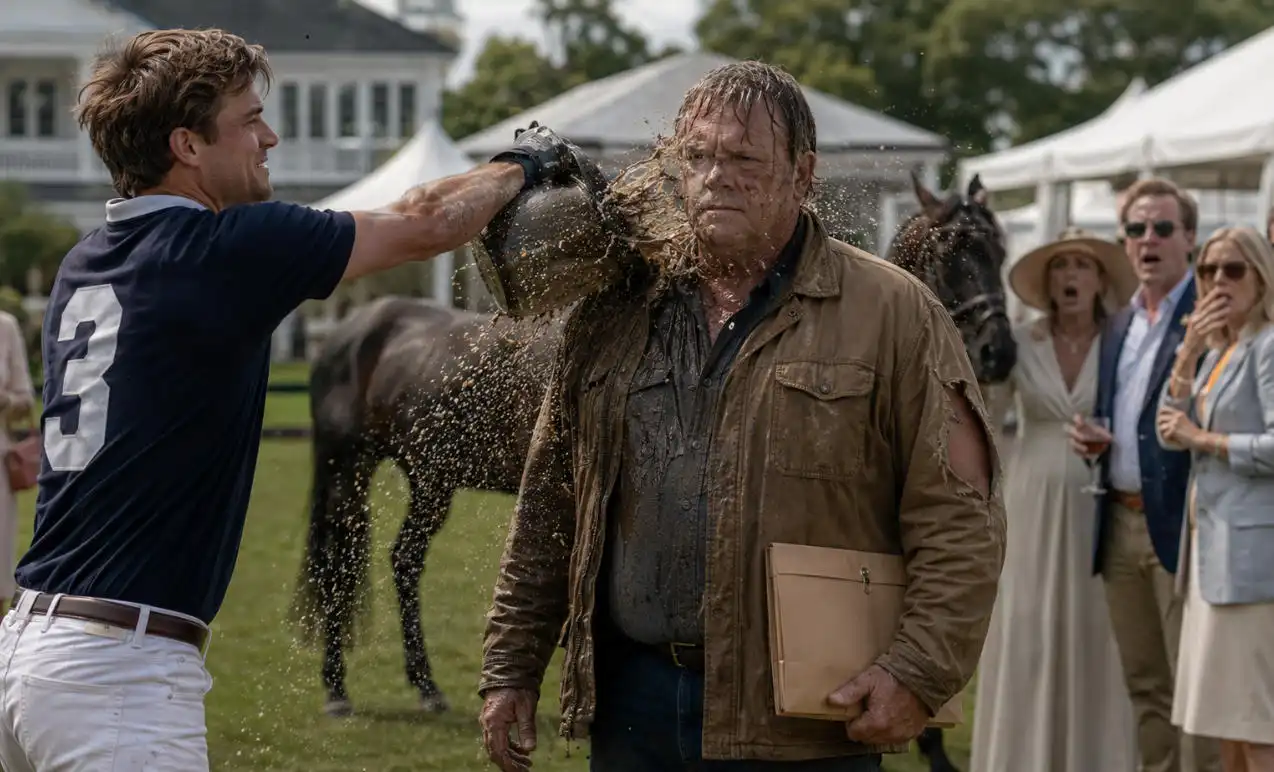
A Rich Polo Player Tore A Hardware Store Owner’s Jacket In Front Of Everyone… Minutes Later, He Was Begging On The Grass
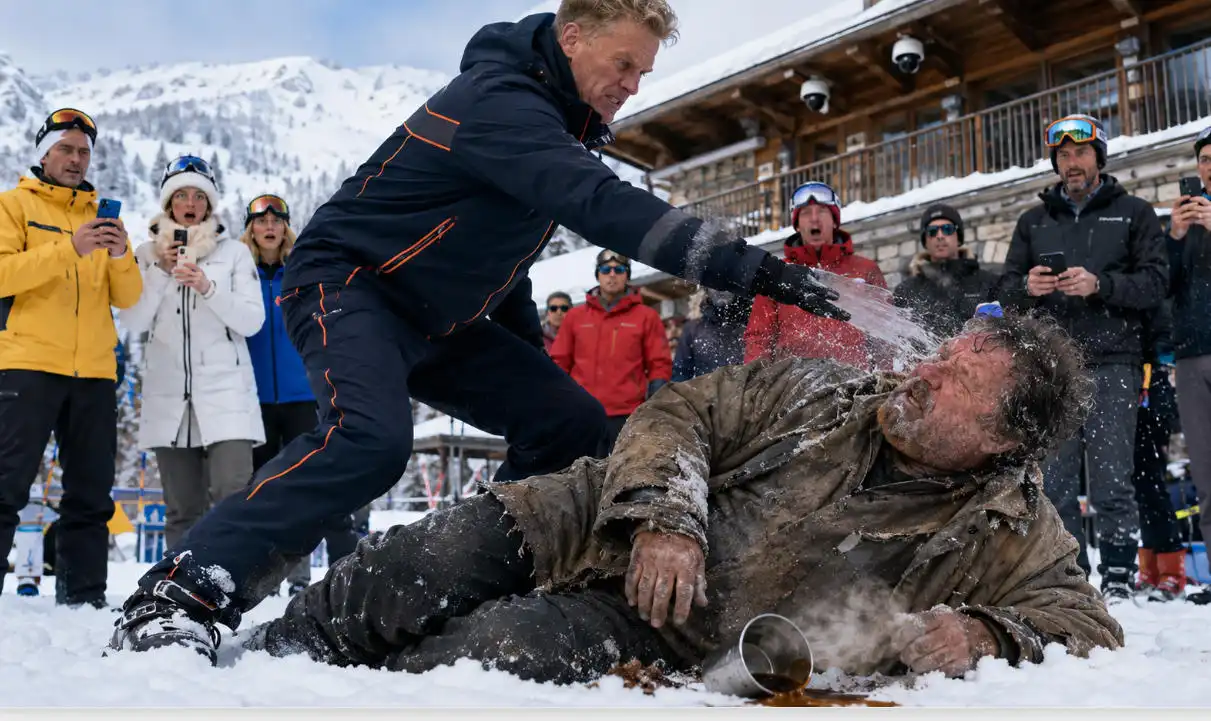
A Round-Bellied Carpenter Was Humiliated by an Elite Ski Coach in Front of Rich Guests… But Sven Had NO IDEA Who Bob Really Was 😳

Parents Covered Their Noses When the “Cheap Mom” Walked In… Minutes Later, the PTA Queen Was on Her Knees Begging 😮