
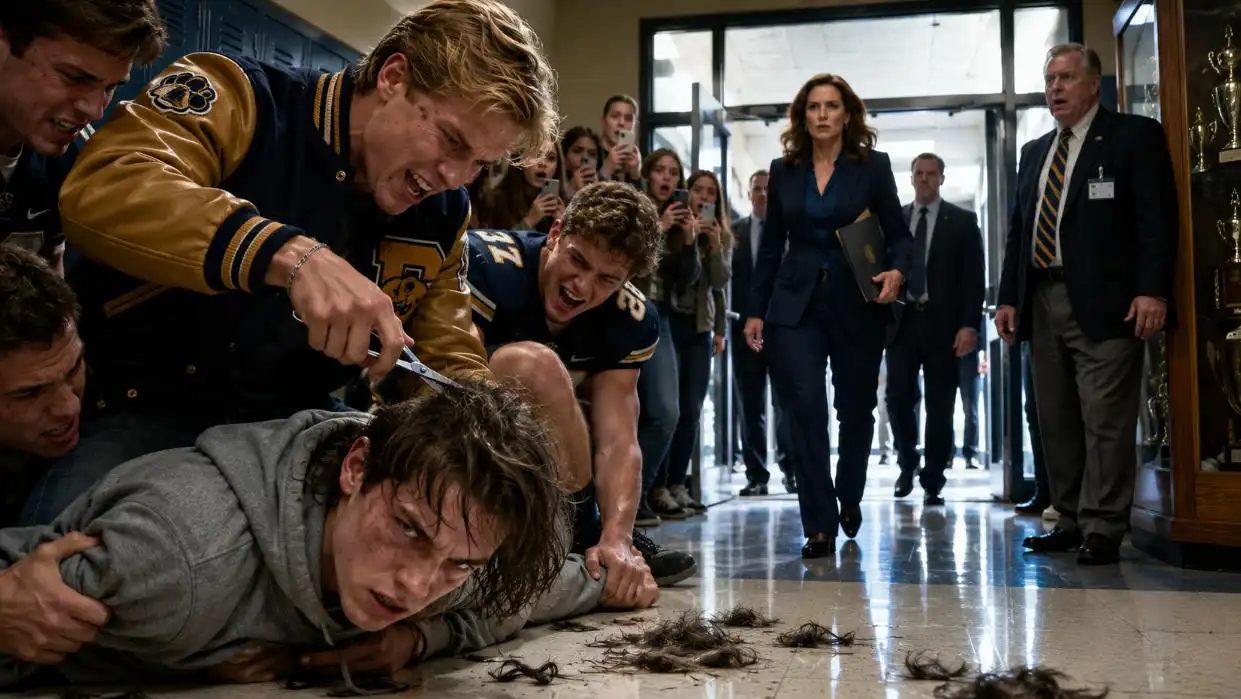
The woman in the navy suit didn’t look at me first.
She looked at Hunter’s father.
He had just stepped out of the athletic office with a donor badge clipped to his jacket and a smile that belonged on a billboard.
Then he saw the folder.
His smile disappeared.
The hallway was so quiet I could hear the scissors tremble in Hunter’s hand.
My name is Liam Ashford.
At that school, most people knew me as the quiet kid with the long hair.
Not the loud kid.
Not the rich kid.
Not the athlete.
Just Liam.
The boy who sat in the back of AP History.
The boy who ate lunch near the library windows.
The boy who wore thrift-store hoodies even though my mother kept telling me she could buy me anything I wanted.
That was the part nobody understood.
I didn’t dress that way because I was poor.
I dressed that way because I hated attention.
My mother was Evelyn Ashford, CEO of one of the most powerful investment banks in New York.
To the financial world, she was a hurricane in heels.
To me, she was the woman who still cut the crusts off my sandwiches when I was sick.
And to Hunter Walker?
She was a name he had never bothered to learn.
Because in his world, if you didn’t arrive at school in a lifted truck, wear a varsity jacket, or have a father whose name was on a donor plaque, you were nobody.
Hunter was the king of Briar Ridge Academy football.
Six-foot-two.
Blond.
Perfect teeth.
A scholarship offer waiting from a major college.
A father who donated to the athletic department.
A mother who ran every parent committee like a courtroom.
Teachers smiled wider when Hunter walked by.
Coaches clapped him on the back.
The principal called him “a natural leader.”
I called him what he was.
A coward with an audience.
It started with my hair.
I had grown it since sixth grade.
My dad died that year.
Cancer took him fast.
Before he passed, he used to brush my hair back and say, “Don’t let anybody tell you how to carry yourself, kid.”
After he died, I stopped cutting it.
Not because I thought hair was magic.
Not because I wanted attention.
Because every inch felt like a year I survived without him.
My mother understood.
She never pushed.
She only said, “Your father would be proud of the man beneath it.”
Hunter found out about that somehow.
Maybe somebody heard me tell my English teacher.
Maybe he read an old essay I wrote.
However he learned it, he turned it into a weapon.
The first week was whispers.
“Nice ponytail, princess.”
“Is that shampoo sponsored?”
“Do you cry when you braid it?”
The second week became shoulder checks near the lockers.
Then gum stuck to my hood.
Then someone posted a photo of me from behind and captioned it:
“New girl on campus?”
I reported it once.
The assistant principal sighed and said, “Liam, boys can be immature. Try not to give them a reaction.”
That sentence taught me a lot.
Not about boys.
About adults.
Some adults don’t stop cruelty.
They manage the victim.
So I stopped reporting.
I started recording.
Not in some dramatic way.
I saved screenshots.
I kept dates.
I wrote down names.
I emailed myself descriptions after every incident.
My mother taught me that.
“When powerful people act untouchable,” she once said, “don’t argue with their confidence. Document their pattern.”
At the time, I thought she meant Wall Street.
Turns out, high school hallways run on the same disease.
The day it happened was a Friday.
Pep rally day.
The football team was playing in the state semifinal that night, so the school felt like a stadium from 8 a.m. onward.
Posters everywhere.
Cheerleaders painting faces.
Teachers wearing blue and silver.
Hunter walked in like a prince returning from war.
His father, Richard Walker, was there too.
He wore a dark blazer, expensive loafers, and a donor badge that said ATHLETIC SPONSOR GUEST.
He shook hands with the principal outside the athletic office.
I heard him say, “This program is the heart of the school. We’re happy to keep supporting excellence.”
Excellence.
That word sat in my stomach like a stone.
At 11:42 a.m., I went to my locker to grab my calculus binder.
The hallway was packed.
Students were changing posters on the walls.
Someone had a speaker playing music.
The trophy case behind me reflected the whole scene.
That was when Hunter appeared on my left.
Two of his teammates stepped in on my right.
I knew before anyone touched me.
There is a certain kind of silence that comes right before humiliation.
It’s not quiet.
It’s hungry.
Hunter smiled.
“Liam,” he said, loud enough for everyone nearby to hear. “Big day. Team needs good luck.”
I shut my locker.
“Move.”
He leaned closer.
“See, that’s the problem. You walk around like you’re better than people.”
“I don’t talk to you.”
“Exactly,” he said. “Snobby.”
His teammate Bryce laughed.
Another one, Connor, held up his phone.
“Do it, man.”
I saw the scissors then.
Silver.
Small.
Probably stolen from an art classroom.
My chest went cold.
“Don’t,” I said.
Hunter grinned.
“Aww. He found his voice.”
I turned to leave.
Bryce shoved me.
My shoulder hit the lockers.
Metal banged behind me.
Students turned.
Phones lifted.
I tried to push past them.
That was when Connor hooked my arm, and Bryce swept my leg.
I hit the tile hard enough to knock the air out of me.
A girl screamed.
Somebody laughed.
Somebody said, “Yo, that’s too far.”
But nobody stepped in.
Bryce pressed my wrist down.
Connor pinned my shoulder.
Hunter stood over me with the scissors.
“Relax,” he said. “Your mom can buy you a wig.”
The crowd laughed because they thought he was making a random joke.
He wasn’t.
He had no idea how close he was to the truth.
The first cut was near my left ear.
I felt the pull before I heard the snip.
Hair fell across my cheek.
The sound that came out of the crowd was half gasp, half entertainment.
That is what public cruelty feeds on.
People being horrified enough to watch, but not brave enough to move.
Hunter lifted the chunk of hair like a trophy.
“Much better.”
My eyes burned.
Not from pain.
From the knowledge that my father’s memory was lying on a dirty school floor while a hallway full of people decided whether it was funny enough to post.
I didn’t fight.
I couldn’t win that way.
Three football players against me would only give the school an excuse to call it a “mutual altercation.”
So I did what my mother taught me.
I stayed still.
I looked at Connor’s phone.
At Bryce’s hand on my wrist.
At Hunter’s scissors.
At the security camera above the trophy case.
Then I used the hand they hadn’t pinned completely and tapped my smartwatch.
One emergency shortcut.
One text.
Mom. Main hallway. Don’t call. Bring the folder.
Hunter cut again.
Jagged.
Cruel.
Unnecessary.
“Maybe now you’ll look normal,” he said.
That was when Principal Hargrove appeared near the office door.
Finally, I thought.
He looked at Hunter.
Then at me.
Then at the phones.
And he said, “Gentlemen, let’s not make this bigger than it is.”
Bigger than it is.
I was on the floor.
My hair was in Hunter’s fist.
Scissors were inches from my face.
And the adult in charge was worried about the size of the problem.
Hunter stepped back just enough to pretend he had been joking.
“Just team spirit, sir.”
Hargrove forced a laugh.
“Put the scissors away.”
I stared at him.
“Help me up.”
He hesitated.
That hesitation told the whole hallway everything.
Hunter’s father walked out behind him.
Richard Walker took in the scene and did not ask if I was hurt.
He looked at his son.
Then at the crowd.
Then at the principal.
“Teenagers,” he said with a polished chuckle. “They get carried away.”
My stomach turned.
Hunter was not afraid.
Why would he be?
His father had just translated assault into enthusiasm.
Principal Hargrove nodded like a man relieved to be given the correct language.
“We’ll handle this internally.”
I sat up slowly.
My hair hung in uneven pieces around my face.
The hallway blurred, but I refused to cry.
Hunter crouched in front of me.
Quiet enough that only I could hear.
“Go ahead,” he whispered. “Call mommy.”
So I did.
Not with my phone.
With the message already sent.
Eight minutes later, the front doors opened.
My mother entered first.
Evelyn Ashford did not rush.
She never rushed when she was angry.
Four attorneys followed her.
Two men.
Two women.
All in dark suits.
One carried a leather portfolio.
Another carried the sealed folder.
Behind them came Ms. Alvarez, our school security officer, looking like she had just realized she should have acted sooner.
The hallway parted.
Phones turned.
Whispers spread.
“Who is that?”
“Is that Liam’s mom?”
“Why does she have lawyers?”
Hunter still had a smile on his face, but it had started to rot at the edges.
My mother stopped three feet from me.
Her eyes moved across my face.
The hacked hair.
The red mark on my wrist.
The scattered pieces on the tile.
For one second, she looked like my mom.
Not a CEO.
Not a headline.
Just a mother seeing her child hurt.
Then the steel came down behind her eyes.
“Liam,” she said softly, “are you injured?”
“My wrist hurts.”
“Did he cut you?”
“No.”
“Did anyone from the school intervene before I arrived?”
I looked at Principal Hargrove.
“No.”
A sound moved through the crowd.
Not loud.
Worse.
A collective understanding.
Principal Hargrove stepped forward.
“Mrs. Ashford, I understand this looks upsetting, but I assure you—”
“My name,” she said, “is Ms. Ashford. And I did not ask for assurance. I asked whether an adult stopped an assault in your main hallway.”
His face reddened.
Richard Walker stepped in with both palms raised.
“Now, let’s not use inflammatory words.”
My mother looked at him.
That was the first time I saw him truly uneasy.
“Mr. Walker,” she said, “your son restrained my child with the help of teammates and used scissors on him against his will in a public school hallway.”
Richard laughed once.
Too fast.
Too fake.
“Boys make mistakes.”
My mother nodded.
“Men too.”
One attorney opened the folder.
Richard’s jaw tightened.
Hunter looked confused.
That was the thing about bullies.
They understand force.
They understand status.
They understand fear.
They do not understand paperwork until it is too late.
Principal Hargrove tried again.
“Perhaps we should discuss this privately.”
“No,” my mother said.
The word cracked through the hallway.
“Your school allowed this publicly. You minimized it publicly. Mr. Walker excused it publicly. So the first part will remain public.”
A hundred students held their breath.
Hunter shifted.
“Dad?”
Richard didn’t answer.
His eyes were locked on the folder.
My mother turned to me.
“Stand behind me.”
I did.
One of the attorneys handed me his suit jacket.
I wrapped it around my shoulders because my hoodie had hair all over it.
That small kindness almost broke me.
Almost.
Then my mother faced the principal.
“You will preserve every security recording from this hallway, the athletic office entrance, and the adjacent stairwell. You will collect the scissors as evidence. You will instruct every student present not to delete footage. And you will contact law enforcement for an incident report.”
Principal Hargrove swallowed.
“Law enforcement seems excessive.”
“Then your failure to call them will be added to the complaint.”
He went silent.
Richard Walker stepped closer.
“Evelyn, I think we may have gotten off on the wrong foot.”
My mother’s eyebrows lifted.
“You know my first name now?”
His face flickered.
A few students murmured.
Richard lowered his voice.
“My family has supported this school for years. I’m sure we can reach a reasonable understanding. Boys apologize. Families move forward.”
My mother took the sealed folder from the attorney.
“This is not the first time your family has asked people to ‘move forward’ after damage was done.”
Richard’s skin changed color.
Not pale exactly.
Gray.
Hunter finally looked scared.
“Dad, what’s she talking about?”
Richard snapped, “Be quiet.”
That was when I realized the folder wasn’t about me.
At least not only me.
My mother had been waiting for this man long before his son touched my hair.
Later, she explained everything.
Her bank had been reviewing a private financing request from Walker Development Group, Richard’s family company.
They wanted hundreds of millions for a luxury sports complex and retail project.
The numbers looked beautiful.
Too beautiful.
My mother’s compliance team flagged duplicate invoices.
Inflated vendor contracts.
Loans moved through shell companies.
A charity tied to youth athletics that appeared to be used as a pass-through.
And the ugliest part?
Some donations to schools and sports programs were allegedly being used to create goodwill while Walker Development buried liabilities.
My mother’s firm declined the deal quietly.
Then outside counsel began preparing a report.
Richard didn’t know the review had gone that far.
He thought he was untouchable.
Men like him usually do.
That morning, while his son planned to humiliate me, Richard was in the athletic office discussing an expanded donor arrangement with Briar Ridge.
A new scoreboard.
New uniforms.
A training facility.
His name on another wall.
He had no idea my mother had already seen the documents behind the smile.
And Hunter, arrogant little prince that he was, had just created the perfect public demonstration of what the Walker family believed rules were for.
Other people.
My mother did not reveal every document in the hallway.
She was too careful for that.
But she revealed enough.
One attorney handed Principal Hargrove a preservation letter.
Another handed Richard a notice that all communications between Walker Development, school administrators, and athletic fundraising committees were to be preserved.
A third attorney stepped aside and made a phone call.
Richard heard the words federal authorities and his mouth opened slightly.
“Are you threatening me?” he asked.
My mother’s voice stayed calm.
“No. I’m informing you that evidence already in our possession is being submitted through proper legal channels. What happened to my son today simply removed any doubt about whether your family uses influence responsibly.”
Hunter whispered, “Dad?”
Richard spun on him.
“Do you have any idea what you’ve done?”
For the first time in my life, I saw Hunter small.
Not physically.
He was still taller than everyone.
But the power had leaked out of him.
The varsity jacket looked like a costume.
The scissors looked childish.
His teammates backed away like he had become contagious.
Bryce said, “Man, you told us it was just a prank.”
Connor lowered his phone.
Hunter turned on them.
“You held him too!”
And there it was.
The first crack.
Not remorse.
Self-preservation.
My mother heard it.
So did every phone recording.
So did Principal Hargrove.
Ms. Alvarez finally stepped forward and took the scissors.
“Hunter Walker,” she said, “come with me.”
Richard tried to block her.
“Do not touch my son.”
One of my mother’s attorneys said, “Sir, I’d advise you not to interfere with school security responding to an assault allegation captured by multiple witnesses.”
Richard froze.
That sentence did what decency couldn’t.
It stopped him.
Hunter looked around for support.
The hallway gave him none.
The same students who had laughed now held their phones like evidence.
Some looked ashamed.
Some looked thrilled.
Some looked scared because they had cheered too loudly.
Hunter pointed at me.
“He’s not some victim! He baited me!”
My mother turned her head slowly.
I will never forget her face.
“You believe my son grew his hair for six years, endured weeks of harassment, and allowed himself to be pinned to a floor so you would commit a crime on camera?”
Hunter had no answer.
The hallway did.
A few people actually laughed.
Not the cruel kind.
The kind that happens when a liar runs out of room.
Principal Hargrove invited everyone into his office.
My mother declined.
“The police can take Liam’s statement in a room with windows. My attorney will be present. And Principal Hargrove?”
“Yes?”
“Effective immediately, Ashford Capital and the Ashford Family Foundation are suspending all donations, sponsorships, and partnership payments to Briar Ridge Academy pending an independent investigation into student safety, athletic favoritism, and administrative misconduct.”
The principal gripped the doorframe.
“Our football program depends on—”
“My son depended on adults,” she said. “He was disappointed first.”
That line traveled faster than the videos.
By 3 p.m., every parent group had it.
By dinner, local news had the story without my name.
By Monday morning, Briar Ridge was no longer talking about the semifinal game.
They were talking about lawsuits.
The police report listed unlawful restraint and assault-related allegations.
The school placed Hunter on immediate suspension.
Bryce and Connor were suspended too.
The coach tried to argue they were “good boys under pressure.”
Then video surfaced of him laughing at earlier harassment during practice.
He was placed on leave.
Principal Hargrove sent a school-wide email about “a regrettable student conflict.”
My mother’s attorney responded with one sentence:
“Please preserve all drafts of that statement.”
A new email followed two hours later.
The phrase “student conflict” disappeared.
The word “assault” appeared.
Funny how language improves when lawyers arrive.
But the real earthquake hit the Walker family.
Three weeks after the hallway incident, federal investigators executed search warrants at Walker Development Group.
The news cameras showed Richard Walker walking out of his office with no donor badge, no polished chuckle, no principal standing beside him.
Just a wrinkled shirt and a face full of consequences.
The indictment came later.
Wire fraud.
Bank fraud.
False statements.
Conspiracy.
My mother never celebrated it.
She said, “Prison is not entertainment, Liam. It is what happens when arrogance becomes evidence.”
Richard and his wife both faced serious federal charges because investigators said she signed off on financial statements connected to the youth athletics charity.
Their lawyers fought hard.
They blamed accountants.
They blamed market pressure.
They blamed “miscommunication.”
But the documents were specific.
Transfers.
Emails.
Fake invoices.
Altered projections.
A donor image built on rotten math.
Eventually, both accepted plea agreements.
Richard received ten years.
His wife received a shorter sentence, but still federal time.
The school removed the Walker name from the athletic donor wall before graduation season.
Nobody held a ceremony for that.
Maintenance just unscrewed the plaque one afternoon.
I watched from the parking lot.
It made a soft metal sound when it came loose.
Like history losing its grip.
Hunter’s life changed faster than mine did.
His scholarship offer vanished first.
The university released a statement about conduct expectations.
Then the football team cut him loose.
Not because they suddenly discovered morality.
Because public relations has a stronger spine than some adults.
Briar Ridge expelled him after the investigation confirmed he had planned the hallway “haircut” in a group chat.
The messages were ugly.
They joked about holding me down.
They joked about my dead father.
They joked about making me “cry for mommy.”
That was the part I did not tell my mother at first.
I thought it would destroy her.
But she read them in the legal file.
That night, she knocked on my bedroom door and sat beside me on the floor.
Not on the bed.
The floor.
Like she wanted to meet me where I had been.
“I’m sorry,” she said.
I looked at her.
“For what?”
“For every adult who taught you silence was safer.”
That was when I cried.
Not in the hallway.
Not in the police interview.
Not when I saw my reflection with hacked hair.
I cried when my mother said the thing I didn’t know I needed to hear.
We donated the rest of my cut hair to a private memorial box my mother kept with my father’s watch.
Not because the hair mattered more than me.
Because grief deserves witnesses too.
A stylist fixed what she could.
For a while, I looked different.
Shorter hair.
Sharper face.
Older somehow.
My mother asked if I wanted to stay at Briar Ridge.
I said no.
She nodded once.
No lecture.
No “are you sure?”
Just action.
By January, I transferred to St. Anselm, a top private school with a real honor code, smaller classes, and a headmaster who looked my mother in the eye and said, “Your son will be safe here, but more importantly, he will be heard.”
On my first day, I wore a tailored charcoal suit.
Not because my mother forced me.
Because I wanted to.
For years, I had hidden from attention.
That morning, I decided attention was not the enemy.
Cruelty was.
There is a difference.
A boy named Caleb showed me around campus.
He noticed my uneven haircut growing back and said, “Bad barber?”
I almost lied.
Then I said, “Bad football captain.”
He nodded.
“Got it. We hate those.”
And somehow, that made me laugh.
Real laugh.
The kind I forgot I still had.
Months passed.
The videos faded.
The headlines moved on.
Briar Ridge hired a new principal.
The football program lost its special funding.
The athletic department had to merge resources with other student activities, which meant the debate team finally got travel money and the arts program got new lighting.
That part made me smile.
Justice sometimes looks like a courtroom.
Sometimes it looks like theater kids getting the budget they deserved all along.
Hunter ended up working at a fast-food place off Route 17.
I know because I saw him once.
I was in the passenger seat while my mother drove us home from a scholarship dinner.
We stopped for coffee.
There he was behind the counter, wearing a paper hat and avoiding eye contact with a customer who complained about cold fries.
He saw me.
For a second, the old Hunter flashed in his face.
Anger.
Embarrassment.
The instinct to blame.
Then he looked away.
I did not mock him.
I did not film him.
I did not call him “karma” to his face.
That surprised some people when they heard.
But here is the truth.
I didn’t need to become him to beat him.
His punishment was not my performance.
His life had already answered him.
He lost the scholarship.
Lost the school.
Lost the family name he thought made him untouchable.
And every time someone searched his name, they found the hallway before they found the highlight reel.
That was enough.
My mother asked me once if I thought she went too far.
We were sitting in her office after one of my college interviews.
The skyline burned gold behind her.
For once, she looked tired.
Not CEO tired.
Mother tired.
“People online say I used power to crush a teenager,” she said.
I thought about that.
Then I said, “You used rules to stop people who thought rules were optional.”
She looked at me for a long time.
Then she smiled.
A small one.
The kind that looks like healing.
“I can live with that,” she said.
So can I.
Because this was never just about hair.
It was about every kid told to ignore cruelty because the bully is popular.
Every parent told to calm down because the school wants quiet.
Every powerful family that mistakes donations for immunity.
Every adult who sees a child humiliated and chooses reputation over responsibility.
My father used to say dignity is not something people give you.
It is something they reveal about themselves when they try to take yours.
Hunter tried to take mine in front of everyone.
All he did was reveal his own.
My hair grew back.
My confidence grew back slower.
But it did grow.
The first time I tied the new length behind my head, I stood in front of the mirror and heard my father’s voice again.
Don’t let anybody tell you how to carry yourself, kid.
So I didn’t.
Not Hunter.
Not his father.
Not a principal.
Not a hallway full of phones.
And definitely not people who confuse mercy with silence.
Some apologies are enough.
Some are not.
An apology after consequences begin is not remorse.
It is a receipt.
Hunter’s family wanted a private handshake.
My mother gave them due process.
They wanted the school to protect their image.
She made the school protect the evidence.
They wanted me embarrassed forever.
Instead, I walked into a better school in a better suit with my head up.
That is the ending I choose to remember.
Not the scissors.
Not the tile.
Not the laughter.
The doors opening.
My mother walking in.
The hallway going silent.
And for the first time all day, the right person being afraid.
⚖️ Choose one in the comments: TEAM CONSEQUENCES or TEAM SECOND CHANCES. And share this if you believe public humiliation should come with public accountability.
Disclaimer: Mention of any brand or trademark is for identification only and does not imply partnership or endorsement
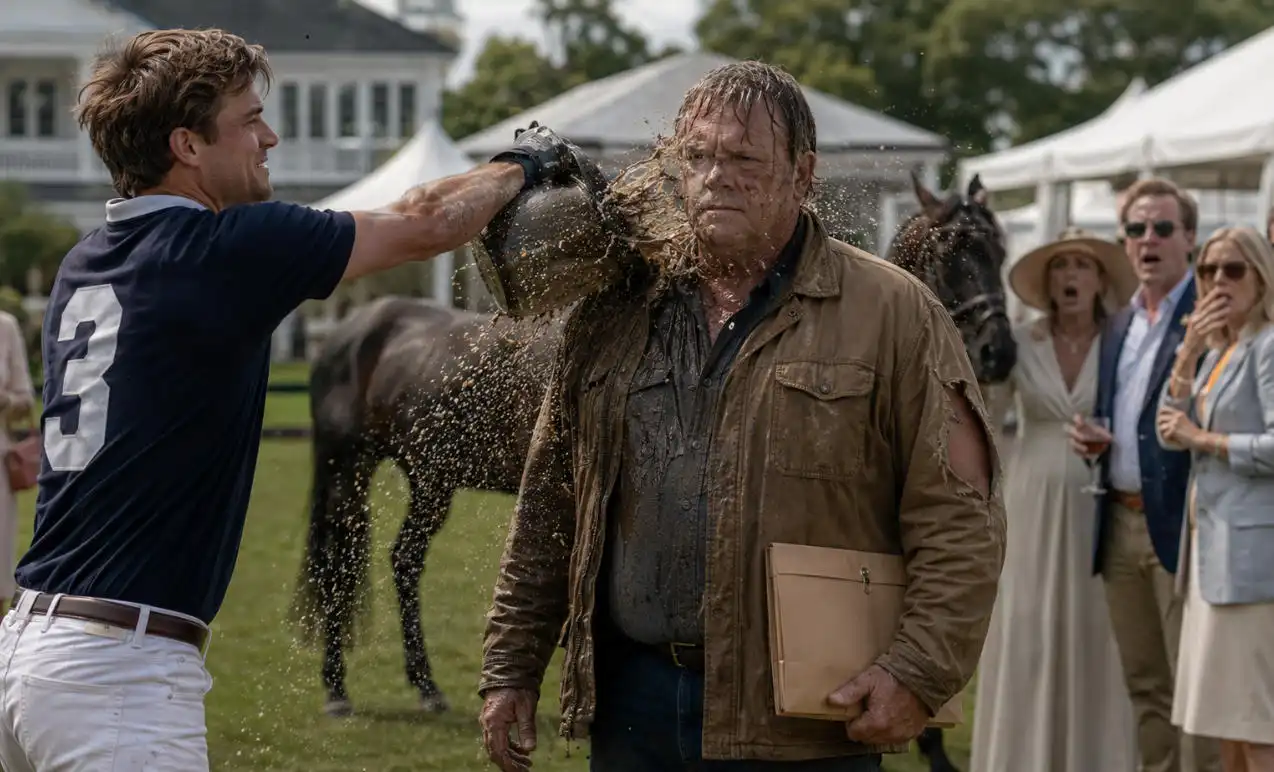
A Rich Polo Player Tore A Hardware Store Owner’s Jacket In Front Of Everyone… Minutes Later, He Was Begging On The Grass
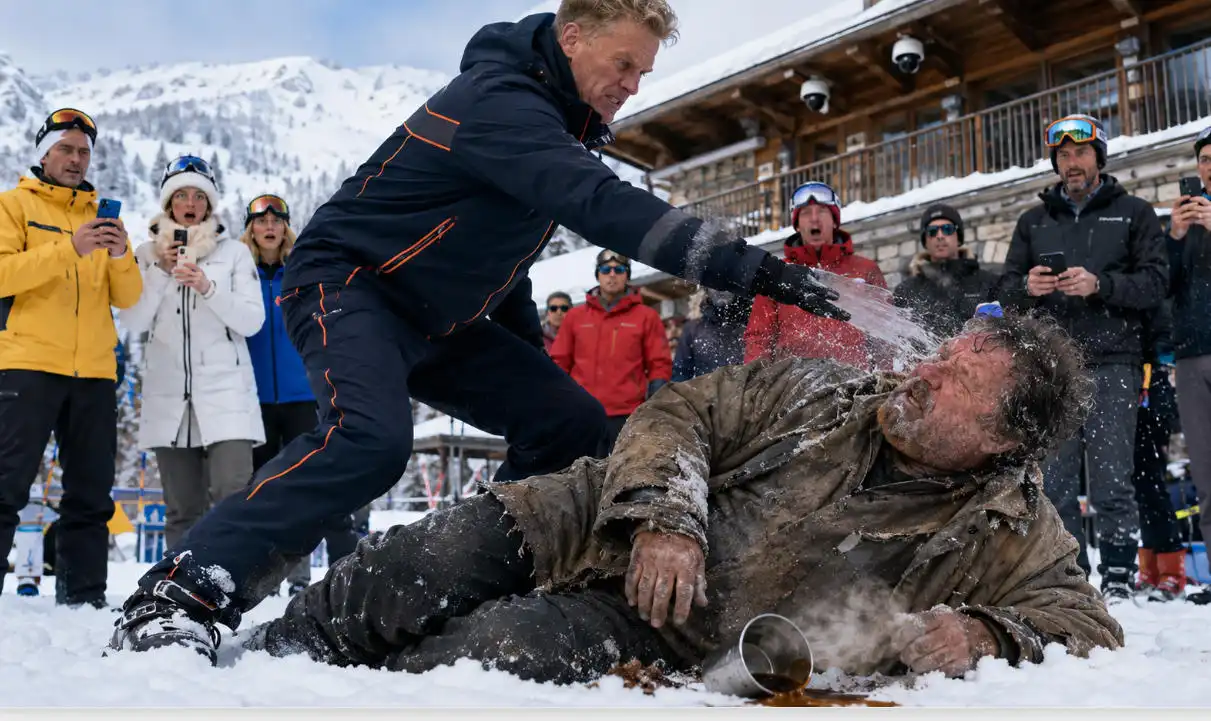
A Round-Bellied Carpenter Was Humiliated by an Elite Ski Coach in Front of Rich Guests… But Sven Had NO IDEA Who Bob Really Was 😳
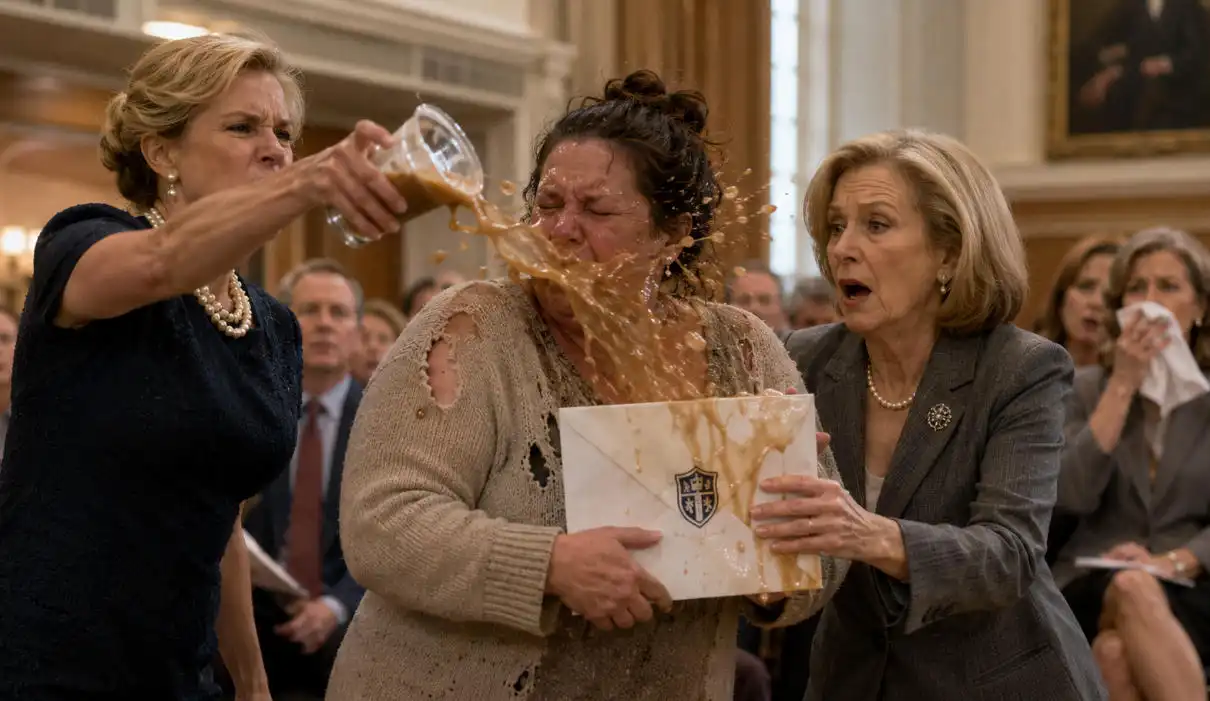
Parents Covered Their Noses When the “Cheap Mom” Walked In… Minutes Later, the PTA Queen Was on Her Knees Begging 😮