
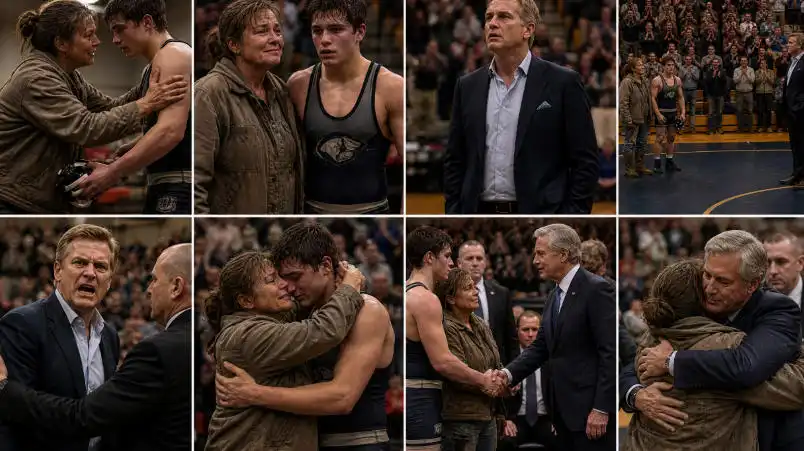
“Get that cleaning lady out of the family section.”
That was the first thing Richard Halden said when he saw my mother sitting two rows behind the mat.
Not “excuse me.”
Not “wrong seat.”
Not even “ma’am.”
Just cleaning lady.
Like her name, her age, her work, her life, and every sacrifice she had ever made could be wiped off the floor with the same mop she used after midnight.
The high school wrestling championship gym was packed shoulder to shoulder.
Parents in school colors.
Coaches with clipboards.
Little brothers eating popcorn.
College scouts leaning against the wall with folded arms.
And there was my mother.
Muddy boots.
Faded gray work jacket.
Hair pulled back tight.
Hands rough from cleaning classrooms before sunrise and office buildings after dark.
She had come straight from a shift because she refused to miss my final.
I was seventeen.
My name was Caleb Reed.
And to most people in that gym, I was the quiet kid whose mom drove the janitorial van.
Richard Halden was different.
He wanted everyone to know exactly who he was.
He wore a navy blazer with brass buttons, a gold watch, and a donor badge that said VIP in bold letters.
His son, Preston, was undefeated.
Tall.
Strong.
Coached privately since middle school.
The kind of kid adults called “a future champion” before he ever had to prove it.
Richard’s family had money.
Our family had a work schedule.
That was the difference he cared about.
He stood in the aisle, looked at my mother’s boots, and curled his lip.
“You’re tracking mud into a championship event.”
My mother looked down.
There was a small smear of dirt near her heel. She had probably crossed the grass outside because the parking lot was full.
“I’ll clean it up after the match,” she said.
Richard laughed.
Loud enough for the row behind him to hear.
“Of course you will. That is what you do, isn’t it?”
A few parents turned their faces away.
Not because they disagreed.
Because they were embarrassed for her.
That kind of silence cuts deeper than laughter.
My mother did not blink.
She simply folded her hands and kept her eyes on the mat.
Richard stepped closer.
“My son earned his place here. Families like ours support this program. We donate. We build winners.”
Then he nodded toward me, where I was stretching near the edge of the mat.
“Your boy is lucky the school lets him stand next to real athletes.”
I felt heat crawl up my neck.
I wanted to walk over.
I wanted to tell him to shut his mouth.
But my mother saw my shoulders rise.
She lifted one hand.
Not much.
Just two fingers.
Our signal.
Breathe.
Wait.
Win clean.
So I stayed where I was.
Richard noticed.
That made him smile wider.
“Oh, he listens. Good. Maybe you taught him manners while you were emptying trash cans.”
One of his friends, a round man in a red booster jacket, snorted.
Another whispered, “Maybe she can mop the mat when Preston pins him.”
Richard laughed like that was the funniest thing he had ever heard.
Then he said the line that made half the gym go quiet.
“People like you don’t belong in these seats. You don’t get to breathe the same air in this section.”
My mother finally looked at him.
Not angry.
Not afraid.
Just still.
“I paid for this ticket,” she said.
Richard leaned down.
“You paid for a ticket. I paid for a program.”
Then he tapped the donor badge on his chest.
“Understand the difference.”
That was the moment phones came out.
Not many.
Just enough.
People always know when cruelty crosses a line.
They may not stop it.
But they record it.
Richard loved the attention.
He straightened his blazer like he was onstage.
“You should move before someone mistakes you for staff and asks you to clean a spill.”
A mother nearby whispered, “That’s enough.”
Richard snapped his head toward her.
“You can mind your business.”
And just like that, she did.
My mother picked up her purse.
For one second, I thought she was leaving.
Instead, she moved one seat down, away from Richard’s shadow, and sat back down.
Calm.
Silent.
Steady.
Richard’s face darkened.
He wanted tears.
He wanted a scene.
He wanted her to prove every ugly thing he believed.
She gave him nothing.
That made him meaner.
Before the match, I had to go back through the side hallway for weigh-in confirmation.
As I passed the lobby doors, I saw two of Richard’s friends outside near my mother’s janitorial van.
The back doors were open.
One man held a black trash bag.
The other was laughing.
They dumped it in.
Concession garbage spilled across the rubber floor.
Soda cups.
Greasy nacho trays.
Hot dog wrappers.
Mud from the outside bins.
Someone had even thrown in a half-full blue slushie that burst against the side panel.
I stopped cold.
The round man saw me.
He smiled.
“Tell your mom we decorated her office.”
My fists closed.
Every muscle in me wanted to move.
Then my mother’s voice came from behind me.
“Caleb.”
I turned.
She was standing in the doorway.
She had seen everything.
Her face did not change.
The man in the red booster jacket shrugged.
“Oops. Thought it was a dumpster.”
His friend laughed so hard he nearly dropped the empty bag.
My mother walked to the van and looked inside.
Then she looked up at the small security camera mounted above the gym entrance.
Then at the two men.
Then at Richard, who had come outside just in time to enjoy the show.
Richard clapped slowly.
“Looks like your office is ready.”
My mother reached into her coat pocket and pulled out her phone.
Richard stepped toward her.
“What are you going to do? Call maintenance?”
She did not answer.
She took one picture of the van.
One picture of the men.
One picture of Richard standing behind them, smiling.
Then she put the phone away.
Richard leaned close enough that I moved forward without thinking.
My mother touched my wrist.
“Not here.”
Richard heard her.
“Oh, listen to Mama. She knows better than to start trouble around people who matter.”
I looked at him and said, “You don’t know anything about her.”
He laughed.
“I know enough.”
My mother turned to me.
“Warm up.”
“Mom—”
“Warm up.”
Her voice was soft.
But there was steel under it.
So I went back inside.
I had been wrestling since I was six.
Not in fancy clubs.
Not with private trainers.
Mostly in old gyms, church basements, and anywhere my mother could drive me between jobs.
She never missed practice if she could help it.
She never yelled from the stands.
She never blamed referees.
Her rule was simple.
Control what you can.
Endure what you must.
Finish what you start.
But that day felt different.
When the match began, the referee would not look me in the eye.
His name was Dale Mercer.
I knew him.
Everyone knew him.
He had called big matches all over the county.
He stood between Preston and me and checked our headgear.
Preston smirked.
“My dad says this ends in the first period.”
I said nothing.
The whistle blew.
Preston came in hard.
Too hard.
He shoved his forehead into my cheekbone and drove me toward the edge.
I circled out.
He grabbed at my singlet.
No call.
I snapped him down.
The crowd reacted.
For half a second, I had him.
Then the whistle screamed.
“Illegal grip! Red, one point!”
I stared at the referee.
“What?”
He pointed at me.
“Don’t argue.”
Coach Daniels jumped up from our corner.
“Illegal grip? He had wrist control!”
The referee ignored him.
Richard stood behind the rail and smiled.
“There we go, Dale. Keep it clean.”
That was when I knew.
Not suspected.
Knew.
The next call came thirty seconds later.
Stalling.
On me.
Even though I had taken the only shot.
Then another.
False start.
On me.
Preston shoved my head after the whistle.
No call.
I looked toward my mother.
She was sitting in the same seat.
Still.
Watching everything.
Richard leaned over the rail and shouted, “Some boys are just born in the wrong lane!”
The crowd murmured.
A few Preston fans laughed.
A few people booed.
Most did nothing.
That is how public humiliation works.
It does not need everyone to join.
It only needs enough people to stay quiet.
By the second period, I was down on points I had not earned.
My cheek was swelling.
My lip was split from a crossface the referee pretended not to see.
Coach Daniels was red in the face.
“Caleb, stay sharp! Don’t let them pull you out of position!”
Them.
Not him.
Them.
He knew too.
Preston got cocky.
He started whispering during ties.
“You should quit.”
“You hear them laughing?”
“My dad owns this place.”
The last one made something inside me go cold.
Not hot.
Cold.
Because I remembered my mother’s second rule.
Hot anger makes mistakes.
Cold anger waits.
There were forty-two seconds left in the second period when my mother stood.
Richard noticed immediately.
“Well, well. Finally leaving?”
She walked down the bleacher steps.
Slowly.
Not toward the exit.
Toward the scorer’s table.
The athletic director, Mr. Sweeney, saw her coming and looked nervous.
“Ma’am, you can’t be down here during—”
She held up her phone.
Not high.
Just enough for him to see the screen.
His face changed.
Richard barked, “Don’t you dare interrupt my son’s match.”
My mother ignored him.
She tapped the screen once.
Then she sent something.
I saw it happen from the mat.
One button.
One message.
Then she returned to her seat.
The referee watched her.
For the first time all match, he looked afraid.
The whistle blew again.
Third period.
I chose bottom.
Preston leaned down over me.
“You’re done.”
The whistle blew.
He chopped my arm hard and drove his knee into my thigh.
I built my base.
He reached too high.
Too eager.
Too sure.
My mother’s voice cut through the noise.
“Stay low.”
Two words.
The same two words she had said to me since I was little.
I dropped my hip.
Caught his wrist.
Rolled through.
For one clean second, his balance was mine.
The crowd rose.
But the referee slapped the mat? No.
He blew the whistle.
“Potentially dangerous!”
Coach Daniels threw his hands up.
“That was a reversal!”
The gym erupted.
Even people who had no idea how wrestling worked knew what they had seen.
Richard shouted, “Good call!”
My mother stood again.
This time she did not walk to the table.
She turned toward the back doors.
And that was when they opened.
First came two state troopers.
Then the school superintendent.
Then a woman in a dark suit I recognized from television.
Governor Elaine Whitmore.
The sound drained from the gym.
The referee’s whistle slipped from his mouth and bounced once against his chest.
Richard’s smile disappeared.
My mother stood at the edge of the bleachers.
Not surprised.
Not impressed.
Just ready.
The governor walked straight across the gym floor.
Past the boosters.
Past the athletic director.
Past Richard.
She stopped in front of my mother.
Then she held out her hand and said, “Sergeant Major Reed.”
Every head turned.
Richard blinked.
“What did she say?”
The governor’s voice carried clean across the gym.
“Sergeant Major Angela Reed trained half the disaster-response command staff in this state. She served this country with distinction for twenty-two years.”
My mother shook her hand.
The gym was silent.
The governor continued.
“She led special operations instruction, emergency extraction training, and civilian rescue coordination. After retirement, she declined a public security appointment because she wanted to raise her son in peace.”
Richard looked like someone had punched the air from his lungs.
The round man from the van stepped backward.
The referee stared at the floor.
My mother did not look proud.
She looked tired.
That hurt more.
Because she had never hidden who she was out of shame.
She had hidden it because she did not believe service needed applause.
The governor turned toward the scorer’s table.
“I am also here because Sergeant Major Reed sent my office, school officials, and state athletic oversight a live recording.”
The athletic director swallowed.
Richard raised both hands.
“Now hold on. This is being blown way out of proportion.”
The governor looked at him.
“Mr. Halden, please don’t speak yet.”
That one sentence landed harder than a slap.
A state trooper approached the referee.
“Mr. Mercer, we need you to step away from the mat.”
The referee’s face went pale.
“I’m officiating a state championship match.”
“Not anymore,” the trooper said.
The crowd exploded.
Parents stood.
Phones rose higher.
Preston backed away from me, confused.
“Dad?”
Richard forced a laugh.
“This is ridiculous. Dale is one of the best refs in the county.”
The superintendent stepped forward with a folder.
“Mr. Mercer is currently under investigation for accepting payment connected to today’s match assignments and scoring conduct.”
The gym went wild.
The referee snapped his head up.
“That’s not—”
The superintendent opened the folder.
“We have messages. A bank transfer. And video from the hallway.”
Richard’s wife, seated three rows back in a cream sweater, covered her mouth.
Richard’s face turned red.
“You can’t prove context.”
My mother finally spoke.
Her voice was calm.
“I can.”
She handed her phone to the governor.
On the screen was the recording from outside.
Richard’s friends dumping garbage into the van.
Richard clapping.
Richard calling it her office.
Richard saying people like her should know better than to start trouble around people who matter.
Then another clip.
The gym audio.
Richard saying, “There we go, Dale. Keep it clean.”
Then another.
A voice message.
Richard’s voice.
“Make sure Preston doesn’t lose momentum early. I don’t care how you call it. I’ll make it worth your time.”
The referee sat down hard in a folding chair.
The sound of the chair scraping the floor echoed through the gym.
Richard pointed at my mother.
“You recorded private conversations?”
My mother looked at him.
“You made them in public.”
The governor nodded once.
“There is no expectation of privacy while intimidating a parent at a school event, vandalizing her work vehicle, and interfering with a sanctioned youth athletic contest.”
Richard’s confidence cracked.
The legal hammer had fallen.
Not revenge.
Rules.
Evidence.
Witnesses.
Procedure.
The governor turned to the crowd.
“This match will continue with a replacement official. The prior scoring penalties are under review by the athletic board, and the conduct reported today will be referred for formal investigation.”
Then she looked at me.
“Caleb Reed, you are also not just some boy who got lucky.”
I froze.
My mother closed her eyes for a second.
The governor smiled faintly.
“The national training program has reviewed your season performance, your academic record, and your physical assessment from the regional trials. Your invitation was approved this morning.”
I heard Coach Daniels whisper, “My God.”
The governor said it loud enough for every scout to hear.
“You have been granted accelerated admission as a core development athlete for the national team pipeline.”
The gym erupted.
Not polite applause.
Not school applause.
Real noise.
The kind that shakes your ribs.
I looked at my mother.
For the first time all day, her face softened.
She did not cry.
But her eyes shined.
Richard stared at me like I had become someone else.
That was his mistake.
I had not become someone else.
He had simply been forced to see me.
The replacement referee was brought in from the adjacent mat.
A gray-haired official named Mrs. Keller.
She checked both wrestlers.
She looked at Preston.
Then at me.
“Clean match. Earn it.”
Preston’s hands were shaking.
I almost felt sorry for him.
Almost.
Because he was still his father’s son in that moment, standing there with all that borrowed arrogance and no idea what to do without it.
Richard grabbed the rail.
“Preston! Finish him!”
The crowd booed him.
He flinched.
That was new for him.
He was used to rooms bending.
He had never heard a room reject him.
The whistle blew.
Preston lunged.
Too desperate.
Too high.
I saw his right foot step heavy.
I saw his shoulder open.
I heard my mother’s voice, not from the stands this time, but from every year of training she had given me.
Stay low.
Stay patient.
Finish clean.
I dropped under his reach.
Hit the ankle.
Turned the corner.
He tried to sprawl, but his weight was already wrong.
I lifted.
Not high.
Just enough.
Then I ran through him.
The mat thundered.
Preston hit flat.
I covered tight, chest to chest, shoulder pressure clean, hips low.
He kicked once.
Twice.
Then stopped.
Mrs. Keller dropped beside us.
One.
Two.
Three.
Her hand slapped the mat.
Pin.
The gym detonated.
Coach Daniels ran toward me and caught me before I could stand straight.
My teammates screamed.
People who had looked away earlier were now on their feet.
The same bleachers that had gone silent during my mother’s humiliation now shook with applause.
But I did not look at them first.
I looked at her.
My mother stood alone at the bottom of the bleachers.
Muddy boots on the gym floor.
Work jacket zipped halfway.
Hands clasped in front of her.
A woman Richard had called trash.
A woman who had served her country, raised her son, cleaned other people’s messes, and still carried herself with more dignity than every rich bully in that room combined.
I walked off the mat and went straight to her.
The official tried to raise my hand.
I gently pulled away.
“Just a second.”
Then I hugged my mother in front of everyone.
She held me tight.
For the first time that day, I heard her voice shake.
“You kept your head.”
I said, “You taught me how.”
Behind us, Richard was being escorted toward the hallway with his lawyer on speakerphone.
His two friends were stopped near the exit and questioned about the van.
The referee was removed from the tournament floor.
By Monday morning, everything was official.
Richard Halden was facing charges connected to bribery, harassment, vandalism, and interference with a school athletic event.
His friends were charged for the damage to my mother’s work vehicle.
The referee, Dale Mercer, was banned for life from officiating school athletics in the state.
The athletic director resigned before the board could vote.
And Preston?
He did not lose his future.
My mother made sure of that.
When reporters asked if she wanted Preston punished too, she said, “A boy should answer for what he does, not for every sin his father teaches him.”
That line went everywhere.
Some people called her too forgiving.
Others called her old-school.
I called her Mom.
A week later, the school held an assembly.
Not for revenge.
For repair.
They replaced my mother’s work van.
The wrestling team cleaned it themselves first.
Every seat.
Every mat.
Every inch.
Coach Daniels said, “This is how we learn what respect actually costs.”
Then the governor presented my mother with a civilian service honor she had refused twice before.
This time, she accepted it.
Not because she wanted a medal.
Because every kid in that gym needed to see that quiet people are not weak people.
Working people are not lesser people.
And dignity does not come with a donor badge.
When she walked to the center of the gym, the crowd stood.
The applause started slow.
Then it grew.
Teachers.
Parents.
Students.
Custodians.
Coaches.
Even kids who had once joked about my mom’s van.
All standing.
My mother looked embarrassed.
Then she smiled.
Not big.
Just enough.
The kind of smile that said the wound had not vanished, but justice had touched it.
I left for national training that summer.
Before I packed, I found my mother outside the house, washing mud off her boots.
I said, “You know, you could’ve told people who you were.”
She kept scrubbing.
“I never wanted you to think titles make a person worth respecting.”
I sat beside her.
“Then what does?”
She looked at me.
“What they do when nobody powerful is watching.”
I thought about Richard.
How he acted when he believed my mother had no power.
I thought about the referee.
How quickly a whistle could be sold.
I thought about the people who stayed silent.
And the few who recorded.
Then I thought about my mother pressing one button.
Not in rage.
Not in panic.
In discipline.
She had not destroyed Richard.
He had done that himself.
She had simply turned on the lights.
Months later, the championship photo still hangs in our hallway.
Not the one where my hand is raised.
Not the one where Preston is pinned.
The one my coach took after the match.
My mother and me standing on the mat.
Her boots muddy.
My lip split.
Both of us smiling.
Behind us, the crowd is blurred, but you can still see people standing.
Every time I look at that picture, I remember what the governor said.
Sergeant Major Reed.
But I also remember what Richard said.
Cleaning lady.
One title was earned in uniform.
The other was earned through hard work.
Neither one made her small.
Richard thought money made him untouchable.
The referee thought a whistle made him powerful.
The crowd thought silence made them safe.
My mother proved all three wrong.
And my final pin did not feel like revenge.
It felt like balance.
Like every insult, every laugh, every dirty cup thrown into that van had been placed on one side of the scale.
And then truth stepped onto the other.
⚖️ Choose a side: Team Richard learned too late, or Team Mom showed what real strength looks like.
Share this with someone who believes you should never judge a working person by their uniform.
Disclaimer: Mention of any brand or trademark is for identification only and does not imply partnership or endorsement
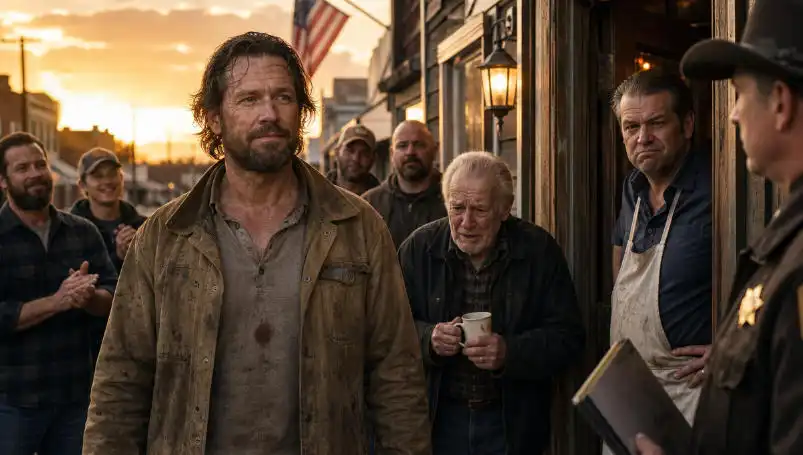
The Tavern Owner Set A Trap To Make Paul Drink Again… But He Had NO IDEA The Entire Town Was Watching 👀
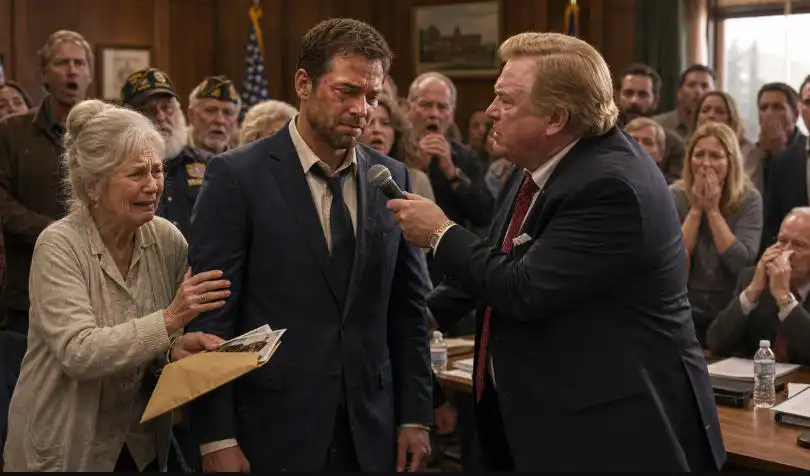
They Laughed When Mark Announced He Was Running for Office… Then One Sealed Envelope Made the Whole Room Go Silent 😳
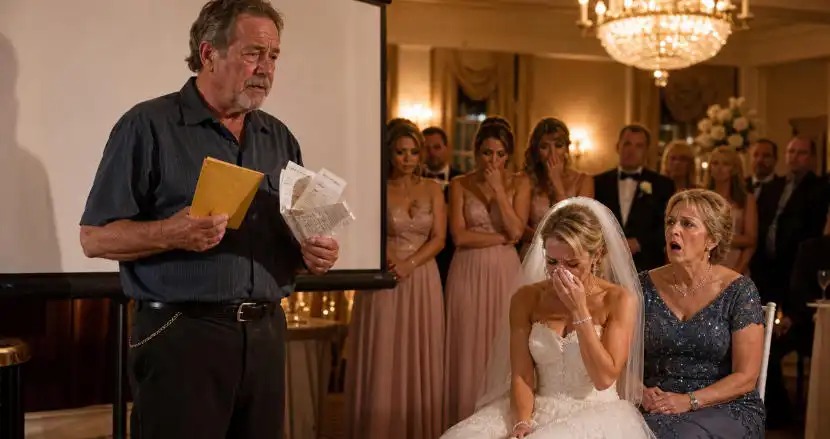
My Stepdaughter Thought Her Real Father Paid for Her Golf Club Wedding… Then I Showed the Guests the Letter He Sent Me