
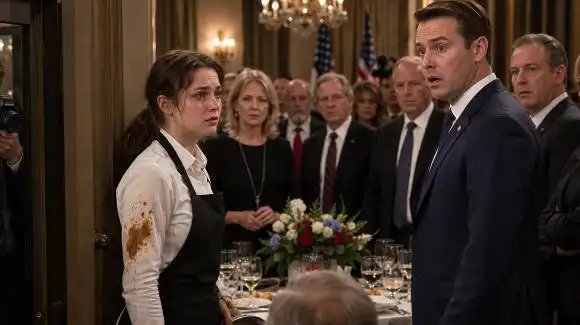
“That’s where bad service belongs.”
On the floor.
That was what Preston Vale said to me while I was on my knees in the middle of the Grand Harbor Hotel ballroom, picking up broken white plates with sauce dripping down my wrist.
Three hundred people heard him.
Nobody stopped him.
Not the donors in tuxedos.
Not the women in pearls.
Not the campaign staff wearing little blue lapel pins that said VALE FOR VALUES.
I was just the waitress.
He was the man on the posters.
Preston Vale had spent six months telling every church group, veterans’ breakfast, and local TV station that he was running for office to “bring dignity back.”
That night, dignity apparently meant snapping his fingers at me like I was a dog.
“Sweetheart,” he said, loud enough for the front tables to hear, “I asked for medium rare. This is cold.”
I looked at the plate.
It had been sitting in front of him for twenty minutes while he worked the room, shook hands, and laughed into donors’ faces like each laugh came with a check.
“I’m sorry, sir,” I said. “I can have the kitchen prepare another one.”
He smiled.
Not kindly.
Not politely.
It was the kind of smile people use when they know everyone around them is too afraid to challenge them.
“You can have the kitchen prepare another one?” he repeated.
His campaign manager, Nolan Price, chuckled beside him.
Preston leaned back in his chair and looked me up and down.
“Do you hear that, Nolan? She thinks this is about the steak.”
A few donors laughed because powerful people teach a room when to laugh.
I kept my hands steady on the tray.
“My apologies, sir.”
He snapped his fingers inches from my face.
“Look at me when you apologize.”
That was when the room got quiet.
I felt every eye turn toward me.
My supervisor, Mrs. Bell, stood near the side station with her mouth tight and her hands locked together. She couldn’t afford to lose this contract. None of us could.
The Grand Harbor only booked events like this a few times a year. One campaign dinner paid half a month of payroll.
So I swallowed my pride.
I looked at him.
“I’m sorry, Mr. Vale.”
He tilted his head.
“Better.”
Then he grabbed the edge of my tray.
It happened so fast I barely had time to shift my weight.
The tray dipped.
Three plates slid.
One hit the marble floor and shattered.
Another splashed brown sauce across my sleeve.
The third clipped the leg of a donor’s chair, and the woman sitting there gasped like I had personally attacked her pearls.
Preston put both hands up.
“Well, there it is,” he said. “That’s where bad service belongs.”
On the floor.
My knees hit the tile before I even thought about it.
I reached for the broken plate.
A shard sliced the side of my finger.
A tiny red line opened.
I heard someone whisper, “Poor thing.”
Then someone else said, “She should’ve been more careful.”
I kept my head down.
Not because I was weak.
Because I was counting.
Three security cameras covered the ballroom.
One hotel audio recorder sat behind the donor table because the campaign had requested a clean recording of the speeches.
And near the service door stood a man in a cheap gray jacket with a camera hanging from his neck.
I had noticed him earlier because Nolan Price had noticed him first.
Before dinner service, I’d been refilling water near the lobby when Nolan cornered the man beside a marble column.
“No shots of the candidate drinking,” Nolan had warned.
The man lifted both hands. “I’m credentialed press.”
“You’re tabloid trash,” Nolan said. “You publish one bad angle, I’ll make sure nobody in this state hires you again.”
The photographer didn’t argue.
He just smiled.
That kind of smile matters.
My father used to say, “A quiet man with a camera is either broke or dangerous. Sometimes both.”
My father knew reporters. He had been one for thirty-two years.
Before he died, he taught me two things.
Never argue with someone who wants a show.
And never assume a cruel man is only cruel once.
So when Preston humiliated me, I did not cry.
I did not shout.
I stood up slowly.
I wrapped a napkin around my bleeding finger.
And I looked straight at him.
“Sir,” I said, “would you like me to repeat what you just said?”
Preston laughed.
“Go ahead,” he said. “Nobody important is listening.”
Nolan’s smile froze for half a second.
He had heard the same thing I heard.
The little red light on the hotel’s recording unit was still on.
Preston had forgotten it was there.
The campaign wanted footage of applause, donors, speeches, and inspirational quotes.
They had also recorded him calling a waitress trash without using the word.
I turned toward Mrs. Bell.
“May I take my break?”
Her eyes widened.
Technically, it was the worst possible time.
Practically, she knew my face.
I had worked doubles since my mother’s surgery. I had covered shifts for girls with sick kids. I had cleaned vomit off a banquet carpet at midnight and come back at six for brunch.
Mrs. Bell looked at my bleeding finger.
Then she nodded once.
“Five minutes, Claire.”
My name is Claire Whitaker.
That night, Preston Vale learned it.
I walked toward the service hallway with sauce drying on my sleeve and my heart beating so hard I could hear it behind my ears.
The photographer moved at the same time.
He slipped through the side door before security could block him.
In the hallway, he turned.
“You okay?”
I looked at his press badge.
Marcus Reed.
I knew that name.
My father used to read his articles out loud at breakfast and shake his head.
“Reed’s got teeth,” Dad would say. “Good. The world needs a few.”
“You recorded that?” I asked.
Marcus held up the camera.
“Video. Audio from my lapel mic. But I’m guessing you have better.”
I glanced at the banquet office behind us.
Inside sat the event audio console.
I knew because I had helped the AV tech label the channels before dinner.
Podium mic.
Room mic.
Backup recorder.
Preston’s table was close enough for every word to be clear.
Nolan Price stormed into the hallway before I could answer.
“You,” he barked at Marcus. “Hand over the footage.”
Marcus smiled.
“No.”
Nolan turned to me.
“And you. Back to work before you make this worse.”
I lifted the napkin from my finger.
Blood had spotted through.
“I need a bandage.”
“You need a better attitude,” Nolan said. “Do you know what one bad clip can do to a campaign?”
Marcus stepped closer.
“Sounds like the candidate should’ve thought of that before performing for the room.”
Nolan pointed at him.
“Publish anything from tonight and we’ll sue.”
“For what?” Marcus asked.
Nolan’s jaw tightened.
“For defamation.”
Marcus looked past him toward the ballroom.
“You can’t defame someone with their own words.”
That was the first hammer.
The legal one.
But it was not the last.
Nolan lowered his voice.
“Listen carefully. That girl signed an event confidentiality agreement.”
I almost laughed.
Not because it was funny.
Because it was desperate.
“I signed a catering conduct form,” I said. “It says I won’t share guest lists, payment details, or private security procedures. It doesn’t say I have to stay quiet if a public candidate assaults my tray in a ballroom full of witnesses.”
Nolan blinked.
He had expected a scared waitress.
He had found a waitress raised by a courthouse reporter.
Then Marcus said, “Also, she doesn’t need to leak anything. I witnessed it.”
Nolan’s phone buzzed.
He looked down.
The color drained from his face.
Another buzz.
Then another.
From inside the ballroom, applause started.
Preston had gone to the podium.
His voice boomed through the speakers.
“Ladies and gentlemen, tonight is about character.”
Marcus looked at me.
I looked at him.
And despite everything, we both almost smiled.
Nolan whispered into his phone, “Take it down. I don’t care. Take it down now.”
Marcus tilted his head.
“What went up?”
Nolan looked like a man watching his house catch fire from inside the kitchen.
His assistant ran into the hallway holding a tablet.
“Nolan,” she whispered, “it’s already at eighty thousand views.”
He grabbed it.
On the screen was Preston Vale in perfect focus.
Snapping his fingers.
Yanking my tray.
Smirking while I knelt.
“That’s where bad service belongs.”
The caption read:
CANDIDATE OF “DIGNITY” HUMILIATES WAITRESS AT FUNDRAISER.
It had not come from Marcus.
It came from a college kid bussing tables who had filmed from behind the dessert station.
That was the thing arrogant people never understand.
When you mistreat the person serving you, you are usually surrounded by other people serving you.
And some of them have phones.
Nolan turned on me like I had personally uploaded the video with my bloody finger.
“You planned this.”
I stared at him.
“He grabbed my tray.”
“You baited him.”
“He snapped his fingers in my face.”
“You embarrassed him.”
I stepped closer, my voice low.
“No, sir. He embarrassed himself. I just didn’t hide it for him.”
Inside the ballroom, Preston was still speaking.
“We are tired,” he declared, “of politicians who pretend to care about working families.”
The room applauded.
Then phones started lighting up.
One by one.
At first, it was subtle.
A donor looking down.
A wife nudging her husband.
A campaign volunteer whispering.
Then the whispers spread like a match in dry grass.
Someone near the back gasped.
Someone else said, “Is that him?”
Preston noticed.
He paused mid-sentence.
“My friends,” he said, forcing a smile, “please stay with me.”
Nobody was with him anymore.
A woman at table twelve stood and picked up her purse.
Her husband followed.
Then another couple.
Then the president of the local business association, who had just pledged a large donation, walked straight toward Nolan.
“I want our check returned,” he said.
Nolan tried to guide him away from the cameras.
Too late.
Marcus had stepped back into the ballroom.
So had two other reporters.
The paparazzi Preston threatened had become the least of his problems.
Preston gripped the podium.
“This is a smear,” he said. “A dirty trick.”
A donor called out, “Did you say it or not?”
Preston’s smile cracked.
“This is taken out of context.”
That line is where public men go when truth has already beaten them to the door.
Mrs. Bell appeared beside me.
“Claire,” she whispered, “the hotel manager wants you in the office.”
My stomach dropped.
There it was.
The punishment.
Not for him.
For me.
I followed her down the hall, past the kitchen, past the laundry carts, into Mr. Hanley’s office.
He was behind his desk, red-faced, with the hotel’s general counsel on speakerphone.
Nolan Price was already there.
Of course he was.
“She violated guest privacy,” Nolan said the second I entered. “Terminate her immediately, or the campaign will pursue damages.”
Mr. Hanley rubbed his forehead.
“Claire, did you release any recording from hotel equipment?”
“No.”
“Did you post any guest list?”
“No.”
“Did you speak to the press during service?”
“I asked for a bandage.”
The lawyer on the phone said, “Was the event open to credentialed press?”
Mr. Hanley looked at Nolan.
Nolan hesitated.
“Yes, but—”
“Was the candidate speaking as a candidate at a political fundraiser?”
“Yes, but—”
“Was the conduct witnessed by attendees and staff in a public ballroom?”
Nolan’s face hardened.
“This is not the point.”
The lawyer said, “It is exactly the point.”
Silence.
Beautiful silence.
Then Mrs. Bell stepped forward.
“I saw Mr. Vale grab her tray.”
Mr. Hanley looked up.
A dishwasher named Luis appeared in the doorway.
“I saw it too.”
Then Amanda from desserts.
Then Ray from valet.
Then two bartenders.
One by one, the invisible people became witnesses.
Nolan looked around like the walls had turned against him.
“You all want to throw away your jobs for a waitress?”
Mrs. Bell lifted her chin.
“No. We want to keep our dignity.”
That was the second hammer.
The human one.
But the final hammer landed the next morning.
At 7:10 a.m., Marcus Reed published his full story.
Not gossip.
Not rumor.
Receipts.
The original clip.
Witness statements.
A transcript from his own lapel mic.
Public records showing Preston’s campaign had spent months branding him as “the working family candidate” while paying event staff through vendors at the lowest allowable rate.
Then came the audio from the ballroom recorder.
Clear as church bells.
“People like you should be grateful to breathe the same air as the people funding this room.”
That sentence ended him.
By noon, the video had crossed four million views.
By two, national outlets had it.
By three, Preston Vale’s biggest donor released a statement calling his behavior “inconsistent with the values of public service.”
By five, his campaign announced a “temporary pause.”
Everyone knew what that meant.
At six thirty, Preston held a press conference outside his headquarters.
His wife stood beside him with sunglasses on.
Nolan stood behind him, pale and stiff.
Preston approached the microphones like a man walking to his own trial.
“I regret that my words were misunderstood,” he began.
A reporter shouted, “What part was misunderstood?”
Another asked, “Why did your team threaten media outlets?”
A third asked, “Did your campaign attempt to pressure the hotel into firing Claire Whitaker?”
He looked up when he heard my name.
For the first time, I was not “sweetheart.”
Not “girl.”
Not “bad service.”
I had a name.
He tried to continue.
But then Marcus asked, “Mr. Vale, do you still believe nobody important was listening?”
Preston froze.
That question hit harder than any insult could.
Because everybody was listening now.
The next morning, he withdrew from the race.
Nolan Price resigned from the campaign before there was no campaign left to resign from.
The hotel did not fire me.
In fact, Mr. Hanley called an all-staff meeting and apologized in front of everyone.
He said the hotel had failed to protect its employees from abusive guests.
Then he announced a new policy.
Any client who threatened, touched, shoved, grabbed equipment from, or verbally degraded staff would be removed from the property, no matter how powerful they were.
Mrs. Bell cried.
Luis clapped first.
Then all of us did.
A week later, I was invited onto a morning show.
I almost said no.
I am not loud by nature.
I do not enjoy cameras.
My father was the one who chased truth with a notebook in his pocket. I just serve coffee, carry plates, and help my mother with prescriptions.
But Mom said, “Your dad would want you to go.”
So I went.
The host asked me, “What do you want people to learn from what happened?”
I thought about Preston’s face.
I thought about all the people who looked away.
I thought about my knees on that ballroom floor.
Then I said, “Pay attention to how people treat someone who can’t help their career.”
The studio got quiet.
Not uncomfortable quiet.
The kind of quiet where something lands.
After that interview, letters came to the hotel.
From nurses.
Cashiers.
Janitors.
Bus drivers.
Waitresses who had been called stupid, slow, lazy, invisible.
One woman from Ohio wrote, “I showed your story to my granddaughter. She starts her first restaurant job next week. I told her kindness is not weakness.”
I kept that letter.
I keep it still.
Marcus visited the hotel two months later.
He ordered coffee at the bar and left a tip too large for one cup.
“You changed the race,” he said.
I shook my head.
“No. He did.”
Marcus smiled.
“Fair.”
Then he handed me an envelope.
Inside was a photograph from that night.
Not the one where I was on the floor.
Not the one where Preston was yelling.
It was a photo from after.
I was standing in the service hallway, sauce on my sleeve, bandage on my finger, chin lifted.
Behind me, the ballroom doors were open.
The donors were staring.
The campaign was collapsing.
And I was still standing.
I framed it.
Not because it made me famous.
Because it reminded me of something my father told me when I was sixteen and terrified to speak at his retirement dinner.
“Claire,” he said, “truth doesn’t always need a loud voice. Sometimes it just needs someone who refuses to look down.”
Preston Vale thought nobody important was listening.
He was wrong.
The waitress was listening.
The busboy was listening.
The dishwasher was listening.
The photographer was listening.
The voters were listening.
And when the truth finally hit the room, it did not need revenge.
It had rules.
It had witnesses.
It had receipts.
That was enough. ⚖️
So choose a side and say it plainly: are you standing with the waitress who stayed calm and exposed the truth, or with the candidate who thought power gave him permission to humiliate her?
Share this if you believe character is shown by how people treat the person holding the tray.
Disclaimer: Mention of any brand or trademark is for identification only and does not imply partnership or endorsement
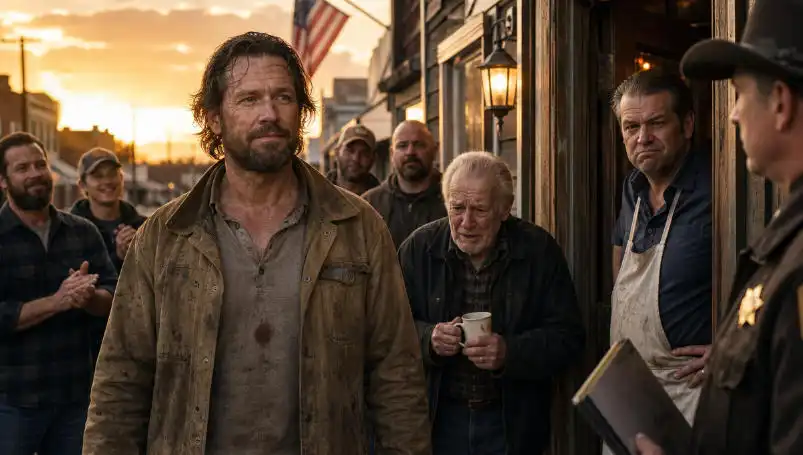
The Tavern Owner Set A Trap To Make Paul Drink Again… But He Had NO IDEA The Entire Town Was Watching 👀
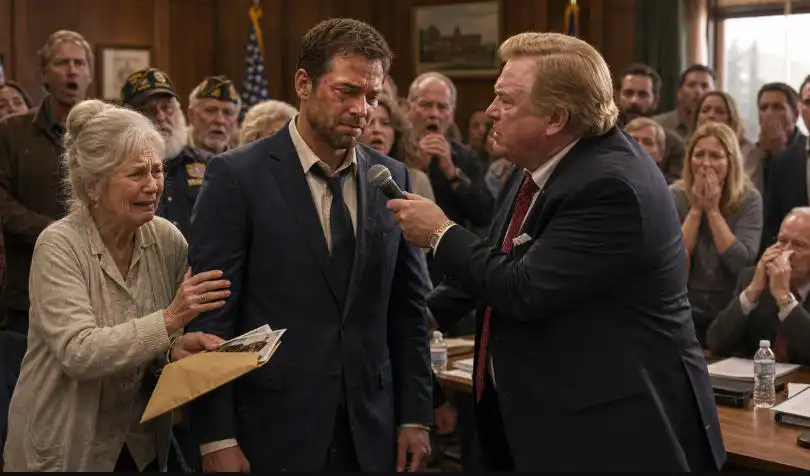
They Laughed When Mark Announced He Was Running for Office… Then One Sealed Envelope Made the Whole Room Go Silent 😳
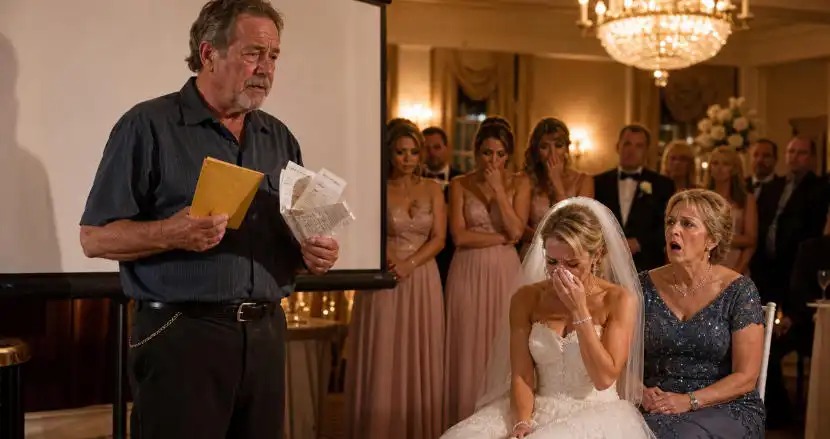
My Stepdaughter Thought Her Real Father Paid for Her Golf Club Wedding… Then I Showed the Guests the Letter He Sent Me