
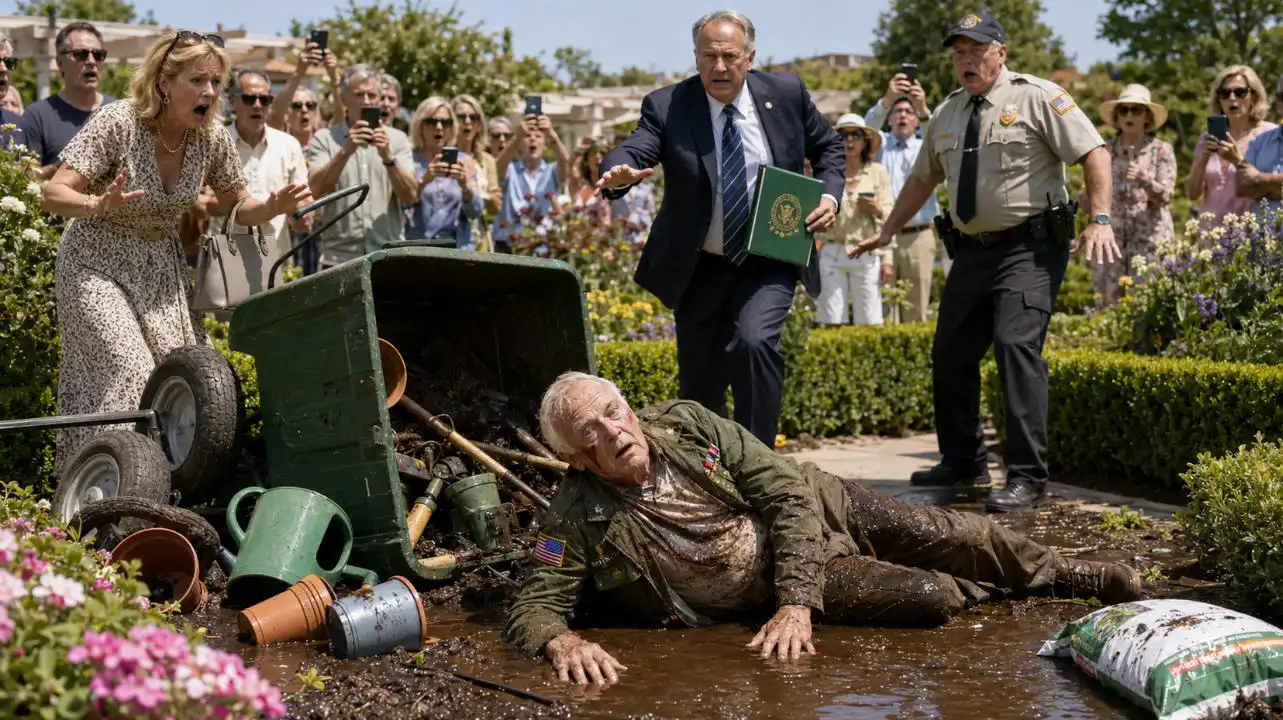
—Karen laughed and tried to snatch the folder from the mayor’s hand.
“Don’t be dramatic,” she said. “It’s a garden.”
Arthur was still on the ground.
Fertilizer water dripped from the brim of his old Army cap.
His hands were muddy.
His right leg was shaking under the overturned cart rail.
And every person in that beautiful, sunlit garden had suddenly gone quiet.
The mayor did not move the folder away.
He only looked at Karen.
Then he looked at Arthur.
“Sir,” the mayor said, and his voice dropped low, “don’t try to stand yet.”
That one word hit Karen harder than a shout.
Sir.
Not “old man.”
Not “volunteer.”
Not “groundskeeper.”
Sir.
Karen’s mouth tightened.
Behind her, roses climbed white trellises.
Bees moved lazily over lavender.
The fountain in the center of the garden kept running like nothing ugly had just happened there.
But everyone had seen it.
The gardeners.
The neighbors.
The security guard.
Two women walking expensive little dogs.
A retired couple sitting on the bench.
Even the delivery driver at the gate.
They had all seen Karen push the cart.
They had all seen Arthur fall.
They had all seen her dump the bucket over his head.
And worse than that, they had heard what she said.
“Now you smell like what you are.”
Arthur’s lips were pale.
“I’m all right,” he muttered.
“No, you’re not,” said Mrs. Bell, one of the gardeners. She rushed forward with a towel. “Arthur, don’t move.”
Karen scoffed.
“Oh, please. He’s milking it.”
That was when the mayor finally turned fully toward her.
“Mrs. Whitmore,” he said, “step back.”
Karen blinked.
No one in that neighborhood told Karen Whitmore to step back.
Her husband, Grant Whitmore, owned half the new development going up beside the old park.
He had billboards all over town.
He chaired donor dinners.
He smiled in photos with council members.
And Karen carried his last name like a weapon.
She crossed her arms.
“Mayor Ellis, you might want to be very careful how you speak to me.”
A few people gasped softly.
The mayor’s jaw tightened.
The police cruiser rolled to a stop beside the garden gate.
Two officers stepped out.
Karen turned her head just enough to see them.
For the first time, her confidence flickered.
Then she recovered.
“Good,” she said. “Officers, this man blocked the path with unauthorized equipment. He created a safety hazard. I tried to move it, and he fell because he’s too old to be doing this work.”
Arthur closed his eyes.
Not because he was weak.
Because he had heard lies told with confidence before.
In boardrooms.
In hearings.
In uniform.
In hospital rooms.
Lies always sounded cleanest when they came from people who had never paid for the damage they caused.
One officer knelt beside Arthur.
“Sir, can you tell me where it hurts?”
“My knee,” Arthur said. “And my shin.”
“Did she push the cart?”
Arthur didn’t answer right away.
He looked at Karen.
Her face said what her mouth did not.
Don’t you dare.
Then Arthur looked past her.
At the gardeners.
At the neighbors.
At the phones still recording.
And he said quietly,
“Yes.”
Karen laughed.
“Of course he’d say that. He wants a payday.”
Mrs. Bell snapped, “You shoved it!”
Another gardener, Miguel, stepped forward.
“I saw it too.”
The security guard swallowed.
“I saw her push it.”
Karen whipped around.
“You work for the neighborhood association.”
The guard looked ashamed.
“Yes, ma’am.”
“Then remember who signs the contracts.”
The mayor’s eyes narrowed.
“Did you just threaten a witness in front of two police officers?”
Karen’s cheeks flushed.
“I didn’t threaten anyone. I’m simply saying people should be honest.”
Arthur tried to sit up.
Pain shot through his leg, and he clenched his teeth.
The mayor crouched beside him.
“Arthur, the ambulance is on its way.”
Arthur shook his head slightly.
“I just need the folder read.”
Karen rolled her eyes.
“Oh, for heaven’s sake. What is in the precious folder?”
The mayor stood.
He held the sealed green folder against his chest.
“This,” he said, “is why I was coming here today.”
Karen looked at the officers.
“Can someone please explain why we’re entertaining this? This is private community land.”
Arthur opened his eyes.
“No,” he said.
Karen stared at him.
“What?”
Arthur’s voice was rough, but steady.
“No. It isn’t.”
The mayor did not open the folder yet.
Not right away.
He let that sentence sit in the air.
Because sometimes the truth needs one quiet second before it lands.
Karen looked from Arthur to the mayor, then to the officers.
“This garden belongs to Maple Crest Estates.”
“It belongs to the city trust,” the mayor said.
“That’s impossible,” Karen snapped.
“The land was protected six years ago.”
Karen’s smile vanished.
“My husband’s company manages this area.”
“Maintenance access,” the mayor said. “Not ownership.”
One of the neighbors whispered, “What?”
The mayor looked at the officers.
“Please make sure Mrs. Whitmore does not leave.”
Karen’s whole body stiffened.
“Excuse me?”
The younger officer said, “Ma’am, please stay where you are.”
Karen looked offended, as if the words themselves were dirty.
“I’m not some criminal.”
No one answered.
That silence was worse than an accusation.
The ambulance arrived three minutes later.
By then, the video had already spread through the neighborhood group chat.
Arthur was lifted carefully onto a stretcher.
He kept one hand on the side rail.
Not because he was afraid.
Because that old green cart had been with him since the garden opened.
He had built its wooden handle himself.
He had painted the wheels twice.
He had carried roses, soil, tomatoes, flags, and wreaths in it.
To Karen, it was junk.
To Arthur, it was memory.
As the EMT wrapped his shin, Arthur looked at the mayor.
“Don’t let them close it.”
The mayor’s face softened.
“We won’t.”
Karen heard that.
“Close what?”
Nobody answered her.
That made her more nervous.
So she did what people like Karen often do when they feel control slipping.
She got louder.
“This is ridiculous. My husband will call the council president. He’ll call the city attorney. He’ll call every donor who helped put you in office.”
The mayor looked at her.
“Please do.”
Karen froze.
Because he didn’t sound scared.
He sounded ready.
The officers took statements from the gardeners.
Miguel showed his video.
Mrs. Bell showed hers.
A teenager who had been filming butterflies had captured the whole thing from the bench.
The push.
Arthur’s fall.
Karen’s voice.
The bucket.
The insult.
The security guard admitted he had been told by the homeowners’ board not to “interfere with residents of influence.”
Karen kept saying the same thing.
“He was blocking the path.”
But each time she said it, someone showed another angle.
The cart had been two feet off the walkway.
There was plenty of room.
She had gone out of her way to touch it.
By the time the officers finished, Karen’s white linen pants were splattered with fertilizer mud.
Her sunglasses sat crooked on her head.
Her phone kept buzzing.
Grant.
Grant.
Grant.
She ignored it until the mayor finally opened the green folder.
Inside was a city resolution.
A land-use protection order.
A veterans association stewardship agreement.
And a photograph from the dedication ceremony six years earlier.
Arthur stood in the photo, younger but still gray-haired, wearing a navy blazer and his Army service pin.
Beside him stood the former mayor, three city council members, and a group of disabled veterans.
Behind them was a wooden sign.
Liberty Garden — Dedicated to Veterans and Gold Star Families
Karen’s lips parted.
The mayor held up the photograph.
“This garden is not a private luxury amenity,” he said. “It is a protected public memorial garden, maintained by the Veterans Civic Association under city authorization.”
Karen looked at Arthur on the stretcher.
For the first time, she didn’t look angry.
She looked trapped.
The mayor continued.
“Arthur Hayes is not ‘just some volunteer.’ He is the registered stewardship chair.”
Miguel whispered, “Chair?”
Mrs. Bell covered her mouth.
Arthur looked away, embarrassed by the attention.
The mayor’s voice grew harder.
“And that cart you overturned is listed as city-supported garden equipment. The tools you damaged were purchased through a veterans preservation grant.”
Karen swallowed.
“That’s not— I didn’t know.”
Arthur finally looked at her.
“You didn’t ask.”
That quiet sentence did more damage than any speech could have.
Karen’s face reddened.
“I was having a bad morning.”
Mrs. Bell said, “So you dumped fertilizer on an old man?”
Karen snapped, “Stay out of it.”
The officer stepped closer.
“Ma’am.”
She stopped.
The mayor handed the folder to the city attorney, who had arrived with the inspection team.
“Document everything,” he said. “Damaged equipment. Witness videos. Injury report. Interference with protected civic property.”
Karen’s voice shook.
“Mayor Ellis, this is getting out of hand.”
“No,” he said. “It got out of hand when you put your hands on a seventy-four-year-old veteran.”
The older officer turned Karen around.
Not violently.
Not theatrically.
Just firmly.
“Karen Whitmore, you’re being detained pending investigation for assault and destruction of public property.”
The garden erupted.
Not with cheers.
With shock.
Neighbors whispered.
Phones lifted higher.
One woman said, “Oh my God.”
Karen looked around as if the world had betrayed her.
“You can’t do this to me.”
The officer said, “Hands behind your back, ma’am.”
Karen pulled away.
“My husband owns half this block!”
The mayor stepped closer.
“And he owns none of this garden.”
That was when Karen lost her last piece of control.
She lunged toward Arthur’s cart.
“I barely touched it!”
Her shoe slipped in the spilled fertilizer mud.
She went down on one knee.
The officers caught her arms and held her there long enough to secure the cuffs.
Not cruelly.
Not for show.
But in the same mud she had made.
Her pearl sunglasses fell into the brown puddle.
Nobody picked them up.
Arthur watched from the stretcher.
There was no smile on his face.
That surprised people later.
They expected revenge to look like joy.
But Arthur had been old long enough to know that justice and happiness are not the same thing.
Justice can feel heavy.
Especially when it arrives after humiliation.
The ambulance doors opened.
Before they loaded him in, the mayor leaned close.
“Arthur, I’m sorry this happened on my watch.”
Arthur said, “Mayor, make sure the garden stays open.”
“It will.”
“For the widows too,” Arthur added.
The mayor nodded.
“For the widows too.”
Karen heard that from the police car.
And maybe, for the first time that morning, she understood that she had not attacked a random old gardener.
She had attacked a place people used to remember the dead.
At the hospital, Arthur’s shin needed stitches.
His knee was badly bruised, but not broken.
The doctor told him he was lucky.
Arthur almost laughed.
Lucky was a strange word for a man who had spent the morning under a cart while a millionaire’s wife poured fertilizer over his face.
But he knew what the doctor meant.
Bones heal slower at seventy-four.
Pride heals slower than bones.
That evening, Miguel came to the hospital with a clean shirt, Arthur’s veteran cap, and a plastic bag full of muddy tools.
“I washed what I could,” Miguel said.
Arthur touched the cap.
“Thank you.”
Mrs. Bell came with soup.
The security guard came too.
He stood near the door, twisting his hat.
“I’m sorry, Mr. Hayes.”
Arthur looked at him.
The guard’s eyes were wet.
“I should’ve stepped in.”
Arthur didn’t answer immediately.
Then he said,
“Next time, step in for someone who can’t get up.”
The guard nodded.
“Yes, sir.”
The videos hit Facebook before dinner.
By 8 p.m., the comments were full of people asking the same question.
Who was that woman?
Who was that old man?
Why did the mayor come in person?
By morning, the local news had the answer.
Developer’s Wife Detained After Alleged Assault at Protected Veterans Garden
Grant Whitmore’s office released a statement.
It was cold.
Polished.
Cowardly.
“Mrs. Whitmore was involved in an unfortunate misunderstanding regarding access and maintenance at a community green space.”
That word — misunderstanding — made people furious.
Because the video had no misunderstanding in it.
It had a shove.
A fall.
A bucket.
An insult.
And an old man bleeding in the sun.
The city responded within two hours.
They released the documents.
The stewardship agreement.
The public memorial designation.
The grant list.
The inspection schedule.
And one more thing.
A complaint record.
For months, the Veterans Civic Association had reported pressure from Maple Crest Estates.
Unauthorized signs telling non-residents to leave.
Locked gates installed and removed.
Water access being restricted.
Requests from the developers’ office to “relocate unsightly volunteer equipment.”
Arthur had filed three written complaints.
He had not posted about them.
He had not gone on television.
He had not shouted at meetings.
He had followed the rules.
Quietly.
Patiently.
Exactly the way people tell older men like him to behave.
That was the legal hammer.
Not rage.
Not revenge.
Records.
Dates.
Photos.
Witness statements.
A city land order Karen never bothered to read.
By Friday, Grant Whitmore was no longer smiling on billboards.
The city suspended his company’s maintenance contract pending review.
The homeowners’ association board issued an apology.
Then two board members resigned after emails surfaced showing they knew Liberty Garden was public, but still discussed making it “feel private enough to discourage outside use.”
Karen was charged with misdemeanor assault, malicious destruction of public property, and interference with a protected civic site.
Her attorney tried to call it “a brief emotional lapse.”
The judge watched the video.
Then set conditions that included no contact with Arthur, no entry into Liberty Garden, restitution for damaged equipment, and community service away from the neighborhood she had tried to control.
That part made the internet laugh.
Karen Whitmore doing community service.
But Arthur didn’t laugh.
When a reporter asked him if he felt satisfied, he said,
“I feel sad it took a video for people to believe what volunteers had been saying for months.”
That quote spread farther than the slap, farther than the arrest, farther than Karen’s muddy sunglasses.
Because it was true.
People often ignore quiet warnings until cruelty becomes entertainment.
Two weeks later, the city held the inspection ceremony Karen had interrupted.
Arthur did not want a ceremony.
He told the mayor that five times.
The mayor ignored him five times.
The garden was packed.
Veterans came in dress jackets.
Widows came with folded flags.
Children from the elementary school brought paper flowers.
The gardeners lined the walkway.
Miguel had repaired the green cart.
Mrs. Bell had tied a ribbon around the handle.
The dent from Karen’s shove was still there.
Arthur asked why they didn’t hammer it out.
Miguel said,
“Because some scars should stay visible.”
Arthur looked at the dent for a long time.
Then he nodded.
The mayor stood near the fountain with a small velvet box.
Karen was not there.
But her absence was everywhere.
In the open gate.
In the repaired tools.
In the city workers replacing the private-looking signs with new ones.
The new sign read:
LIBERTY GARDEN A PUBLIC MEMORIAL GARDEN STEWARD: ARTHUR HAYES, VETERANS CIVIC ASSOCIATION
Arthur saw his name and shook his head.
“That’s too much.”
Mrs. Bell said, “No, it isn’t.”
The mayor stepped to the microphone.
“Arthur Hayes served this country overseas,” he said. “Then he came home and served this city quietly. He did not ask for attention. He did not ask for payment. He asked for water lines, working tools, open gates, and dignity for the people this garden was built to honor.”
Arthur stared at the flowers.
He did not like being looked at.
But he listened.
The mayor opened the velvet box.
Inside was the City Golden Key.
Not a huge thing.
Not flashy.
A gold-colored ceremonial key on a blue ribbon.
But when Arthur saw it, his eyes filled.
The mayor said,
“Arthur, on behalf of this city, I name you the permanent steward of Liberty Garden.”
People applauded.
Not wildly.
Respectfully.
The kind of applause that feels like hands making room for a man’s pain.
Arthur stepped forward slowly with a cane.
His knee still hurt.
His shin was bandaged.
His veteran cap sat low on his forehead.
The mayor placed the ribbon around his neck.
Arthur touched the key.
Then he turned to the crowd.
For a moment, he couldn’t speak.
Miguel whispered, “Take your time.”
Arthur nodded.
“I planted the first rose here for my friend Daniel,” he said.
The crowd went still.
“He didn’t come home. His wife did. His little girl did. And I didn’t know what to say to them. So I planted something that would still be alive when words failed.”
Mrs. Bell wiped her cheek.
Arthur looked at the rows of roses.
“Then other families came. Other names. Other stories. Pretty soon, this garden wasn’t mine. It wasn’t the city’s either. It belonged to grief. And to memory. And to anybody who needed a quiet place to stand.”
He paused.
His voice thickened.
“So when someone calls this place junk, or calls volunteers trash, or thinks money gives them the right to shove people out of the way…”
He looked toward the open gate.
“Remember this. A garden can be soft and still have roots.”
Nobody moved.
Then the applause rose.
This time louder.
A little boy walked up and handed Arthur a paper flower.
“Thank you for fixing the garden,” the boy said.
Arthur took it like it was made of glass.
“Thank you for coming to see it.”
The final piece of justice came a month later.
Not from jail.
Not from headlines.
From a letter.
Karen wrote it as part of her court-ordered restitution process.
Arthur did not have to accept it.
He almost threw it away.
But Mrs. Bell told him, “You don’t have to forgive her to read it.”
So he read it on the bench near the fountain.
Karen admitted she knew the garden had public status.
She admitted her husband’s office had complained about the “wrong kind of people” using the space.
She admitted she had wanted to make an example out of Arthur because he looked harmless.
That line sat in Arthur’s chest a long time.
Because that was the truth of it.
She chose him because she thought he was safe to hurt.
The court ordered Karen to pay for Arthur’s medical bills, replace the damaged equipment, fund a new accessible pathway, and complete service hours at a veterans rehabilitation center.
Grant Whitmore’s company lost the city maintenance contract permanently.
The HOA removed the security policy that favored “residents of influence.”
And the guard who failed to step in?
He came back every Saturday.
Off duty.
No uniform.
He weeded beside Arthur without asking for praise.
One morning, Arthur handed him a pair of gloves.
The guard said, “You sure?”
Arthur said, “Gardens need people who learn.”
That was Arthur.
Hard where it mattered.
Soft where healing could still happen.
By summer, Liberty Garden looked better than it ever had.
The new pathway curved gently through the roses.
Wheelchairs could pass without trouble.
Gold Star families had a shaded bench.
A plaque listed the names of the original veteran volunteers.
And Arthur’s old green cart stayed near the tool shed.
Still dented.
Still squeaky.
Still working.
People asked him why he didn’t buy a new one.
Arthur would smile and say,
“This one tells the truth.”
On the anniversary of the incident, the mayor visited again.
No cameras this time.
No big ceremony.
Just a quiet walk through the garden.
Arthur was trimming lavender.
The mayor stopped beside him.
“You ever think about retiring from this?”
Arthur snorted.
“I did retire.”
The mayor laughed.
Arthur clipped one careful stem.
Then he said,
“I think people confuse quiet with weak.”
The mayor nodded.
“They do.”
Arthur looked toward the gate.
A young mother had just come in with her father, an old veteran in a wheelchair.
They stopped at the roses.
The woman put one hand on her father’s shoulder.
Neither of them spoke.
They didn’t need to.
Arthur watched them for a moment.
Then he said,
“That’s why the gate stays open.”
The mayor looked at him.
“And as long as I’m mayor, it will.”
Arthur smiled.
“Then you’re doing something right.”
The garden kept blooming.
Karen’s name faded into an ugly story people told as a warning.
Arthur’s name stayed on the sign.
But what mattered most was not the sign.
It was the open gate.
The repaired path.
The children who learned why the flowers were there.
The widows who sat without being rushed.
The veterans who found a quiet place where nobody asked them to prove their pain.
Karen thought she was humiliating an old man with a rusty cart.
Instead, she exposed a lie, saved a public memorial, and reminded an entire city what dignity looks like when it is covered in mud.
So choose a side:
Stand with Arthur — protect the quiet people who serve without applause. 🌿
Or stand with Karen — and explain why money should let someone crush an old veteran in public.
Share this if you believe some gates should stay open forever.
Disclaimer: Mention of any brand or trademark is for identification only and does not imply partnership or endorsement
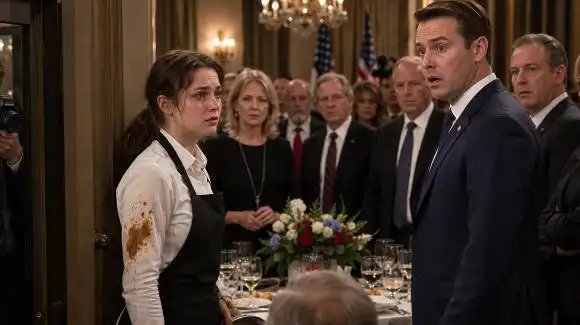
A WAITRESS Was Humiliated at a Campaign Dinner by a POWERFUL Candidate… But He Had NO IDEA Cameras Were Watching 📸
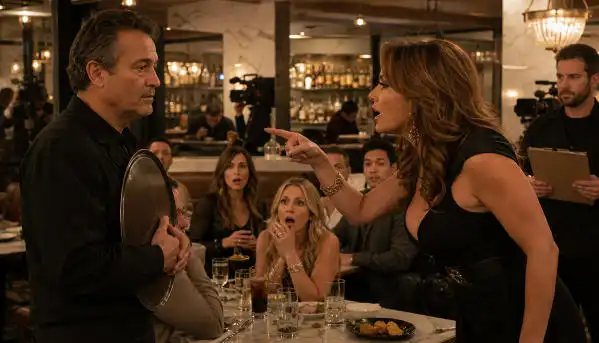
A Reality Star Laughed At A Waiter’s Cheap Shoes… But The Secret Cameras Caught The Moment She Would REGRET Forever 🎥
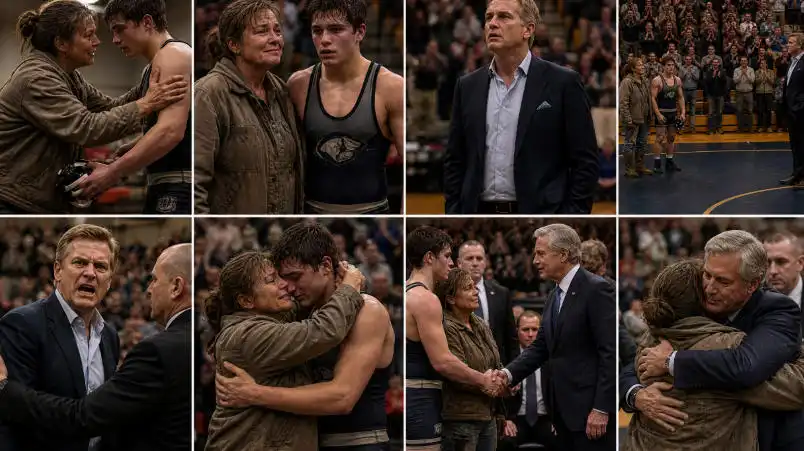
The Referee Kept Penalizing the Poor Kid While His Mom Was Mocked in the Stands… Then the Whole Gym Went Silent