
The phone clicked.
The loudspeaker above the Jackson Hole tram gate crackled once, then twice.
Every tourist on that frozen platform stopped moving.
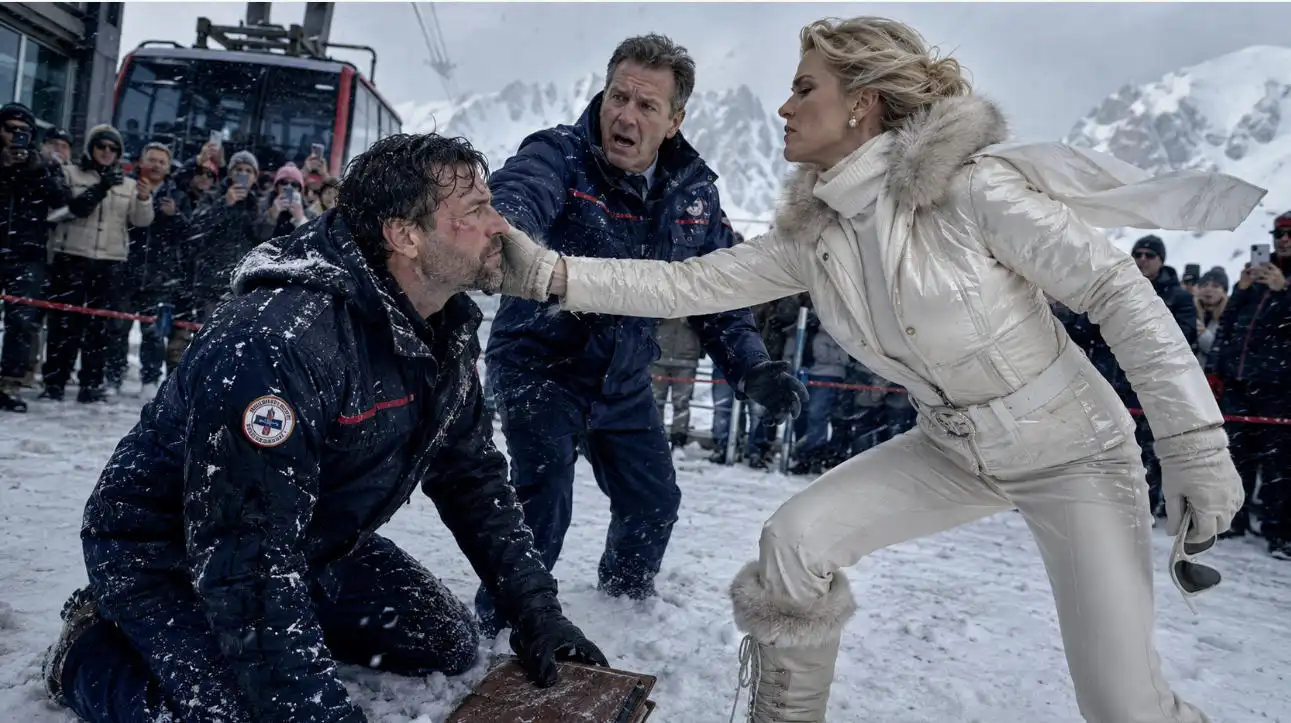
Victoria Whitmore still had one hand lifted near Arthur’s face, like she might slap him again if the wrong person answered.
Then the resort president’s voice came through the speaker.
“Arthur,” he said carefully, “is the wind still above shutdown limit?”
Arthur looked at the red warning light blinking beside the tram controls.
“Yes.”
That was all he said.
Victoria rolled her eyes so hard the women behind her laughed again.
“Wonderful,” she snapped toward the speaker. “Then tell your little employee to stop playing mountain sheriff and open the tram.”
No one breathed.
The tram station sat high above Jackson Hole, surrounded by white slopes, steel cables, and the kind of winter wind that didn’t just whistle.
It shoved.
It punched.
It made the glass tremble in the frames.
Families had been standing in line for almost twenty minutes, waiting for the gusts to calm. Most people understood. A few grumbled. But nobody wanted to be dangling in a steel box over a frozen mountain while warning lights flashed.
Nobody except Victoria Whitmore.
She was not used to waiting.
She was not used to rules.
And she was definitely not used to a man in a dark green cable car jacket telling her no.
Victoria was the chairwoman of the Aurora Club, the most exclusive private winter club in that part of Wyoming. Her family’s name was on donor walls, ski lodges, charity plaques, and half the glossy brochures the resort used to impress wealthy visitors.
She arrived that morning like she was entering her own kingdom.
White cashmere coat.
Pearl earrings.
Designer snow boots with tiny gold buckles.
A diamond snowflake pin bright enough to catch sunlight through the windows.
Behind her came six women who dressed like every inconvenience in life could be solved by calling someone’s father.
They laughed before they spoke.
They filmed before they helped.
And they looked at working people the way some people look at salt on a floor.
Arthur had seen their type before.
He was fifty-six, broad-shouldered, gray at the temples, and quiet in the way mountain men get quiet after enough winters teach them noise does not stop storms.
His job title said cable car operator.
His uniform said staff.
His hands said work.
That was enough for Victoria to decide who he was.
The wind alarm had started just after noon.
Arthur pressed the shutdown button, locked the gate, and announced, “The tram is temporarily paused due to high winds. We’ll reopen when it’s safe.”
Most guests stepped back.
A few groaned.
One older man muttered, “Better late than dead.”
Arthur nodded at him.
Then Victoria walked straight past the rope.
The young supervisor, Mason, hurried forward.
“Mrs. Whitmore, please stay behind the safety line.”
She didn’t even look at him.
“My luncheon is at the summit lounge in nine minutes.”
Arthur turned from the panel.
“Ma’am, the tram stays down.”
Victoria blinked.
For one second, she looked almost amused.
“I’m sorry?”
“The wind is above the operating threshold.”
“I heard you.”
“Then you understand.”
Her smile disappeared.
One of her friends whispered, “Oh, he’s brave.”
Another lifted her phone.
Victoria stepped close enough for Arthur to smell champagne and expensive perfume.
“My guests did not fly into Jackson Hole to stare at a locked gate because a man in a thrift-store jacket got nervous.”
A woman in line gasped.
Arthur kept his voice level.
“It’s not nerves. It’s procedure.”
“Procedure?” Victoria repeated, turning so everyone could hear her. “Do you know who I am?”
Arthur looked at the warning light.
“I know you’re standing too close to a closed safety gate.”
A few tourists exchanged looks.
Someone near the back gave a small, nervous laugh.
That laugh humiliated Victoria more than any insult could have.
Her cheeks tightened.
“Open it.”
“No.”
“Arthur,” Mason said under his breath, “maybe we should call operations and—”
“I already did,” Arthur said. “The mountain is under wind hold.”
Victoria’s friends started murmuring.
One said, loudly enough for the crowd, “This is why clubs should have private lifts.”
Another raised her champagne flute.
“He probably enjoys making important people wait.”
Arthur turned to Victoria.
“You’re welcome to wait inside where it’s warmer.”
Victoria looked him up and down.
His scuffed boots.
His wet gloves.
His old name patch.
His sun-creased face.
Then she smiled.
“Do you polish the windows too, Arthur?”
The group laughed.
Arthur didn’t answer.
That made her angrier.
Because arrogant people do not just want obedience.
They want performance.
They want the person beneath them to look hurt.
To shrink.
To prove the hierarchy is real.
Victoria took the champagne flute from her friend’s hand.
Arthur saw it coming.
He still did not move.
She tilted the glass slowly and poured champagne down the front of his jacket.
It ran over his radio.
Down his zipper.
Onto the snow at his feet.
The entire platform went quiet except for the wind.
A little girl in a pink ski helmet whispered, “Mom, why did she do that?”
Her mother covered her ears.
Victoria leaned close and said, “Now you smell more like service.”
Arthur wiped his cheek with one glove.
His face stayed calm.
But the young supervisor looked sick.
“Mrs. Whitmore,” Mason said, voice shaking, “you can’t do that.”
Victoria turned on him.
“Careful.”
One word.
That was all it took to shut him up.
Because everyone at that resort knew what her family could do.
A bad word from Victoria could ruin a seasonal worker’s contract.
A complaint from the Aurora Club could move a manager from mountain operations to parking lot duty overnight.
Her influence did not need to be official.
Old money rarely does.
It floats through rooms.
It changes voices.
It bends spines.
Arthur saw Mason step back.
He didn’t blame him.
The kid had college loans and a pregnant wife.
Victoria knew exactly what fear looked like on working people.
She enjoyed it.
Then Arthur said, “You’re done here.”
The words were quiet.
Not dramatic.
Not angry.
Just final.
Victoria stared at him.
“What did you say?”
“You assaulted an employee during a safety shutdown.”
Her eyebrows lifted.
“Assaulted?”
“You poured alcohol on me and struck me.”
“I struck arrogance.”
“You struck the wrong man.”
A few phones lifted higher.
That sentence got people’s attention.
Victoria heard the shift in the crowd.
So she escalated.
She stepped forward and slapped Arthur across the face.
Hard.
The sound cracked across the station.
Arthur’s head turned slightly.
The little girl in the pink helmet began to cry.
Her father said, “Hey! That’s enough!”
Victoria pointed a gloved finger at him.
“Stay out of this.”
The father looked like he wanted to step forward, but his wife gripped his arm.
Security stood near the glass doors.
Two guards.
Both frozen.
Victoria’s friend laughed into her phone.
“Imagine getting slapped at work.”
Arthur slowly turned his face back.
A red mark had already started to rise across his cheek.
Mason whispered, “Arthur…”
Arthur held up one hand.
Not to stop Victoria.
To stop Mason from risking his job.
Victoria’s eyes narrowed.
She hated that he still looked calm.
She wanted rage.
She wanted pleading.
She wanted proof that she could break him in front of everyone.
So she lifted her right boot and kicked him hard in the shin.
Arthur buckled to one knee.
The crowd erupted.
“Are you serious?”
“Call security!”
“She kicked him!”
Victoria stood over him, breathing fast.
“Open. The. Tram.”
Arthur stayed on one knee for a moment.
Snow stuck to his pant leg.
Champagne dripped from his cuff.
His cheek burned.
His shin throbbed.
But his eyes stayed on the red warning light.
Families were watching him now.
Staff were watching him.
Victoria was watching him.
Everyone expected him to either fight back or fold.
He did neither.
He reached under the operator desk and pulled out an old leather folder.
Brown.
Weathered.
Closed with a brass snap.
Victoria scoffed.
“What is that? Your complaint form?”
Arthur stood.
He placed the folder beside the phone.
Then he lifted the receiver.
Victoria laughed loudly.
“What are you going to do? Call your manager?”
Arthur dialed one number from memory.
Not from a list.
Not from a directory.
From memory.
When the resort president answered, Arthur pressed speaker.
That was when the whole station heard the first question.
“Arthur,” the president said carefully, “is the wind still above shutdown limit?”
Arthur answered, “Yes.”
Victoria snapped, “Then tell your little employee to stop playing mountain sheriff and open the tram.”
There was a pause.
A very strange pause.
The kind of pause that makes rich people straighten because they suddenly sense the room may not belong to them.
The resort president’s voice changed.
“Mrs. Whitmore,” he said, “are you on the platform?”
Victoria smiled again, relieved to hear her name.
“Yes, Daniel. And I expect this embarrassing situation to be handled immediately.”
“It will be.”
She turned to Arthur with a victorious look.
“See?”
Daniel continued.
“Arthur, are there witnesses?”
Arthur looked at the line of tourists.
“At least forty.”
“Video?”
Arthur’s eyes moved to the raised phones.
“Plenty.”
Victoria’s smile faded a little.
Daniel said, “And did Mrs. Whitmore interfere with a safety shutdown?”
Victoria’s mouth opened.
Arthur said, “Yes.”
“Did she assault you?”
Victoria laughed, but it sounded thinner now.
Arthur said, “Yes.”
Daniel exhaled.
“Then I need you to open the brown folder.”
The platform went still.
Victoria looked at the folder.
For the first time, she seemed to notice it was not a staff binder.
Arthur unsnapped it.
Inside was a mountain survey map.
Several laminated pages.
A copy of a long-term land lease.
And one page with a signature at the bottom.
Victoria leaned close enough to read.
Then her face changed.
Not completely.
Not yet.
But enough.
“Daniel,” she said sharply, “what is this?”
The resort president did not answer her.
He spoke to Arthur.
“Do you want counsel on the line?”
Arthur looked at Victoria.
Then he looked at Mason, the young supervisor whose hands were still shaking.
Then he looked at the little girl in the pink helmet, crying into her mother’s jacket because a grown woman had turned a safety rule into a spectacle.
“No,” Arthur said. “I know the clause.”
Victoria’s eyes flicked from the map to his face.
“What clause?”
Arthur slid one page from the folder.
His voice stayed even.
“Section 14. Unsafe Interference and Reputational Damage.”
Daniel said through the speaker, “Arthur, for the record, please state your decision.”
The tourists held their phones steady.
Mason’s mouth fell open.
Security finally stepped closer.
Victoria whispered, “Your decision?”
Arthur looked at her.
That was when she understood something was wrong.
Not socially wrong.
Legally wrong.
Financially wrong.
The kind of wrong that old money cannot laugh off.
Arthur said into the speaker, “Effective immediately, I am issuing notice of conditional termination of the resort’s land lease for operations on Whitaker Ridge and the north tram corridor.”
The station went dead silent.
Victoria blinked.
“What?”
Arthur continued.
“Operations may remain active only if the resort removes Victoria Whitmore from all mountain privileges, revokes Aurora Club access to the tram corridor, and submits written safety protection policies for staff by 5 p.m.”
Daniel answered instantly.
“Understood.”
Victoria’s voice cracked.
“Daniel, do not entertain this.”
The president’s voice was lower now.
“Mrs. Whitmore, step away from Mr. Whitaker.”
The last name landed like a hammer.
Whitaker.
Not Arthur from the tram.
Not hired help.
Not the man who polished windows.
Arthur Whitaker.
The quiet owner of Whitaker Ridge.
The family that owned the mountain land beneath the resort’s most profitable lifts.
Victoria stared at him.
The women behind her stopped filming themselves and started looking at each other.
The crowd started whispering.
“No way.”
“He owns the mountain?”
“She slapped the landlord?”
Arthur closed the folder.
Victoria tried to recover.
Rich people like Victoria rarely apologize at first.
They negotiate with reality.
“Arthur,” she said, forcing a laugh, “this has clearly gotten dramatic.”
Arthur said nothing.
“I was frustrated,” she continued. “We all were. Your tone was very provoking.”
A man in line shouted, “She kicked you!”
Another woman said, “My daughter saw the whole thing!”
Victoria snapped toward them.
“I said I was frustrated.”
Arthur finally spoke.
“You wanted me to open a tram in unsafe wind because you had a lunch reservation.”
Victoria swallowed.
“I wanted reasonable service.”
“You poured alcohol on my uniform.”
“You embarrassed me first.”
“You slapped me.”
Her eyes darted toward the phones.
“Lower your voices.”
“You kicked me in front of families.”
Victoria’s friend whispered, “Vicky, stop talking.”
But Victoria could not stop.
Her whole life had trained her to believe silence was defeat.
“You can’t just shut down a resort because of one misunderstanding.”
Arthur looked at the speaker.
“Daniel?”
The resort president answered, “Security is removing Mrs. Whitmore now.”
That sentence did something to the station.
It broke the spell.
The two security guards, who had frozen when she was only abusing a staff member, finally moved when the landowner was on speaker.
Victoria stepped back.
“Don’t touch me.”
One guard said, “Mrs. Whitmore, please come with us.”
“I am chairwoman of the Aurora Club.”
“Your club access is suspended.”
Daniel’s voice came over the speaker again.
“Not suspended. Revoked.”
Victoria turned white.
Mason looked at Arthur like he was seeing him for the first time.
Arthur did not smile.
He did not gloat.
That made it worse for Victoria.
Because a cruel person can fight cruelty.
A proud person can fight pride.
But dignity makes them look small.
A black SUV pulled up outside the upper station within minutes.
By then, the resort’s senior operations manager had arrived, red-faced and breathless.
His name was Paul Hensley, and he had spent fifteen years learning when to bow to donors and when to obey contracts.
Today the contract won.
Paul walked straight to Victoria.
“Mrs. Whitmore, I need your Aurora Club card.”
She stared at him.
“You are not serious.”
“I am.”
“My family helped build this resort.”
Arthur said quietly, “My family leased you the ground under it.”
Paul held out his hand.
Victoria did not move.
One of her friends whispered, “Vicky, just give it to him.”
Victoria pulled the silver VIP card from her sleeve pocket and slapped it into Paul’s palm.
Paul looked pained.
Then, in front of the entire platform, he bent the card until it cracked.
A gasp moved through the crowd.
Victoria looked like he had struck her.
“You will regret that.”
Paul said, “I regret not enforcing staff protection sooner.”
Arthur looked at him.
Paul’s eyes dropped.
Good.
Some shame is useful when it comes before change.
Security escorted Victoria toward the doors.
Her friends tried to follow, but the guard stopped them too.
“All Aurora Club summit access is paused pending review.”
One woman said, “But our bags are upstairs.”
Paul said, “They’ll be brought down.”
Another said, “This is humiliating.”
The father in line spoke up.
“So was watching her hit a man for keeping our kids safe.”
People nodded.
That was the first moment the crowd stopped being spectators.
They became witnesses.
Victoria heard it.
She looked back at Arthur, and for the first time, the anger in her eyes had fear behind it.
“You don’t know who you’re crossing,” she said.
Arthur held up the land lease.
“I know exactly who I’m protecting.”
The video went online before Victoria reached the SUV.
Not from Arthur.
Not from the resort.
From tourists.
Three angles.
Clear audio.
The slap.
The champagne.
The kick.
The warning light blinking red.
And Arthur’s calm voice saying, “I don’t gamble with wind.”
By sunset, the clip had spread across ski groups, parenting pages, local Wyoming news, and private resort forums.
By dinner, people were calling it “the mountain slap.”
By midnight, Victoria’s family trust had called an emergency meeting.
The Whitmore family had survived scandals before.
A tax rumor.
A messy divorce.
A nephew with a yacht crash.
But this one was different.
It was simple.
Anyone could understand it.
A rich woman demanded a dangerous ride.
A worker said no.
She humiliated him in public.
Then the worker turned out to own the land under her privilege.
No PR team could make that look noble.
The next morning, Arthur arrived at the lower operations office at 6:15.
Same boots.
Same jacket, now cleaned.
Same quiet face.
Mason was already there.
He stood up too fast.
“Mr. Whitaker—”
Arthur raised a hand.
“Arthur.”
Mason nodded, embarrassed.
“Arthur. I’m sorry.”
“For what?”
“For freezing.”
Arthur hung his gloves near the heater.
“You have a wife, don’t you?”
Mason swallowed.
“Yes.”
“And a baby coming.”
“Yes, sir.”
“Then you weren’t freezing. You were calculating survival.”
Mason’s eyes reddened.
Arthur opened the brown folder again.
“I don’t want employees calculating survival when someone hits them.”
That morning, the resort board met in a glass-walled conference room overlooking the slopes.
Victoria did not attend.
Her lawyer did.
Her family’s lawyer did.
The Aurora Club’s lawyer did.
Arthur came alone.
The resort president, Daniel Mercer, stood when he entered.
“Arthur.”
Arthur nodded.
Everyone else looked uneasy.
That suited him fine.
A lawyer in a navy suit started first.
“Mr. Whitaker, we believe yesterday’s incident, while unfortunate, was isolated.”
Arthur sat down.
“Was it?”
The lawyer paused.
Arthur opened a second folder.
Not the land lease.
This one was thicker.
Incident reports.
Staff complaints.
Quiet settlements.
Emails.
A bartender called “trash” after cutting off an intoxicated club member.
A ski instructor threatened after refusing to take a drunk guest onto a black diamond trail.
A lift attendant shoved for enforcing a child height rule.
A housekeeper fired after a donor claimed she was “rude,” when camera footage showed the donor screaming first.
Arthur slid the folder across the table.
“I’ve owned that land for twenty-two years,” he said. “I’ve operated that tram off and on because my father believed owners should understand the work their contracts create.”
No one spoke.
“My father leased that ridge to this resort on one condition. Safety before revenue. People before status. That clause is not decoration.”
Daniel looked ashamed.
“As of this morning,” Arthur continued, “I am requiring a staff protection policy tied to the land lease.”
The Aurora Club lawyer frowned.
“Mr. Whitaker, with respect, you cannot dictate membership decisions for a private club.”
Arthur looked at him.
“I can dictate who uses my land to reach a private club.”
That ended the legal confidence in the room.
Arthur laid out the terms.
Victoria Whitmore permanently banned from all resort property operating on Whitaker land.
Aurora Club tram access suspended for ninety days.
Mandatory written apology to staff.
Independent safety authority given to operations workers during weather shutdowns.
No donor, club member, trustee, sponsor, or VIP could override a safety call.
Any assault on staff would trigger police notification and immediate removal.
Any manager who retaliated against staff for enforcing safety rules would be terminated.
Daniel signed first.
Then the board chair.
Then the club representative.
The Aurora Club lawyer said he needed to “consult.”
Arthur closed the folder.
“You have until five.”
They signed at 4:37.
Victoria’s consequences came faster than anyone expected.
Not because Arthur chased her.
He didn’t need to.
Rules did the work.
The resort association shared the incident report with partner mountains.
The video made the decision easy.
Within a week, several major ski properties quietly revoked her reciprocal privileges.
Then the national luxury travel network flagged her account for staff assault and safety interference.
That phrase mattered.
Safety interference.
It was not gossip.
It was not drama.
It was a formal category.
A week later, the Whitmore family trust froze Victoria’s discretionary spending pending reputational review.
That sounded polite.
It meant her private jet allowance was paused.
Her club reimbursements stopped.
Her foundation chairmanship was placed “under temporary governance transition.”
In rich-family language, she had been sent to the corner.
Victoria did try to fight.
Of course she did.
She released a statement through a publicist saying the video lacked “full context.”
That lasted six hours.
Then a tourist posted the full three-minute clip.
It showed Arthur warning everyone calmly.
It showed Victoria mocking his uniform.
It showed the champagne.
The slap.
The kick.
The red light.
The crying child.
It showed everything.
The publicist resigned the next morning.
Two days later, Victoria sent Arthur a private apology through her attorney.
Arthur returned it unread.
Then she sent a handwritten note.
He read that one.
It said:
“Arthur, I let frustration and embarrassment control my behavior. I apologize for the physical contact and the disrespect. I hope we can resolve this privately.”
Arthur placed it on his kitchen table and stared at the word “privately.”
That was the part she still did not understand.
The harm had not been private.
She had made sure of that.
She had wanted an audience.
So the repair needed one too.
Arthur wrote back with three sentences.
“Mrs. Whitmore, I accept apologies made directly to the people harmed. Mason and the tram staff deserve one. The families who watched you demand an unsafe ride deserve one.”
She did not respond for four days.
On the fifth day, Victoria returned to Jackson Hole.
Not to ski.
She was not allowed.
She came to the public safety hearing Arthur had requested at the resort lodge.
No fur-trimmed entourage this time.
No champagne.
No laughter.
Just a dark coat, pale face, and a lawyer who looked like he had begged her to behave.
The room was full.
Staff.
Parents.
Local reporters.
Board members.
Ski patrol.
Lift operators.
Housekeepers.
Servers.
The people who made luxury possible and were often treated like furniture inside it.
Arthur sat in the back.
Not at the front.
Not on stage.
He wanted the workers to speak.
Mason spoke first.
His hands shook at the podium.
“My job is to keep people safe,” he said. “But sometimes when wealthy guests yell, we are made to feel like safety is bad service.”
The room was silent.
A ski patrol woman stood next.
“I’ve had donors demand closed runs be opened because they ‘know the owner.’ Yesterday proved why that can’t happen.”
Then the father from the tram line spoke.
He held his little girl’s pink helmet in one hand.
“My daughter asked me why the lady was allowed to hit the man who was protecting us,” he said. “I didn’t have a good answer.”
Victoria lowered her head.
Finally, she walked to the microphone.
For once, nobody rushed to make the room comfortable for her.
She had to stand in the discomfort she created.
Her voice shook at first.
“I was wrong.”
No one clapped.
Good apologies do not need applause.
She looked toward Arthur.
“I humiliated a man because I believed my status mattered more than his judgment. I demanded unsafe service. I assaulted him. I frightened families. I disrespected staff who were doing their jobs.”
Her fingers tightened around the paper in her hand.
“I apologize to Arthur Whitaker. I apologize to Mason. I apologize to the tram staff. I apologize to the families who watched my behavior. I do not ask for forgiveness today.”
Arthur studied her face.
For the first time, she looked smaller.
Not poor.
Not ruined.
Just human.
And maybe that was the first honest thing she had been in years.
The resort announced the new rule that afternoon.
They called it the Whitaker Safety Standard.
Arthur hated the name at first.
But Mason said, “People will remember it.”
So Arthur let it stand.
The sign went up at every lift, tram, gondola, and summit gate:
Safety decisions are final. No guest status overrides staff authority. Abuse of employees results in removal.
Simple.
Clear.
Long overdue.
A month later, Arthur worked the tram again.
People asked why.
A man who owned the mountain did not need to sit in a cold booth checking wind speeds.
Arthur always gave the same answer.
“My father worked this station before he owned anything. He said land means nothing if you forget the people standing on it.”
That morning, the wind was calm.
The sky was painfully blue.
Snow glittered on the peaks like broken glass.
Mason stood beside him, more confident now.
When the first tram filled, Arthur looked at the passengers.
Families.
Workers.
Tourists.
Rich people.
Regular people.
All breathing the same cold air.
“All set?” Mason asked.
Arthur checked the panel.
Green light.
Safe.
Only then did he nod.
“Send it.”
The tram doors closed.
The cable hummed.
And the car rose smoothly over Whitaker Ridge.
No shouting.
No champagne.
No VIP tantrum.
Just order.
Just safety.
Just a mountain remembering the right rule.
Victoria never returned to that resort.
Her family eventually restored part of her trust access, but not her public roles. The Aurora Club replaced her as chairwoman with a retired judge who had once been a ski patrol volunteer. Staff said the difference was immediate.
As for Arthur, he never asked for revenge beyond the contract.
He didn’t need to ruin Victoria with lies.
He let the truth stand in public where she had chosen to be cruel.
That was enough.
So choose a side:
Team Arthur — safety and dignity come first.
Or Team Victoria — VIP status should get special treatment.
Share this if you believe nobody should be humiliated for doing their job. ❄️
Disclaimer: Mention of any brand or trademark is for identification only and does not imply partnership or endorsement
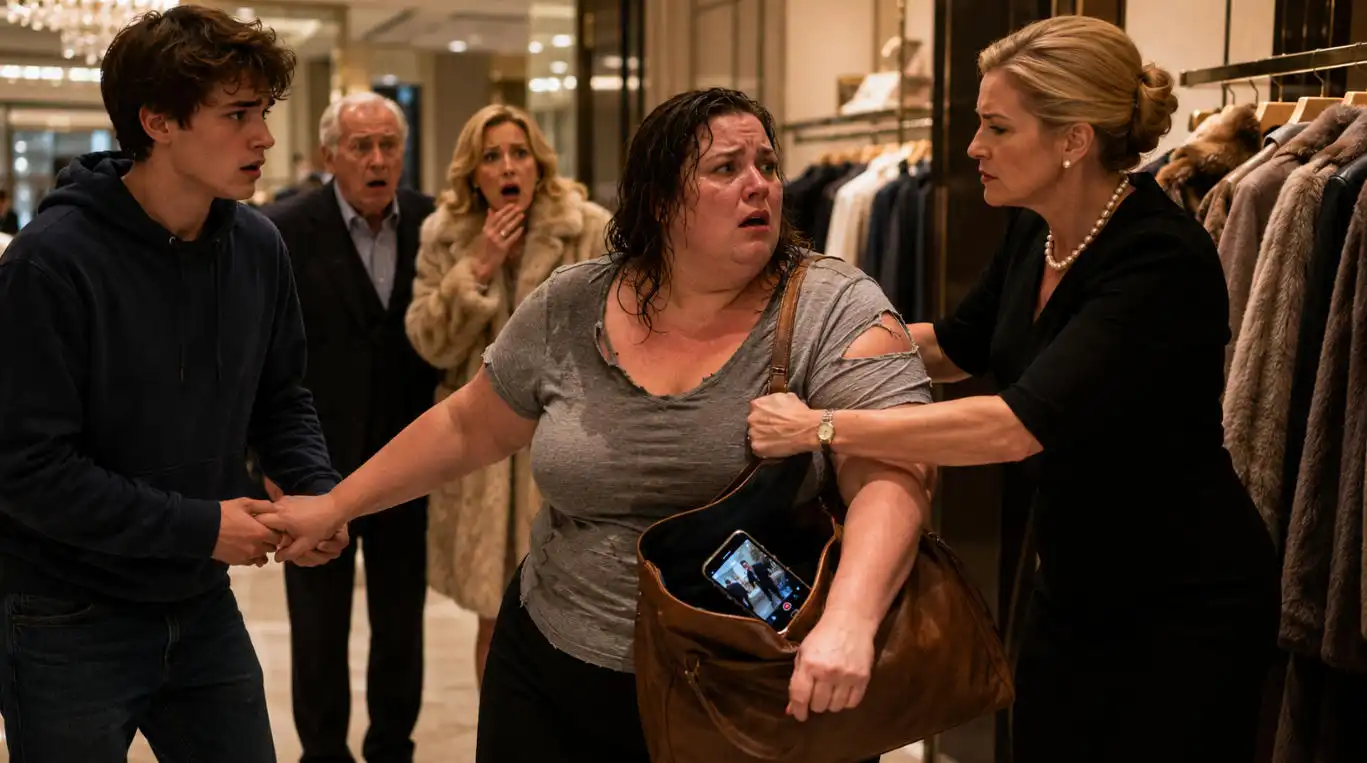
Maggie Was Covered In Shampoo, Slapped, And Laughed At In Front Of Rich Parents… Until One Quiet Phone Call Changed EVERYTHING
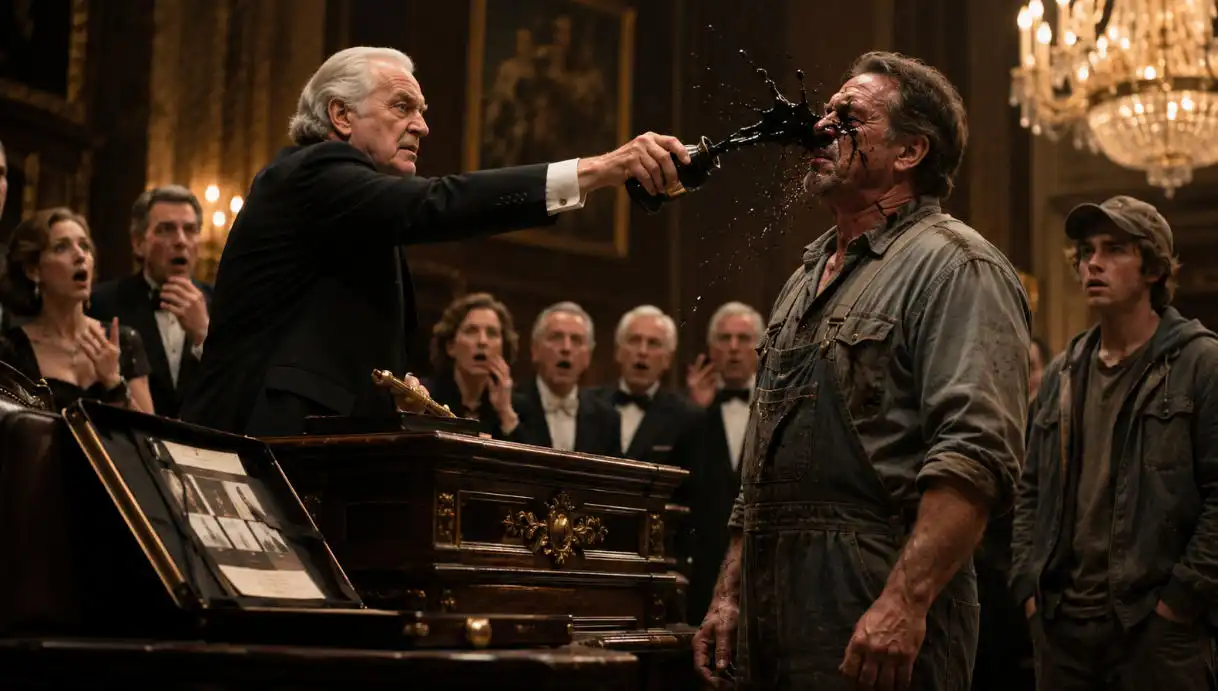
A Blue-Collar Dad Was DRAGGED Out Of A D.C. Private School Auction By A Snobby Auctioneer… But They Had NO IDEA Who He Really Was 😳

A Palm Beach Tennis Star HUMILIATED a Quiet Older Man in Front of the Whole Club… Then He Saw What Norman’s Attorney Filed That Morning