
The base commander didn’t speak at first.
He just stared at the live monitor from the valley command tent.
On the screen, Major Garland had just slapped Cooper in front of the whole training group.
Then the snow shelf cracked.
Then Garland disappeared.
And the only man close enough to save him was the old guide he had humiliated.
The wind was screaming so loudly that the camera shook on its pole.
The recruits were frozen in place.
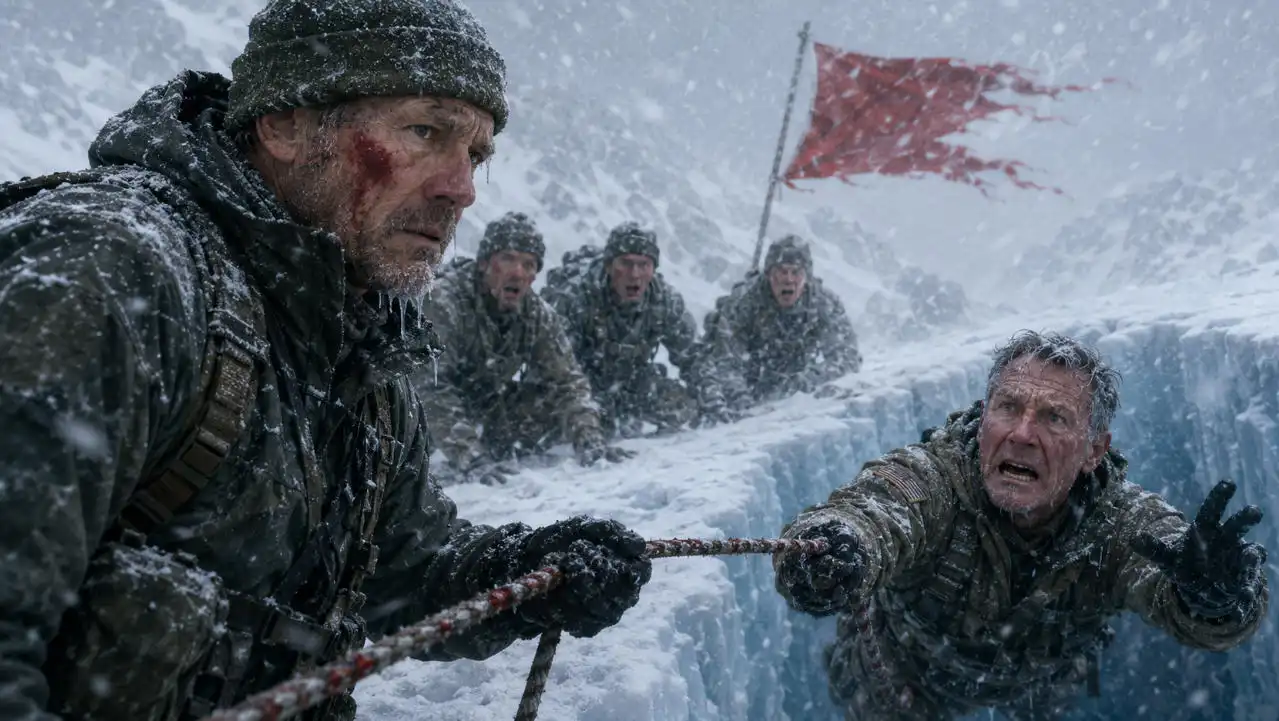
Cooper stood at the edge of the crevasse with blood already running across his knuckles.
“Rope!” he shouted.
Nobody moved.
Not because they didn’t hear him.
Because fear had locked their bodies solid.
The mountain training ground was supposed to teach discipline.
Cold weather survival.
Team trust.
Respect for nature.
But Major Garland had turned it into a stage for his ego.
He was an airborne officer with polished boots, sharp sunglasses, and the kind of voice that made young soldiers straighten before they even understood why.
Cooper was the opposite.
Late sixties.
Quiet.
Weather-beaten.
Hands like old leather.
He wore a faded cold-weather jacket, carried a coil of rope, and spoke only when the mountain gave him a reason.
To the recruits, he looked like a retired civilian guide hired to carry gear.
To Garland, he looked like an easy target.
That morning, Cooper had warned them three times.
“Wind shear is shifting from the west.”
Garland ignored him.
“The top layer is hollow.”
Garland rolled his eyes.
“The helicopter won’t fly in this.”
Garland laughed loud enough for the new soldiers to hear.
“That’s why they send officers, Cooper. To make decisions. Not to get scared by snow.”
The recruits looked uncomfortable.
A few had already lost feeling in their fingers.
One private named Ellis was shaking so hard his helmet strap clicked against his chin.
Cooper noticed.
Garland noticed too.
But Garland didn’t see a young soldier in trouble.
He saw weakness.
“You cold, Private?” Garland barked.
“Yes, sir.”
“Good. Pain means you’re learning.”
Cooper stepped in front of Ellis.
“Major, he needs to descend.”
Garland turned slowly.
The whole line went silent.
Snow slapped sideways across their faces.
Garland walked right up to Cooper until their noses were nearly touching.
“You don’t give orders on my mountain.”
Cooper looked up at the ridge.
“This isn’t your mountain.”
That was the sentence Garland couldn’t stand.
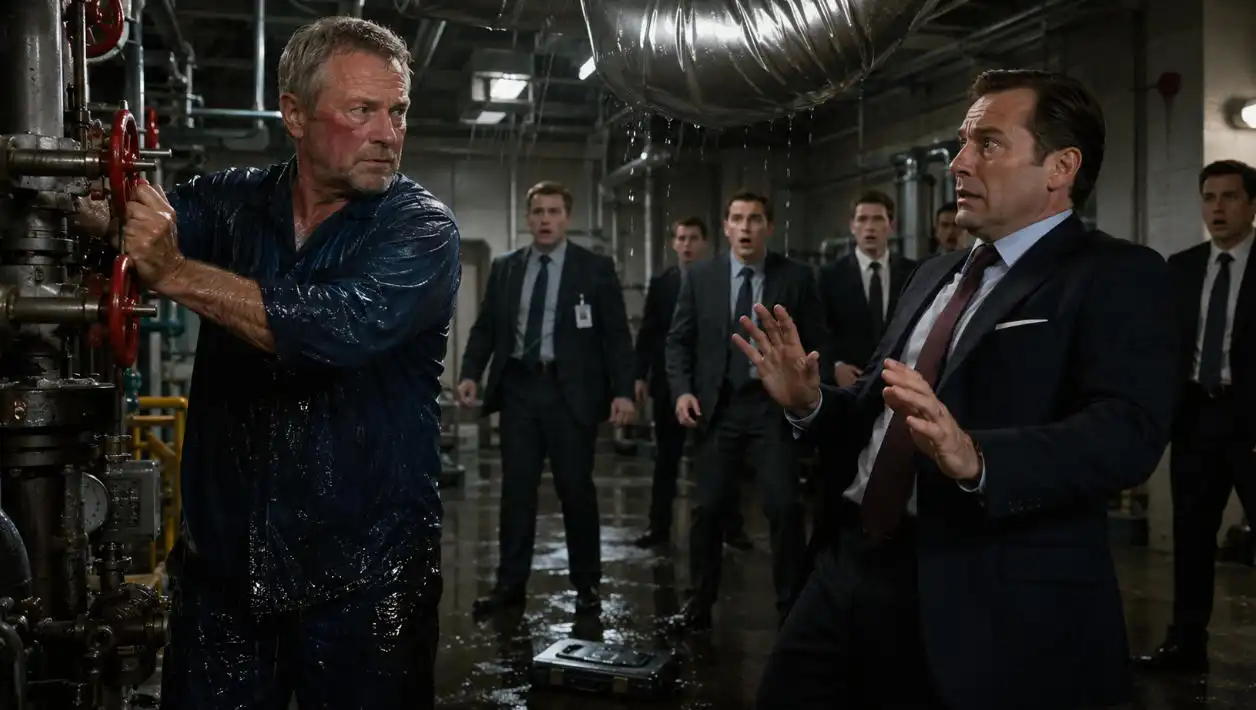
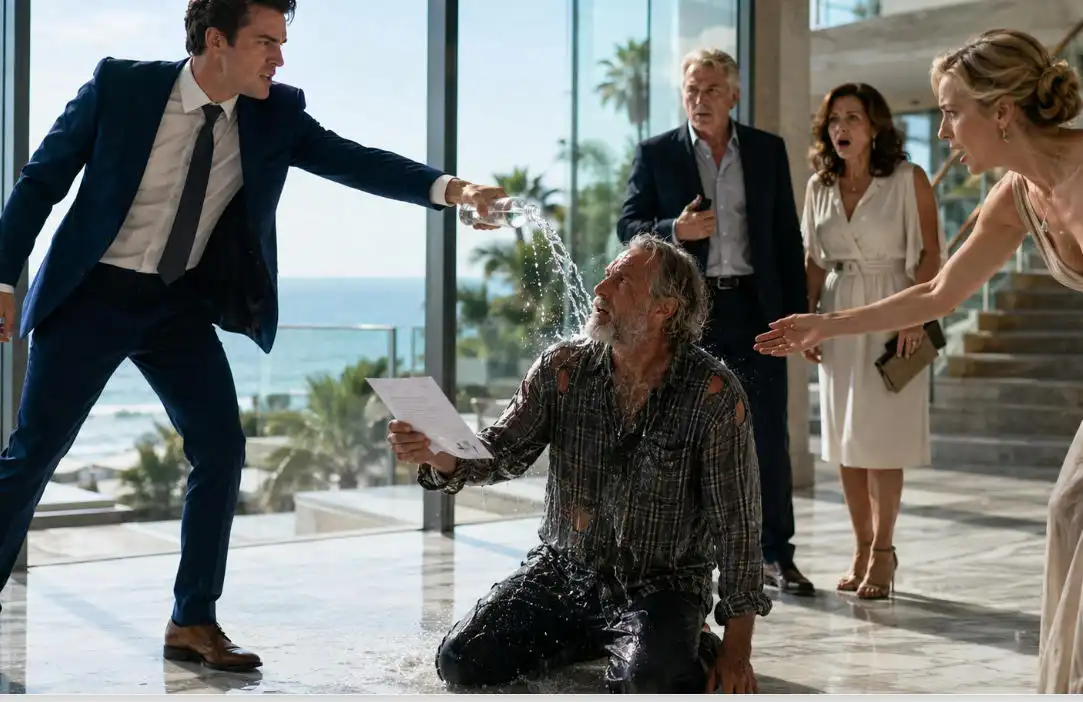
He grabbed a metal canteen from a recruit’s pack, scooped slush from a snowbank, and poured it straight over Cooper’s head.
The water ran down Cooper’s face.
Into his collar.
Across the red skin of his cheeks.
The recruits gasped.
Garland smiled.
“Now you look awake.”
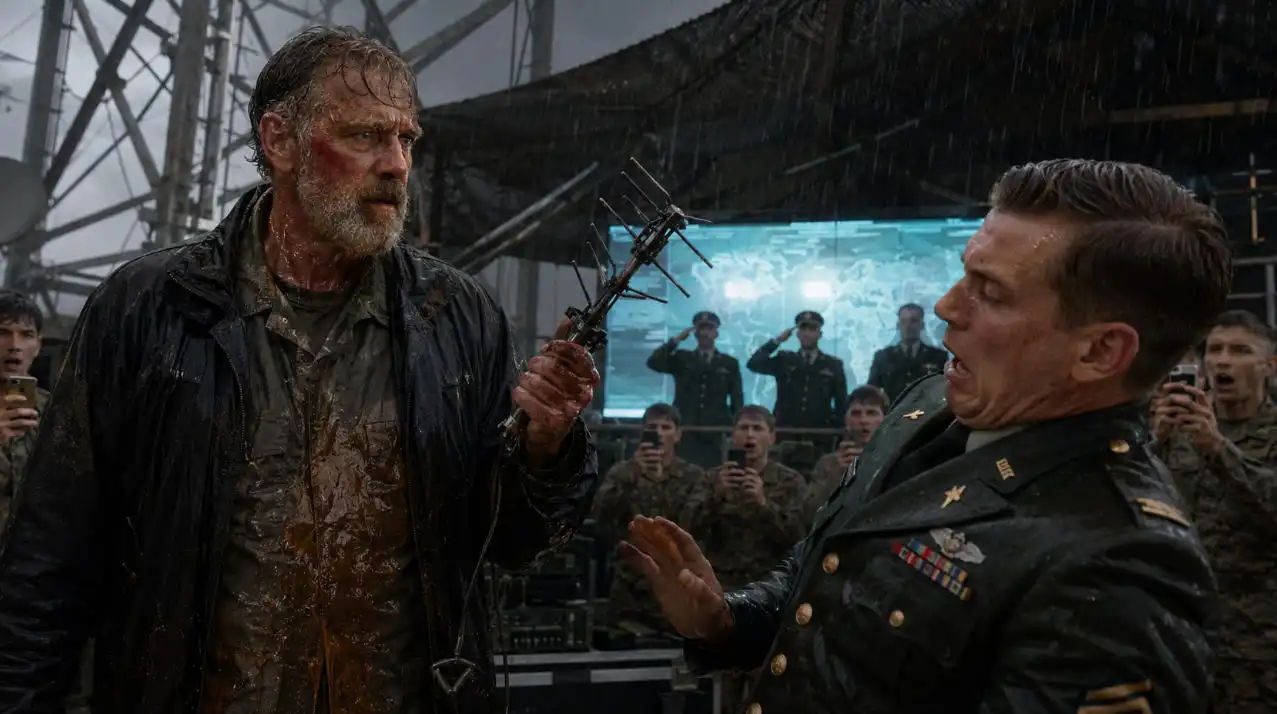
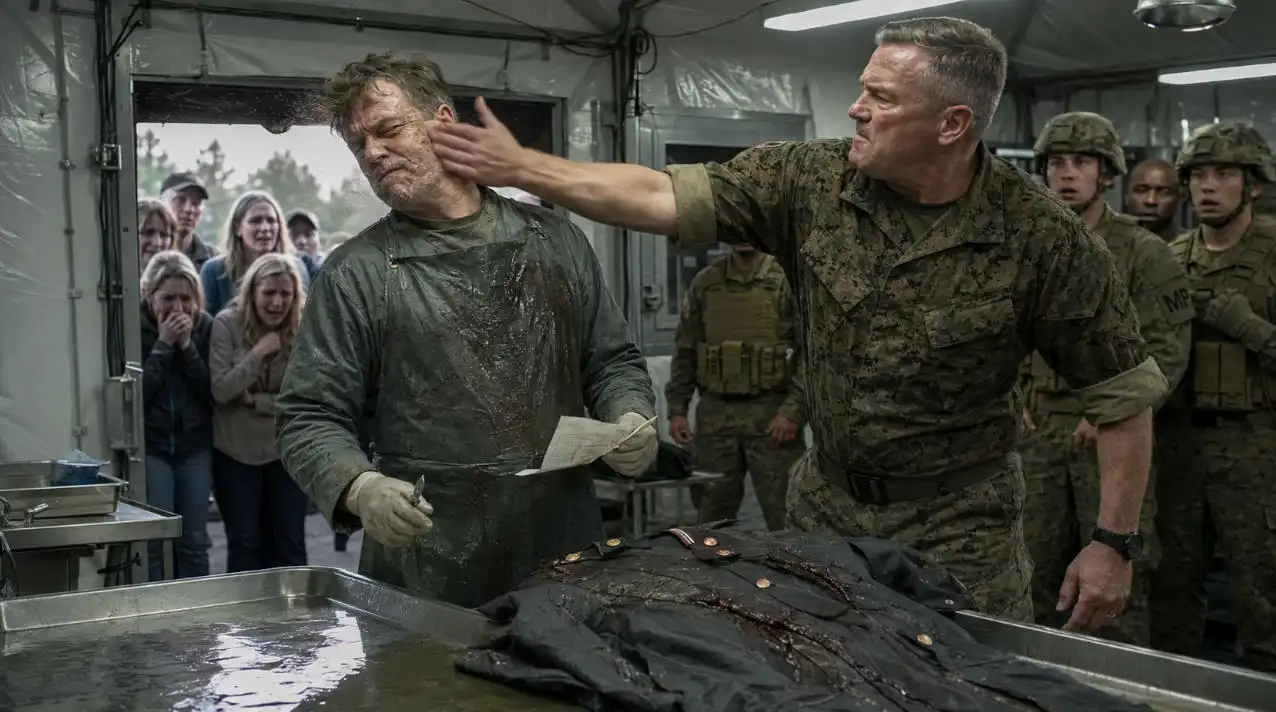
Then he slapped him.
Hard.
Cooper staggered one step.
A younger man might have swung back.
A proud man might have shouted.
Cooper did neither.
He only raised one hand to his cheek, wiped away the water, and looked at the rope lying beside his boot.
The base camera caught everything.
Garland didn’t know that.
The mountain safety system had been upgraded the week before.
Every ridge.
Every training lane.
Every instructor interaction.
Recorded and streamed live to the command tent below.
Garland thought he was performing for scared recruits.
He was actually performing for the base commander.
And worse than that, for the safety review officer standing beside him.
Down in the valley, Colonel Redding leaned toward the monitor.
“Did he just strike the guide?”
Nobody answered.
They didn’t need to.
Garland pointed up toward the ridge.
“We climb.”
Cooper’s voice stayed low.
“Major, no.”
Garland laughed.
“No?”
“The snowpack is loaded. The cornice is unstable. The wind has sealed the surface. If we put weight on that traverse, it breaks.”
Garland turned to the recruits.
“You hear that? This is what happens when a man spends too long carrying rope. He starts thinking the rope makes him important.”
A few soldiers forced nervous smiles.
Not because it was funny.
Because men like Garland made silence feel dangerous.
Then Garland shoved Cooper back with both hands.
Cooper’s boots slid on the ice.
A recruit reached out to steady him.
Garland snapped, “Don’t touch him.”
The recruit froze.
Garland stepped over Cooper’s rope like it was trash.
“Column forward.”
That was when Cooper stopped speaking.
He looked once at the storm flag.
Once at the slope.
Once at the recruits.
Then he quietly clipped the rescue line to his harness.
Not for Garland.
For the boys Garland was leading into danger.
The climb lasted less than four minutes.
The first crack sounded like a rifle shot under the snow.
Private Ellis flinched.
Garland spun around.
“Keep moving!”
The second crack rolled longer.
Deeper.
Like the mountain clearing its throat.
Cooper shouted, “Down! Everybody down!”
This time, the recruits listened.
They dropped to their bellies.
Garland didn’t.
He took two angry steps toward Cooper.
“You don’t override my—”
The snow vanished beneath him.
One second he was standing tall.
The next, his boots kicked empty air.
He slammed against the side of a blue ice crevasse and dropped out of sight.
His scream came back thin and broken.
“HELP!”
The recruits crawled backward in panic.
Private Ellis started crying.
“He’s gone!”
Cooper was already moving.
He hit the ground flat, drove his ice axe into the packed shelf, and fed the rope through his gloved hand.
The glove tore almost immediately.
The rope burned through the fabric.
Then through skin.
Blood marked the white rope in thin red lines.
Garland screamed from below.
“Cooper! Pull me up!”
The irony hung in the air.
Ten minutes earlier, Garland had called him Grandpa.
Now he was calling him by name.
Cooper leaned over the edge just far enough to see him.
Garland was wedged against the wall, one arm hooked through a broken strap, boots scraping uselessly at ice.
Below him was darkness.
Not movie darkness.
Real mountain darkness.
The kind that doesn’t care who you are.
“Don’t move,” Cooper shouted.
“Get me out!”
“Don’t move.”
“I said get me out!”
Cooper looked at the recruits.
“You three. Belly down. Anchor line around your waists. Do exactly what I say.”
Nobody questioned him now.
Not one of them.
They crawled into position.
Ellis was still shaking, but he followed Cooper’s hand signals.
Another recruit, Mason, looped the rope around a buried picket.
The third, Brooks, braced his boots against a rock shelf.
Cooper tied the knot fast.
Clean.
Perfect.
It wasn’t fancy.
It was practiced.
The kind of movement a man doesn’t learn from a manual.
The kind he learns when people live or die based on whether his fingers remember.
Garland looked up from the crevasse, face pale with terror.
“Hurry!”
Cooper’s jaw tightened.
“You’re going to stop giving orders now.”
For the first time all day, Garland shut up.
The wind punched across the slope.
Snow dust poured into the crevasse.
The rescue helicopter couldn’t lift.
The radio kept spitting static.
Every second mattered.
Cooper wrapped the rope around his forearm, planted both boots, and pulled.
His shoulder shook.
His back bowed.
Blood from his hand froze almost as fast as it appeared.
The recruits pulled with him.
One inch.
Then another.
Garland rose slowly from the blue cut in the mountain.
His medals meant nothing there.
His rank meant nothing.
His shouting meant nothing.
Only the rope mattered.
Only the man holding it mattered.
Down in the command tent, Colonel Redding watched every second.
Beside him, the safety officer had already printed the incident log.
Ignored storm warning.
Unauthorized ascent.
Public humiliation of contracted guide.
Physical assault.
Endangerment of trainees.
Failure to obey safety hold.
All recorded.
All time-stamped.
All witnessed.
The colonel’s face hardened.
“Get medical up there the moment the wind drops.”
“Yes, sir.”
“And have military police waiting for Major Garland.”
The tent went silent.
Colonel Redding kept watching the screen.
Cooper was still pulling.
Finally, Garland’s hand appeared over the edge.
Then his elbow.
Then his chest.
The recruits grabbed him and dragged him onto the snow.
Garland rolled onto his back, gasping like a child.
Nobody cheered.
Nobody clapped.
They were too shaken.
Cooper sat back on his heels, rope still in his hands.
His face was wet.
His cheek was red.
His fingers were bleeding.
Garland looked at him.
For one second, something like shame crossed his face.
Then pride crawled back in.
He pushed himself up and snapped, “You took too long.”
The recruits stared.
Even the wind seemed to pause.
Cooper slowly stood.
He didn’t yell.
He didn’t threaten.
He didn’t hit him back.
He only looked toward the ridge camera.
Then Garland followed his gaze.
That was the moment his face changed.
He saw the black camera housing on the pole.
The red recording light.
The signal antenna pointed down toward base command.
Garland swallowed.
“You recorded this?”
Cooper said, “The mountain did.”
A convoy reached them forty minutes later.
By then, the recruits were wrapped in thermal blankets.
Cooper’s hands were bandaged.
Garland was seated alone on a medical sled, trying to bark instructions at medics who no longer looked afraid of him.
When they reached the lower staging area, Colonel Redding was waiting.
No dramatic speech.
No shouting.
That made it worse.
Garland stepped off the sled and tried to salute.
“Sir, there was an unexpected terrain failure during—”
The colonel held up one hand.
“Stop.”
Garland froze.
The recruits stood behind Cooper, silent and pale.
Redding looked at Cooper first.
“Mr. Cooper, are you able to stand for a few minutes?”
“Yes, Colonel.”
Then Redding turned to Garland.
“Major, you ignored a storm hold. You ordered trainees onto an unstable traverse. You assaulted the lead alpine safety guide. Then that same guide saved your life after your decision nearly killed this team.”
Garland’s mouth opened.
“Sir, with respect, he challenged my authority in front of—”
“He protected soldiers in front of soldiers.”
That line landed hard.
Garland’s face tightened.
Redding took a tablet from the safety officer.
He tapped the screen.
Garland’s own voice played from the speaker.
“Maybe that’ll wake you up, Grandpa.”
Then the slap.
Then the recruits gasping.
Then Cooper’s warning.
“This mountain is about to move.”
Then Garland’s laugh.
Then the crack.
Garland looked down.
No rank could cover that sound.
No excuse could soften it.
Redding stepped closer.
“You are relieved of all training command duties effective immediately.”
Garland went pale.
“Sir—”
“You will surrender your badge and field authority to Captain Lowell. You will be escorted for evaluation and counseling. Pending formal review, you are not to supervise trainees, lead field exercises, or issue safety decisions.”
The recruits looked at one another.
Not smiling.
Not celebrating.
Just breathing easier.
Garland tried one last time.
“Sir, I was maintaining discipline.”
Redding’s voice turned ice cold.
“You confused cruelty with leadership.”
That was the sentence that ended him.
Within a week, Garland’s name disappeared from the training roster.
His office door was cleared.
His command photo came down.
The report did not call him evil.
It didn’t need to.
Facts were enough.
He had ignored weather restrictions.
He had endangered recruits.
He had struck a senior safety specialist in public.
He had created the emergency that almost killed him.
And he had been saved by the very man he degraded.
The review board ordered him removed from field command and sent for mandatory psychological assessment before any future assignment.
The recruits who had been on that mountain submitted written statements.
Private Ellis wrote only five sentences.
But the last one traveled across the base faster than any rumor.
“Mr. Cooper was the only man on that ridge who acted like a leader.”
Two Fridays later, the entire cold-weather battalion assembled in the main hangar.
Cooper hated ceremonies.
Everybody knew it.
He stood near the back in his old jacket, trying to blend into the shadows.
But Colonel Redding called his name anyway.
“Daniel Cooper.”
The hangar went quiet.
Cooper walked forward slowly.
His hands were still wrapped.
The red mark on his cheek had faded.
The recruits stood at attention.
Redding held up a small medal case.
“For extraordinary courage under extreme alpine conditions, for preserving the lives of trainees, and for demonstrating the highest standard of judgment under pressure, this command awards you the Polar Warrior Medal.”
The room erupted.
Not polite applause.
Real applause.
The kind soldiers give when they know the difference between a title and a man.
Cooper lowered his head.
For a moment, he looked almost embarrassed.
Then Private Ellis stepped out from the line.
He shouldn’t have.
Protocol said stay still.
But Redding let him.
Ellis walked up to Cooper and handed him something small.
A piece of rope.
Cut clean.
Wrapped with white tape.
Written on it in black marker were four words:
RANK DOESN’T HOLD.
Cooper stared at it.
Then he laughed once.
Softly.
Like the mountain had finally let him breathe.
After that, things changed.
Cooper was no longer treated like a hired old guide.
He received full command-level authority over alpine safety decisions.
If Cooper said stop, the climb stopped.
If Cooper said descend, the unit descended.
No officer could override him without written review from command.
He was given private quarters near the training ridge.
Priority medical care.
Access to the operations room.
And one unofficial privilege that mattered more than all of it:
Every recruit listened when he spoke.
Months later, a new class arrived.
Young soldiers.
Nervous faces.
Expensive boots.
Too much confidence.
Cooper stood before them with a rope over one shoulder.
He did not tell them about Everest unless asked.
He did not mention the medal.
He did not mention Garland.
He only pointed up at the white ridge and said:
“Out there, the mountain doesn’t salute anybody.”
The recruits went quiet.
Cooper lifted the rope.
“This doesn’t care about your rank either. It only cares whether you tied it right, whether you listened, and whether you protected the person beside you.”
Private Ellis, now assigned as assistant instructor, stood behind him with a small smile.
Cooper looked across the new class.
“You want to lead? Learn to listen first.”
Nobody laughed.
Nobody rolled their eyes.
Because the story had already become part of the base.
The old guide.
The arrogant major.
The slap.
The storm.
The rope.
And the lesson no one forgot:
In nature, rank is worth nothing.
Skill is everything.
And real strength is not humiliating a man when others are watching.
Real strength is saving him when the whole world would understand if you didn’t.
So choose a side:
Team Cooper — save the man, expose the truth, let the rules finish the job. Or Team Garland — rank first, respect later.
Share this if you believe leadership is proven under pressure, not shouted from above. 🧊
Disclaimer: Mention of any brand or trademark is for identification only and does not imply partnership or endorsement
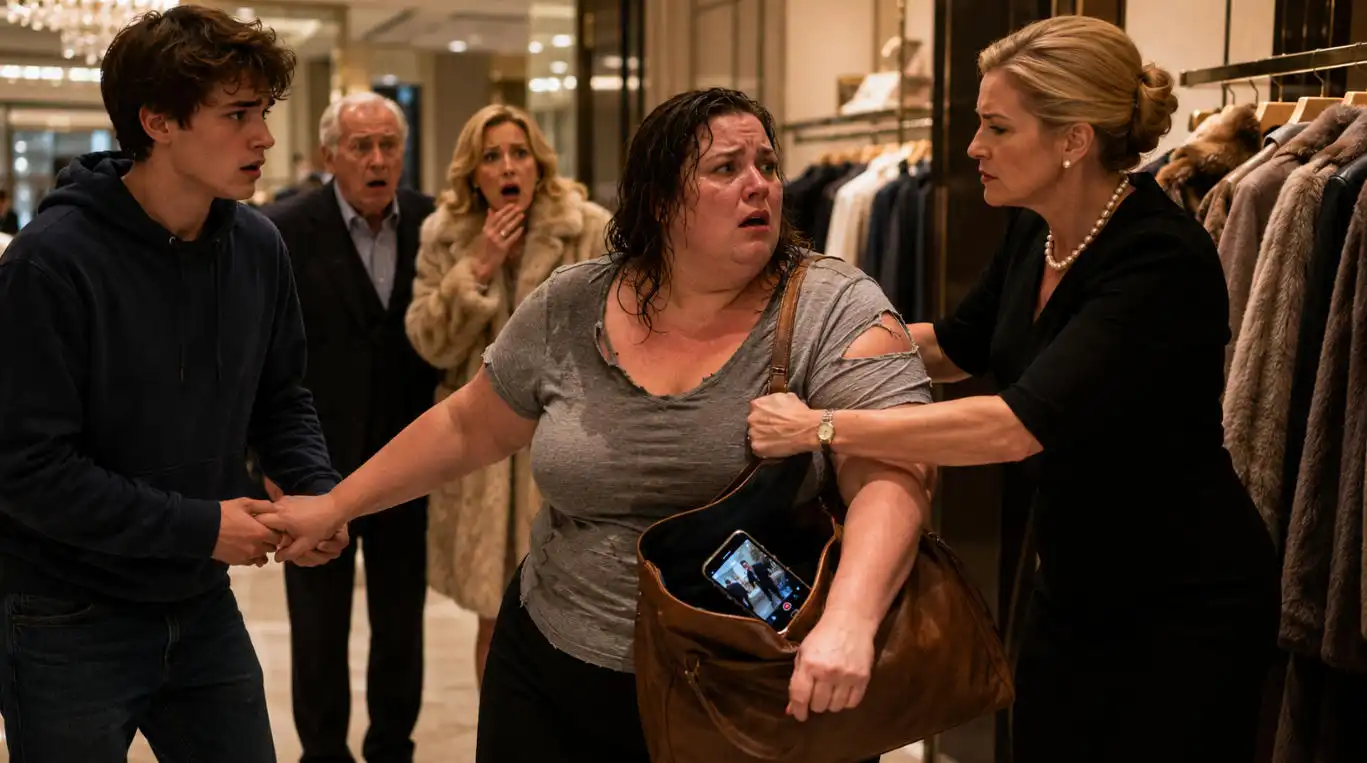
Maggie Was Covered In Shampoo, Slapped, And Laughed At In Front Of Rich Parents… Until One Quiet Phone Call Changed EVERYTHING
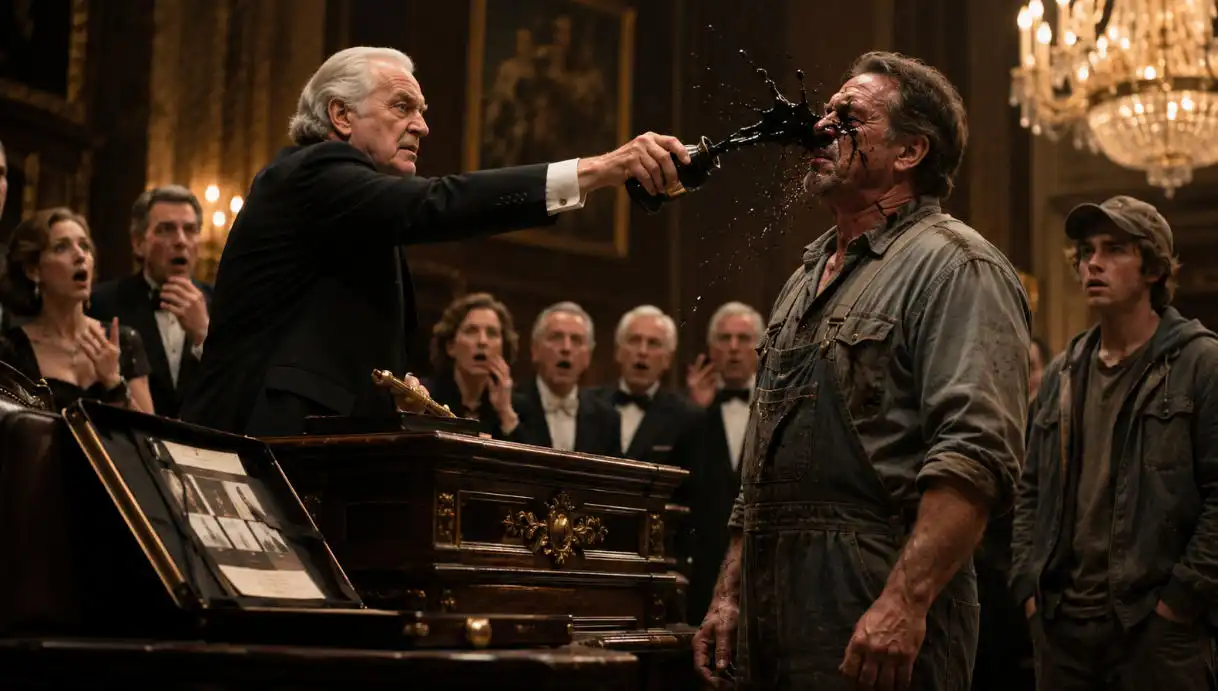
A Blue-Collar Dad Was DRAGGED Out Of A D.C. Private School Auction By A Snobby Auctioneer… But They Had NO IDEA Who He Really Was 😳
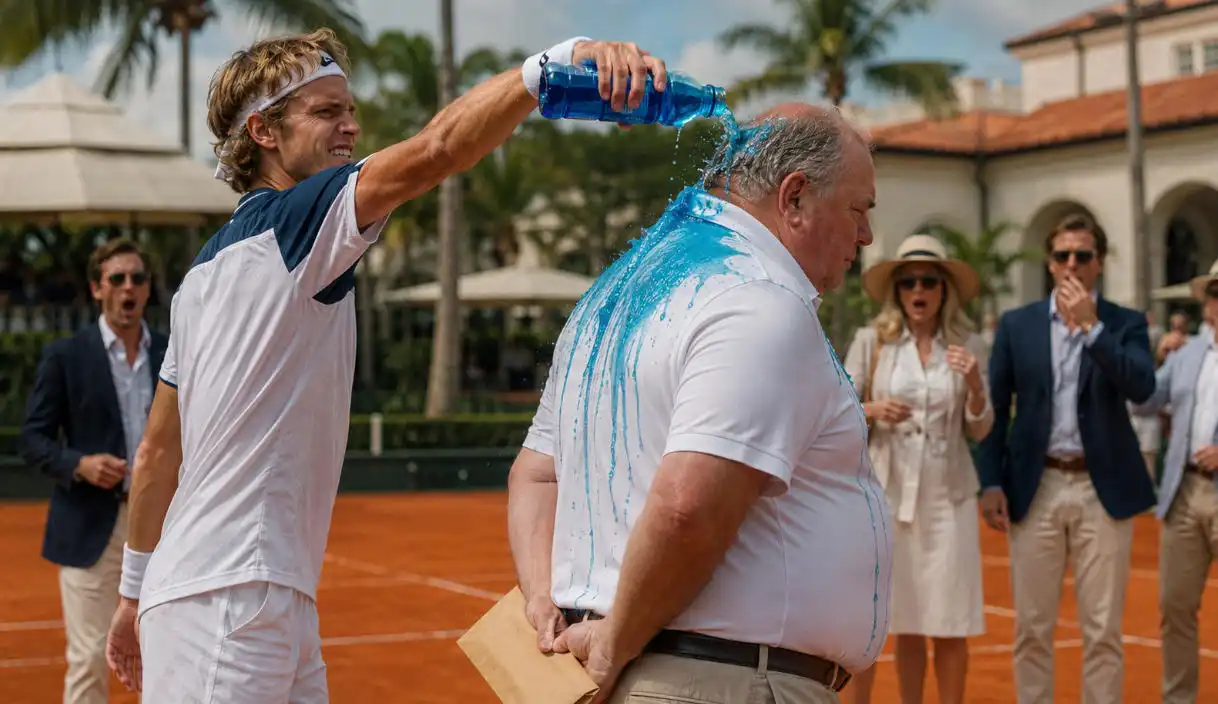
A Palm Beach Tennis Star HUMILIATED a Quiet Older Man in Front of the Whole Club… Then He Saw What Norman’s Attorney Filed That Morning