In her tenth year in Seattle, Carol Morgan learned not to cry. She worked as a cashier at a bakery, standing for eight hours a day, smiling at every customer who walked through the door. Her smile was good—she had nice teeth, the dentist said, and the manager said it made customers feel warm. But no one noticed that she couldn't hear any of it—not the ambient music, not the cash register beeps, not even the echo of her own laughter. She was born profoundly deaf. She communicated with the world through sign language and lip-reading. Most of the time, people would politely look at her, wait for her to finish gesturing, and say, "Okay, thanks." But few had bothered to actually learn sign language. So Carol learned another skill: how to watch with her heart. She observed every customer who entered. Their footsteps, their eyes, the way their hands rested on the counter. She read a thousand things in those details—fatigue, joy, anger, longing. She never gave anything away. Until a man started appearing every Wednesday at 2 PM, ordering a black coffee, sitting by the window, saying nothing, staying until close. She started watching him.
The man was Marcus. He brought a little boy. The boy was about five or six, always dressed in a coat too big for him, sleeves falling past his fingers. He never spoke. Never smiled. Never looked anyone in the eye. His eyes always fixed on some distant void, as if listening to a song only he could hear. Carol first noticed him because of something he did. While waiting for the coffee, he walked up to the pastry display and stared at a blueberry muffin for a long time. Then he reached out and traced the outline of the muffin on the glass with his finger. Slowly. Carefully. Like he was drawing a picture. Carol watched him finish the trace. Then she did something no one at the bakery had ever done: she reached into the case, took out that muffin, boxed it, walked over to Marcus, and set it on the table. The boy saw. He froze. Then he looked up at Carol for the first time. "For you," Carol signed. The boy didn't respond. He just stared at Carol. Then he reached out and took the box, carefully, like it was made of glass. That night, Carol went home and signed to her reflection in the mirror: "He smiled. He smiled." She didn't know why it made her so happy.
She learned more later. The boy's name was Aiden. He was Marcus's son. Marcus's ex-wife had left when Aiden was three. Marcus quit his software engineering job to care for his son full-time. He took Aiden to countless doctors, ran endless assessments. The final diagnosis: severe autism spectrum disorder with sensory processing differences. "He lives in another world," the doctor signed to Carol—yes, Marcus had learned sign language; Aiden needed him to. "He processes the world differently than we do." "Can he hear music?" Carol signed back. "He can hear. But he can't process the information. To him, music might just be... noise." Carol was silent for a long time. That night, she went home, opened her computer, and searched. She watched videos about autistic children—how they perceived the world in unique ways, how some found connection through art. Then she made a decision.
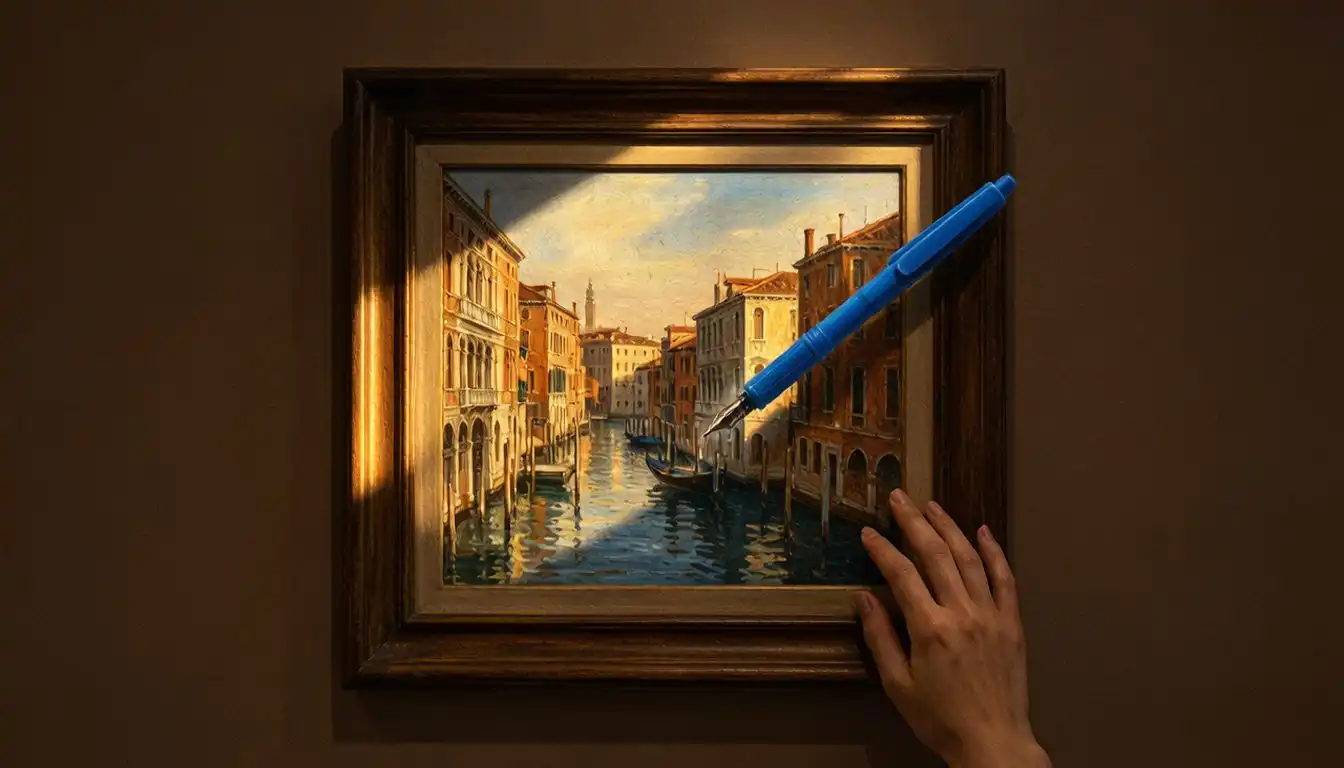
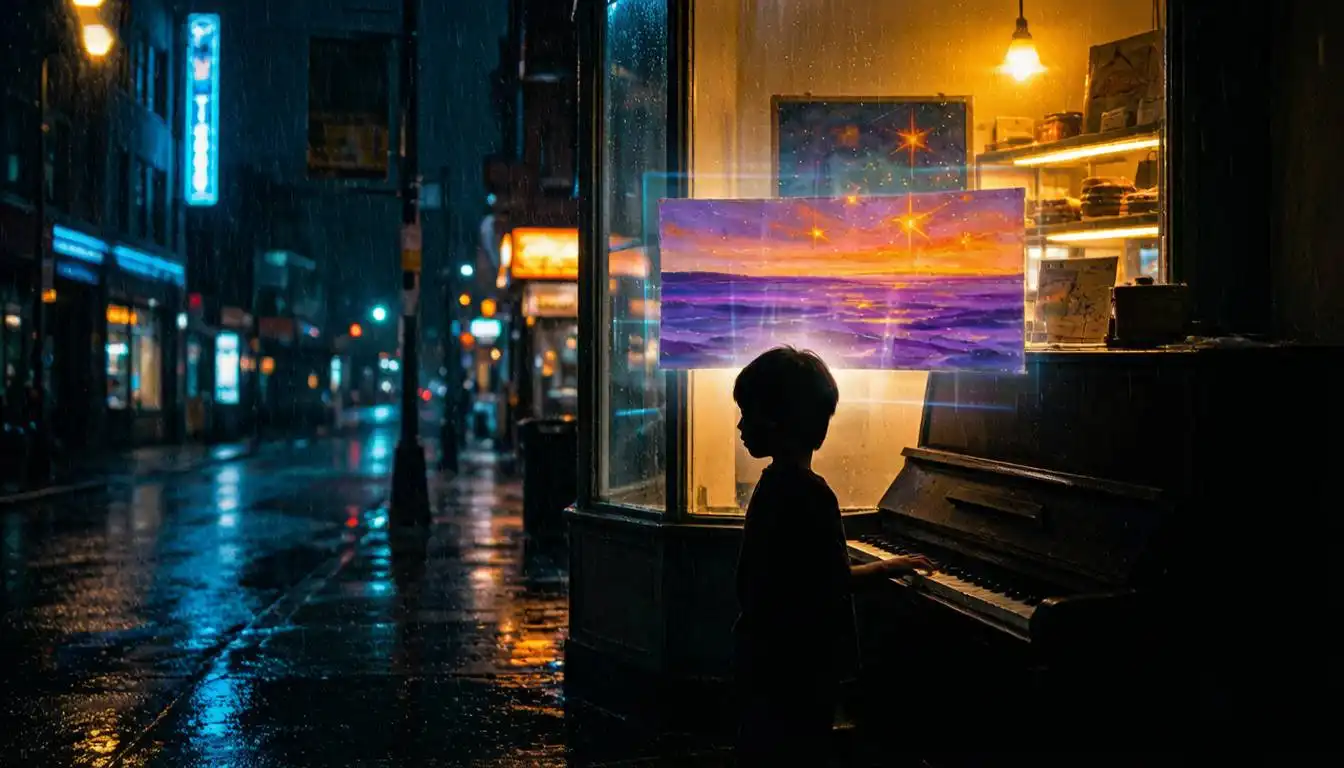
Carol began coming to Marcus's house every Wednesday to teach Aiden to paint. Not ordinary painting. Painting through music. She found a method: translating sound into sight. She used colors and shapes to represent different pitches, rhythms, and emotions. High notes were blue; low notes were brown. Fast tempos were sharp lines; slow tempos were gentle curves. Happy music was warm colors; sad music was cool. Aiden resisted at first. He'd throw the brush and curl up in the corner. But Carol was patient. She never pushed. She just waited nearby until Aiden was ready, then offered the brush again. Sometimes this took many repetitions. But Carol never gave up. Because she knew what it felt like to be given up on. Finally, one day, Aiden picked up the brush. His first painting was a purple sea. Deep in the water, there were orange specks of light—like stars sinking into the ocean floor. Carol looked at that painting for a long time. And then she understood. Aiden wasn't unable to hear music. He was hearing too much—more than he could process. And painting gave him a container to pour all that chaotic sound into, to transform it into visible shapes.
When Aiden was eight, Marcus took him to a classical concert. "I need to know if he truly loves music," Marcus signed to Carol. "I need to see it with my own eyes." Carol went. She sat in the back row, Carol beside her. The concert's featured performer was an old pianist, playing Chopin's Second Piano Concerto. The famous slow movement—beautiful, clear, so haunting that Beethoven reportedly said afterward: "An inexpressible sadness." Marcus watched Aiden from the corner of his eye. Aiden showed no reaction at first. He sat as he always did, eyes on some void, fingers moving faintly in the air. Then, in the second movement—in a moment Carol later estimated lasted about fifteen seconds—Aiden's body went still. His fingers stopped. His eyes shifted from the void to the piano. He wasn't looking at the pianist. He was looking at the piano. He was watching the light dance on the black and white keys. After the concert, Marcus brought Aiden backstage. The old pianist, having heard about Aiden's condition, offered to let him try the piano. Aiden sat at the bench. He was silent for a long time. Then he began to play. He played Chopin's second movement. Every note was in the right place. Every rhythm was at the right tempo. But this was no simple replication. Because in Aiden's version, there was something extra—some slower pauses, some gentler vibratos, as if he was breathing with the piano. The old pianist stood beside him, listening. When the last note faded, he was silent for a long time. "He's not playing Chopin," the old pianist signed at last. "He's talking to him."
When Aiden was seventeen, something changed. A music producer saw a video of Aiden playing online. He tracked down Marcus and offered a number. "Eight figures," he said. "Sign Aiden. We'll package him as a child prodigy. Documentary, albums, world tour. We can show the whole world his story." Marcus said no. "He's not a display," Marcus signed. "He's my son." The producer wasn't discouraged. He started going around Marcus—waiting outside Aiden's school, lurking near the bakery, even texting Aiden directly. Carol was the last to know. She found out from Marcus's text message, standing outside the bakery after her shift ended. "Carol, I need your help. Aiden got their message. He's starting to ask me if he should say yes." Carol stood outside the bakery, staring at her phone screen. She thought about many things. She thought about how many times she'd been rejected in her life—rejected by schools, by employers, by society, because she was deaf. She thought about how long it had taken her to get back up each time. She didn't want Aiden to have that experience. But she also knew Aiden wasn't her. Aiden had a gift. Aiden's music could move people. And she was just an ordinary woman who couldn't hear a single sound in the world. That night, she had a dream. In the dream, she stood inside a massive opera house. The stage was empty—no singers, no orchestra, nothing. But she knew the opera house was complete. Somewhere, someone was preparing a performance. She woke up and thought for a long time. Then she went to find Marcus. "Let him choose himself," she signed. "But first tell him the whole truth. Including the parts he doesn't want to hear."
When Aiden was seventeen, he signed a contract. Not with a music company. With something else. A volunteer contract making him a music therapist, going to special education schools every week to teach children how to play piano. "I don't need to be a star," Aiden signed to Marcus. "I need them to know that music doesn't belong to prodigies. Music belongs to everyone who hears it." Marcus cried. He never cried in front of Aiden, but he couldn't hold it back that day. Carol stood nearby, signing: "I've been waiting for you to make this choice." Aiden turned to look at her. There was a strange light in his eyes. "You always believed I could do this," he signed. "From the blueberry muffin." Carol smiled. She reached out and wrote two words in the palm of his hand. "Go. Fight."
Thirty years later. Carol was sixty-three. She had retired from the bakery ten years prior and now volunteered at a deaf community center in Seattle, teaching children to draw and sign. Marcus had passed fifteen years before—heart attack, sudden and quiet, with Aiden beside him. Aiden was now one of the most renowned music therapists in America. He had developed an approach called "Sensory Translation," helping autistic children transform the chaotic world they perceived into music and paintings. His methods were adopted by special education schools in over thirty countries. But every year, he came back to Seattle. Every April, for one evening, he would return to the bakery that was still there—under new ownership, the window seat still empty—and order a black coffee. He would sit there until closing. It was the day Carol died. Carol left the world peacefully at seventy, in her sleep. In her final days, she had smiled constantly. Aiden sat beside her hospital bed, placed her hand on the piano keyboard—he had brought a digital keyboard—and played a piece. Not Chopin. Not Beethoven. Something he had composed himself. No name. Carol had never heard it in her life. But she must have heard it then. Because when she left, her smile and the last note of his piece stopped at the exact same moment.
Many years later, a journalist asked Aiden: "What is the most important thing your mother taught you?" Aiden signed: "She never made me feel like someone who needed to be fixed." He paused. "She said, everyone has their own opera house. Some people sing with their voices. Some paint with brushes. Some speak in silence. But all opera houses are complete." "What do you think she meant by that?" Aiden thought about it. Then he stood up from the piano and walked to the window. Outside was Seattle at night, lights scattered like countless eyes waiting in the dark. "She meant," Aiden signed, "there are many kinds of sounds in the universe. Some are loud. Some are quiet. Some we'll never hear at all. But they're all there. Every sound is real." "Like your mother's 'Go. Fight'—" "Like she said, 'Go. Fight.'" Aiden nodded. "That was the most important sound she ever heard."
Disclaimer: Mention of any brand or trademark is for identification only and does not imply partnership or endorsement