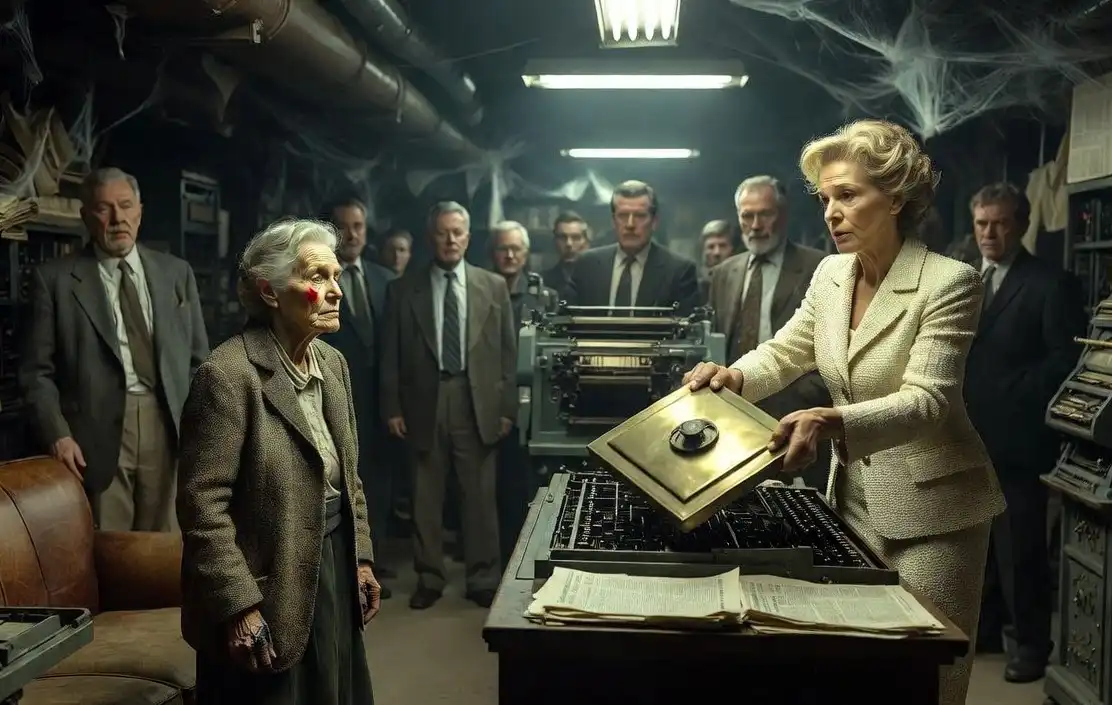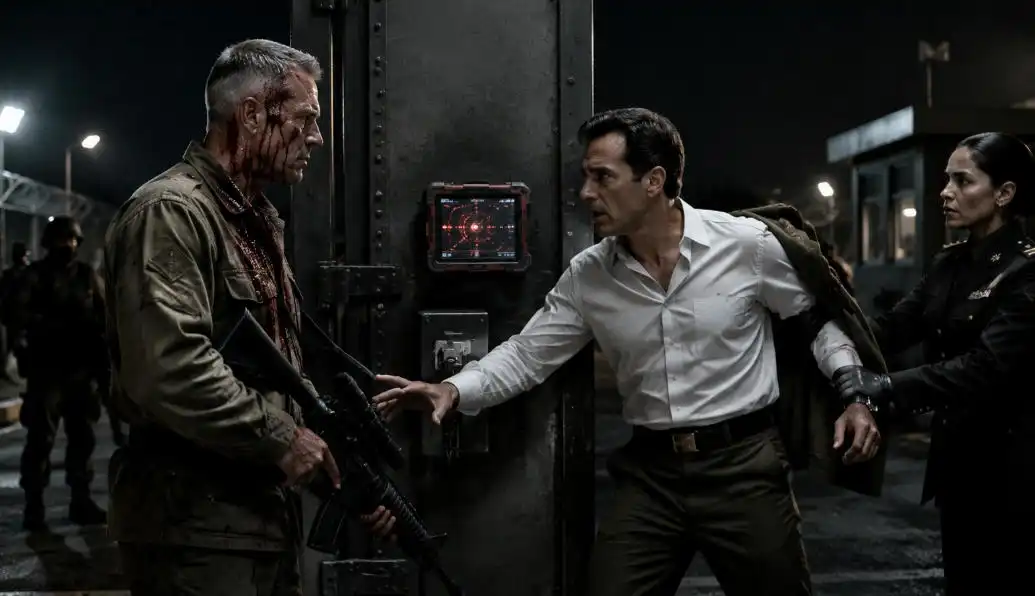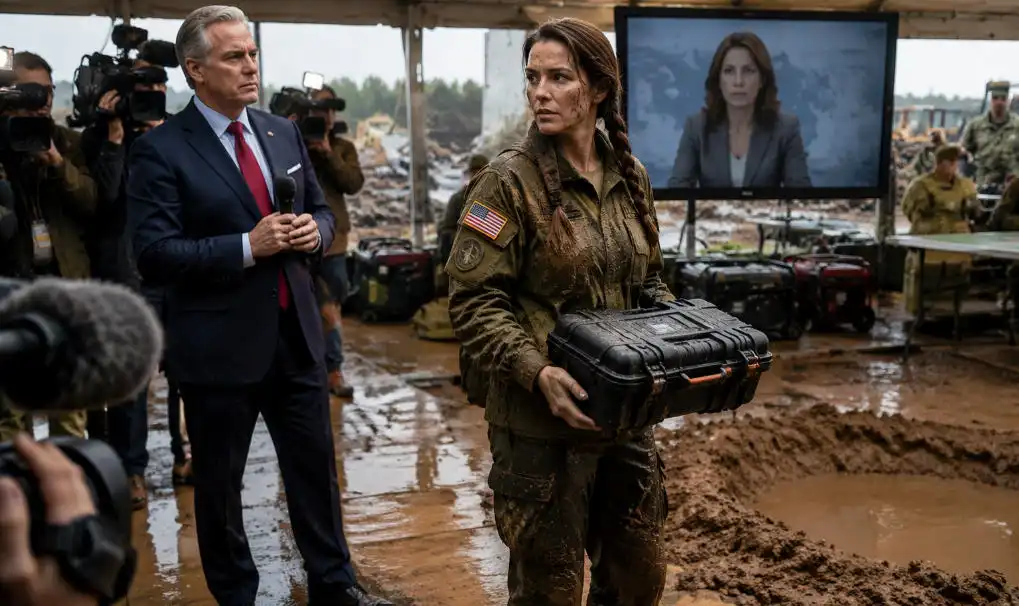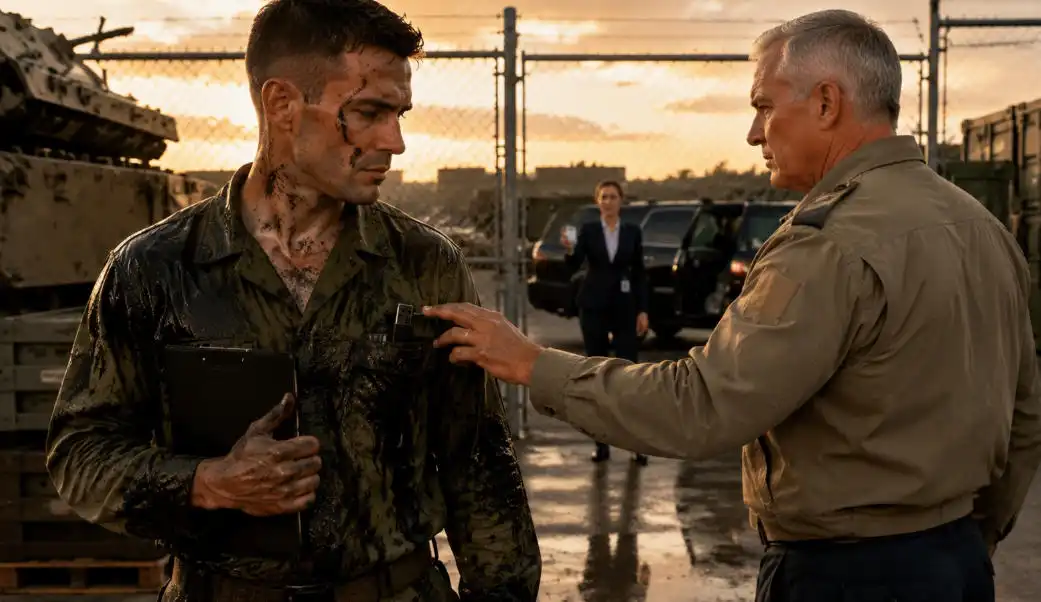


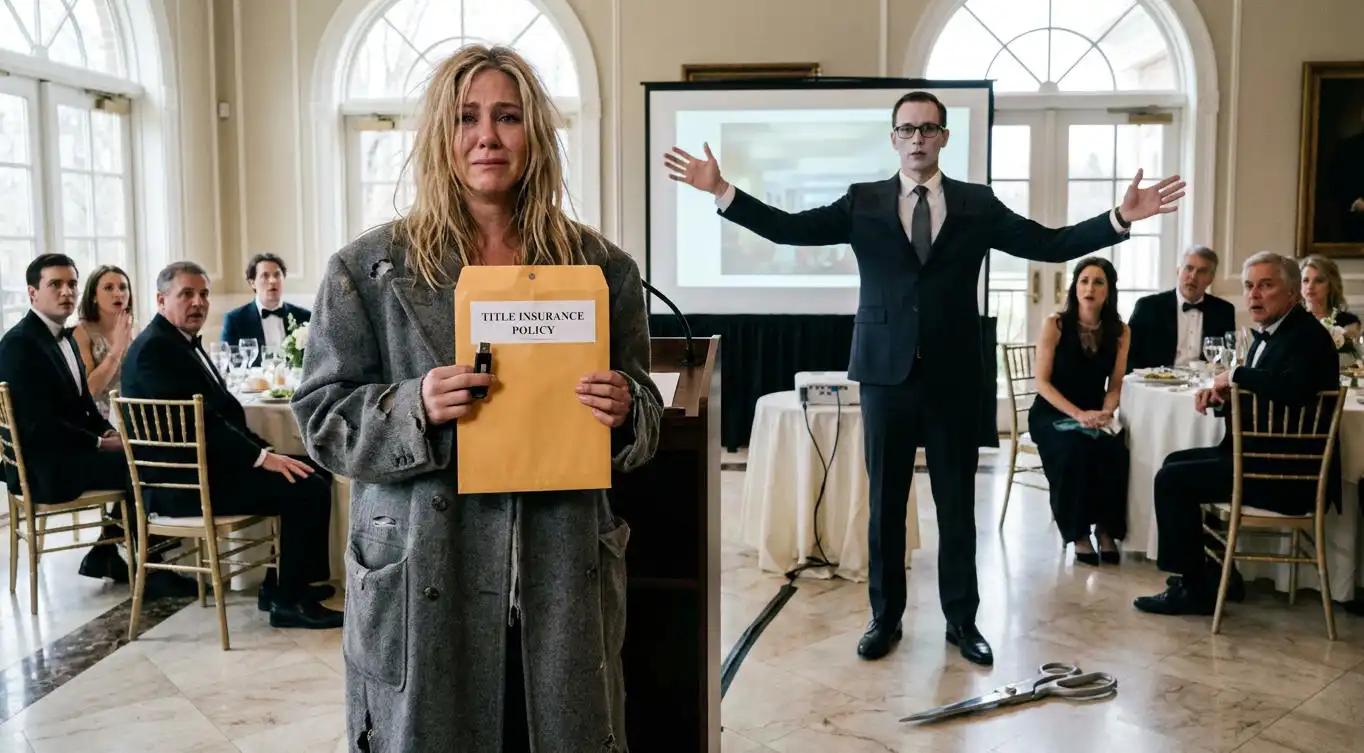
The panic transmitter clicked under my thumb. Behind Ethan, the charity projector woke from black to a cold blue glow. He swung toward it and spread both arms, trying to block the screen, while I held the title-insurance policy and the dashcam drive above my torn coat. For the first time that night, his smile disappeared.
“Turn that off,” he snapped.
The auctioneer stared at him. “Dr. Bennett, I’m not touching anything.”
A woman at Table Six stood and closed a county folder. I had met Mara Collins from Child Protective Services three days earlier, after school, in a parking lot Ethan never checked.
“Step away from your wife,” she said.
Ethan recovered quickly. He always did. His public voice returned—the warm, measured voice that made donors trust him and patients tell him their secrets.
“My wife is having an episode,” he announced. “Please don’t encourage her.”
A few guests shifted uncomfortably. Others looked at the scissors still in his hand and the shredded wool hanging from my shoulder.
The projector changed. A paused image appeared: our driveway at 7:42 p.m., Ethan’s hand wrapped around my wrist, my phone on the pavement, and our son Noah visible behind the front window.
Ethan lunged for the laptop table.
Country club security caught his arm.
“That footage is stolen,” he said. “And misleading.”
I looked at him.
“Then let them watch all of it.”
He reached into his leather briefcase and pulled out a thick medical file.
“This is exactly what I warned everyone about,” he said. “Claire has paranoid delusions. I already have the clinical records necessary for an emergency psychiatric hold.”
He slapped the file onto the auction table as if it were a winning card.
Mara opened it. I watched Ethan’s confidence settle back into place. He believed a logo, a diagnosis, and his professional title could erase everything the room had just seen.
Mara turned the first page.
“Dr. Samuel Avery signed this evaluation?” she asked.
“Yes,” Ethan said. “A respected specialist.”
Mara looked up slowly.
“Dr. Avery died eleven months ago.”
The entire ballroom went silent. No one reached for a bid paddle or a wineglass.
Ethan did not fold. He smiled at Mara as if she were a confused receptionist.
“That was his template,” he said. “Another clinician completed the assessment under his supervision.”
“After his death?” I asked.
His eyes cut toward me.
“Stop performing, Claire.”
He grabbed the torn front of my coat and yanked me closer. The remaining seam split with a sharp rip. Several guests gasped. A silver emergency tag, stitched into the lining, swung between us.
“You wear garbage,” he hissed, loud enough for every microphone in the ballroom to catch it. “You teach two afternoons a week and still act like you contribute. I pay the mortgage. I pay Noah’s medical bills. I decide what happens in my house.”
Mara’s expression hardened.
“Does Claire consent to the loans opened in her name?”
Ethan released my coat.
“My wife authorized me to manage our finances.”
“On what date?” I asked.
He named April 18.
I stayed quiet.
That was the day I had taught a six-hour student exhibition across town, surrounded by parents, cameras, and time-stamped school records. Ethan did not know I had kept the program.
He mistook my silence for fear.
He picked up the title-insurance policy and waved it at the room.
“This old document means nothing. The house is marital property, and Claire is not mentally competent to handle it.”
He tried to tear the cover. Security took it from him before he could.
Then he turned to Mara.
“I have arranged appropriate transport. She will be evaluated tonight, and our son will finally have stability.”
The auctioneer’s live microphone carried every word.
Mara asked, “You arranged confinement before an independent examination?”
Ethan’s jaw tightened.
“I arranged care.”
A phone began vibrating inside his briefcase. He ignored it.
It rang again.
The auctioneer glanced at the screen.
“It says Pine Hollow Behavioral Transport.”
Ethan snatched the phone, but his thumb hit the speaker icon.
A man’s voice filled the ballroom.
“Dr. Bennett, our team is in the lobby. We still need the patient’s signature or the emergency physician’s authorization. You sent neither.”
Every face turned toward Ethan.
Then the ballroom doors opened, and two transport workers stood there holding blank intake forms.
I had spent fourteen months learning not to answer Ethan too quickly.
Every argument became proof that I was “unstable.” Every tear became a symptom. Every question about money became what he called obsession.
So I stopped giving him reactions he could edit into a story.
I started collecting dates.
I kept bank notices in the stitched pockets of that cheap coat because Ethan searched my purse. I copied messages at the school library because he monitored our home computer.
When our neighbor, Ruth Dawson, told me her parked SUV’s dashcam had recorded our driveway, I asked for the original memory card, the metadata report, and a signed statement.
Then I made three copies.
One went to Mara.
One went to my legal-aid attorney, Dana Brooks.
The third was clipped to the title-insurance policy Ethan had just tried to destroy.
I held the policy open for the room.
“This was issued before I married Ethan,” I said. “It names my family trust as the insured owner and Noah as the successor beneficiary. Ethan used the house as collateral anyway.”
Ethan laughed too loudly.
“She doesn’t understand title law.”
“I understand my signature,” I said. “And I know when I didn’t write it.”
Mara asked the auction technician to continue the video.
The timestamp appeared first.
April 18.
The same date Ethan had just claimed I approved the largest loan.
On-screen, I stepped out of my car carrying Noah’s medicine. Ethan came through the gate, grabbed my wrist, knocked my phone onto the concrete, and blocked the front door.
The room heard his voice through the dashcam microphone.
“You sign the refinancing papers, or you don’t see him tonight.”
Ethan shoved away from security.
“There is context!”
The video continued.
I bent to pick up my phone. He kicked it beneath his car and leaned close enough for the camera to catch every word.
“I’m a psychologist, Claire. I can make one phone call and have everyone believing you’re dangerous.”
A woman near the stage covered her mouth.
I did not look at the crowd.
I watched Ethan.
He was no longer looking at me.
He was staring at the screen like a man watching a locked door swing open.
Then Noah’s small voice came through the speakers.
“Dad, please let Mom in.”
The sound of my son begging changed the room.
People who had avoided my eyes now looked directly at Ethan. The country club president stepped away from him. One of his former patients stood up and left without a word.
On the screen, Noah pressed both hands against the window.
He had come home from heart surgery six days earlier. I had his medication in my bag, but Ethan kept the door locked until I signed a loan authorization.
I refused.
The video showed him twisting my arm behind me and forcing the papers against the hood of my car.
“You can leave with nothing,” he said on the recording. “I’ll keep the house, the boy, and your name on the debt. If you fight me, I’ll have you committed.”
That sentence was his fatal mistake.
It connected the violence, the forged diagnosis, the false loans, and his plan to take the house.
It was not a marital argument.
It was a documented scheme.
Ethan charged toward the screen.
Security pinned his arms before he reached it.
“Edited!” he shouted. “She edited all of it!”
Mara raised the evidence envelope.
“The original dashcam card was collected under chain of custody. The timestamps match the lender’s electronic submission. The neighbor signed an affidavit. The file has not been altered.”
I unfolded two bank notices from the coat lining.
“The loan applications were submitted from Ethan’s clinic network,” I said. “While I was teaching.”
His face drained.
I showed Mara the messages he had sent while Noah was sick.
SIGN TONIGHT OR YOU DON’T GET TO SEE HIM.
PINE HOLLOW HAS A BED. DON’T TEST ME.
The ballroom did not need a speech after that.
Mara turned to the transport workers.
“You were told there was a valid emergency authorization?”
They nodded.
Ethan shouted, “She is manipulating all of you!”
Mara pulled a sealed document from her county folder.
“This is an emergency child-safety order,” she said. “It authorizes immediate protective action based on the evidence Claire provided before tonight.”
Ethan stopped fighting security.
A sheriff’s sergeant who had responded to my alarm stepped beside him.
“Dr. Bennett,” Sergeant Nolan said, “turn around and place your hands behind your back.”
For the first time in our marriage, Ethan had no answer ready.
Ethan was removed from the country club while the guests watched in silence.
He kept calling my name as Sergeant Nolan led him out.
“Claire, tell them this is a misunderstanding.”
I did not move.
Mara came to me instead.
“Noah is safe at the pediatric recovery center. Your supervised-access restriction has been lifted. You can see him tonight.”
That sentence nearly dropped me to my knees.
The emergency order barred Ethan from contacting either of us. Police opened investigations into domestic assault, identity theft, loan fraud, and the forged medical documents.
Pine Hollow canceled the transport request and surrendered Ethan’s intake messages.
Forty-eight hours later, Dana Brooks stood beside me in family court.
Ethan arrived in an expensive suit with two attorneys. He still believed appearance could repair evidence.
His lawyers argued that the dashcam angle was incomplete, that the loans benefited the family, and that his concern about my mental health had been sincere.
Dana answered with records, not emotion.
The original memory card.
Ruth Dawson’s affidavit.
The auction’s live audio.
The dead doctor’s forged signature.
The clinic-network login used to submit loans in my name.
The title-insurance policy and trust documents showing Ethan had no authority to pledge the house.
My school’s time-stamped exhibition footage proving I could not have signed on April 18.
Then Mara testified that Ethan had repeatedly interfered with my access to Noah’s medical care and had used the threat of psychiatric confinement to force financial signatures.
The judge issued sole temporary custody before lunch.
Four months later, after the forensic review confirmed every document, the court made the order final.
Ethan received no visitation.
No phone calls.
No third-party messages.
No right to attend Noah’s school or medical appointments.
The court sent the forged records to the state psychology board and referred the financial evidence for prosecution. The fraudulent liens were frozen while the title insurer defended the trust.
Outside the courtroom, Ethan tried one last time.
“You’re taking my son away.”
I faced him.
“No,” I said. “Your choices did that.”
The bailiff stepped between us, and the courtroom door closed on him.
I had told Dana from the beginning that I would leave with nothing if that was the price of keeping Noah safe.
The title policy protected the house, but the house was never the reason I stayed.
I stayed long enough to build a case no professional title, polished speech, or forged file could erase.
Six months after the final order, Noah helped me unlock the door to a small storefront near his school.
The sign read CLAIRE’S ART ROOM.
It was not glamorous.
The floorboards creaked. The sink leaked. My first class had seven children and twelve mismatched chairs donated by parents from the school exhibition Ethan had forgotten about.
It was mine.
More importantly, Noah could sit at the back table after his medical appointments, paint spaceships, and ask for me without anyone using that need as leverage.
One afternoon, he noticed the repaired coat hanging beside my desk.
“Why did you keep it?” he asked.
I touched the crooked seam where the alarm had been hidden.
“Because it reminds me that something can look ruined and still protect you.”
He considered that, then dipped his brush into blue paint.
On the studio’s main wall, I hung a photograph taken on opening day.
Noah and I stood beneath the new sign, his arm around my waist, both of us laughing.
There was no third person cropped out.
No missing place at the edge.
Just a mother and her son, safe in the life we had rebuilt.
The debt accounts were removed from my credit after the fraud findings. The state board suspended Ethan’s license while the criminal case continued.
I did not follow every update.
I no longer needed his collapse to prove my recovery.
I needed breakfast with Noah.
I needed a key he could not take.
I needed work that made me feel like myself again.
Ethan had spent years teaching me that silence meant weakness.
He was wrong.
My silence had been preparation.
Should Ethan have lost every visitation right after using money, forged records, and his professional status to control his wife and son? Comment YES—he deserved every consequence—or NO, and share this story with someone who needs to remember that survival can look quiet.
Disclaimer: Mention of any brand or trademark is for identification only and does not imply partnership or endorsement